How to Calibrate Vector Network Analyzer Source Power with a USB Power Sensor

Calibrate Source Power at the Measurement Plane
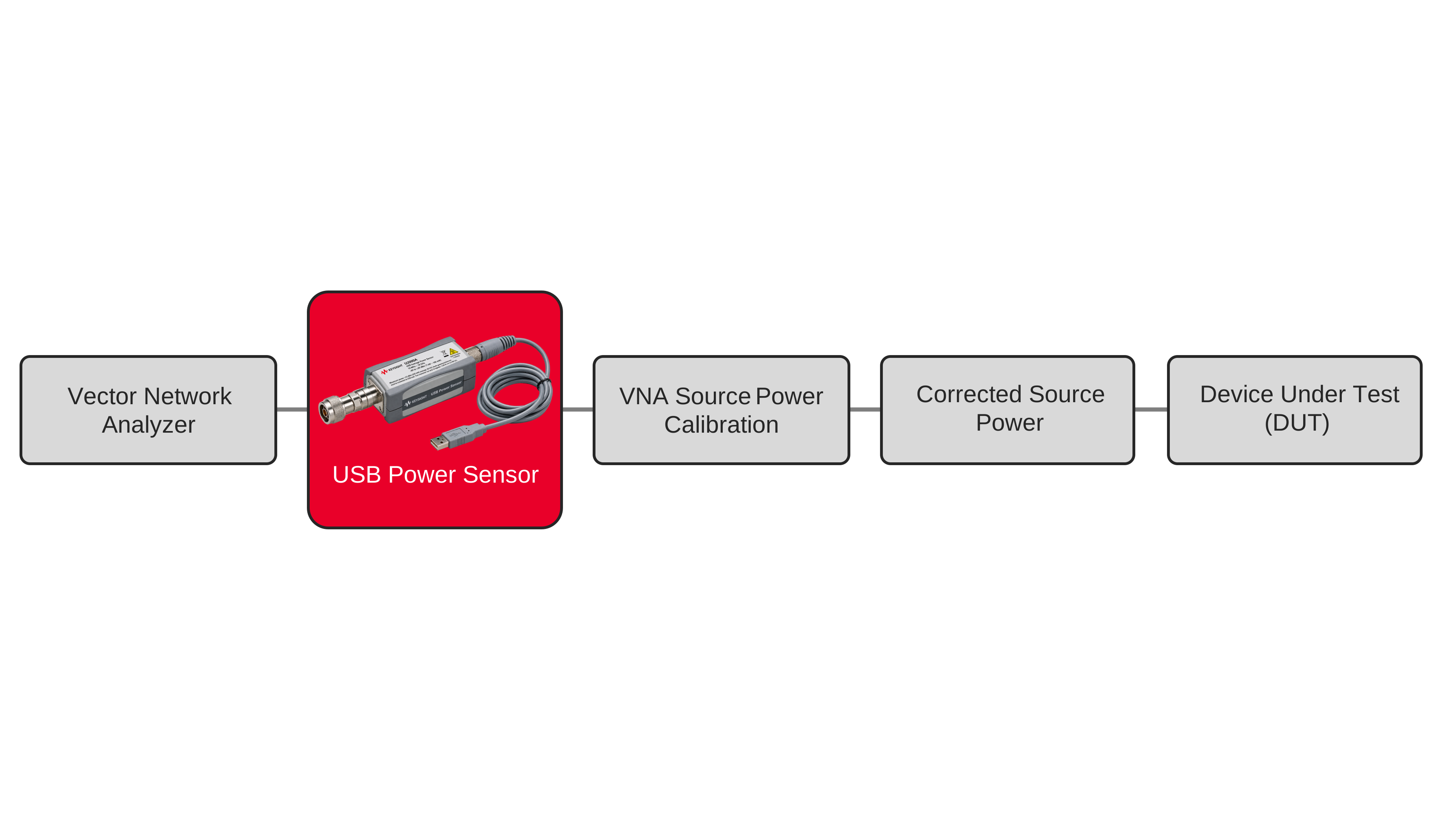
Calibrating vector network analyzer source power requires measuring the actual radio frequency (RF) power delivered at the desired measurement plane and correcting differences between the programmed source level and measured power. Cables, adapters, fixtures, and other components between the analyzer source and device under test can introduce frequency-dependent loss that changes the power reaching the device. This becomes important when measurements require a controlled stimulus level across frequency or when device response depends on the applied input power. A USB power sensor can measure source power directly at the reference plane so the analyzer can determine the correction required at each calibration point.
The measurement setup includes a vector network analyzer, USB power sensor, and the interconnects that will form the measurement path. The sensor is placed at the desired reference plane and connected to a compatible analyzer through USB. During source power calibration, the analyzer steps through the required measurement points while the sensor measures the actual power delivered through the test path. The resulting power measurements are used by the analyzer's source power calibration process to correct the source level, establishing a more accurate power condition at the device-under-test reference plane before subsequent network measurements are performed.

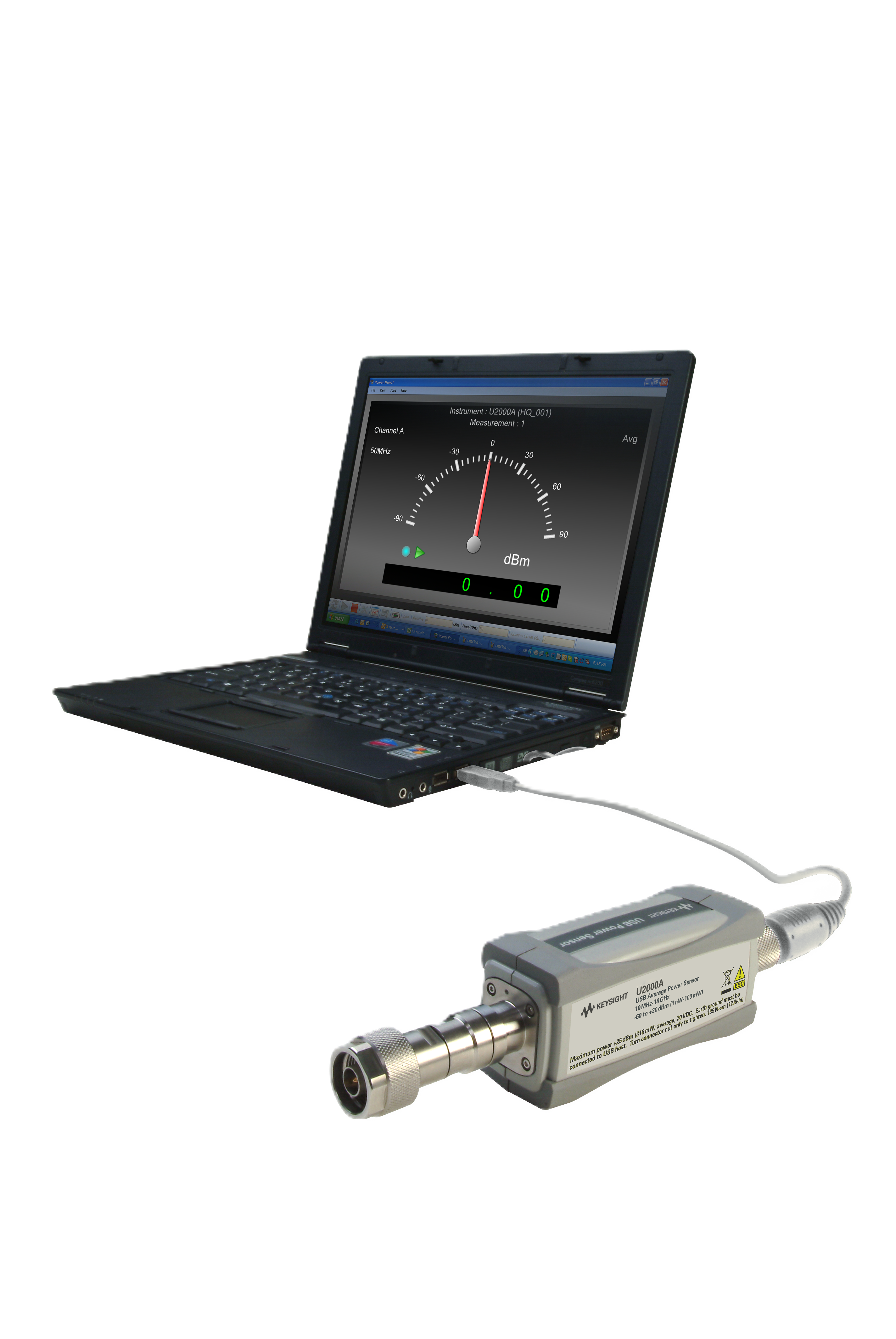
Vector Network Analyzer Source Power Calibration Solution
See Block Diagram of Vector Network Analyzer Source Power Calibration Solution

Explore Products for Our Vector Network Analyzer Source Power Calibration Solution
-

![]()
U2000A 10 MHz - 18 GHz USB Power Sensor


Discover Resources and Insights
Additional Resources for Vector Network Analyzer Source Power Calibration
Related Use Cases


-
![]()
Learn More
How to Maintain Signal Generator Output Power with External Leveling
Maintain radio frequency signal generator output power using a USB power sensor for external leveling and closed-loop power control.
Learn More

-
![]()
Learn More
How to Select DC-Coupled or DC-Blocked Power Sensors for RF Measurements
Select DC-coupled or DC-blocked power sensors based on the RF measurement setup to improve measurement accuracy and protect the sensor.
Learn More
-
![]()
Learn More
How to Benchmark 5G Devices
Benchmarking a 5G device means subjecting it to a wide range of network signaling and radio channel conditions. Learn how to set up a test to emulate real-world network conditions and equipment to stress your 5G device and verify its performance.
Learn More

Get in Touch with One of Our Experts
Need help finding the right solution for you?