How to Conduct CRPA Anti-Jam Antenna Testing
Validating CRPA Anti-Jam Antenna Systems Against NAVWAR Threats
Controlled reception pattern antennas (CRPAs), also known as anti-jam antennas, are a key line of defense against navigation warfare threats. They provide spatial filtering that protects positioning, navigation, and timing (PNT) systems in contested environments. Anti-jam solutions protect platforms by distinguishing between desired GNSS signals and threats in the RF environment—including powerful jamming waveforms and deceptive spoofed signals designed to appear legitimate. CRPAs are used across defense and civilian applications on aircraft, ground vehicles, drones, precision-guided hypersonic missiles, naval platforms, long-range loitering munitions, and battle-management systems for timing synchronization and data integrity.
Unlike a fixed reception pattern antenna, a CRPA uses multiple antenna elements and adaptive signal processing to respond dynamically to its RF environment. The system analyzes signals received at each antenna element and adjusts amplitude and phase in real time to steer nulls toward interference while maintaining or enhancing reception in the direction of desired satellite signals. An array with N elements can form up to N-1 independent nulls, with larger arrays focusing reception more precisely and better separating signals arriving from similar directions. As CRPA designs scale from traditional 4- and 7-element arrays to systems with 16-plus elements, validating anti-jam performance becomes increasingly demanding. Testing must reproduce realistic signal levels, threat geometry, angles of arrival, and dynamic platform conditions. Engineers can then evaluate metrics such as null depth and steering accuracy, jammer-to-signal tolerance, and GNSS acquisition and tracking before deployment.


CRPA Anti-Jam Antenna Test Solutions
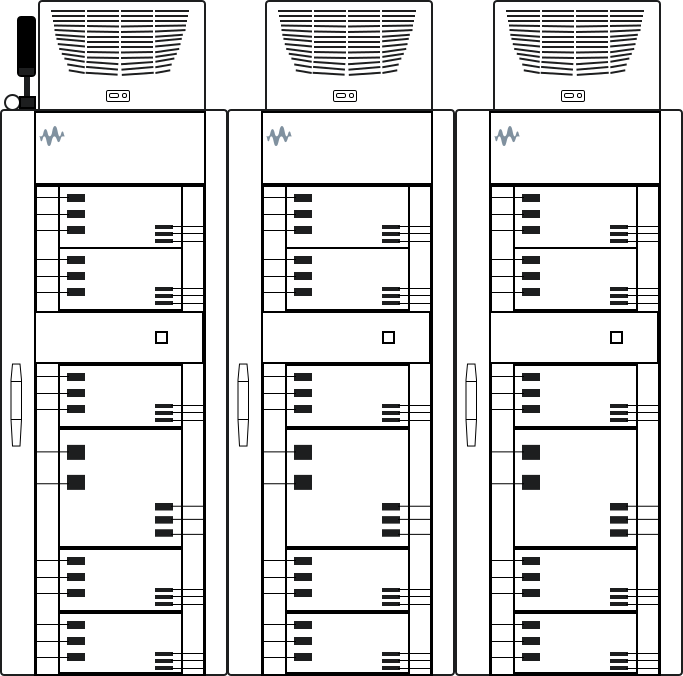
CRPA performance can be validated in a lab through conducted wavefront testing or over-the-air (OTA) testing in a chamber. Keysight’s PNT X CRPA Test System uses direct-injected wavefront simulation to deliver synchronized GNSS, jamming, and spoofing signals to each CRPA element. This approach provides precise, repeatable control of 6 degrees-of-freedom scenario dynamics, including full flight profiles, for testing the antenna electronics and receiver. A stable architecture preserves phase alignment and holds calibration throughout scenario execution, avoiding run-time recalibration and the phase discontinuities continuous calibration can introduce.
OTA testing brings the physical antenna into the test, radiating GNSS and threat signals in a chamber to evaluate the complete CRPA system. Keysight’s PNT X OTA Test System offers a patented zoned-chamber approach for increased realism and longer test times. While OTA provides end-to-end validation, scenario dynamics are more limited than with conducted testing. Together, the two methods provide complementary subsystem and system-level validation.
Explore Products in Our CRPA Anti-Jam Testing Solution
-


![]()
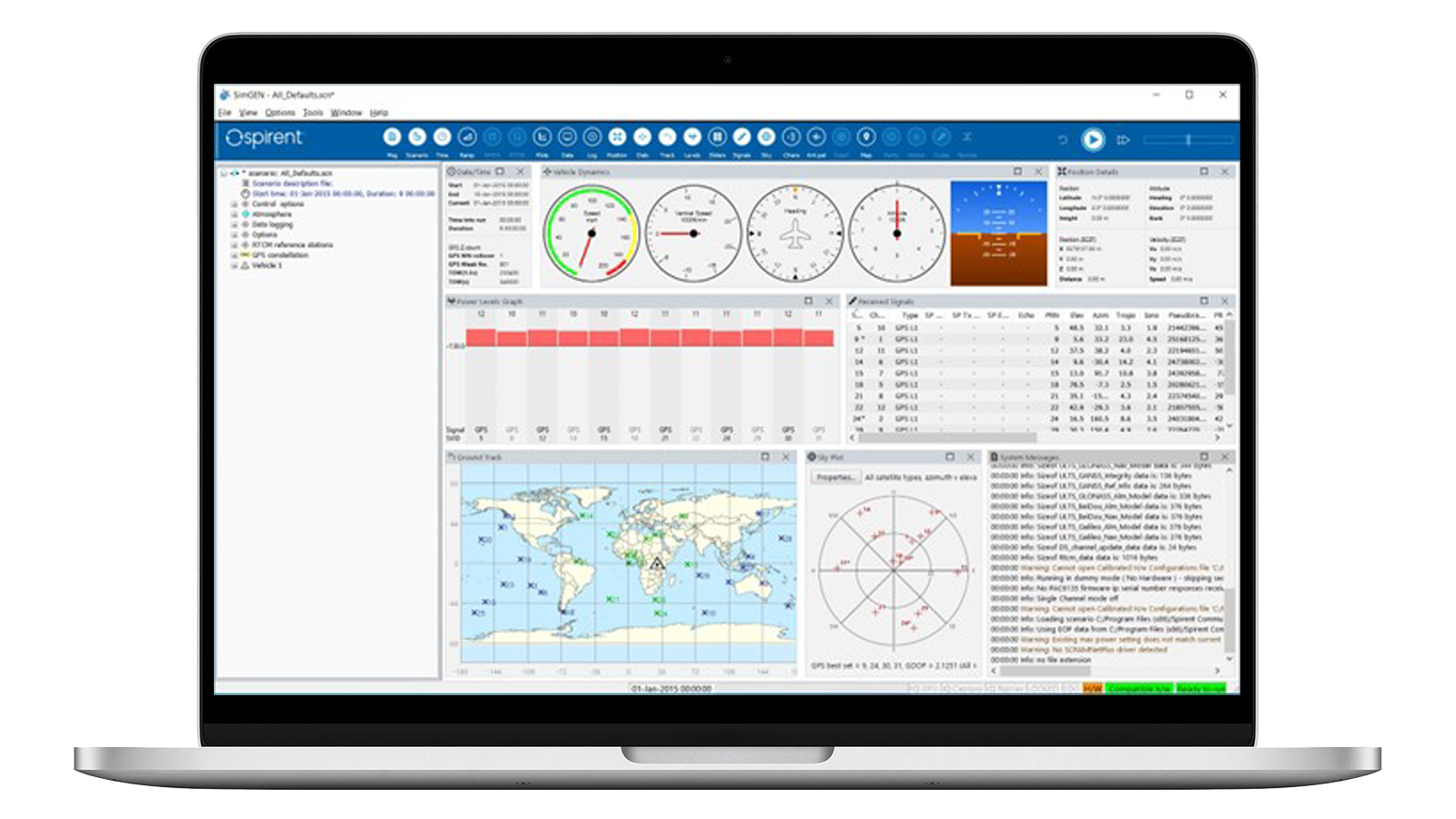
PNTF211A SimMNSA GPS Military Code Simulation Software
-

![]()
PNT2003A SimINERTIAL
-

![]()
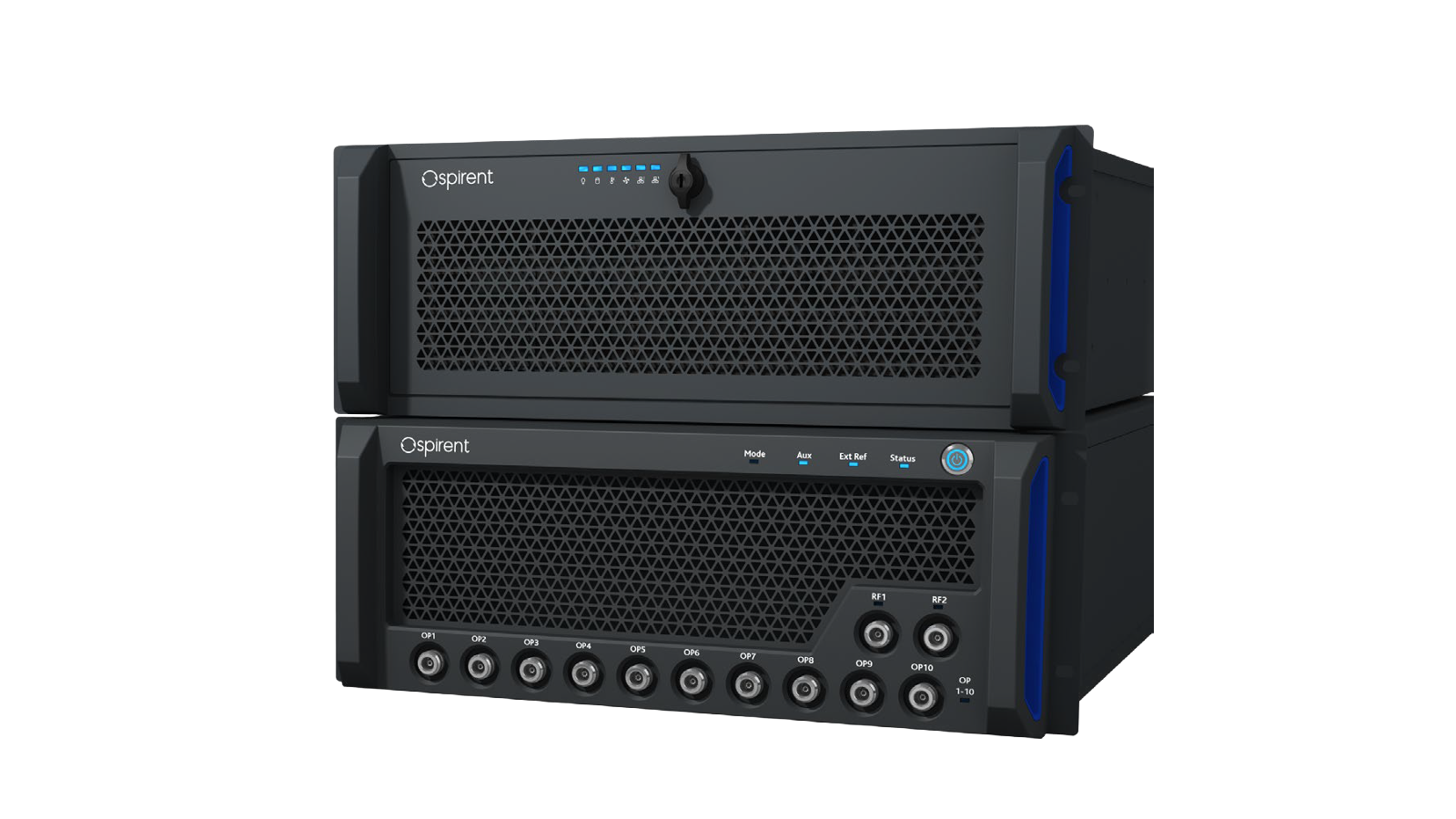
PNTX000A PNT X CRPA Test System
-

![]()
PNTX100A PNT X

Discover Resources and Insights
Additional Resources for CRPA Anti-Jam Antenna Testing
Related Use Cases

-
![]()
Learn More
How to Validate LEO Satellite Performance
Assuring performance of LEO satellites and constellations requires comprehensive testing. Learn how to validate satellite performance with PNT simulation.
Learn More

-
![]()
Learn More
How to Test 5G NR Base Station Receivers
Testing base station and user equipment with channel coding and multi-antenna support requires use of standard-compliant 5G NR signals. Learn how to use a vector signal generator, frequency extender, and signal generation software to characterize performance, verify RF subsystems, and conduct functional testing.
Learn More
-
![]()
Learn More
How to Measure Signal Quality in 5G Private Networks
Measuring 5G private network base station transmitter signal quality requires a high-frequency and wide-bandwidth test system that can address excessive path loss, wideband noise, and frequency errors with minimum impact on the EVM test results. Learn how to measure accurate signal quality in your 5G private network base station transmitters for your 5G new radio (NR) frequency range 1 (FR1) and FR2 applications.
Learn More

Get in Touch with One of Our Experts
Need help finding the right solution for you?