











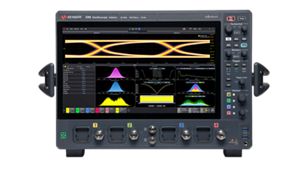


- Overview
- All Models
- Support
Scalable tools for complete 5G and ORAN base station performance testing
Keysight cellular base station solutions validate 5G NR, LTE, and ORAN gNB performance through development. They emulate realistic radio environments with fading, beamforming, and load testing across sub-6 GHz (FR1), mmWave (FR2), and non-terrestrial networks. Offering high-performance transceivers with scalable RF channels, wide bandwidth, and real-time fading. Software enables automated KPI testing, MIMO/Massive MIMO channel modeling, and OTA validation. For lab and production, solutions support remote heads, cloud control, and standards-aligned automation (open APIs). Request a quote for one of our popular configurations today. Need help selecting? Check out the resources below.
Massive MIMO beamforming
Validate beam management, tracking, and precoding algorithms with full-stack, OTA testing of active antenna systems.
Real-time channel fading emulation
Simulate dynamic MIMO and massive MIMO channel conditions using enhanced fading profiles with configurations up to 64x64.
High-frequency OTA testing
Conduct OTA testing at mmWave bands using calibrated setups for conformance and performance characterization.
Carrier-grade network environment modeling
Simulate network conditions using carrier-calibrated channel models to evaluate performance under realistic deployment scenarios.
-
Workflow stage
Development, Acceptance, Interoperability, Deployment, Design validation, Manufacture test
-
Test domain
RF, Performance, Non-signaling PXIe performance
-
Technology
5G NR, NTN
Most popular configurations
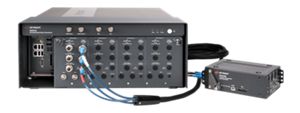
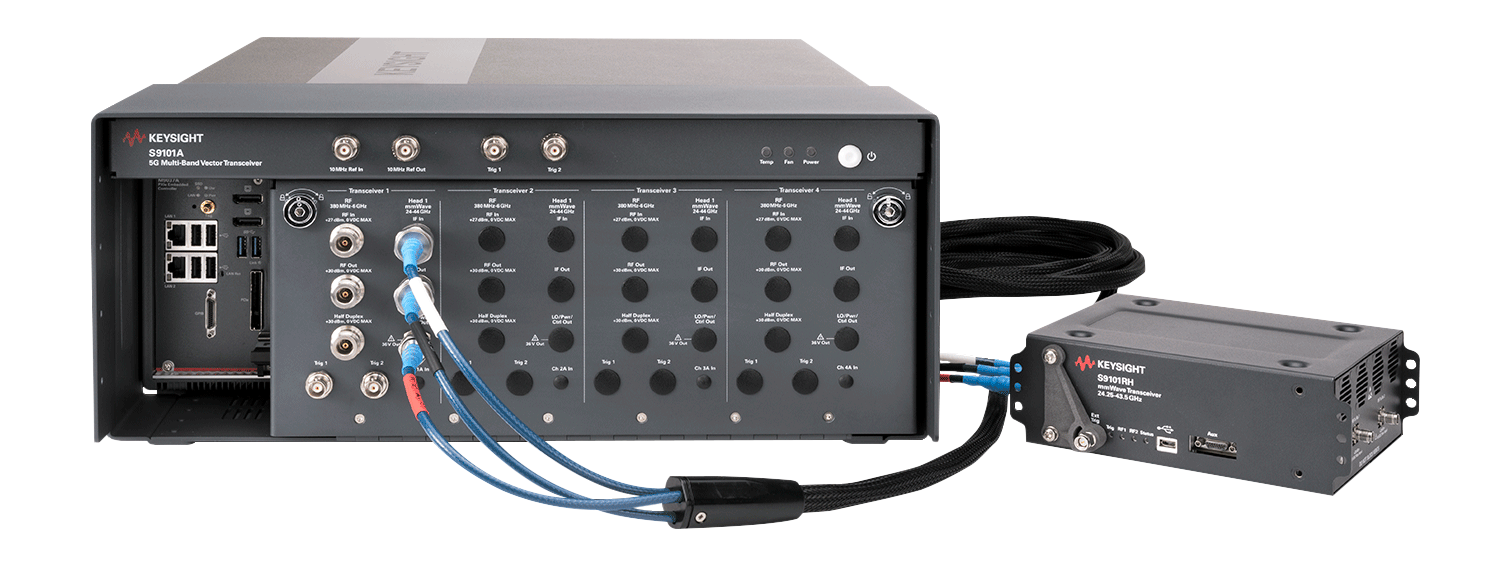
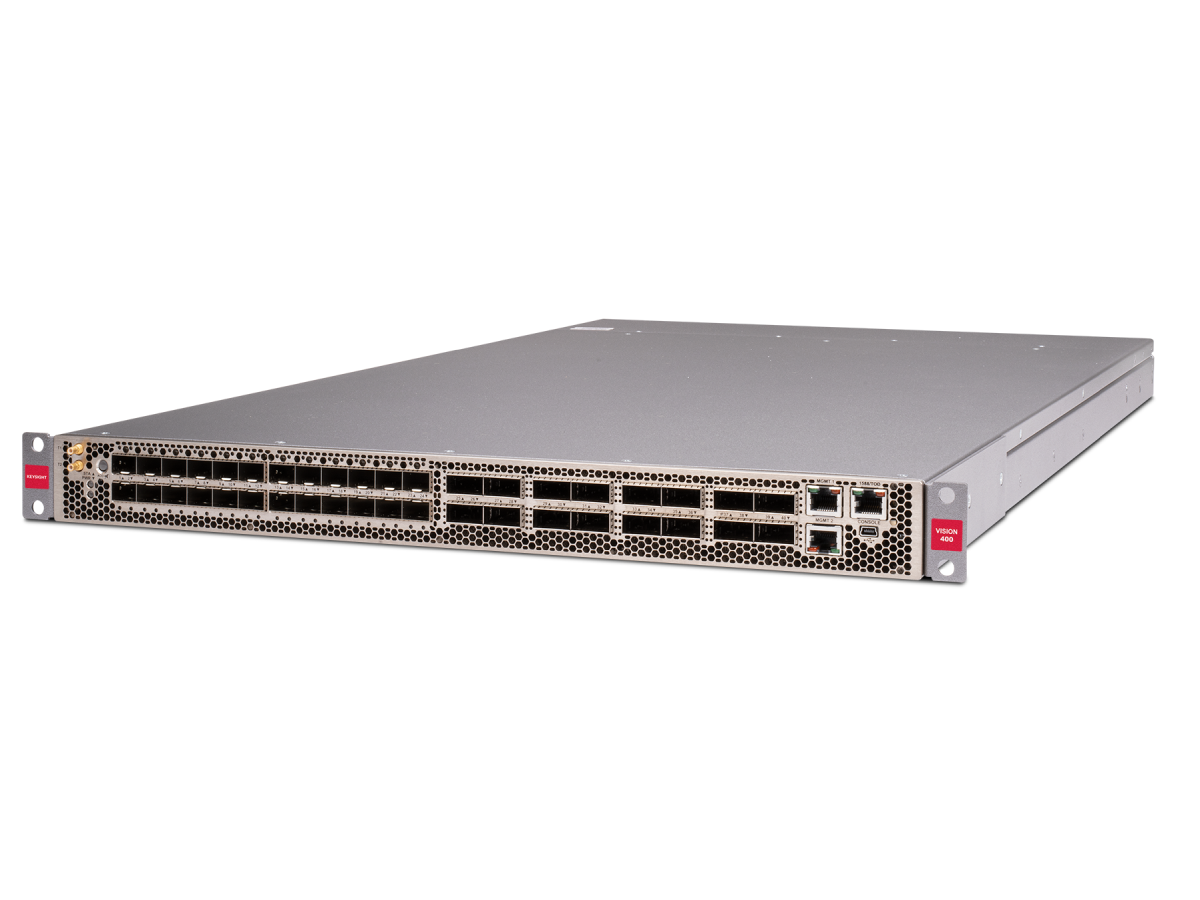
VT5-class Vector Transceiver, for 5G multiband testing
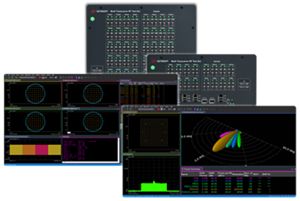

VT7-class Vector Transceiver, for 5G Massive MIMO and MIMO Beamforming Test
Services and support
Innovate at speed with curated support plans and prioritized response and turn-around times.
Get predictable, lease-based subscriptions and full lifecycle management solutions—so you reach your business goals faster.
Experience elevated service as a KeysightCare subscriber to get committed technical response and more.
Ensure your test system performs to specification and meets local and global standards.
Make measurements quickly with in-house, instructor-led training, and eLearning.
Download Keysight software or update your software to the newest version.
Frequently asked questions
Cellular base station performance testing assesses how well a 5G gNB (next-generation Node B) performs under real-world radio conditions. This type of testing is critical because it ensures that the base station:
Handles realistic RF scenarios, including fading, mobility, and interference.
Delivers expected 5G KPIs, such as throughput, latency, and beamforming accuracy.
Complies with 3GPP standards, ensuring interoperability and regulatory acceptance.
Is ready for deployment, by identifying issues before going live in commercial networks.
As 5G networks rely on massive MIMO, mmWave, and dynamic spectrum use, base station testing must replicate the complexity of real deployments. This includes not only RF challenges but also control signaling, timing, and user mobility across multiple frequency bands and radio configurations.
Massive MIMO beamforming testing is the process of verifying a 5G base station's ability to precisely control and steer radio frequency (RF) energy through large antenna arrays. This testing ensures that the base station can efficiently manage multiple simultaneous connections by directing signals exactly where they are needed.
Why is it important?
Optimizes Coverage: By focusing RF energy toward specific users or devices, beamforming enhances signal strength and quality, even in challenging environments like urban areas or indoors.
Increases User Capacity: Massive MIMO allows base stations to serve many users simultaneously by using spatial multiplexing, reducing interference and improving network throughput.
Enhances Spectral Efficiency: Efficient beamforming maximizes data transmission within limited spectrum resources, a critical factor in dense 5G deployments.
Adapts to Dynamic Environments: Testing confirms the system’s ability to adapt beam patterns in real-time as users move or environmental conditions change.
Supports Advanced 5G Features: Massive MIMO and beamforming are foundational technologies enabling high data rates, low latency, and improved reliability in 5G networks.
Real-time fading emulation is a powerful testing technique that replicates the dynamic and complex wireless channel conditions a 5G base station will encounter in the real world. This includes effects like:
Doppler shifts caused by user or object movement.
Multipath propagation, where signals reflect off surfaces creating multiple overlapping paths.
Signal fading due to obstacles and environmental changes.
User mobility scenarios, simulating users moving at various speeds and directions.
Why is this important for base station testing?
Validates performance under real-world conditions: Ensures the base station can maintain reliable connections despite the constantly changing radio environment.
Tests adaptive algorithms: Confirms that beamforming, handovers, and power control react properly to fading and mobility.
Reduces costly field trials: Engineers can emulate diverse scenarios in the lab, speeding development and improving reliability.
Optimizes network resilience: Helps tune the base station to handle signal fluctuations, improving user experience in dense and mobile environments.
Keysight real-time fading emulators provide highly accurate, repeatable simulations, enabling engineers to stress-test base stations comprehensively before deployment.
A critical method used to evaluate 5G base stations operating in the FR2 frequency bands (typically 24 GHz and above), is mmWave over-the-air (OTA) testing. This is where traditional cabled connections are impractical or impossible due to the nature of millimeter wave signals.
Why is mmWave OTA testing necessary?
Validates real-world performance: Since mmWave signals have very short wavelengths and are highly susceptible to blockage and reflection, OTA testing replicates how signals propagate in free space.
Assesses beam steering and massive MIMO: OTA tests ensure the base station can accurately direct and shape beams to maintain strong connections with users.
Ensures regulatory compliance: OTA testing confirms devices meet emission, power, and other regulatory requirements in the actual radiated environment.
Compensates for cable losses and antenna effects: At mmWave frequencies, cables and connectors introduce significant losses, making cabled tests unreliable for system-level performance.
Tests complex scenarios: OTA testing allows for evaluation under varying angles, distances, and environmental conditions that mimic real deployment situations.
Keysight mmWave OTA test solutions provide precise, repeatable measurement capabilities to ensure 5G FR2 base stations meet performance and compliance demands.
Base station performance testing and User Equipment (UE) or O-RAN testing target different layers and aspects of the 5G network, requiring distinct approaches and tools.
Key differences:
Base Station Testing:
Focuses on RF output quality, ensuring the transmitter meets power, spectral mask, and modulation accuracy requirements.
Evaluates physical layer performance, such as error vector magnitude (EVM), signal quality, and massive MIMO antenna behavior.
Tests how the base station handles high loads and multiple simultaneous users, including beamforming and dynamic adaptation.
Involves over-the-air (OTA) and channel emulation to validate real-world RF and antenna performance.
UE Testing:
Emphasizes protocol layer functionality, including signaling, handover, and data throughput.
Validates timing, mobility, and interoperability with various base stations.
Focuses on power consumption, battery life, and device-specific RF characteristics.
O-RAN Testing:
Concentrates on open interface standards, network coordination, and interoperability between disaggregated RAN components.
Tests protocol conformance, timing synchronization, and fronthaul/backhaul communication.
Requires extensive software-based emulation and network orchestration tools.
Because each testing domain addresses different technical challenges, specialized tools and test setups are necessary for accurate validation.
A carrier-grade 5G base station test solution delivers the highest level of accuracy, reliability, and realism to ensure base stations will perform as expected in live commercial networks.
Key attributes of a carrier-grade test solution:
Realistic Channel Models: Uses validated and standardized wireless channel models (including multipath, fading, Doppler effects) that reflect actual deployment environments worldwide.
KPI Benchmarking: Measures key performance indicators (KPIs) such as throughput, latency, reliability, and spectral efficiency against benchmarks defined by leading mobile network operators.
Mobility Profiles: Simulates realistic user and device movement patterns, including pedestrian, vehicular, and high-speed scenarios to validate handover and beamforming performance.
Reproducibility & Repeatability: Provides highly repeatable test scenarios to ensure consistent and comparable results across labs and over time.
Compliance & Interoperability: Ensures the device under test meets industry standards, regulatory requirements, and works seamlessly within multi-vendor ecosystems.
Scalability & Flexibility: Supports complex multi-antenna configurations, massive MIMO, and advanced 5G features to cover a broad range of deployment cases.
Carrier-grade testing bridges the gap between lab verification and real-world operation, minimizing costly field failures and accelerating time-to-market for base stations. Carrier-grade 5G test solutions should integrate all these elements, providing mobile operators and equipment manufacturers with trusted test results that closely mirror live network conditions.
Choosing the right 5G base station test setup depends on a clear understanding of your testing objectives, technical requirements, and project phase. Here's how to approach it:
1. Define Your Test Goals:
Are you focusing on beamforming accuracy, real-time fading emulation, throughput performance, or protocol compliance?
Different goals require different test capabilities and equipment.
2. Consider Frequency Bands:
FR1 (Sub-6 GHz) testing involves different hardware and channel emulation needs than FR2 (mmWave) due to propagation characteristics and antenna design.
Ensure your test system supports the required frequency ranges.
3. Evaluate Channel and Bandwidth Requirements:
How many antenna channels and RF chains does your base station have?
What bandwidths need to be supported (e.g., 100 MHz, 400 MHz, or more)?
Your test equipment must match or exceed these specs to provide accurate results.
4. Over-The-Air (OTA) vs. Cabled Testing:
OTA testing is necessary for validating antenna performance, beamforming, and mmWave scenarios where cables are impractical.
Cabled tests may suffice for initial lab validation of signal quality and physical layer parameters.
5. Match Your Development Stage:
R&D Phase: May require flexible, modular test setups to experiment and develop new features.
Validation Phase: Demands highly repeatable and accurate emulation to verify compliance and performance against standards.
Integration & Production: Focuses on speed, automation, and scalability for manufacturing tests.
6. Additional Considerations:
Support for massive MIMO and multi-user scenarios.
Ability to emulate realistic mobility and fading conditions.
Scalability for future upgrades as standards evolve.