














- Overview
- All Models
- Support
Next-gen security testing with ultra-high-speed compute fabric
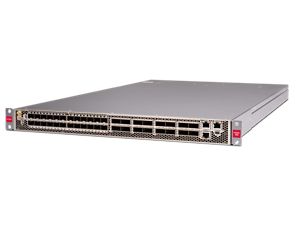
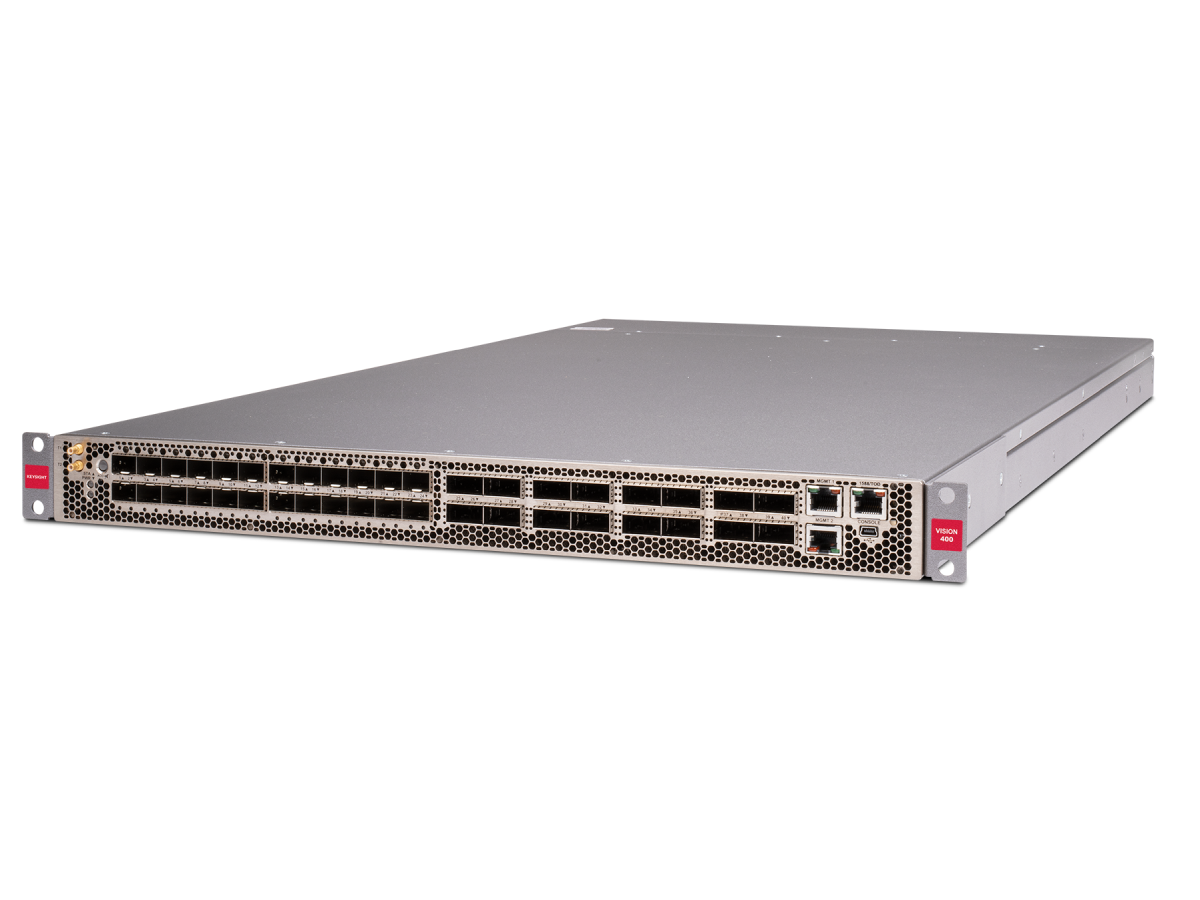
Keysight APS-100/400 systems deliver unmatched performance and scale for advanced security validation and application traffic testing. Built around high-speed compute nodes and dense I/O modules, this platform supports massive parallel workloads, ultra-high throughput, and detailed threat modeling. Ideal for validating next-generation infrastructure, including cloud networks, 5G cores, and large-scale enterprise deployments, the APS-100/400 systems ensure realistic performance under extreme traffic conditions and evolving threat landscapes. Request a quote for one of our popular configurations today. Need help selecting? Check out the resources below.
Massive port scalability
Scale from 100GE to 400GE while maintaining deterministic packet timing and multi-terabit throughput. Stress firewalls, load balancers, and gateways under real-world traffic conditions.
Compute-driven test engines
Purpose-built packet engines handle TLS handshakes, protocol fuzzing, and complex application flows without CPU bottlenecks, ensuring consistent, true-to-life stress testing.
Compatible with security test stacks
Integrates with BreakingPoint, IxLoad, and automation frameworks. Combine realistic traffic with attack libraries and workflows for comprehensive validation.
Optimized for modern networks
Emulate 5G slices, NFV workloads, and hybrid data center traffic with precision. Validate resilience against encrypted traffic, evolving threats, and multi-tenant events.
-
Ports
4 to 8
-
Interface
QSFP-DD, QSFP28
-
Interface speed modes
400GE, 200GE, 100GE, 50GE, 40GE, 25GE, 10GE
-
Software compatibility
BreakingPoint, IxLoad
-
Additional features
Fusion; seven-speed, Fusion; triple-speed
Most popular configurations
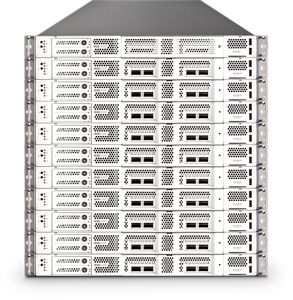

APS-ONE-100 Compute Node with 4 x 100GE Front I/O Ports
APS-ONE-100 Compute Node for IxLoad with 4 x 100GE Front I/O Ports
APS-M8400 8-Port 400GE QSFP-DD Appliance, View PCNs
- The Ultimate Network Security Black Book
- What You Can Do to Strengthen Cloud Security
- Unmasking Network and Data Evasions
Services and support
Innovate at speed with curated support plans and prioritized response and turn-around times.
Get predictable, lease-based subscriptions and full lifecycle management solutions—so you reach your business goals faster.
Experience elevated service as a KeysightCare subscriber to get committed technical response and more.
Ensure your test system performs to specification and meets local and global standards.
Make measurements quickly with in-house, instructor-led training, and eLearning.
Download Keysight software or update your software to the newest version.
Frequently asked questions
Hardware acceleration systems are purpose-built appliances designed to complement and enhance software-based security test platforms. Instead of relying solely on general-purpose servers or virtualized environments, which can be constrained by CPU scheduling, memory contention, or virtual NIC overhead, these systems provide dedicated packet engines optimized for high-throughput, deterministic traffic generation.
By offloading traffic creation and protocol handling from the host software, hardware acceleration enables test teams to scale to extremely high bandwidths, ranging from tens to hundreds of gigabits per second, while maintaining precise inter-packet timing, consistent latency, and accurate protocol emulation. This allows testers to simulate complex, real-world scenarios such as encrypted sessions, multi-vector attack campaigns, or tenant-to-tenant traffic in cloud environments without artificial bottlenecks introduced by software limitations.
The result is more realistic and repeatable validation of security and performance across next-generation firewalls, intrusion prevention systems, load balancers, or deep packet inspection solutions. Organizations benefit from the ability to stress devices under test with line-rate traffic, expose performance ceilings, and uncover subtle issues in packet processing, security policy enforcement, or encrypted flow handling.
In short, hardware acceleration systems bridge the gap between software flexibility and hardware precision, delivering the scale, speed, and fidelity required to validate modern network infrastructure under demanding, real-world conditions.
Software-only test tools, while flexible and cost-effective, are inherently constrained by general-purpose compute and networking stacks. They rely on virtual network interface cards (NICs), hypervisors, and OS-level scheduling, which introduce variability in packet timing, jitter, and throughput. When testing devices that operate at 40GE, 100GE, or 400GE, these platforms cannot consistently saturate the links or maintain line-rate performance across multiple flows, especially when complex protocol stacks or encryption are involved.
Additionally, CPU and memory contention in shared environments can result in packet drops, timing drift, or artificial bottlenecks. Hardware-based appliances like the APS-100/400 overcome these limitations by using dedicated FPGAs and NICs optimized for high-throughput traffic generation, protocol handling, and per-flow customization, ensuring that test conditions remain accurate, repeatable, and free from system-induced noise or artifacts.
When validating high-performance security devices, such as next-gen firewalls (NGFWs), intrusion prevention systems (IPS), and application layer gateways, it’s critical to subject them to traffic that mimics the volume, variety, and velocity of real-world conditions. Virtual test methods often fall short when the device under test (DUT) expects line-rate traffic with minimal latency variation and consistent session distribution. APS hardware accelerators provide just that. They deliver deterministic traffic shaping with microsecond-level precision, support millions of concurrent flows, and emulate encrypted and application-level traffic patterns at high bandwidth.
This means you can fully exercise DUT behavior under both volumetric attack scenarios (e.g., DDoS floods) and targeted exploit campaigns, while also assessing how deep packet inspection or transport layer security (TLS) decryption impacts throughput. The result is a true-to-life performance and security benchmark that informs capacity planning, tuning, and hardening efforts far more effectively than virtual-only methods.
Absolutely. The APS-100 and APS-400 are purpose-built for validating infrastructure that handles massive east-west and north-south traffic flows, such as spine-leaf data center fabrics, carrier-grade firewalls, and core routers. With support for multi-terabit test scenarios, they allow engineers to generate millions of sessions with diverse traffic profiles, mix control and data plane protocols, and validate Quality of Service (QoS), queuing, and load balancing strategies under real-world stress.
APS systems can simulate tenant-to-tenant traffic, border gateway protocol (BGP) convergence events, or TLS handshakes across thousands of clients, enabling you to test for session affinity, failover behavior, and packet reordering under load. This is particularly valuable for operators implementing 5G core, cloud-native edge, or multi-tenant network slices, where performance degradation under peak load can lead to SLA violations or service outages. By using APS in conjunction with BreakingPoint or Cyperf, you can benchmark and prequalify infrastructure before deployment—mitigating risk and optimizing performance.
Integrating APS appliances into your lab or validation pipeline is relatively straightforward but should follow best practices to maximize their effectiveness. First, they connect to BreakingPoint test controllers (physical or virtual) over management interfaces and to DUTs over high-speed test ports (QSFP+/QSFP28 or SFP28 interfaces depending on the model). You’ll need to ensure proper cabling, compatible optics, and sufficient port density on your DUT to match the traffic profiles you intend to generate.
APS appliances are controlled via the BreakingPoint UI or APIs, allowing centralized test orchestration, including scenario selection, flow customization, and real-time results collection. They also support tight integration with test automation frameworks (e.g., REST API, Python, Jenkins), enabling continuous validation workflows. Cooling, rack space, and power should be planned for, especially with the APS-400 which is designed for extremely high-throughput deployments. When configured properly, APS appliances deliver plug-and-play traffic acceleration, dramatically reducing test time while improving result fidelity in performance, security, and functional evaluations.