How to Select VNA Calibration Standards

Calibration Standards Selection
A vector network analyzer calibration setup uses a defined set of calibration standards and associated electrical definitions. The measurement begins by identifying the connector interface, reference impedance, frequency span, and calibration method required for the device under test. Standards such as open, short, load, and thru are selected according to the chosen method and their supported frequency range. The instrument must use the calibration kit definitions that correspond to the physical standards connected at each step. The operator checks connector compatibility and inspects the mating interfaces before applying the calibration sequence. The resulting error correction establishes a reference plane for subsequent scattering-parameter measurements.
After calibration, measurements are verified using an appropriate independent device or known standard. The engineer compares measured reflection and transmission responses against expected behavior, accounting for device characteristics and uncertainty rather than assuming calibration guarantees accuracy. Deviations are investigated through connector repeatability, standard definitions, and kit selection. Multiport setups also require the port configuration and through connections specified by the selected calibration method. Records include the kit identifier, standard definitions, frequency range, method, and verification results. This workflow treats standard selection, error correction, and independent verification as distinct stages of network analyzer calibration.

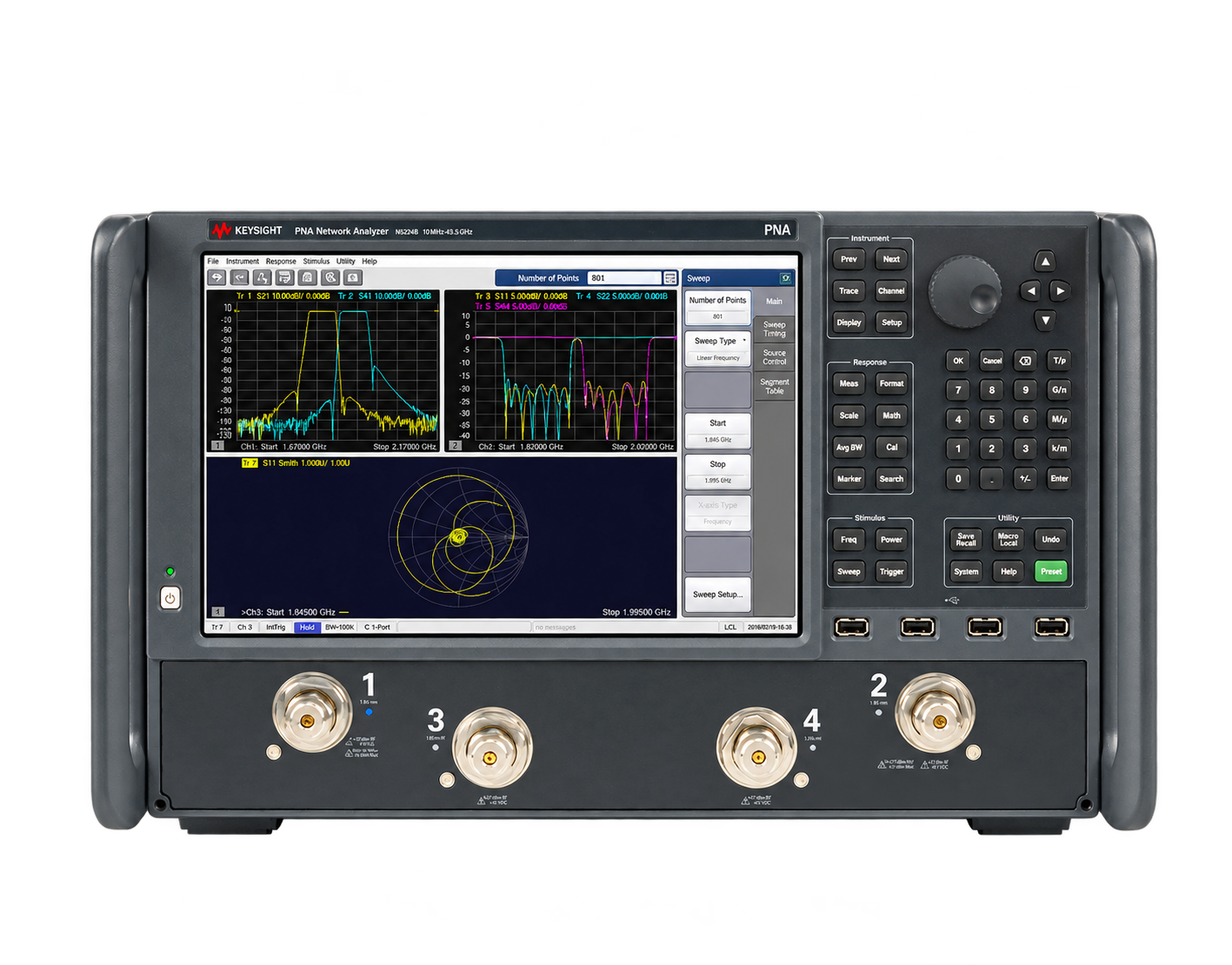
Selecting VNA Calibration Standards Solution
Perform vector network analyzer (VNA) calibration using compatible calibration standards, suitable radio frequency (RF) interconnects, and a calibration method matched to the device under test (DUT). The solution uses defined electrical characteristics of calibration standards to establish accurate measurement reference planes and correct systematic measurement errors. The calibration workflow begins by identifying the connector interface, reference impedance, frequency range, and required measurement configuration. Engineers select appropriate open, short, load, and thru standards based on the chosen calibration method and supported frequency range. The analyzer measures these standards and calculates error-correction coefficients to compensate for systematic errors affecting reflection and transmission measurements.
After calibration, engineers perform verification measurements using an independent verification standard or a device with known characteristics. Measured scattering parameters (S-parameters) are compared against expected values, accounting for verification uncertainty and connection repeatability. This process helps confirm calibration quality before proceeding with device characterization.
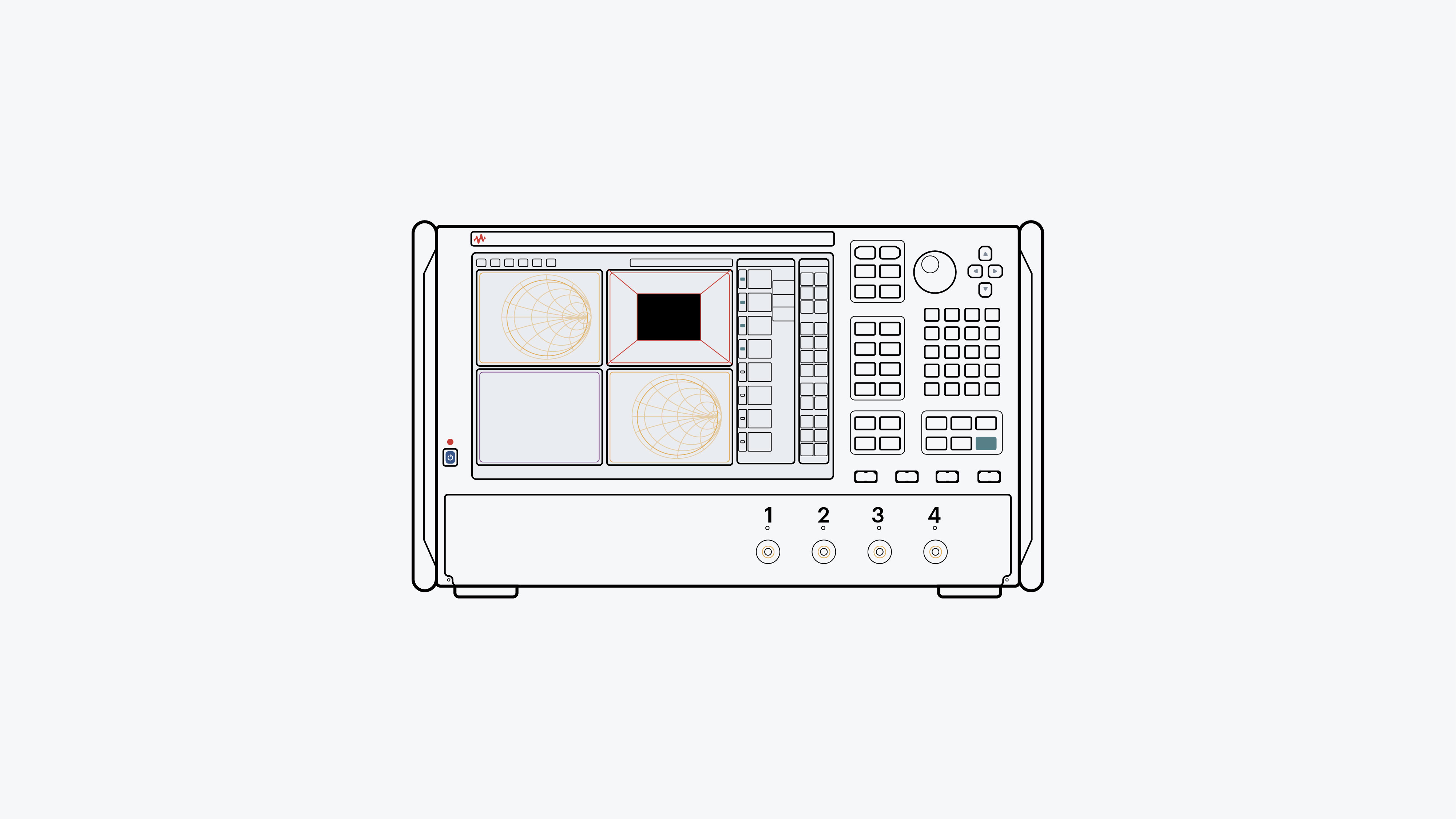
See Block Diagram of Selecting VNA Calibration Standards Solution


Explore Products in Our Selecting VNA Calibration Standards Solution
-

![]()
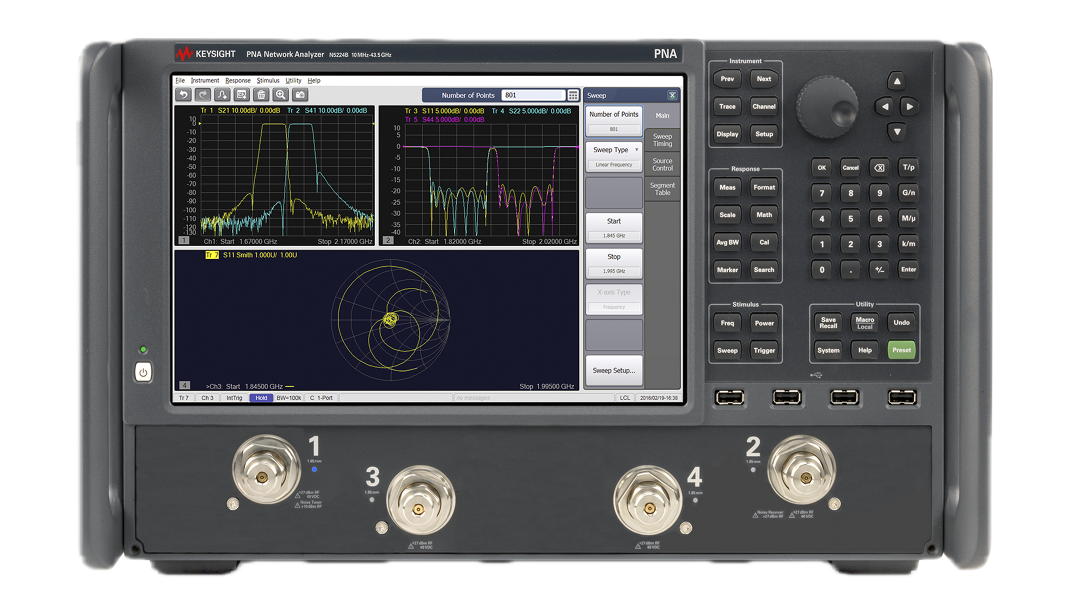
N5224B PNA Microwave Network Analyzer

Discover Resources and Insights
Additional Resources for Selecting VNA Calibration Standards
Related Use Cases

-
![]()
Learn More
How to Measure Frequency Converter Phase Noise
Measuring frequency converter phase noise requires the capture of many parameters, including gain, phase, delay, intermodulation distortion, and noise figure. Learn how to set up a test to characterize frequency converters using a combination of signal generation and analysis tools.
Learn More

-
![]()
Learn More
How to Characterize Low-Loss Materials for 5G
Characterizing low-loss materials for 5G requires understanding their electromagnetic properties. Learn how to determine permittivity, permeability, and other characteristics using a network analyzer and material measurement software.
Learn More
-
![]()
Learn More
How to Measure Residual Phase Noise in Components
Measure residual phase noise added by RF components to isolate intrinsic noise and optimize system-level performance using phase noise analyzer and automated measurement control and data logging software.
Learn More

Get in Touch with One of Our Experts
Need help finding the right solution for you?