











- Overview
- All Models
- Support
Build Practical Expertise in Fault Injection Testing
Training Targets provide a practical and controlled environment for learning, developing, and validating fault injection techniques. Designed to model the behavior of modern embedded devices, these platforms enable security engineers, researchers, evaluation laboratories, and development teams to gain hands-on experience with real-world fault injection attacks without risking production hardware.
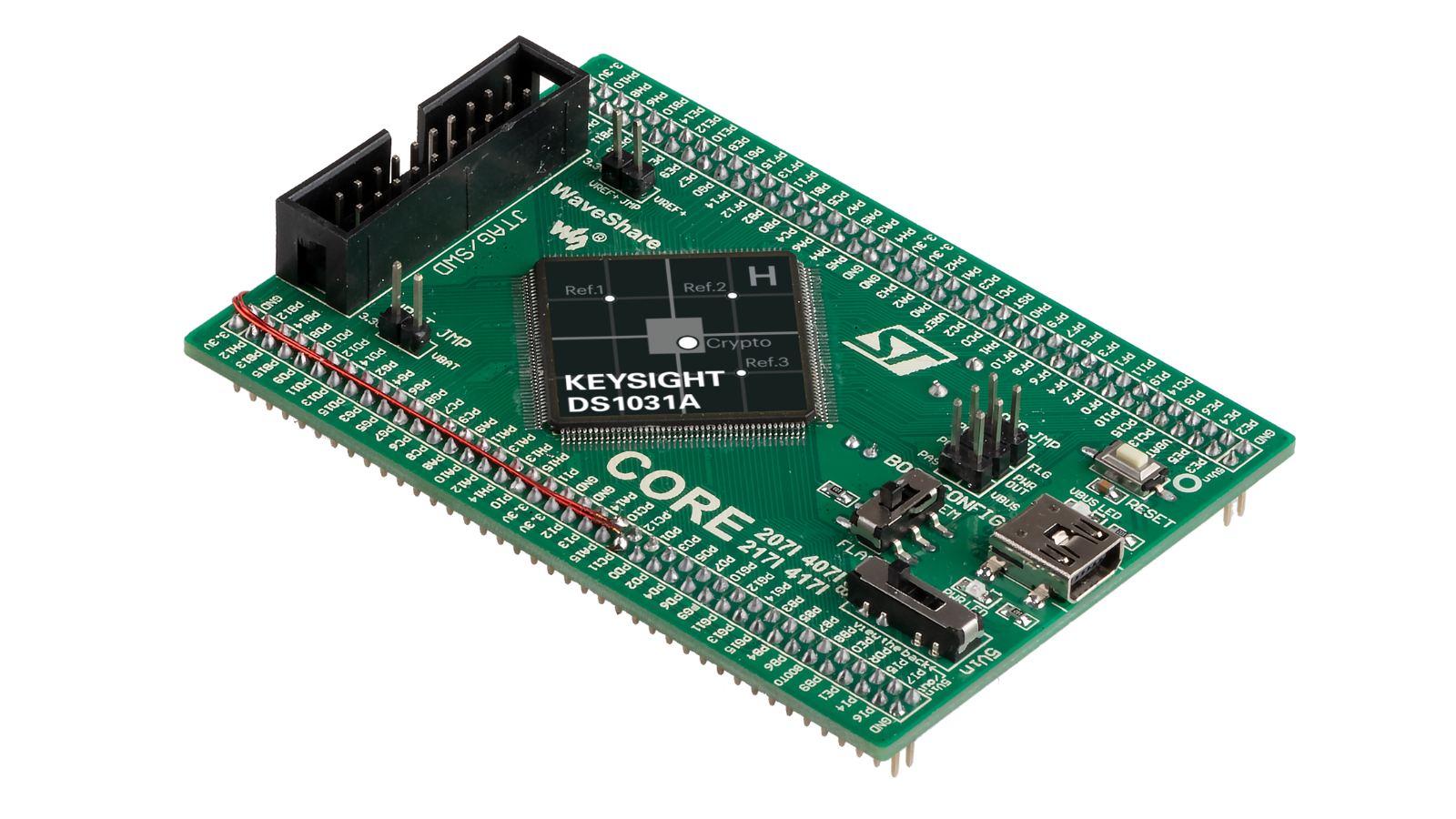
The DS1030A and DS1031A Training Targets are based on ARM Cortex-M4 architectures and have been specifically modified to support advanced fault injection evaluations. They include a range of cryptographic implementations, configurable countermeasures, and documented attack points, allowing users to explore how voltage, electromagnetic, optical, and timing-based faults can influence device behavior. By providing realistic targets with repeatable characteristics, these platforms help users better understand fault mechanisms, attack execution, and vulnerability discovery.
Integrated with the Inspector software suite and supported by source code and development tools, the Training Targets can also be used for prototyping, research, and custom experimentation. Whether used for education, tool validation, certification preparation, countermeasure evaluation, or security research, they provide a reliable foundation for building hands-on fault injection expertise and accelerating hardware security testing workflows.
Explore Real-World Fault Injection Attacks
Perform voltage, electromagnetic, optical, and timing-based fault injection experiments using realistic embedded targets.
Validate Security Countermeasures
Assess the effectiveness of protective mechanisms and observe how devices respond to different fault conditions.
Accelerate Learning and Research
Combine training hardware, source code, and software tools in a single platform for education, experimentation, and development.
Build Repeatable Test Scenarios
Leverage documented attack points and stable target behavior to reproduce results and compare testing methodologies.
-
Memory
1 MB Flash, 196 KB SRAM
-
Instrument Type
ARM Cortex-M4F Development Board
-
Frequency
168 MHz
-
Product type
Hardware crypto training target, Software crypto training target
-
Technology
Device Security
Most Popular Configurations
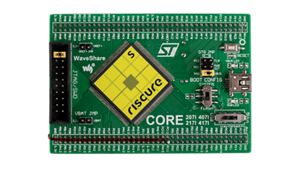

Software Crypto Training Target
The DS1030A Software Crypto Training Target is a training target and development/prototyping board for side channel analysis and fault injection.
The DS1030A Software Crypto Training Target is a training target and development/prototyping board for side channel analysis and fault injection.
Hardware Crypto Training Target
The DS1031A Hardware Crypto Training Target is a training target and development/prototyping board for side channel analysis and fault injection.
The DS1031A Hardware Crypto Training Target is a training target and development/prototyping board for side channel analysis and fault injection.
Services and support
Innovate at speed with curated support plans and prioritized response and turn-around times.
Get predictable, lease-based subscriptions and full lifecycle management solutions—so you reach your business goals faster.
Experience elevated service as a KeysightCare subscriber to get committed technical response and more.
Ensure your test system performs to specification and meets local and global standards.
Make measurements quickly with in-house, instructor-led training, and eLearning.
Download Keysight software or update your software to the newest version.
Frequently Asked Questions
A training target is a purpose-built hardware platform designed to help users learn, develop, and validate fault injection techniques. Unlike production devices, training targets are specifically engineered to expose security-relevant behavior and provide a repeatable environment for experimentation.
Training targets provide documented attack points, known cryptographic implementations, and predictable behavior, allowing users to focus on learning fault injection techniques and evaluation methodologies without the risk of damaging production hardware or disrupting development activities.
Training Targets are commonly used by:
- Hardware security researchers
- Evaluation laboratories
- Product security teams
- Certification facilities
- Universities and research institutions
- Engineers new to fault injection testing
The Training Targets support a variety of fault injection evaluations, including:
- Voltage fault injection
- Electromagnetic fault injection (EMFI)
- Optical fault injection
- Clock glitching
- Boot glitching
- Differential Fault Analysis (DFA)
The DS1030A focuses primarily on software-based cryptographic implementations, while the DS1031A includes hardware cryptographic functionality that more closely resembles the hardware accelerators found in modern secure devices. Together, they allow users to explore different fault injection attack methods, fault effects, and security challenges.
Software and hardware cryptographic implementations often respond differently to fault injection attacks and implement different protection mechanisms. Evaluating both provides a broader understanding of real-world targets, as production devices may implement cryptography in software, hardware, or a combination of both.
Yes. The Training Targets include configurable countermeasures that allow users to observe how security protections affect fault injection attack success rates and device behavior under fault conditions.
Yes. They provide a structured and repeatable environment for learning fault injection concepts and attack methodologies. At the same time, they are sophisticated enough to support advanced research, tool validation, and professional security evaluations.
Yes. The platforms are specifically designed to support both methodologies, allowing users to perform active fault injection attacks as well as passive side-channel measurements using the same target hardware.
The Training Targets integrate seamlessly with the Inspector software suite for test automation, execution, analysis, and reporting. They also include source code, development tools, and documentation, enabling custom experimentation and prototyping.
Yes. Source code, development tools, and documentation are provided to support customization, prototyping, research activities, and the development of new attack scenarios
The best choice depends on your evaluation goals. The DS1030A is ideal for exploring software-based cryptographic implementations, while the DS1031A enables evaluation of hardware cryptographic functionality and related fault injection attack scenarios. The Keysight Device Security team can help recommend the most appropriate platform for your training and research objectives.
The Training Targets support a range of fault injection methodologies, including voltage glitching, electromagnetic fault injection, optical fault injection, and timing-based attacks. This enables users to gain hands-on experience with many of the techniques used in real-world hardware security assessments.