










- Overview
- All Models
- Support
Pattern generation and error detection for digital validation
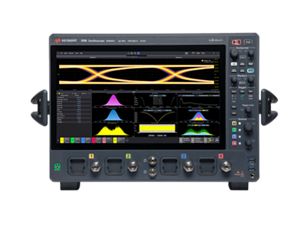
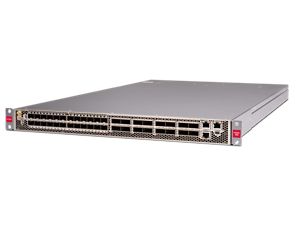
Keysight XE8-class bit error ratio testers (BERTs) are designed for high-speed digital interface testing, enabling you to accurately characterize, validate, and stress test digital receivers. BERTs are modular instruments consisting of a pattern generator, an error detector or analyzer, and a clock data recover module. Used across a wide range of applications — including data center interconnects, optical transceivers, high-speed memory interfaces, and next-generation serial buses — Keysight BERTs support critical standards including PCIe®, DDR, USB, and Ethernet (100G / 400G / 800G / 1.6T). Choose from one of our most popular BERT configurations based on supported data rates and line coding or configure one specific to your application needs.
Fast data rates
Provides precise pattern generation, error detection, and advanced timing analysis at 32 Gbaud and beyond, ensuring signal integrity of high-speed transmissions.
Modular, scalable design
Enables flexible system configuration to meet specific testing needs and adapt to evolving standards, higher data rates, broader test coverage, and multi-channel testing.
Standards compliance
Automates complex receiver compliance tests for industry standards, ensuring devices meet required specifications for performance and interoperability.
Enhanced signal processing
Integrated advanced technologies — de-emphasis, adjustable ISI, clock recovery, and equalization — reduce setup time, minimize calibration, and streamline testing workflows.
-
Supported data rates
32 Gbaud to 120 Gbaud
-
Number of channels
1 to 2
-
Module type
Pattern Generator, Error Analyzer
-
Line coding
NRZ, PAM3, PAM4, PAM6, PAM8
Most popular configurations
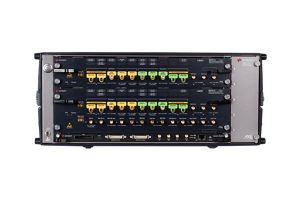

XE8-class Bit Error Ratio Tester
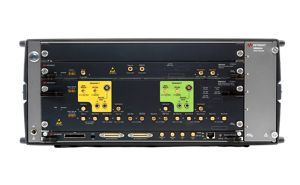

XE8-class Bit Error Ratio Tester
.png)
.png)
XE8-class Bit Error Ratio Tester
Services and support
Innovate at speed with curated support plans and prioritized response and turn-around times.
Get predictable, lease-based subscriptions and full lifecycle management solutions—so you reach your business goals faster.
Experience elevated service as a KeysightCare subscriber to get committed technical response and more.
Ensure your test system performs to specification and meets local and global standards.
Make measurements quickly with in-house, instructor-led training, and eLearning.
Download Keysight software or update your software to the newest version.
Frequently asked questions
A bit error ratio tester (BERT) compares the number of errors received in the data stream through the communications channel with the originally sent data stream. The resulting bit error rate (BER) indicates the number of errors introduced by the transmission channel. BER is the number of bit errors divided by the total number of bits sent. Bit errors can arise from noise, distortion, failed bit synchronization, and other transmission anomalies. This test validates the performance of communications data links by providing a measurement of the errors introduced by the transmission channel, helping to assess the integrity and reliability of the system.
When selecting a BERT, it's important to evaluate several key factors to ensure it meets the specific requirements of your testing environment. Two of the most critical considerations are the supported data rates and line coding compatibility.
Supported Data Rates
One of the most crucial factors to consider when selecting a BERT is the maximum data rate it supports. The data rate refers to the speed at which digital data is transmitted over a communication channel, typically measured in bits per second (bps) or symbols per second (baud), depending on the modulation scheme. To ensure accurate and meaningful testing, the BERT must be capable of generating and analyzing signals at or above the data rate of the system under test.
Modern high-speed communication systems, such as fiber optic links, high-speed Ethernet, and 5G infrastructure, operate at extremely high data rates, often ranging from 10s to 100s of Gbaud. These applications demand a BERT that can support multi-gigabit speeds while maintaining signal integrity and precise timing. Using a BERT with insufficient data rate capacity can lead to incomplete testing or inaccurate results.
Always ensure the selected BERT matches or exceeds the performance of your network or device under test, particularly if you are working with next-generation standards like 400G Ethernet, PAM4-based signaling, or coherent optical systems.
Line Coding
Different communication systems use various line coding schemes, such as Non-Return to Zero (NRZ) and Pulse Amplitude Modulation (PAM). The BERT you choose should support the specific line coding scheme(s) used in your system to ensure accurate bit error rate measurements. Some BERTs are flexible and support multiple line coding schemes, while others are designed for specific coding standards.
- Non-return-to-zero (NRZ): NRZ is one of the most widely used and fundamental line coding schemes in digital communications. It represents binary data using two distinct voltage levels — typically a high voltage for a binary "1" and a low (or zero) voltage for a binary "0". Unlike some other encoding methods, NRZ does not return to a neutral or baseline level between bits, which helps to conserve bandwidth and simplifies signal generation. However, NRZ lacks inherent timing information, making it prone to synchronization issues during long runs of identical bits. This is where BERT testing becomes essential — by generating and analyzing data patterns, a BERT helps identify synchronization issues, detect bit errors, and ensure the overall integrity of communication links using NRZ coding schemes.
- Pulse amplitude modulation (PAM): PAM is a multi-level signaling technique used in high-speed communication systems to increase data throughput without requiring additional bandwidth. In formats like PAM8, each symbol represents 3 bits of information by using eight distinct amplitude levels. This allows significantly more data to be transmitted per symbol compared to traditional binary signaling. For example, PAM4, commonly used in 100G Ethernet, encodes 2 bits per symbol, while PAM8 pushes that further for even higher-speed applications, such as 400G Ethernet and emerging terabit-scale interconnects. However, higher-order PAM schemes like PAM8 are more susceptible to noise and signal degradation, which makes accurate bit error testing even more critical.