













- Overview
- All Models
- Support
Validate your 5G device with thorough 5G RF and RRM test plans.
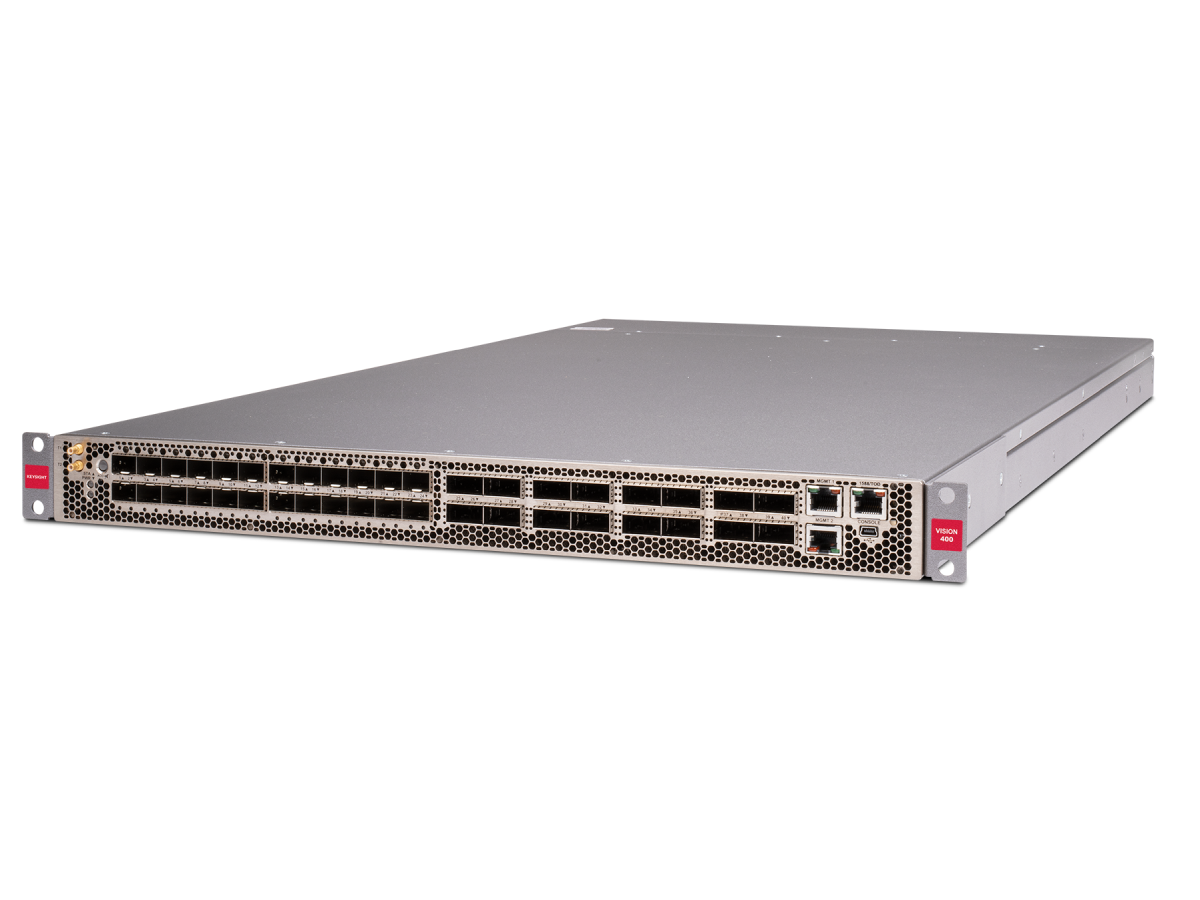
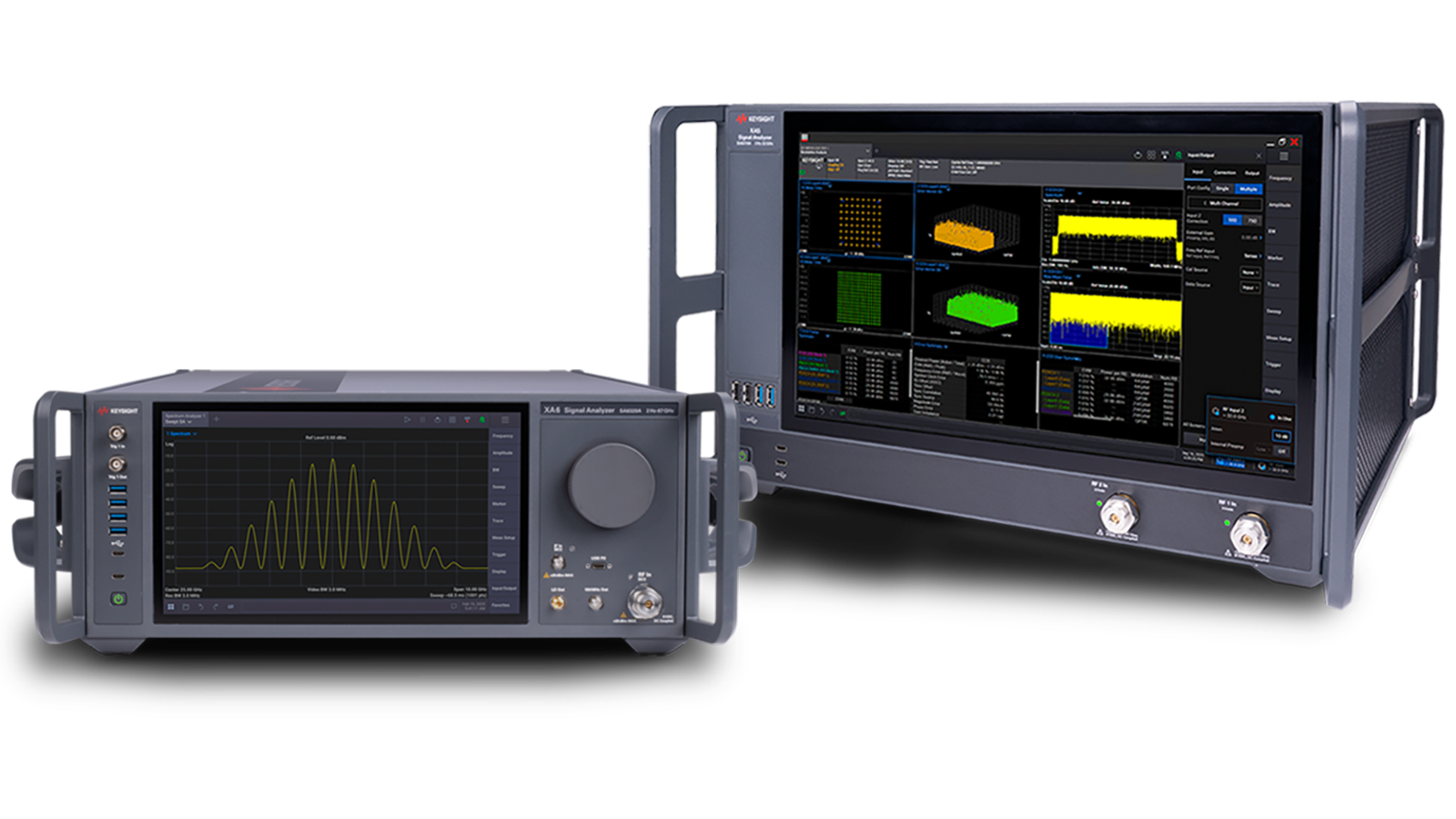
The RF / RRM Carrier Acceptance Toolset provides comprehensive access to RF / radio resource management (RRM) carrier acceptance test plans mandated by the world’s 5G major network operators (MNOs). The integrated software and hardware toolset enables RF performance testing of 5G devices against MNO-defined test specifications across frequency range 1 (sub-6 GHz) and frequency range 2 (FR2, mmWave), including support for non-terrestrial networks (NTNs) for satellite-based connectivity. The toolset also covers RRM and performance testing to characterize the RF performance of 5G devices fully. Request a quote for the RF / RRM Carrier Acceptance Toolset today. Want to learn more about this solution? Explore the resources below.
Alignment with MNO requirements
Keysight works with MNOs and suppliers to define, implement, and validate the toolset's test cases based on their feature roadmap.
In- and out-of-band testing
Supports in-band cases for transmitter / receiver performance and out-of-band measurements for spurious emissions, blocking, and interference resistance.
Integrated AWGN and fading
Generates interferers for blocking test cases, including additive white Gaussian noise (AWGN), and provides fading without additional test equipment.
Scales with test needs
The solution extends from a single-instrument setup to a full-rack solution, adapting to meet your lab test needs.
-
Technology
5G NR, LTE, NB-IoT
-
Test types
RF, RRM, Data Throughput
-
Use cases
Carrier Acceptance (RF/RRM)
Typical configuration
RF/RRM Carrier Acceptance Toolset
- Explore Our Cellular Device Testing Catalog
- RF / RRM Carrier Acceptance Toolset Technical Brochure
- Introducing the RF / RRM Carrier Acceptance Toolset
Services and support
Innovate at speed with curated support plans and prioritized response and turn-around times.
Get predictable, lease-based subscriptions and full lifecycle management solutions—so you reach your business goals faster.
Experience elevated service as a KeysightCare subscriber to get committed technical response and more.
Ensure your test system performs to specification and meets local and global standards.
Make measurements quickly with in-house, instructor-led training, and eLearning.
Download Keysight software or update your software to the newest version.
Frequently asked questions
The carrier acceptance test (CAT) is a crucial phase in the device workflow, bridging the gap between conformance and manufacturing. CAT aims to ensure that devices meet user expectations in terms of functionality and performance. 5G devices need to meet the key performance indicators (KPI) of specific mobile networks to achieve that goal.
Operator device acceptance programs can span several aspects, including:
- Network vendor interoperability enables devices to run on infrastructure equipment from different vendors.
- Field trials are conducted to ensure that devices operate in different locations and usage scenarios.
- Conformance to ensure device compliance with 3GPP requirements and regulations for emissions and safety.
- Network simulation for device performance and interoperability.
All operators conduct network vendor interoperability testing and field trials. Many now perform conformance testing as well as network simulation. In addition, CAT programs focus on features and functions specific to each operator’s network.
5G represents a broad range of new services and paradigms. It requires testing a large matrix of use cases that vary widely. It also demands technical advancements to provide greater flexibility and scalability for its many new use cases. These changes increase the importance of validating device quality of experience (QoE) and performance on networks.
Device engineers are under significant pressure to deliver higher performance while accelerating conformance and CAT to progress to commercialization. Confidentiality is another hurdle faced by device engineers while trying to ensure successful device acceptance testing on the first try. However, there are solutions such as using conformance and CAT toolsets to test ahead of time. Spanning RF characteristics, radio resource management (RRM), and protocol, generic test suites represent the most likely network configurations and are sufficient for some use cases. If they are flexible conformance test solutions, they also allow the customization of test cases beyond the certification requirements, enabling device engineers to test for configurations and use cases that are specific to a given network. Network emulation capability allows engineers to verify devices under various scenarios in a lab environment.
Network operators must stress-test devices to ensure they meet customer expectations. For device manufacturers, performing CAT in the 5G era has thus become more important than it was with 4G. They need to proactively test their devices in their labs beyond 3GPP conformance tests and regulations to accelerate CAT for their devices. While this means that they are now performing tasks that would have previously only been done by carriers, these extra steps are necessary to win the 5G race.
Jumpstarting device acceptance test in the lab is easier said than done, though. However, solutions exist that address the challenges faced by device engineers.
Non-terrestrial networks (NTN) are wireless communication systems whose components are deployed in the Earth's atmosphere or space around the Earth, rather than on land.
NTN technologies use satellite systems or airborne platforms to provide telecommunication services in remote areas that are impractical for traditional terrestrial networks.
A drawback of current NTNs is that they're incompatible with traditional terrestrial networks. For example, SpaceX's Starlink is an NTN that provides internet access to millions of users worldwide through its satellite constellation. But even if users have smartphones and tablets equipped with perfectly capable radio transceivers, they still need an additional gateway device for Starlink internet access.
Fortunately, the 3rd Generation Partnership Project (3GPP), the organization that develops mobile communication standards, is addressing this incompatibility by incorporating the NTN ecosystem under the umbrella of 5G standards. This will enable 5G-compliant non-terrestrial networks to interwork seamlessly with terrestrial mobile networks, allowing users direct access to satellite mobile services from their smartphones and tablets. 5G NTNs are on the verge of dramatically improving global connectivity.
A 5G non-terrestrial networks consists of:
- User equipment (UE): UEs refer to the devices that communicate with a 5G network, such as smartphones or 5G Wi-Fi routers.
- Radio access network (RAN): To receive calls or data, the UEs communicate with a 5G RAN, a wireless network of radio transceivers (called base stations, gNodeBs, or gNBs) installed on towers in areas where 5G coverage is desired. The 5G New Radio (5G NR) standard specifies the radio frequencies it can use, which are either below 6 GHz (designated as FR1) or in the 28-60 GHz range (referred to as mmWave or FR2). Typically, RANs also support older standards, such as 4G Long-Term Evolution (LTE) and 3G.
- 5G core: This is the brain of a 5G network. RANs essentially relay voice and data from the UEs to the 5G core and back. The core consists of network devices and software systems that support all crucial mobile network capabilities, including voice calls, text messaging, internet connectivity, and more.
A gNB has a limited capacity to serve multiple users. So, network operators install one every 300-800 meters in densely populated areas and every 2-3 kilometers elsewhere. Obviously, covering every part of a country, let alone the entire planet, is impractical and expensive.
5G non-terrestrial networks, specified in the 3GPP 5G NR Release 17 standard, overcome such drawbacks by using satellites or airborne vehicles as radio transceivers in their RANs. This dramatically expands the coverage of 5G networks to most parts of the planet.