What are you looking for?
What Is Stray Light?
Definition of Stray Light
Stray light is any electromagnetic radiation that is unwanted and interferes with the performance of an optical system’s intended functions. Unwanted stray light can occur in either imaging or projection systems, although it is usually more critical to control the former. Stray light can originate from the object the optical system is capturing, from unintended external emitters, or, in the case of infrared-sensitive systems, it can originate from elements of the system itself emitting light due to their own heat.
Examples of stray light include:
- Light reflections off mechanical mounting surfaces inside the optical system
- Light leaking through a gap in the system enclosure
- Light scattering off dust and other imperfections on the system’s optical surfaces
- Sky glow, which is caused by the reflection of municipal lights from the atmosphere and affects ground-based astronomy
- The sun, Earth, and moon, which can affect orbiting telescopes
Table of Contents
Two Types of Stray Light
Stray light can be characterized in two distinct types: ghosts and flare or veiling glare.
Ghosts occur in imaging systems when light from a source in the image field undergoes two or more unwanted reflections and then falls on the imaging device, creating an unwanted ghost image. For digital cameras, one of the most common sources of ghost images is light that reflects off the imaging device back into the optical system and then reflects off a lens surface back to form a secondary image.
Flare, or veiling glare, generally occurs when light scatters inside the optical system either off imperfections in the optical surfaces, or off mechanical elements in the system. Veiling glare can also be caused by atmospheric reflection of light such as with haze or sky glow.
- Arise from unintended reflections between imaging surfaces
- Result from higher or unblocked diffractive orders generated by gratings
- Form through secondary imaging of bright scattering surfaces
Flare or veiling glare:
- Enter the image from sources outside the optical system’s field
- Originate from bright sources within the field of view or from thermal emission by warm surfaces
- Occur when light scatters within the optical system


Figure 1. Ghost example: Photo taken with a cell phone camera that clearly shows three sharply focused ghost images of the candle flames. There is also a fourth, extended ghost image centered on the middle sharp ghost image.
Why Is It Important to Find Stray Light in a Design?
Stray light can reduce the contrast of an image by adding unwanted light to the image. For example, stray light can:
- Reduce the sensitivity of detection systems.
- Create unappealing images in commercial imaging systems.
- Cause unwanted bright spots in the beam pattern of light projection systems.
How Does Software Help Find Stray Light?
Stray light can reduce the contrast of an image by adding unwanted light to the image. For example, stray light can:
- Reduce the sensitivity of detection systems.
- Create unappealing images in commercial imaging systems.
- Cause unwanted bright spots in the beam pattern of light projection systems.


Figure 2. Ghost example: A sequential ray trace of a single ghost image path. The light from an object in the field of view passes through the lens and forms an image on the detector at right. Some of the light is then reflected by the detector back into the lens. One of the lens surfaces then reflects the light back to the detector at a different location. This ghost image is of interest because the ghost light is nearly focused on the detector, which will lead to a much brighter ghost image than if the light were spread out over a larger area.
Flare can enter the optical system through many and often unexpected optical paths. You can use Monte Carlo software to investigate the contributions. Brute-force methods will randomly generate many rays and analyze how the energy is distributed through the model. Variance reduction methods can efficiently find contributions coming from paths that include low probability events such as high-angle scattering.


Figure 3. Unintended light example: Light from an object in the field of view scatters off the lens mount and then is reflected by a lens surface to the detector.
Computational Approaches to Simulating Stray Light
The analysis and control of stray light, composed of ghost images and flare, is an important but complex task for the design of imaging systems. Ghost images arise from multiple reflections from surfaces in the primary optical path. Ghost images that impinge on the image plane at or near a focus are of specific concern — flare can arise from light reflecting off lens mounts, nonoptical surfaces of the lenses (such as flats and edges), and the detector itself reimaged back onto the detector. Diffraction from the microstructure of the detector can also complicate the process of modeling light reflected from the detector.
Using Software to Model Stray Light

Model and Optimize Illumination System Designs
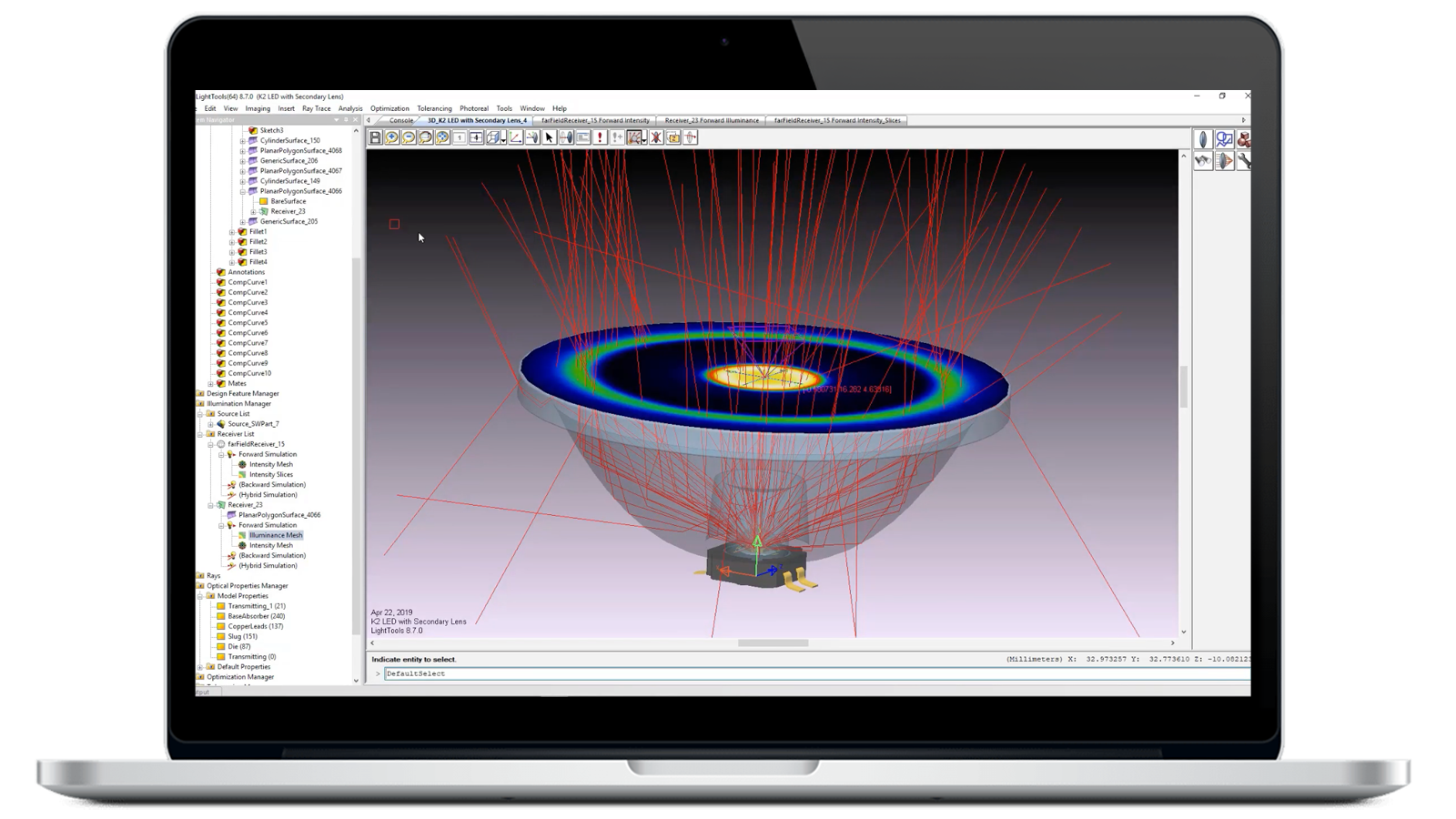
For designing general lighting, backlit displays, LEDs, and vehicle interior lighting, LightTools illumination design software models and optimizes illumination system designs. LightTools offers stray light analysis enhancements that augment the software's industry-leading design capabilities, reliability, and accuracy.


Figure 4. Ray History Sensor example: Edge light design ray restoration from a surface sensor.
Model and Simulate Automotive Lighting Designs
For modeling the design and real-time simulation of automotive forward, rear, and signal lighting, LucidShape software provides a complete set of design, simulation, and analysis tools.

Model, Analyze, and Optimize Optical Systems
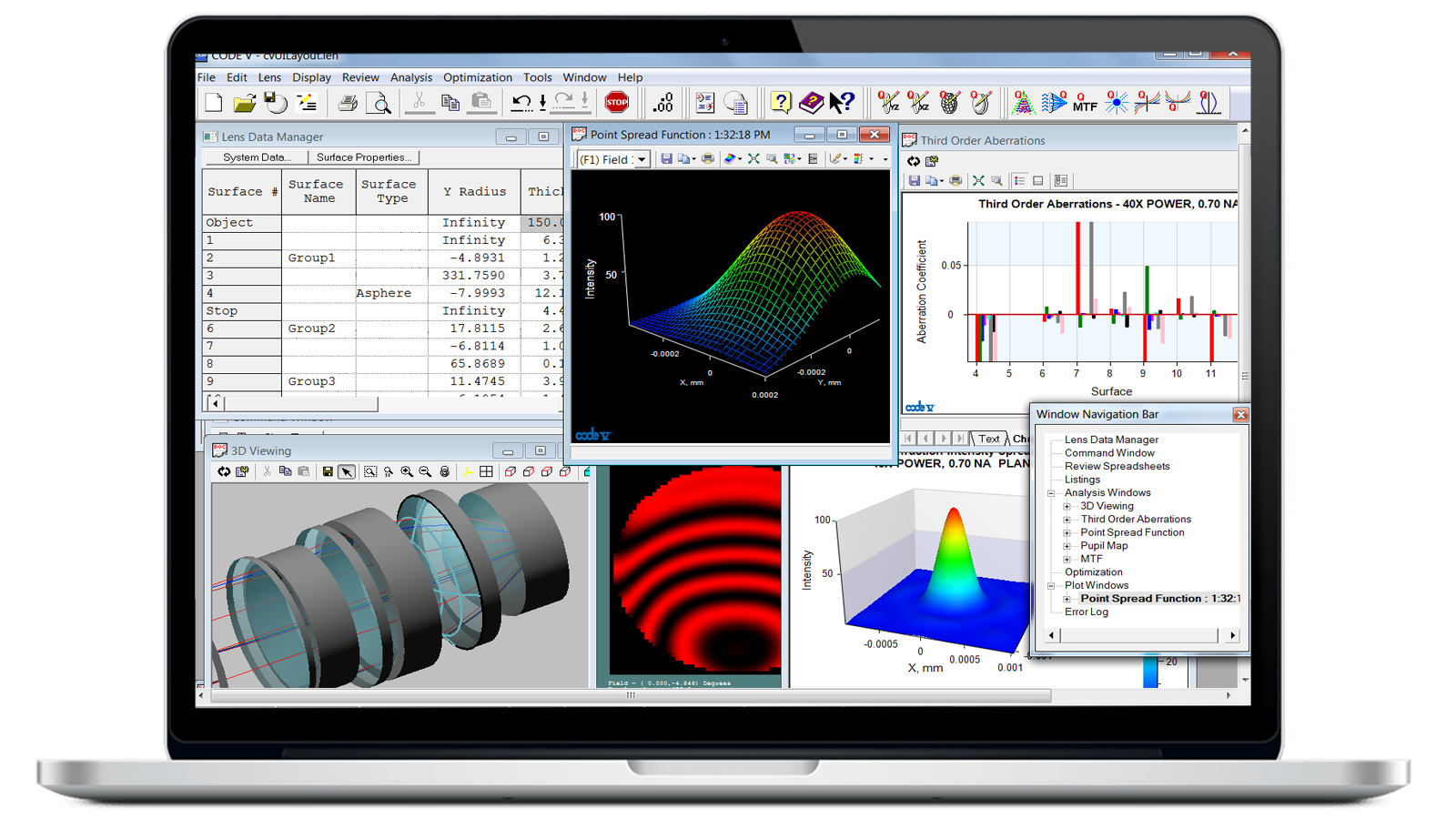
For software to model imaging or free-space telecommunication systems, CODE V is a computer-aided design software used to model, analyze, optimize, and provide fabrication support for the development of optical systems. Applications include aerospace, cameras, information display, microlithography, and photonics.

Simulate Scene Stray Light and Additive Stray Light Sources
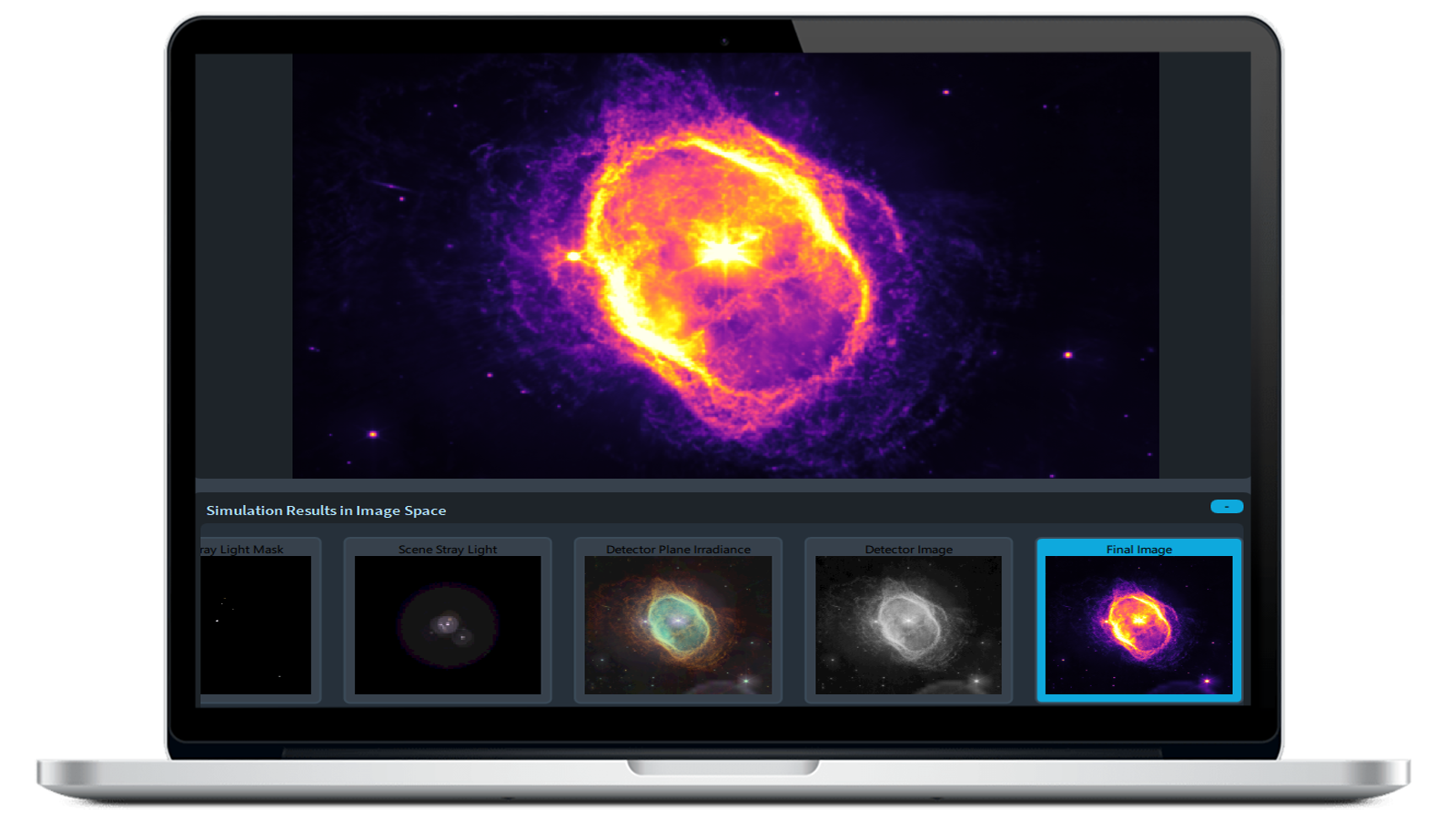
ImSym helps you understand the impact of unwanted light in your system and provides an end-to-end model of your imaging system before it goes to manufacturing. The model includes lenses, sensors, and image and signal processors (ISPs), allowing you to visualize images with precise, quantitative data. These capabilities streamline the development process, empowering you to deliver your next imaging product to market faster.
Stray Light Workflow
Here is a typical workflow for using Keysight software to analyze stray light in a camera system:


Model and Analyze Stray Light with Keysight
Our optical design engineering portfolio offers several software options for modeling and analyzing stray light. Choosing the right software depends on your application, and our products allow for cosimulations.


Explore Related Blogs


Want help or have questions?