












- Overview
- All Models
- Support
Versatile functional test platforms for end-of-line validation
Keysight functional test systems offer a modular, flexible solution for testing complex electronic assemblies. With precision measurement, high-density switching, configurable power delivery, and synchronized signal acquisition, the system supports a wide range of analog, digital, and mixed-signal applications. Built-in automation and real-time monitoring streamline test development and improve coverage, making it ideal for validating devices like automotive ECUs, industrial controllers, and embedded boards. Request a quote for one of our popular configurations today. Need help selecting? Check out the resources below.
Scalable, modular test platform
Easily configure, scale, and upgrade your test setup with modular instruments and switching, supporting diverse test needs and evolving product designs.
Synchronized multi-domain measurements
Capture analog, digital, and power signals simultaneously with time-aligned precision, crucial for validating functional behavior across complex systems.
High-density switching
Route multiple signals efficiently using advanced switching modules, enabling fast test sequencing and reducing fixture complexity in high-throughput environments.
Automated test control & sequencing
Simplify test execution with integrated software that automates sequences, logs data, and enables repeatable, reliable test procedures across units and batches.

-
Form factor
Complete test system - compact, Software, Complete test system, Switch/Load unit (SLU), Complete test system - PXI modular, Complete test system - Mac panel interface
-
Type
Functional Test System, Test Executive Software, Automotive Electronics Functional Test System, Switch Load Unit, Functional Test Platform, Functional Test Platform for EVSE
-
Platform
Modular / LAN, Windows 32 bit, VERSA Module Eurocard (VME), LAN, PXI and VME, PXI
Most popular configurations
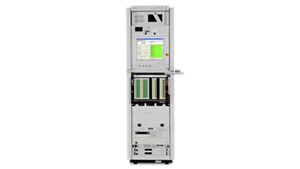
TS-5400 PXI Functional Test System with Mac Panel Interface
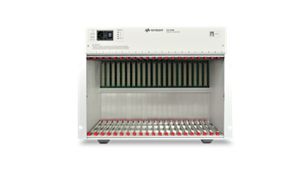

Keysight Switch/Load Unit (SLU)
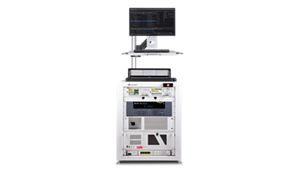

TS-5040 Compact Functional Test System
- How to Configure Signal and Load Switching
- How to Create Hardware Handler in C/C++
- How to Customizing TestExec SL Operator Interface
Services and support
Innovate at speed with curated support plans and prioritized response and turn-around times.
Get predictable, lease-based subscriptions and full lifecycle management solutions—so you reach your business goals faster.
Experience elevated service as a KeysightCare subscriber to get committed technical response and more.
Ensure your test system performs to specification and meets local and global standards.
Make measurements quickly with in-house, instructor-led training, and eLearning.
Download Keysight software or update your software to the newest version.
Frequently asked questions
A functional test system is designed to validate the performance and behavior of a fully assembled electronic device by simulating real-world operating conditions. Unlike in-circuit testing, which verifies components in isolation, functional testing evaluates how the entire system performs as a unit. This includes verifying digital and analog signals, communication interfaces, power-up behavior, response to inputs, and overall system logic. The system often interfaces with the device through custom fixtures, connectors, and test software that simulates user input or operating conditions.
Functional testers are essential during the final stage of the production line to catch faults that are not detectable through visual inspection or component-level tests. These faults could include firmware issues, timing errors, signal integrity problems, or misconfigured peripherals. The systems are flexible and programmable, supporting various devices from automotive control units to telecom modules. Their modular architecture allows them to be adapted easily for different test requirements and product types.
Ensuring accuracy and repeatability in functional testing depends on consistent hardware configurations, reliable signal routing, well-calibrated instrumentation, and standardized test procedures. Modern systems achieve this by utilizing modular test platforms where each module has defined performance specifications and is regularly calibrated to industry standards. These systems often include high-resolution analog measurement units, digital signal generators, programmable power supplies, and RF measurement capabilities—each integrated to support diverse testing scenarios.
Repeatability is also driven by automation. Test software runs pre-programmed scripts that control signal timing, test conditions, and response evaluation with minimal human intervention, reducing variability and operator error. Furthermore, advanced error-handling routines detect anomalies in signal behavior or instrument responses and flag failures with detailed logs.
Data from each test station can be logged and compared across shifts and facilities to detect drifts or systematic issues. This ensures that production quality remains consistent, even as units are tested on different days, by various operators, or at other locations.
Functional test systems are ideal for testing various electronic products across multiple industries. Typical applications include embedded systems, communication modules, automotive ECUs, consumer electronics, industrial controllers, and power management devices. Any product that must perform a complex set of functions in real-world conditions can benefit from this level of testing.
For instance, an automotive ECU may require testing for multiple CAN or LIN bus interfaces, analog sensor inputs, digital control outputs, and power-up sequencing. A telecom module might need to verify data transmission rates, signal timing, and response under simulated network traffic. Industrial controllers may require high-voltage I/O checks, protocol compliance, and thermal behavior validation.
Functional testing is especially valuable when involved in firmware, communication protocols, or timing-sensitive operations. Integrating temperature chambers or vibration tables can also support environmental and reliability testing. These systems are versatile and scalable, handling simple pass/fail logic to highly complex multi-domain tests.
Test automation significantly enhances efficiency, accuracy, and throughput in high-volume manufacturing environments. By automating functional testing, repetitive manual tasks such as signal switching, input simulation, data recording, and pass/fail evaluation are handled entirely by software-controlled sequences. This reduces test cycle time and eliminates inconsistencies caused by operator variability.
Automated test systems can run 24/7 with minimal supervision, providing manufacturing teams with consistent results and faster feedback. This is especially beneficial when testing complex devices where timing, signal synchronization, and multiple interfaces must be evaluated simultaneously. The automation software also enables traceability by logging results for each unit, along with test conditions and timestamps, which is critical for quality control and audits.
Moreover, automation facilitates rapid product changeovers. Engineers can load new test profiles or configurations with minimal downtime, which is crucial for flexible manufacturing lines that handle multiple product variants. Over time, the system contributes to reduced costs, improved yield, and better product reliability.
When choosing a functional test system, several features are essential for ensuring long-term usability, flexibility, and performance. First, modularity is key systems should support plug-in modules that provide functionalities like analog measurement, digital pattern generation, RF testing, or protocol decoding. This allows the system to be tailored to specific test requirements and easily reconfigured for future products.
Another critical feature is software integration. The test platform should offer robust software tools that support automated test sequence creation, real-time monitoring, and data logging. Integration with other factory systems like MES or ERP can streamline production workflows. Signal integrity and measurement accuracy should be thoroughly evaluated, especially if your device under test has tight timing or voltage margins.
Scalability is also important. Whether you are testing one device at a time or multiple units in parallel, the system should scale without significant hardware changes. Finally, support for various communication protocols (I²C, SPI, CAN, USB, Ethernet) ensures compatibility with modern embedded systems.