1.6T for AI Infrastructure

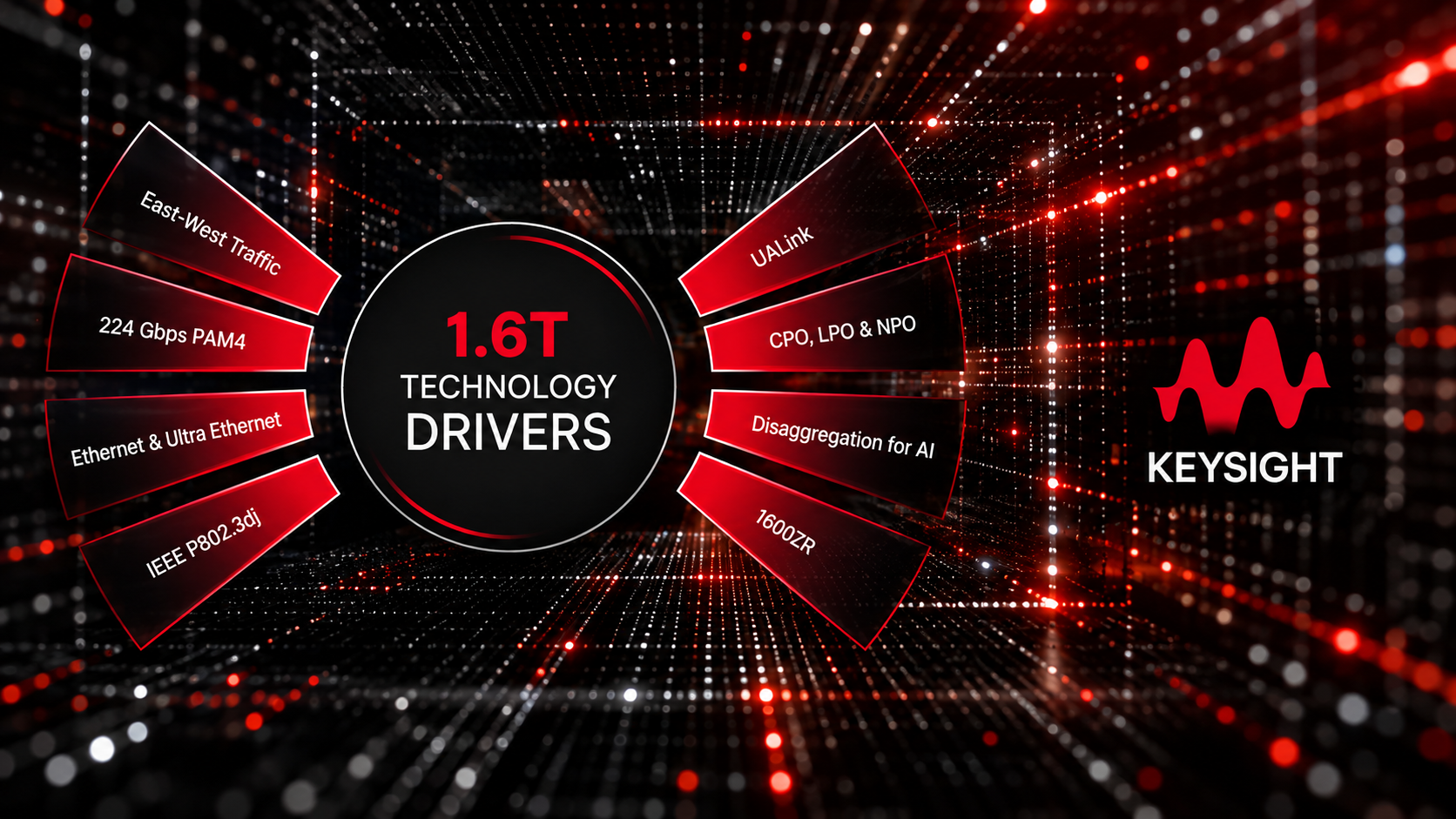
- Pathfinding
- Simulation
- Validation Test
- Conformance Test
- Manufacturing Test
Get the maximum bandwith and flexibility in signaling for the next big step ahead.
Real-World Signal Generation
Set up complex signals with the speed, bandwidth, precision, and flexibility to meet the challenges of next-generation AI data center deployments.

Signal Analysis
Gain deep insights into the real performance of AI-optimized optical and electrical components and systems at 110 GHz of bandwidth, an ultra-low noise floor, and 256 GSa/s sampling rate.
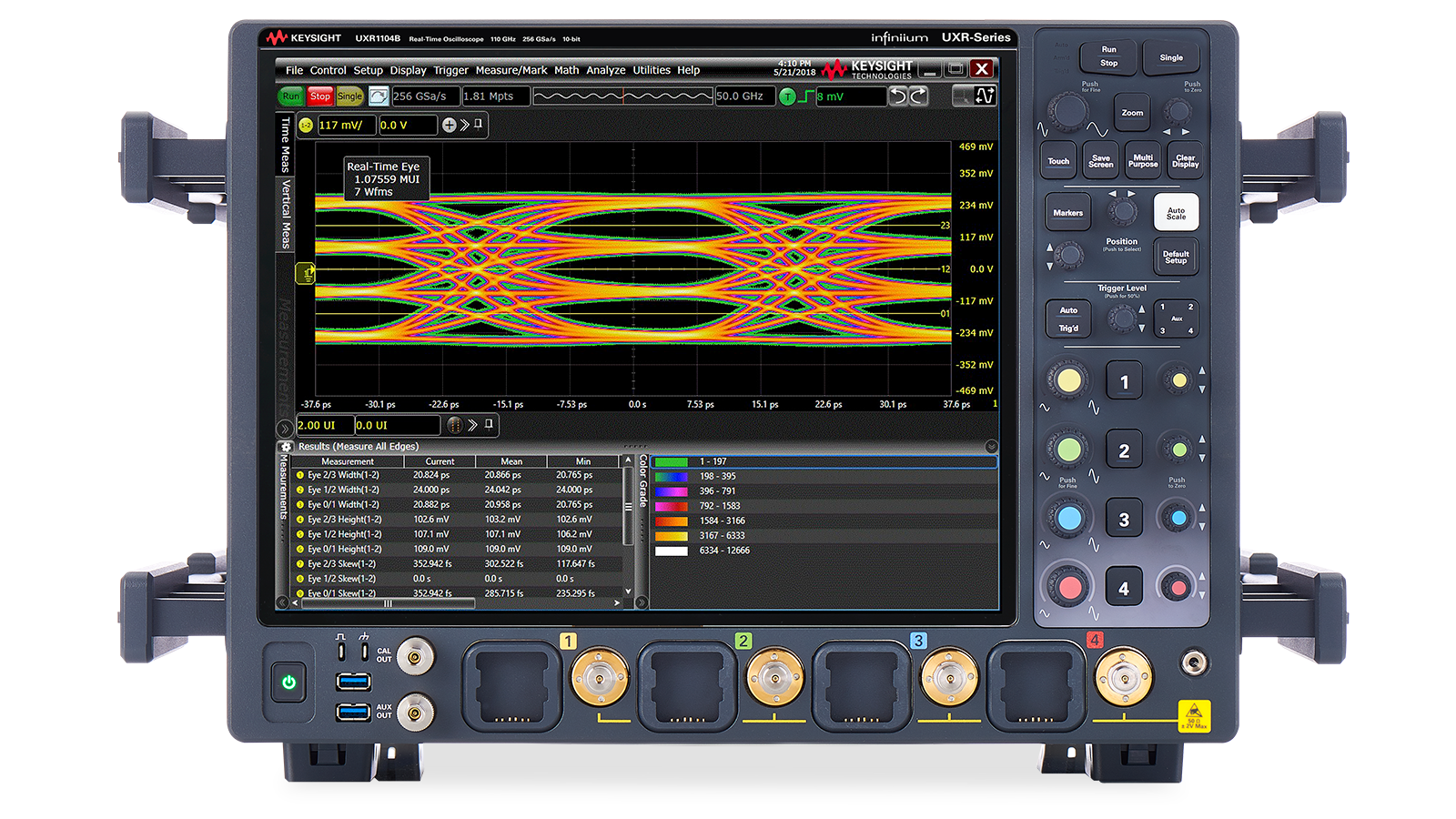
Accelerate prototyping for AI infrastructure with improved signal integrity measurements. Mitigate crosstalk with 16- or 32-port S-parameter measurements and multi-port channel analysis.
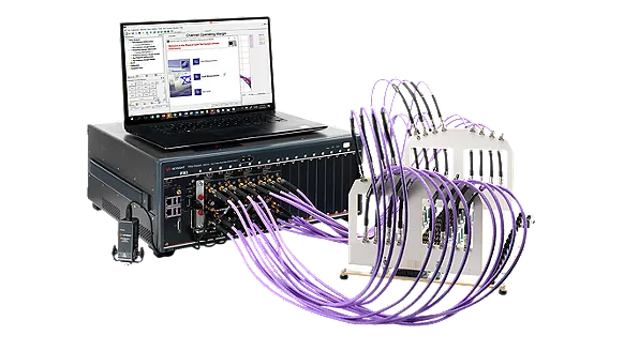
Electro-Optic Component Analysis
Verify AI-ready photonic integrated circuit designs. Characterize the swept modulation freqency response up to 220 GHz.
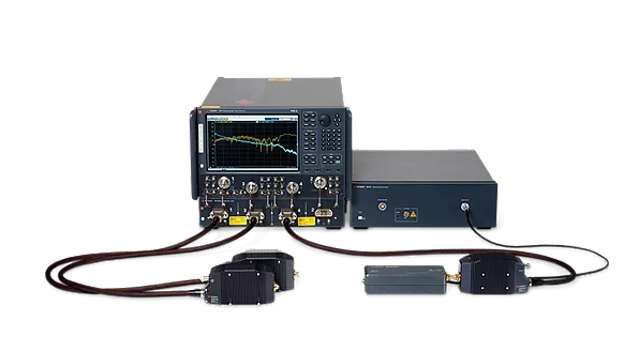
Shorten time to market while minimizing the risk of redesign. Manage rising design complexity and control high prototyping costs with efficient high-performance simulation tools.
Electronic Design Automation
Model, simulate, and optimize with EDA software.
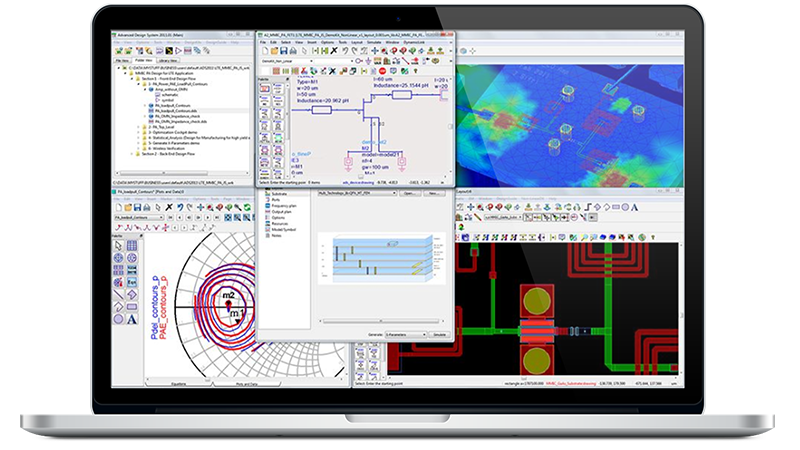
Chiplet Designer
Model and analyze chiplets die-to-die at a system level.

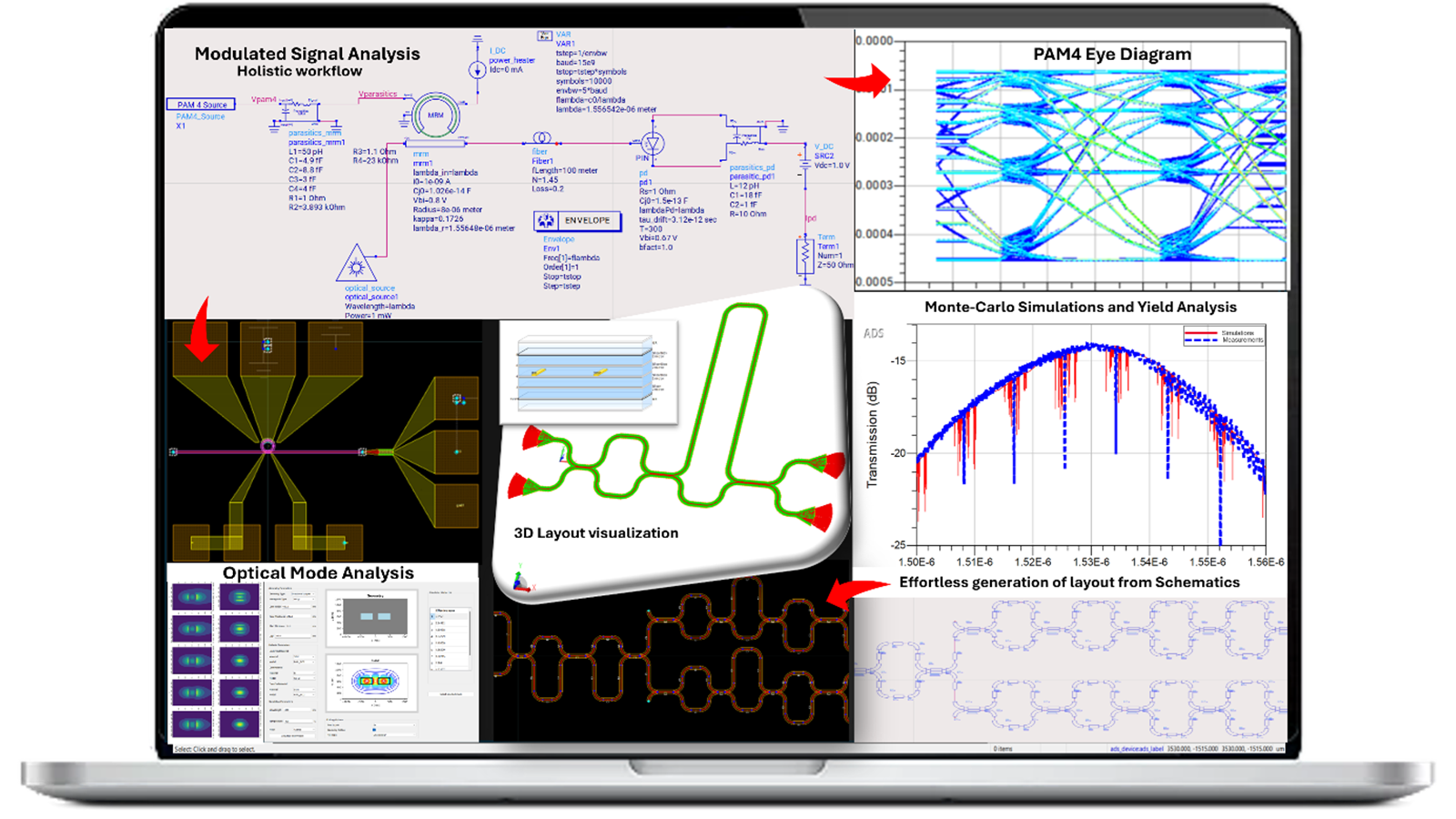
Photonic Designer
Bridge the gap between innovative concepts and practical implementation of photonic integrated circuit designs.
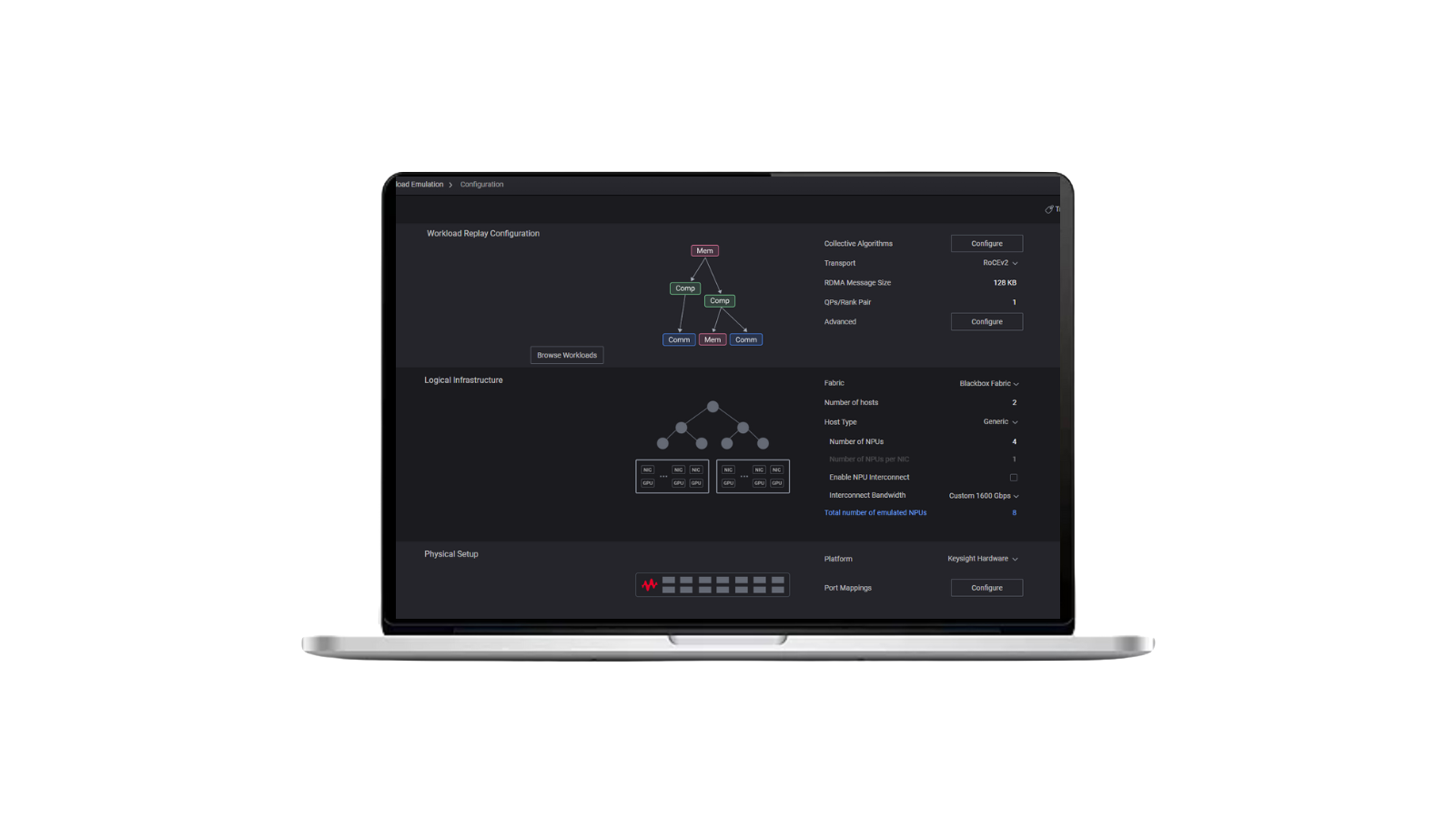
AI Data Center Builder
Emulate AI data center networks with realistic workloads and data flows.
IxVerify
Find functional and performance bugs before chip tape-out, ensuring zero packet loss at maximum emulation speeds.

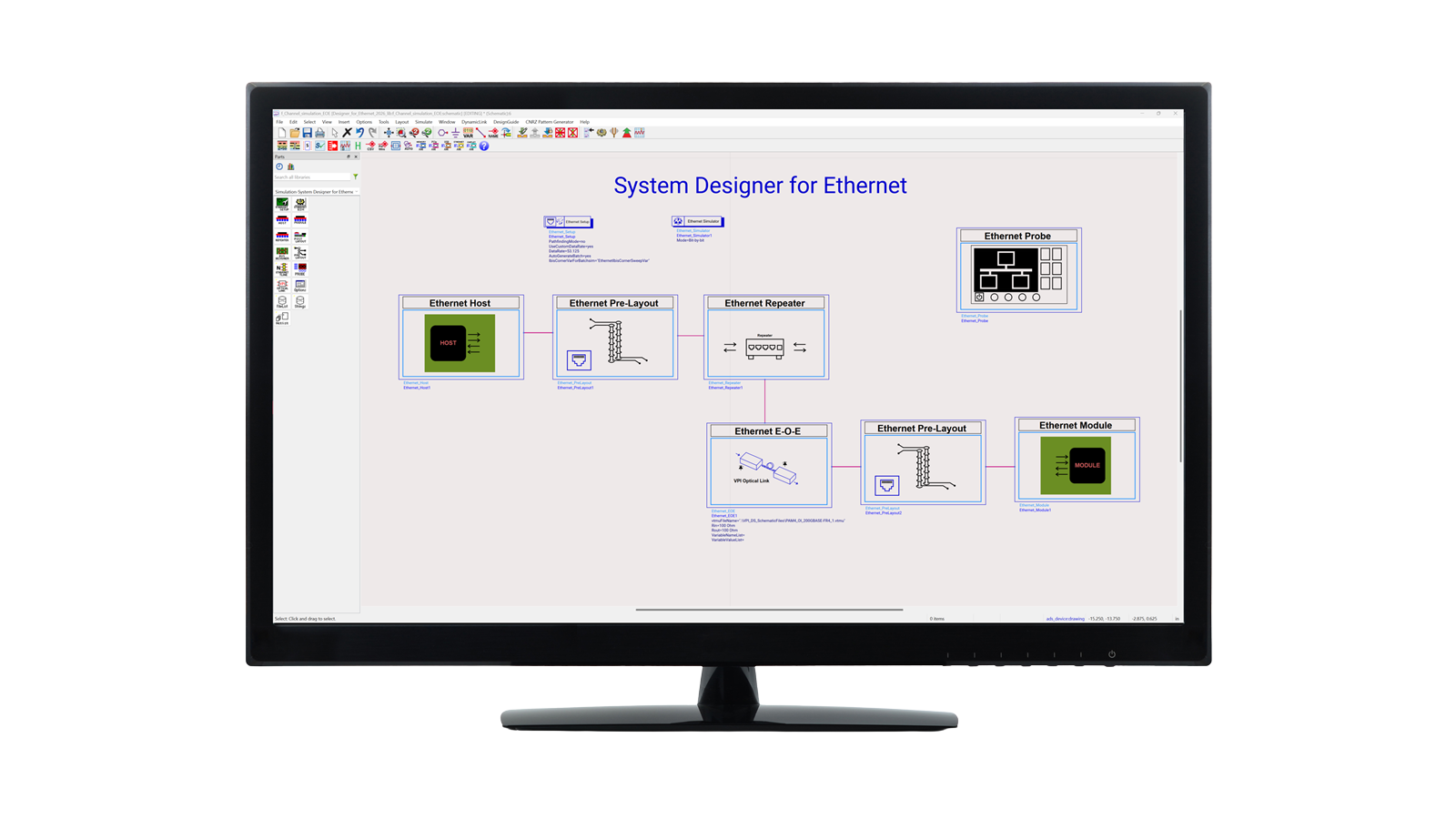
System Designer for Ethernet
Streamline Ethernet system design workflows with AMI generation capabilty.
Generate 1.6T signals, perform electrical and optical TX and RX characterization, and validate interconnect and network performance under realistic AI traffic conditions. This ensures signal integrity and reliable system behavior at scale.
Real-World Signal Generation
Set up complex signals with the speed, bandwidth, precision, and flexibility to meet the challenges of next-generation optical and electrical AI data center deployments.
Real-Time Signal Analysis
Gain deep insights into the real performance of AI-optimized optical and electrical components and systems at 110 GHz of bandwidth, an ultra-low noise floor, and 256 GSa/s sampling rate.
Equivalent-Time Signal Analysis
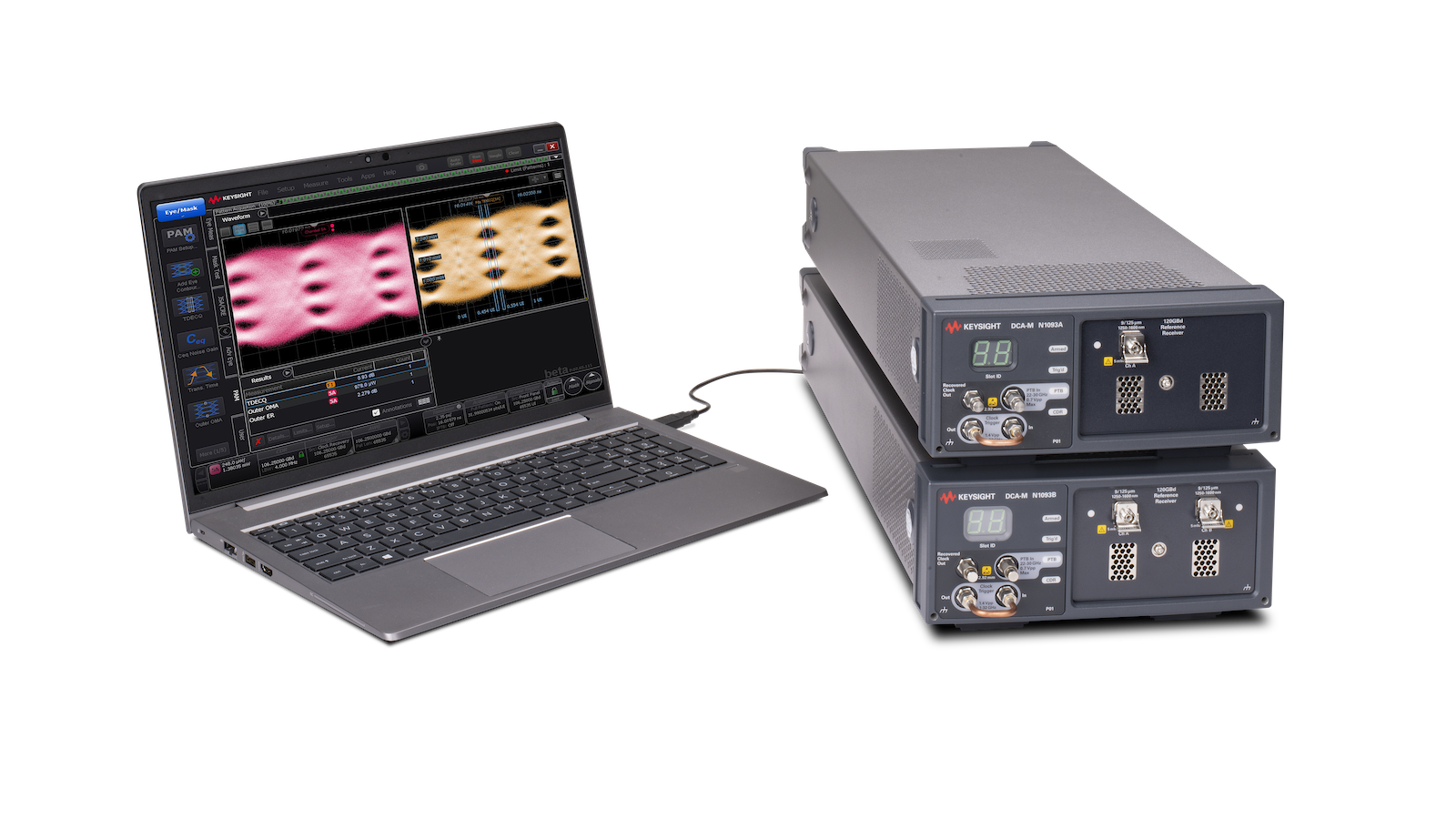
Validate electrical and optical single-mode and multimode transmitter performance with high-sensitivity, low-jitter, and wide-bandwidth measurements.
Pattern Generation and Error Analysis
Generate patterns and anlayze errors up to 120 Gbaud NRZ and PAMn.
.png "M8050A high-performance BERT 120 Gbaud")
.png)
Interconnect and Network Performance Test
Emulate real-world traffic and validate reliability, stability, performance, and interoperability of AI-optimized Ethernet devices and interconnects.

Optical Parametric Test
Simplify characterization of PICs and other optical and electo-optical devices with integrated automated solutions.

Be on the safe side while UALink, OIF, and IEEE 802.3 standards evolve and new MSAs are developed. With Keysight's continually updated test automation solutions, you can reliably test without in-depth knowledge before the standards are complete.
UALink Electrical Transmitter Conformance Test
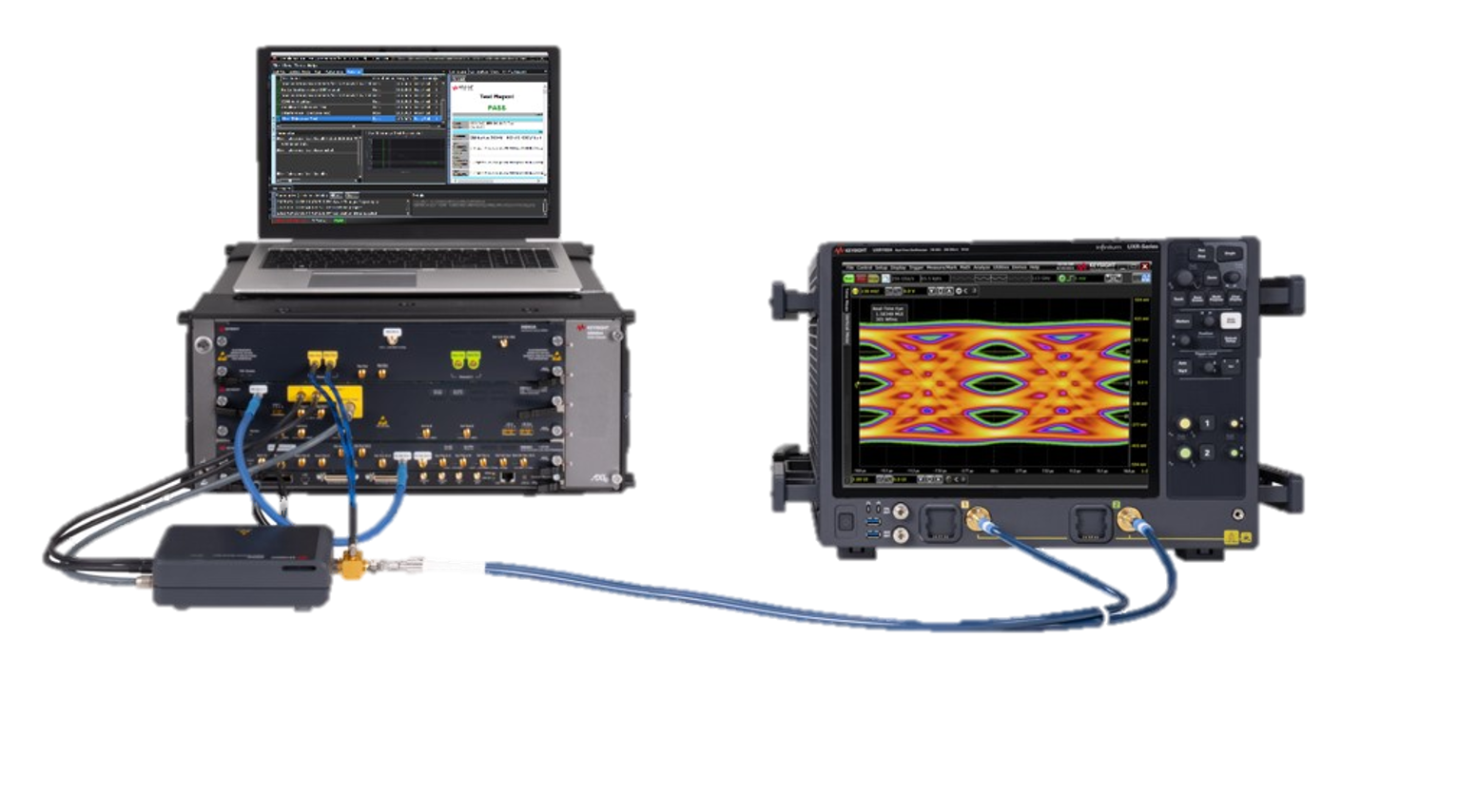
Validate UALink transmitters at 200 Gbps with speed and accuracy while performing automated conformance testing with a Keysight UXR oscilloscope.

UALink Electrical Receiver Conformance Test
Simplify stress signal calibration of UALink receivers at 200 Gbps and perform automated conformance testing with a Keysight M8050A BERT and UXR oscilloscope.
IEEE 802.3dj Optical Transmitter Conformance Test
Validate IEEE 802.3dj optical transmitters at 200 Gbps and perform automated conformance testing with a Keysight N1093 DCA-M oscilloscope.

IEEE 802.3cn/cu/db/df/dj Optical Receiver Conformance Test
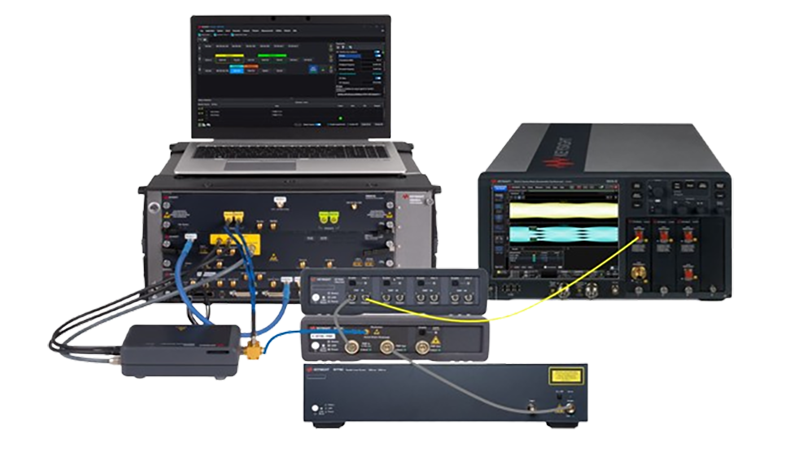
Simplify stress signal calibration of 1.6T optical receivers at 100 Gbps and 200 Gbps and perform automated IEEE 802.3 conformance testing with a Keysight M8050A BERT and DCA-M oscilloscope.
Validate IEEE 802.3dj electrical transmitters and perform automated conformance testing with a Keysight UXR oscilloscope.

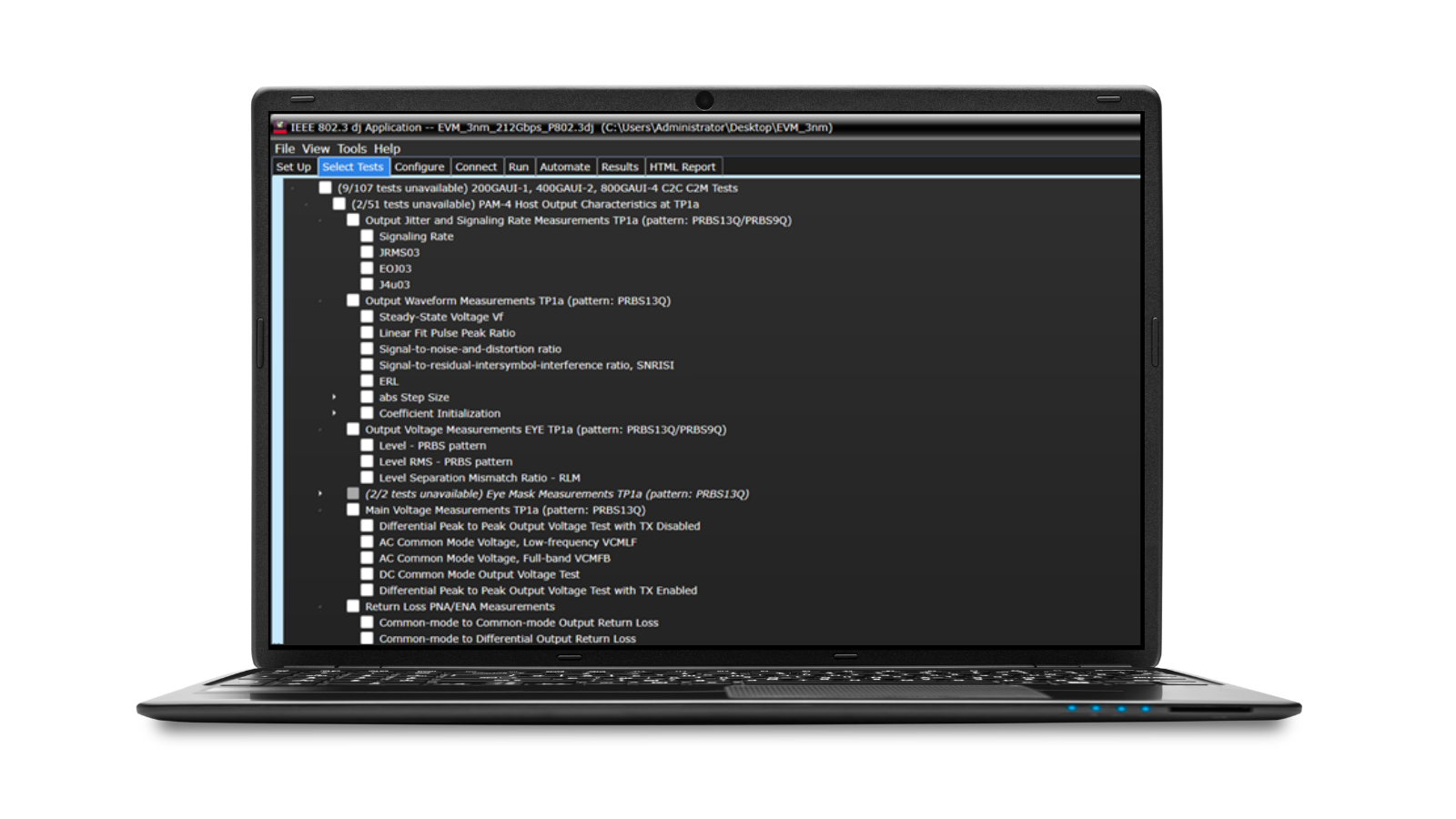
Validate IEEE 802.3dj electrical transmitters and perform automated conformance testing with a Keysight N1093 DCA-M oscilloscope.


IEEE 802.3dj Electrical Receiver Conformance Test
Simplify stress signal calibration of IEEE 802.3dj electrical receivers and perform automated conformance testing with a Keysight M8050A BERT and UXR oscilloscope.

OIF CEI-224G Electrical Transmitter Conformance Test
Validate OIF CEI-224G electrical transmitters and perform automated conformance testing with a Keysight UXR oscilloscope.

Quickly ramp production while maintaining high test yield, speed, and efficiency for high throughput and lower costs.
Wafer Production Test
Automate wafer probing with one-stop test solutions.
Optical Signal Analysis for Multimode Applications
Validate optical transceiver performance for AI data center deployments with 224 Gb/s optical measurements.

Optical Signal Analysis for Single-mode Applications
Validate optical transceiver performance for AI data center deployments with 224 Gb/s optical measurements.
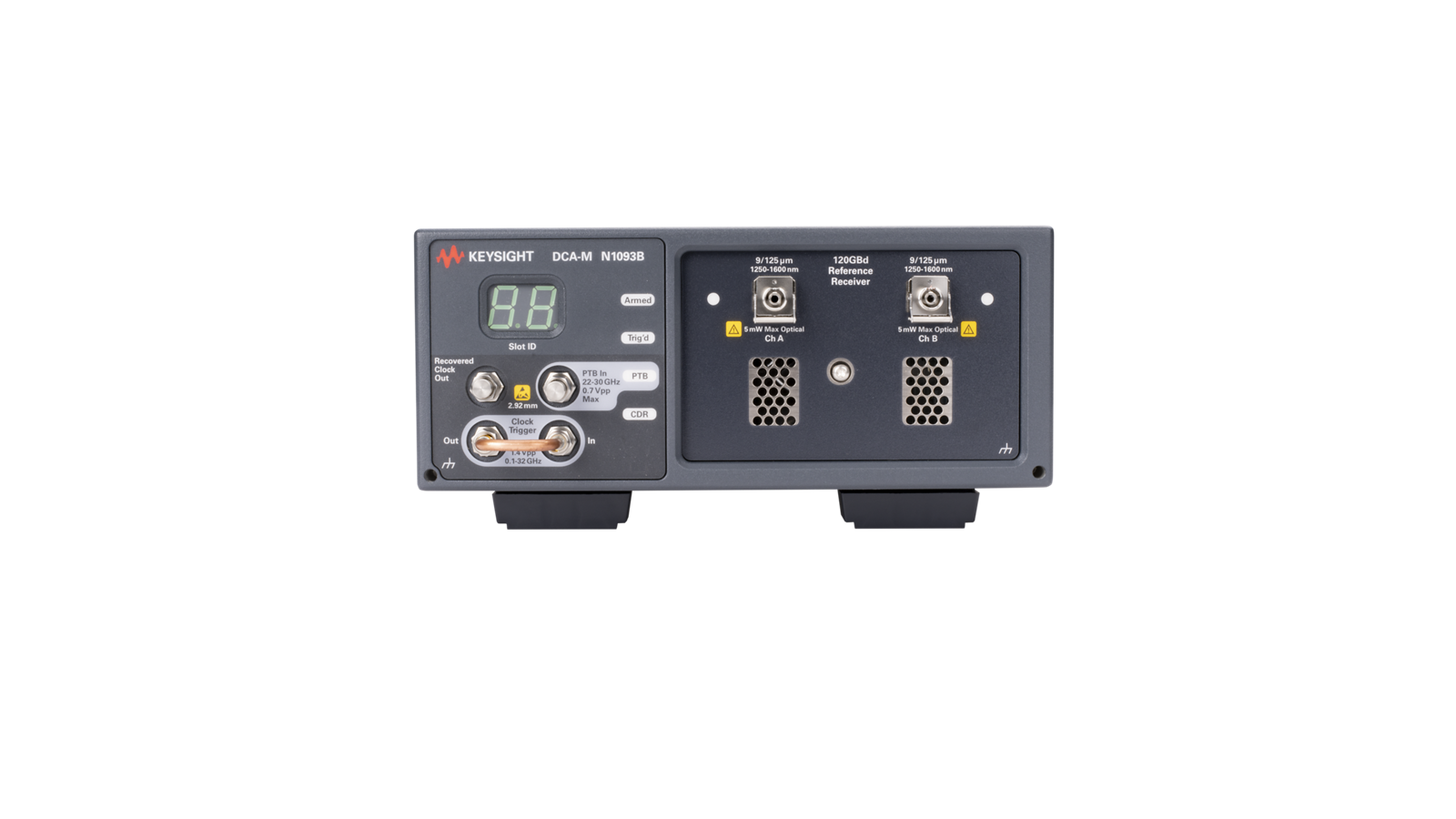
Optical Test Automation
Increase DCA-M hardware utilization in high channel count testing for 1.6T and CPO/NPO applications.

112 Gbps
Comprehensive, multi-platform solutions for optical and electrical validation and conformance test.
224 Gbps
Multi-platform solutions for scaling from 800G to 1.6T
448 Gbps
End-to-end solutions for scaling towards 3.2T
Explore 1.6T AI Infrastructure Use Cases
Learn More About 1.6T AI Infrastructure Solutions
1.6T Solutions FAQs
1.6T Ethernet introduces 200 to 224 Gbps lane speeds with PAM4 signaling, significantly increasing signal complexity and reducing test margins with the reduced eye heights and shorter unit intervals. Compared to 800G, this results in tighter signal integrity constraints, higher noise sensitivity, and more stringent compliance requirements.
TAI workloads depend on synchronized, high-speed communication across large GPU clusters. 1.6T testing validates that interconnects can deliver the bandwidth, latency, and reliability required for these large-scale environments.
Component-level compliance alone is not sufficient. At 1.6T, system-level testing ensures:
- Interoperability across components
- Stability under real AI workloads
- End-to-end performance validation
This is essential because a single weak link can impact overall system performance.
Complete 1.6T validation requires:
- Design and bring-up testing
- Compliance and conformance validation
- Manufacturing and production test
- System-level and network emulation
End-to-end coverage ensures faster time-to-market and reliable deployment.
Accurate calibration ensures repeatability and compliance. At 1.6T, multiple stress parameters — such as jitter, noise, and signal distortion — must be precisely controlled and balanced to match 1.6T standard and MSA speicifications.
Validating receiver performance at 1.6T requires reproducing realistic worst-case channel conditions and verifying that the receiver can accurately recover data under these stress scenarios.
Receiver validation is based on applying a calibrated stress signal to the device under test. This signal intentionally degrades the waveform to emulate real-world impairments, including:
- Random and sinusoidal jitter
- Additive noise (e.g., Gaussian noise)
- Inter-symbol interference (ISI)
- Channel-induced distortion
The goal is to determine the minimum signal quality at which the receiver still meets the bit error ratio (BER) / forward error correction (FEC) targets.
Let's Solve What's Next.
Book a meeting or demo with one of our experts