









- Overview
- All Models
- Support
Precision signal path control for repeatable, scalable optical testing
Keysight optical switches enable high-performance, multichannel optical signal routing for automated and manual test applications. Designed for durability and precision, our optical switches support single-mode and multimode fiber types with low insertion loss, high return loss, and reliable repeatability. With support for various switch configurations, they offer flexible routing options for test setups of any complexity. Fast switching speeds, remote control capabilities, and integration with other Keysight photonic test instruments make them ideal for scalable optical test systems in R&D, validation, and manufacturing environments. Choose one of our popular configurations or configure one specific to your application.
Low insertion loss
Minimizes signal degradation across switching paths, preserving signal quality and measurement accuracy throughout complex optical setups.
Programmable switching
Enables rapid, programmable signal routing via software or SCPI commands, streamlining test automation and increasing hardware efficiency.
Flexible configurations
Supports a variety of switch configurations including multichannel and matrix topologies to match your specific test needs.
Connection certainty
Reduces variability from repeated manual reconnections with automated optical switching for more reliable, repeatable optical measurements.
-
Number of channels
1 to 4
-
Switch configuration
2x2, 1x4, 1x16
-
Fiber mode
Single-mode
-
Insertion loss
< 1.8 dB to <2.4 dB
-
Wavelength range
1250 nm to 1650 nm
Most popular configurations
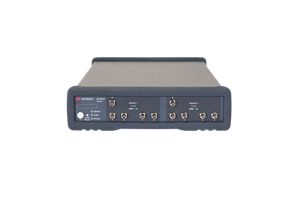

Two Channel 1x4 Optical Switch


1x16 Optical Switch
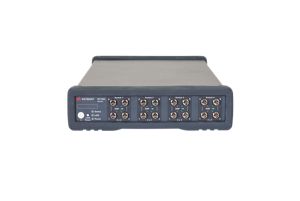

Four Channel 2x2 Optical Switch
Services and support
Innovate at speed with curated support plans and prioritized response and turn-around times.
Get predictable, lease-based subscriptions and full lifecycle management solutions—so you reach your business goals faster.
Experience elevated service as a KeysightCare subscriber to get committed technical response and more.
Ensure your test system performs to specification and meets local and global standards.
Make measurements quickly with in-house, instructor-led training, and eLearning.
Download Keysight software or update your software to the newest version.
Frequently asked questions
An optical switch is a precision instrument that directs optical signals from one fiber path to another without converting light into an electrical signal. It acts as a routing mechanism for fiber optic networks or test systems, enabling flexible control over optical signal paths. Optical switches are essential in scenarios where you need to connect multiple fiber-optic devices, automate test sequences, or switch between different test points in a repeatable, programmable way.
You would typically use an optical switch in R&D labs, optical transceiver validation, fiber optic component testing, and automated production environments to reduce manual intervention and increase test efficiency.
In automated optical test setups, an optical switch delivers several key benefits:
- Automation and control: Switches support programmable control using SCPI commands, APIs, or graphical software interfaces, enabling seamless integration into automated test sequences.
- Improved test repeatability: By eliminating the need for manual reconnections, optical switches reduce human error and ensure consistent test results across runs.
- Higher throughput: Fast switching reduces downtime between tests, helping you meet high-volume test requirements in production environments.
- Reduced wear and contamination: By minimizing the need to manually handle fiber connectors, switches protect against connector wear, contamination, and damage—key for maintaining signal integrity.
- Scalability: Easily expand your setup to test multiple devices or channels in parallel using multi-channel fiber optic switching.
These advantages make optical switches ideal for applications such as optical network testing, optical transceiver verification, and fiber component characterization.
Choosing the right optical switch for your test setup involves evaluating a few key specifications that directly impact performance, compatibility, and scalability. Here’s what to consider:
- Number of channels: This determines how many input and output ports are available for routing signals. Higher channel counts allow you to connect more devices or test points, making it easier to scale up your test system or automate complex measurement workflows.
- Switch configuration: The routing logic—such as 1xN, Nx1, 2x2, or MxN matrix—defines how signals are directed between ports. For example, a 1xN switch routes a single source to multiple destinations, while a matrix switch enables flexible many-to-many connections for advanced multi-path testing.
- Fiber mode: Choose between single-mode or multimode fiber based on your application. Single-mode fiber supports high-precision, long-distance testing and is common in telecom and coherent optics. Multimode fiber is better suited for shorter links and is often used in data centers or industrial environments.
Both insertion loss and return loss are critical parameters in evaluating the performance of an optical switch within a test system:
- Insertion Loss: This measures the amount of optical power lost as the signal passes through the switch. Lower values (typically between <1.2 dB and <2.5 dB, depending on the model and wavelength) mean more signal is preserved, which is especially important for power-sensitive measurements like BER testing, optical power budget analysis, or high-speed modulation testing.
- Return Loss: This measures how much light is reflected back toward the source. High return loss (e.g., >55 dB) is desirable because it minimizes back reflections that can disrupt laser sources, cause measurement instability, or introduce noise into the system.
Maintaining low insertion loss and high return loss ensures measurement accuracy, protects sensitive optical components, and supports high-fidelity signal analysis, which is essential in advanced optical communications testing like 400G, 800G, and 1.6T transceiver validation.