









- Overview
- All Models
- Support
Dependable, high-accuracy average power measurements
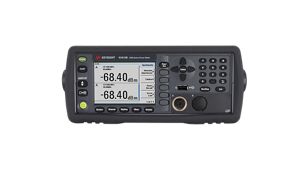
Keysight PM4-class average power meters include the N1910B Series power meters. They deliver dependable, high-accuracy measurements of continuous wave (CW) signals across broad frequency and dynamic ranges. Built for versatility and durability, they perform reliably in both lab and field environments. Enhanced features like real-time measurement calibration provide signal stability and repeatability, minimizing the impact of rapid signal fluctuations for reliable results under dynamic test conditions. A compatible power sensor is required for operation to detect and convert RF signal power into a measurable electrical signal. Request a quote or order a Keysight average power meter today. Need help selecting? Check out the resources below.
Wide dynamic range
With a dynamic range spanning -70 dBm to +44 dBm, you can accurately measure both very low and high-power levels, without the need for external attenuators, preamplifiers, or multiple sensors.
Broad frequency coverage
Ensure maximum flexibility, compatibility, and futureproofing with support for frequencies up to 220 GHz, ideal for applications like 5G, automotive radar, and satellite communications.
Stable, reliable performance
Low-noise circuitry enables stable operation and minimizes the effects of rapid signal fluctuations, delivering accurate measurements under diverse signal conditions.
Real-time calibration
Auto-zeroing functionality continuously corrects internal offsets and drift, ensuring stable baseline readings without manual intervention.

-
Number of channels
1 to 4, 1 to 3
-
Frequency range
DC to 220 GHz
-
Dynamic range
-70 to +44 dBm
Most popular configurations

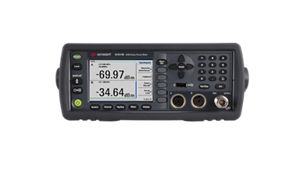
PM4-class Power Meter, single-channel
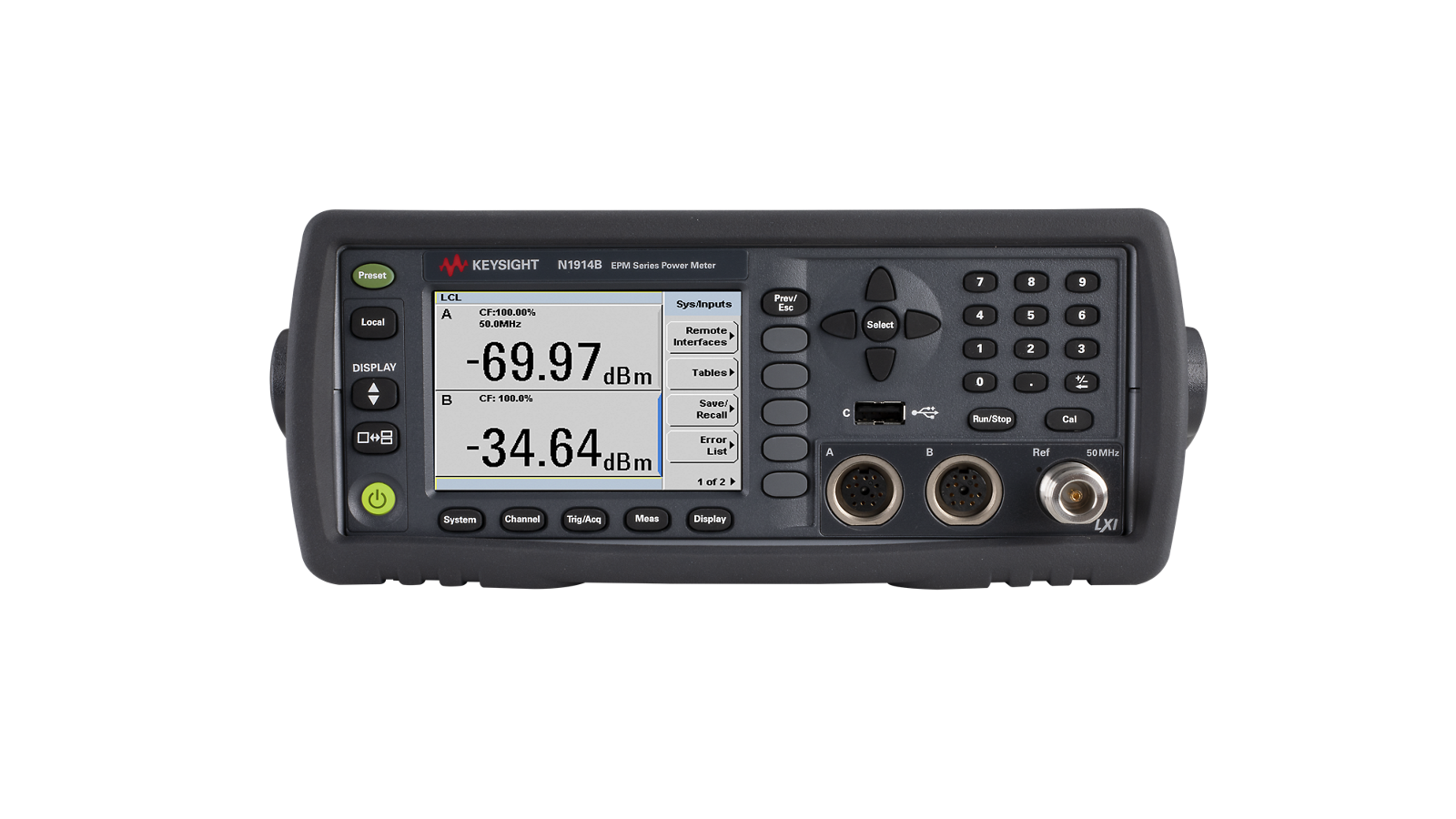
PM4-class Power Meter, dual-channel
Services and support
Innovate at speed with curated support plans and prioritized response and turn-around times.
Get predictable, lease-based subscriptions and full lifecycle management solutions—so you reach your business goals faster.
Experience elevated service as a KeysightCare subscriber to get committed technical response and more.
Ensure your test system performs to specification and meets local and global standards.
Make measurements quickly with in-house, instructor-led training, and eLearning.
Download Keysight software or update your software to the newest version.
Frequently asked questions
An average power meter is an instrument that measures the average power of a radio frequency (RF) or microwave signal over a specified time interval. It provides a scalar, non-time-varying representation of signal power, making it suitable for measuring continuous wave (CW) signals.
An average power meter works in conjunction with a power sensor, typically a diode or thermocouple sensor, that converts incident RF power into a corresponding electrical signal. This signal is then processed and averaged over time to report a stable power reading.
Real-time calibration is important in an average power meter because it ensures accurate and reliable measurements without the need for frequent manual recalibration. As environmental conditions such as temperature change or components in the sensor age, measurement accuracy can drift. Real-time calibration continuously compensates for these effects during operation, maintaining consistent performance. This built-in correction eliminates the need for external reference sources, reducing setup complexity and improving ease of use. Real-time calibration especially valuable in automated test systems or production environments, where maintaining high throughput and repeatability is critical. By adjusting dynamically in real time, the power meter delivers stable, precise readings across a wide range of conditions, ensuring confidence in every measurement.
A wide dynamic range is a key feature of an average power meter because it allows the instrument to accurately measure both very low and very high power levels without needing to switch sensors or compromise accuracy. This flexibility is essential in applications where signal power can vary significantly, such as during device characterization, system calibration, or automated testing across multiple devices or channels. With a wide dynamic range, the power meter can capture subtle signal variations and ensure reliable performance across the full spectrum of input levels. This reduces the need for additional equipment, simplifies test setups, and improves efficiency in both lab and production environments.