How to Improve Radar System Sensitivity with Low-Phase-Noise LO Substitution

Identify LO-Limited Radar Receiver Sensitivity
Determining whether a radar's internal local oscillator (LO) contributes to receiver sensitivity limitations requires comparing performance under controlled LO conditions. Engineers first establish a baseline measurement using the radar's normal internal oscillator. The test may examine weak-signal response, receiver noise behavior, or the ability to distinguish low-level returns near stronger signals or clutter. A sufficiently low-phase-noise external RF source is then substituted for the internal LO, or connected through an appropriate bypass path. The external source must provide the required LO frequency and drive level while maintaining applicable reference and synchronization conditions. Receiver gain, bandwidth, filtering, stimulus level, frequency plan, and other relevant settings remain unchanged so that the comparison isolates the effect of the LO source.
After establishing the baseline, engineers repeat the same receiver measurement using the cleaner external LO and compare the results. Improvements in weak-signal response or reduced noise-related interference suggest that the internal oscillator may be contributing to the radar's sensitivity limitation. If the measured performance changes little, other receiver or system factors may dominate. Engineers examine the differences across relevant operating frequencies and signal conditions to determine whether the effect is consistent. The comparison must account for changes in LO drive level, synchronization, or signal routing that could otherwise influence the result. By holding test conditions constant and changing the LO source, engineers can evaluate whether internal oscillator phase noise is a significant contributor to observed radar performance limitations without assuming that LO substitution permanently improves the system.


Low-Phase-Noise Radar LO Substitution Solution
See Demo of Ultra-Low Phase Noise for Radar Testing
Explore Products for Our Low-Phase-Noise Radar LO Substitution Solution
-

![]()
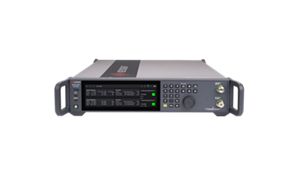
SG6311A PSG Analog Signal Generator


Discover Resources and Insights
Additional Resources for Low-Phase-Noise Radar LO Substitution
Related Use Cases

-
![]()
Learn More
How to Test Direction-Finding Systems
Use phase-stable multi-channel RF sources to validate direction-finding, angle-of-arrival, and coherent receiver performance.
Learn More

-
![]()
Learn More
How to Create Electronic Warfare Test Signals
Control pulse density and dropped pulses by changing threat start times and priority, pulse width, repetition frequency, and coherent processing intervals.
Learn More
-
![]()
Learn More
How to Simulate EW Threat Scenarios
Perform full-spectrum, real-time RF threat scenario simulation with dynamic scenario control, emitter modeling, and high-fidelity visualization.
Learn More

Get in Touch with One of Our Experts
Need help finding the right solution for you?