













- Overview
- All Models
- Support
Throughput and reliability for critical network analysis
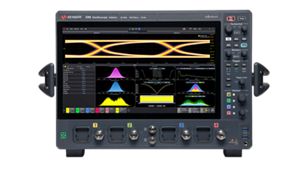
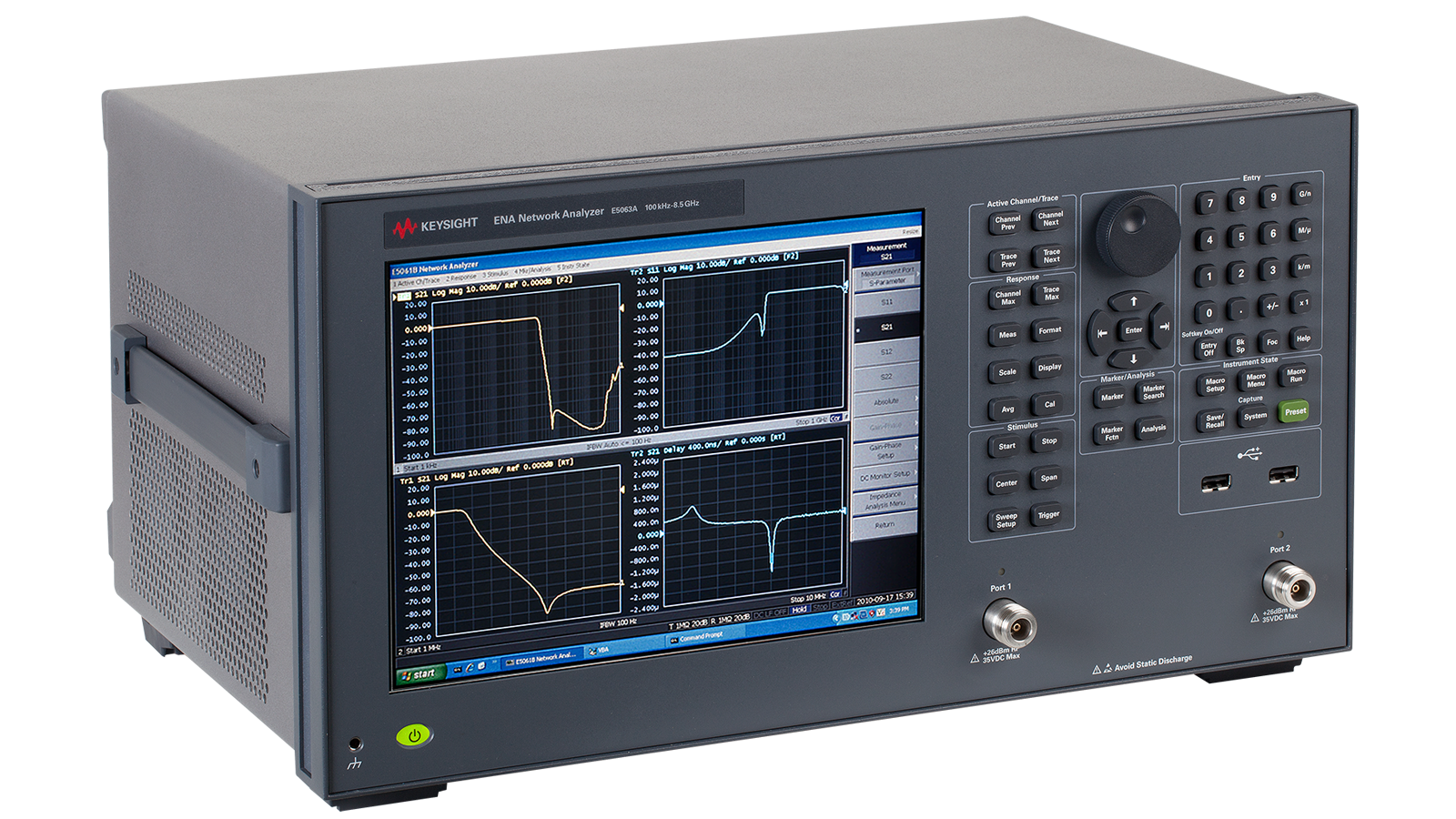
Keysight XN3-class Essential vector network analyzers include the E5063A and E5061B ENAs. Essential VNAs leverage Pro model technology optimized for passive component testing. You can quickly get valuable measurement insights with automated testing and optional measurement software ranging from impedance analysis to basic pulsed-RF measurements. Our affordable, Essential model offers frequency coverage down to 5 Hz, ideal for testing devices like DC-DC converters and power-line electromagnetic interference filters. Our top Essential model leverages the consistent measurement framework of our Expert models to boost efficiency and productivity. Choose one of our most popular configurations or build the one you need for your application. Need help selecting? Check out the resources below.
Passive component test
Analyze the performance of passive components like resistors, antennas, or attenuators with measurements including S-parameter, phase response, and group delay.
Receiver sensitivity
Ensure reliable and repeatable passive component measurements with a >100 dB dynamic range to capture low-power signal responses.
Signal integrity analysis
Diagnose and optimize high-speed electronic performance using capabilities like time-domain reflectometry-enhanced time-domain analysis.
Software applications
Characterize a variety of device parameters using optional test applications like impedance and time-domain measurements.
-
Maximum number of sources
1
-
Integrated low-noise receivers
0
-
Maximum frequency
3 GHz to 18 GHz
-
Number of built-in ports
2
Most popular configurations
XN3-class Vector Network Analyzer

XN3-class Vector Network Analyzer
Services and support
Innovate at speed with curated support plans and prioritized response and turn-around times.
Get predictable, lease-based subscriptions and full lifecycle management solutions—so you reach your business goals faster.
Experience elevated service as a KeysightCare subscriber to get committed technical response and more.
Ensure your test system performs to specification and meets local and global standards.
Make measurements quickly with in-house, instructor-led training, and eLearning.
Download Keysight software or update your software to the newest version.
Frequently asked questions
Receiver sensitivity is a critical performance parameter in a vector network analyzer (VNA), as it directly determines the instrument’s ability to detect and measure low-level signals accurately. In many RF and microwave applications, the signals reflected or transmitted through a device under test (DUT), especially after passing through lossy components like filters, cables, or antennas, can be extremely weak. A VNA with high receiver sensitivity can distinguish these small signals from the noise floor, enabling accurate S-parameter measurements even when the DUT introduces significant insertion loss or when the test setup includes long cable runs and high-attenuation paths.
Moreover, enhanced sensitivity is essential for characterizing passive components and high-frequency devices operating at millimeter-wave or sub-THz frequencies, where signal power is inherently lower. In multi-port, over-the-air (OTA), or highly reflective test environments, poor sensitivity can compromise measurement accuracy and dynamic range, leading to unreliable results. A network analyzer with superior receiver sensitivity not only ensures more precise measurements but also expands the range of viable test scenarios, from R&D to production, especially when testing devices in complex or lossy environments.
A network analyzer plays a vital role in signal integrity (SI) analysis by enabling engineers to characterize how high-speed signals behave as they travel through interconnects such as PCB traces, connectors, cables, vias, and packages. Poor signal integrity can lead to issues such as reflection, crosstalk, loss, or jitter, all of which degrade digital signal performance, particularly at gigabit data rates. Using a network analyzer, engineers can measure S-parameters (S11, S21, etc.) to assess how signals are reflected (return loss) and transmitted (insertion loss) through these paths, helping to identify impedance mismatches, discontinuities, or excessive losses that could corrupt the signal.
VNAs also support time-domain analysis via time-domain reflectometry (TDR) or time-domain transmission (TDT), enabling the visualization of impedance discontinuities or reflections along a transmission path. This insight is crucial when designing high-speed digital systems where every transition, stub, or via can introduce unwanted signal degradation. By using a network analyzer for SI analysis, engineers can optimize interconnect designs, validate simulation models, and ensure compliance with high-speed digital standards, ultimately leading to more reliable and robust digital systems.
A network analyzer performs several key tests on passive components to evaluate their electrical behavior over a range of frequencies. These tests are essential for verifying performance, ensuring consistency with design specifications, and validating that components meet system-level requirements. Here are the main tests a network analyzer runs on passive devices:
1. S-parameter measurements – The core function of a VNA, S-parameter testing provides comprehensive insight into how a passive component reflects and transmits RF signals. Common parameters include:
* S11 (input reflection coefficient) to evaluate input match or return loss.
* S21 (forward transmission coefficient) to measure insertion loss or gain.
* S12 and S22 to assess reverse transmission and output match.
2. Return loss and VSWR – These tests assess how well a passive component matches the system impedance (typically 50 ohms). Poor return loss or high voltage standing wave ratio (VSWR) indicates potential signal reflection and power loss.
3. Insertion loss – This quantifies the amount of signal power lost as it passes through the component, which is particularly crucial for devices such as cables, filters, or attenuators.
4. Impedance characterization – By transforming frequency-domain data into the time or impedance domain, VNAs help verify characteristic impedance and detect discontinuities, especially for connectors, traces, and transmission lines.
5. Phase and group delay – These parameters are important for understanding signal distortion. Group delay helps quantify how consistently different frequency components of a signal are delayed as they pass through a passive device.
6. Isolation and coupling (for multi-port components) – In devices such as directional couplers or splitters, VNAs measure the isolation between ports and the level of power coupled into other paths.
These measurements enable engineers to validate performance across a wide frequency range and optimize component behavior for specific RF applications, such as filters, antennas, cables, or matching networks.