











-
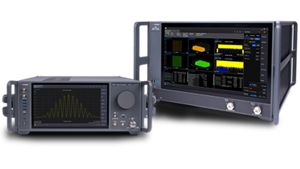
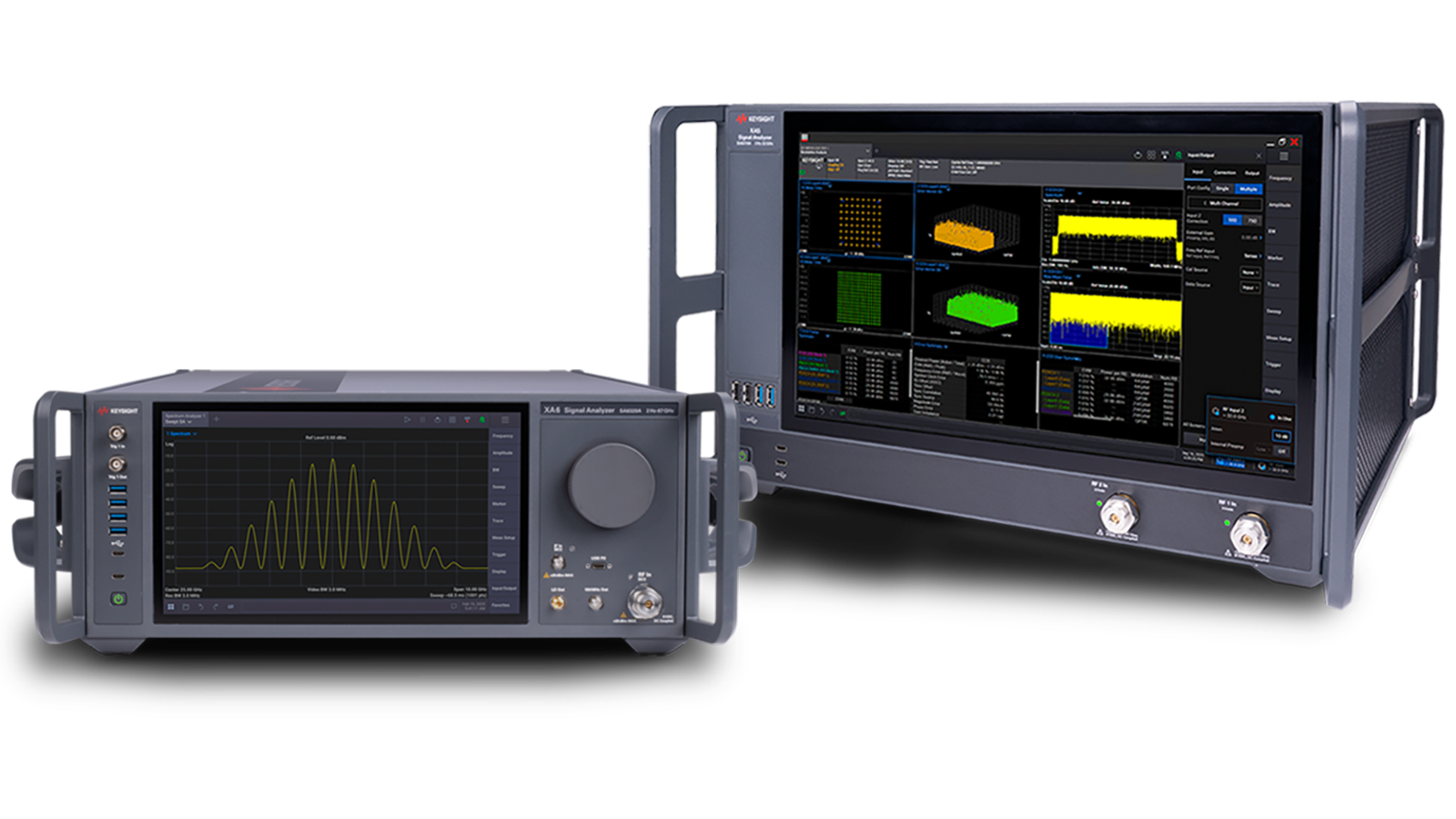
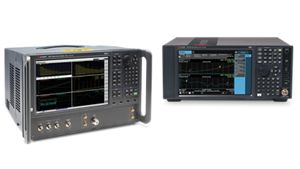
Noise Figure Analyzers
Fast, accurate noise figure measurements

-
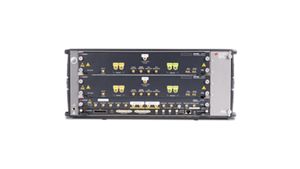
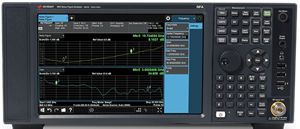
Phase Noise Analyzers
High-sensitivity phase noise measurements
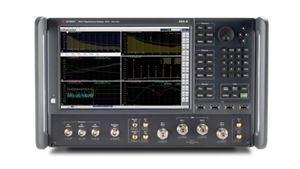
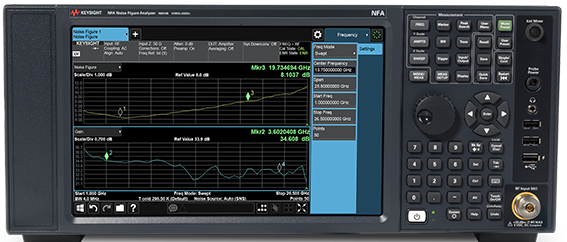

Find the phase noise analyzer for your application in minutes


Find Compatible Software and Accessories For Your Noise Figure or Phase Noise Analyzer
Keysight phase noise analyzer software enhances signal analysis with enhanced features like user-defined cross-correlation, transient and VCO characterization, and spectrum monitoring. Pair your analyzer with the mixers or downconverters needed to make the right measurements for your application.
Services and support
Innovate at speed with curated support plans and prioritized response and turn-around times.
Get predictable, lease-based subscriptions and full lifecycle management solutions—so you reach your business goals faster.
Experience elevated service as a KeysightCare subscriber to get committed technical response and more.
Ensure your test system performs to specification and meets local and global standards.
Make measurements quickly with in-house, instructor-led training, and eLearning.
Download Keysight software or update your software to the newest version.
Frequently asked questions
Noise figure (NF) quantifies how much a device or system degrades the signal-to-noise ratio (SNR). It is defined as NF = (SNRin) / (SNRout) and is typically expressed in decibels (dB).
A noise figure of 0 dB represents an ideal, noise-free device. In practice, components such as amplifiers, mixers, and receivers introduce additional thermal and electronic noise.
Why noise figure matters:
- Determines receiver sensitivity
- Impacts minimum detectable signal (MDS)
- Critical for low-noise amplifiers (LNAs)
- Essential in radar, satellite, 5G, and aerospace systems
How noise figure is measured:
- Y-factor method
- Hot/cold noise source method
- Cold-source (vector) methods
Modern solutions from Keysight automate calibration, noise source control, and uncertainty correction to improve measurement accuracy.
Phase noise describes short-term frequency instability in a signal and is a key parameter for oscillators and RF systems.
According to the National Institute of Standards and Technology (NIST), single-sideband (SSB) phase noise is defined as the ratio of noise power density at a frequency offset from the carrier to the carrier power: L(f) = (Pnoise(f)) / Pcarrier
It is typically expressed in dBc/Hz at a given offset frequency.
Why phase noise matters:
- Affects signal purity and spectral integrity
- Limits system performance in communications and radar
- Impacts modulation accuracy and error vector magnitude (EVM)
How phase noise is measured:
Phase noise is measured using phase noise analyzers or signal source analyzers that evaluate frequency offsets from the carrier with high sensitivity.
Noise figure and phase noise measure different aspects of RF performance:
Noise Figure:
Measures how much noise a device adds to a signal (SNR degradation). It is used for receivers, amplifiers, and RF front-end design.
Phase Noise:
Measures frequency stability and spectral purity of a signal source. It is used for oscillators, synthesizers, and transmit systems
When to use each:
• Use noise figure when optimizing sensitivity and minimizing noise in signal chains
• Use phase noise when evaluating frequency stability and modulation quality
Both are critical in modern RF systems such as 5G, aerospace, and satellite communications.
When selecting an analyzer, it is important to evaluate several key specifications to ensure it meets your measurement requirements.
Core parameters:
The analyzer’s frequency range, spanning from Hz to GHz, must fully cover your device under test. Sensitivity, typically expressed in dBm, determines the instrument’s ability to detect very low noise levels, while dynamic range defines the span between the smallest and largest measurable signals. Measurement accuracy and uncertainty are also critical, as they directly impact the reliability of your results.
Noise figure–specific considerations:
For noise figure measurements, ensure the analyzer supports the required measurement range and is compatible with appropriate noise sources. It should also support established techniques such as the Y-factor method and cold-source (vector) methods to provide flexibility and accuracy in different test scenarios.
Phase noise–specific considerations:
When evaluating phase noise performance, consider the analyzer’s phase noise floor, expressed in dBc/Hz, as well as the available offset frequency range. Instruments with cross-correlation capability can significantly improve sensitivity, enabling more precise characterization of low phase noise signals.
Analyzer ecosystem:
Modern solutions from Keysight integrate calibration routines, automation, and advanced analysis software to improve measurement repeatability and throughput.
Accurate measurements require not only the right instrumentation but also a well-controlled setup to ensure reliable results.
Noise figure measurement setup:
A typical noise figure measurement setup includes a noise figure analyzer or signal analyzer, along with a calibrated noise source with a specified excess noise ratio (ENR). The device under test (DUT) is connected using high-quality RF cables with proper impedance matching to minimize measurement errors.
Phase noise measurement setup:
For phase noise measurements, a phase noise analyzer or signal source analyzer is used in combination with a stable reference oscillator. Maintaining a low-noise environment with adequate shielding is essential to prevent external interference from affecting the measurement.
Best practices:
To achieve accurate and repeatable results, perform a full system calibration before measurements. It is also important to minimize cable losses and impedance mismatches, as well as to control temperature and environmental conditions throughout the testing process.
Measurement errors can significantly impact results if not properly controlled, making it essential to understand and mitigate the most common sources of inaccuracy.
Common error sources:
Errors often arise from mismatches between components, which can introduce voltage standing wave ratio (VSWR) effects. Calibration inaccuracies and uncertainty in the noise source, particularly related to excess noise ratio (ENR), can further degrade measurement reliability. In addition, instrument noise floor limitations may restrict the ability to measure very low-level signals, while environmental factors such as temperature variations and electromagnetic interference (EMI) can also affect results.
How to improve accuracy:
Improving accuracy starts with using high-quality, calibrated noise sources and applying proper calibration techniques, such as the Y-factor method or vector correction. For phase noise measurements, techniques like averaging and cross-correlation can enhance sensitivity. It is also important to minimize cable length and associated losses, and to follow established best practices aligned with industry standards, such as guidelines from NIST.
Noise figure and phase noise measurements play a critical role across a wide range of industries, supporting the design, validation, and optimization of modern RF systems.
Key applications:
These measurements are widely used in RF and microwave design, as well as in 5G and other wireless communication systems where performance demands are high. They are also essential in aerospace and defense applications, including satellite and radar systems, and are commonly applied in semiconductor device characterization to evaluate component-level performance.
Why they matter:
By enabling precise characterization of noise and signal behavior, these measurements help ensure signal integrity and overall system reliability. They are critical for optimizing receiver sensitivity and transmitter performance, and for validating compliance with industry and regulatory standards.
Advanced measurement platforms from Keysight support these applications with high accuracy and automation.
Phase noise can be characterized in different ways depending on the device under test and the specific measurement objective.
Absolute phase noise:
Absolute phase noise measures the total phase noise of a signal source and is typically performed as a one-port measurement. This approach is used to evaluate the overall spectral purity and frequency stability of oscillators and signal generators.
Residual (additive) phase noise:
Residual, or additive, phase noise measures the noise introduced by a specific component within a signal chain. It is commonly used to characterize devices such as amplifiers, mixers, and frequency converters, helping isolate their individual contributions to overall system noise.
Both measurement types are critical for isolating and optimizing performance in RF signal chains.