How to Validate Bidirectional EV DC-DC Converters

Validate Bidirectional Power Conversion
Bidirectional electric vehicle direct current to direct current converters (DC-DC) require synchronized sourcing and sinking operation to validate transitions between traction, regenerative braking, and auxiliary power distribution modes. Testing requires programmable source and sink power systems capable of smoothly transitioning between Quadrant I and Quadrant II operation while maintaining stable voltage and current control. Engineers must also measure waveform synchronization, efficiency, transient response, and regenerative energy behavior under realistic automotive loading conditions.
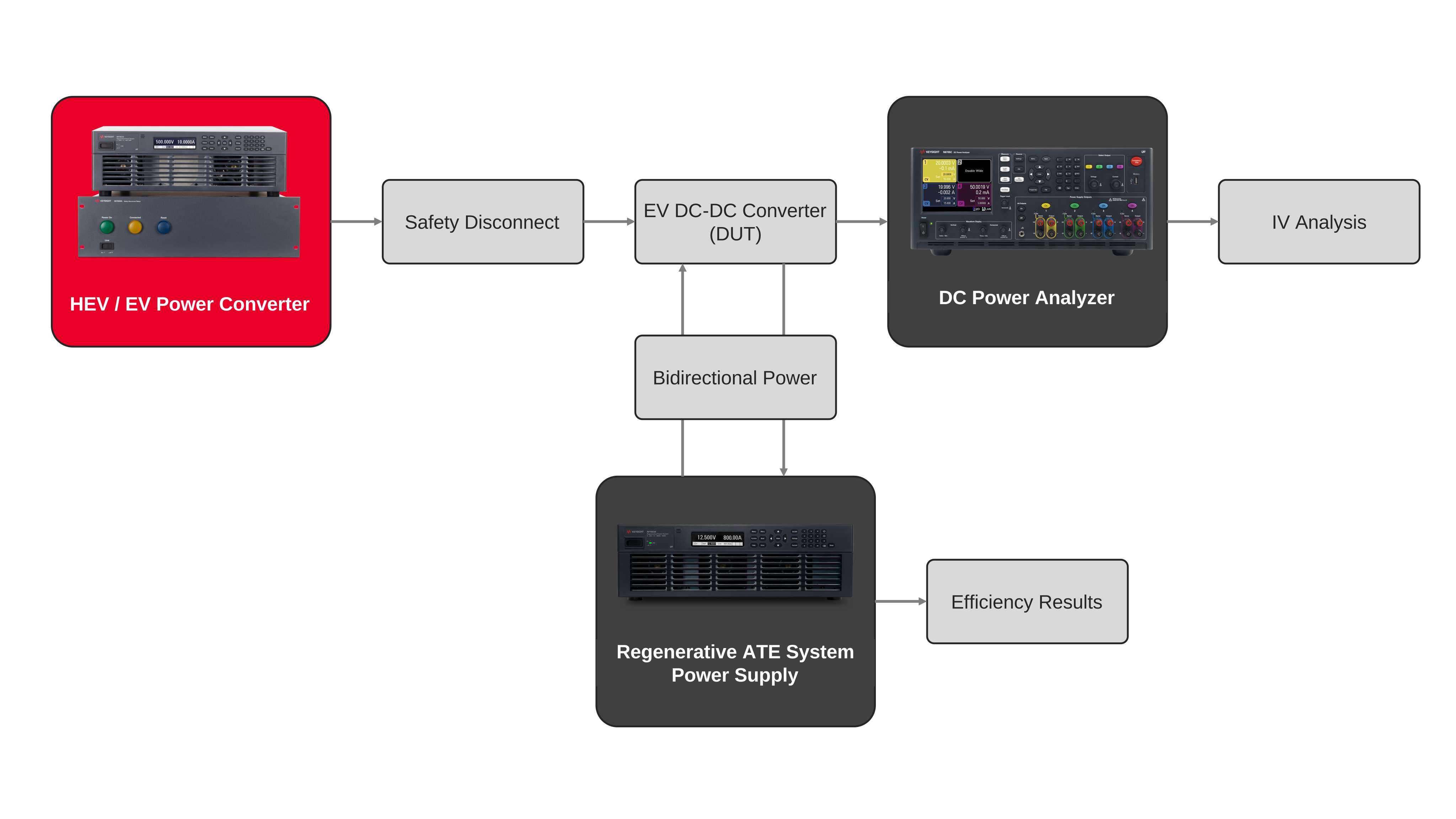
Validation workflows typically combine regenerative source and sink power systems, power analyzers, high-voltage safety disconnect systems, and synchronized waveform measurements. The test setup evaluates bidirectional converter operation across varying voltage levels, load conditions, and regenerative states while monitoring harmonic distortion, power factor, and thermal behavior. Power hardware-in-the-loop validation may also be used to emulate complete electric powertrain operating conditions and control interactions.


Bidirectional EV Converter Validation Solution
Block Diagram of Bidirectional EV Converter Validation Solution

Explore Products for Our Bidirectional EV Converter Validation Solution
-

![]()
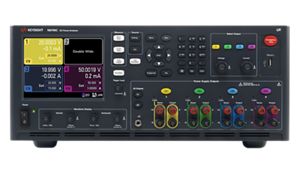
N6705C DC Power Analyzer
-
![]()
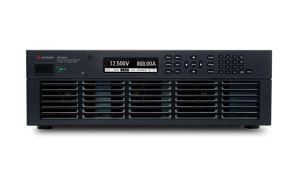
RP7943A Regenerative Power System, 20 V, ±800 A, 10 kW, 400/480 VAC
-
%20front%20top.png)
![]()
EV1003A HEV / EV Power Converter Test Solution


 front top.png)

Discover Resources and Insights
Additional Resources for Bidirectional EV Converter Validation
Related Use Cases

-
![]()
Learn More
How to Validate Battery Module Charge Performance
Validate battery module charge and discharge behavior with synchronized electrical measurements and controlled cycling profiles.
Learn More

-
![]()
Learn More
How to Integrate BMS Data Into Battery Testing
Integrate battery management system data with electrical measurements for synchronized module-level validation and analysis.
Learn More
-
![]()
Learn More
How to Correlate Battery Thermal Electrical Behavior
Correlate thermal and electrical behavior in battery modules using synchronized measurements across dynamic operating conditions.
Learn More

Get in Touch with One of Our Experts
Need help finding the right solution for you?