How to Reduce Averaging Time in Wide Dynamic Range Measurements

Optimize Measurement Averaging
Averaging is used in radio frequency (RF) power measurements to reduce noise and obtain stable results, particularly for signals near the lower end of a sensor's power range. However, excessive averaging increases acquisition time and can significantly delay test sequences containing hundreds or thousands of measurements. The optimum averaging requirement also changes with signal level: weak signals may require more averaging to achieve the desired stability, while stronger signals can often be measured with fewer averages. Applying the same averaging setting across a wide range of power levels can therefore add unnecessary test time.
Wide dynamic range measurements benefit from adapting acquisition settings to the signal conditions rather than applying a fixed averaging strategy throughout the test. Engineers can evaluate the relationship between signal level, measurement noise, averaging count, and acquisition time to determine settings that provide sufficient measurement confidence without unnecessary delay. This approach is particularly valuable in automated validation and manufacturing environments where devices are tested across multiple operating states and substantially different RF output levels.

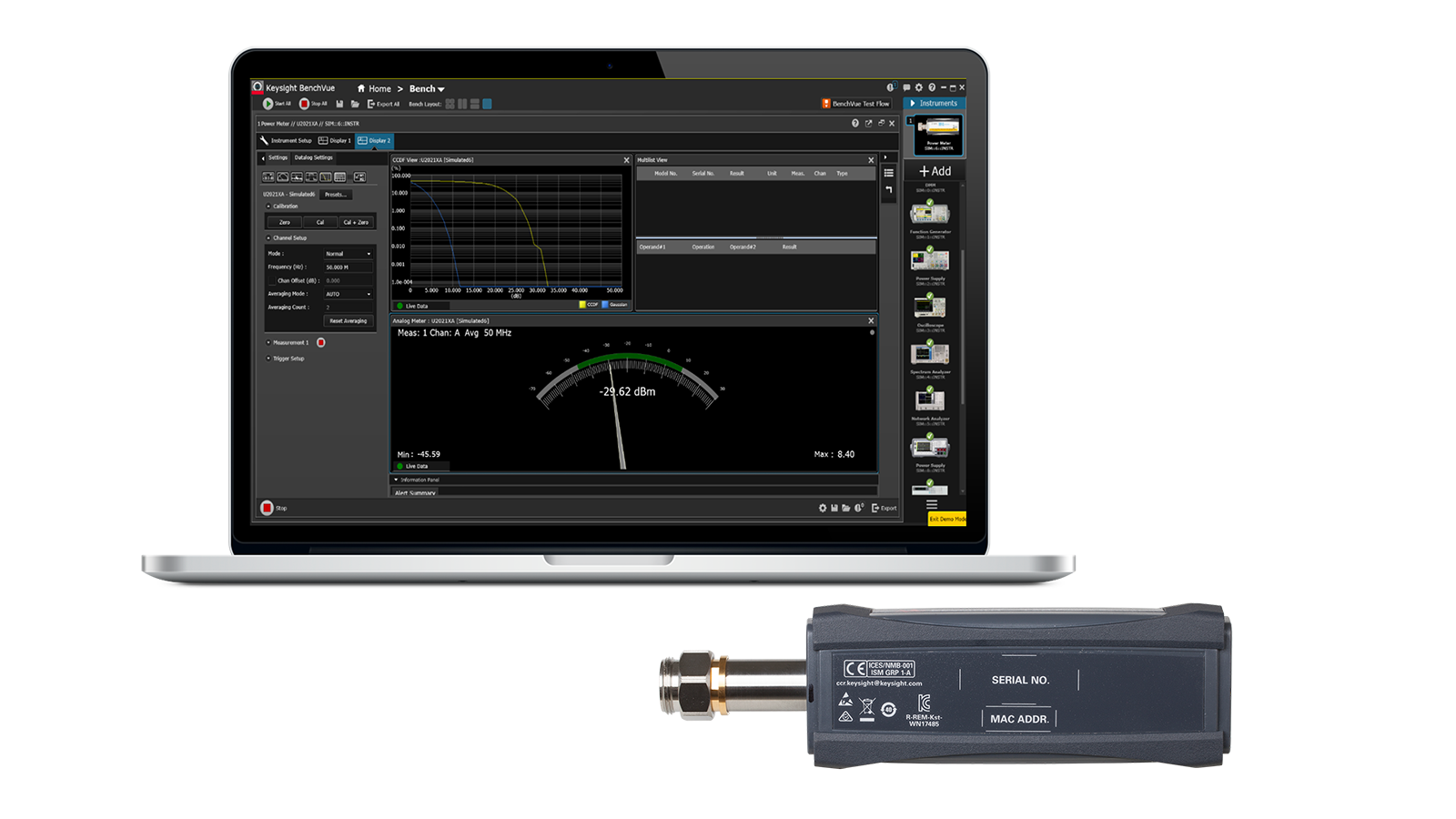
Optimized RF Power Averaging Solution
See Block Diagram of Optimized RF Power Averaging Solution

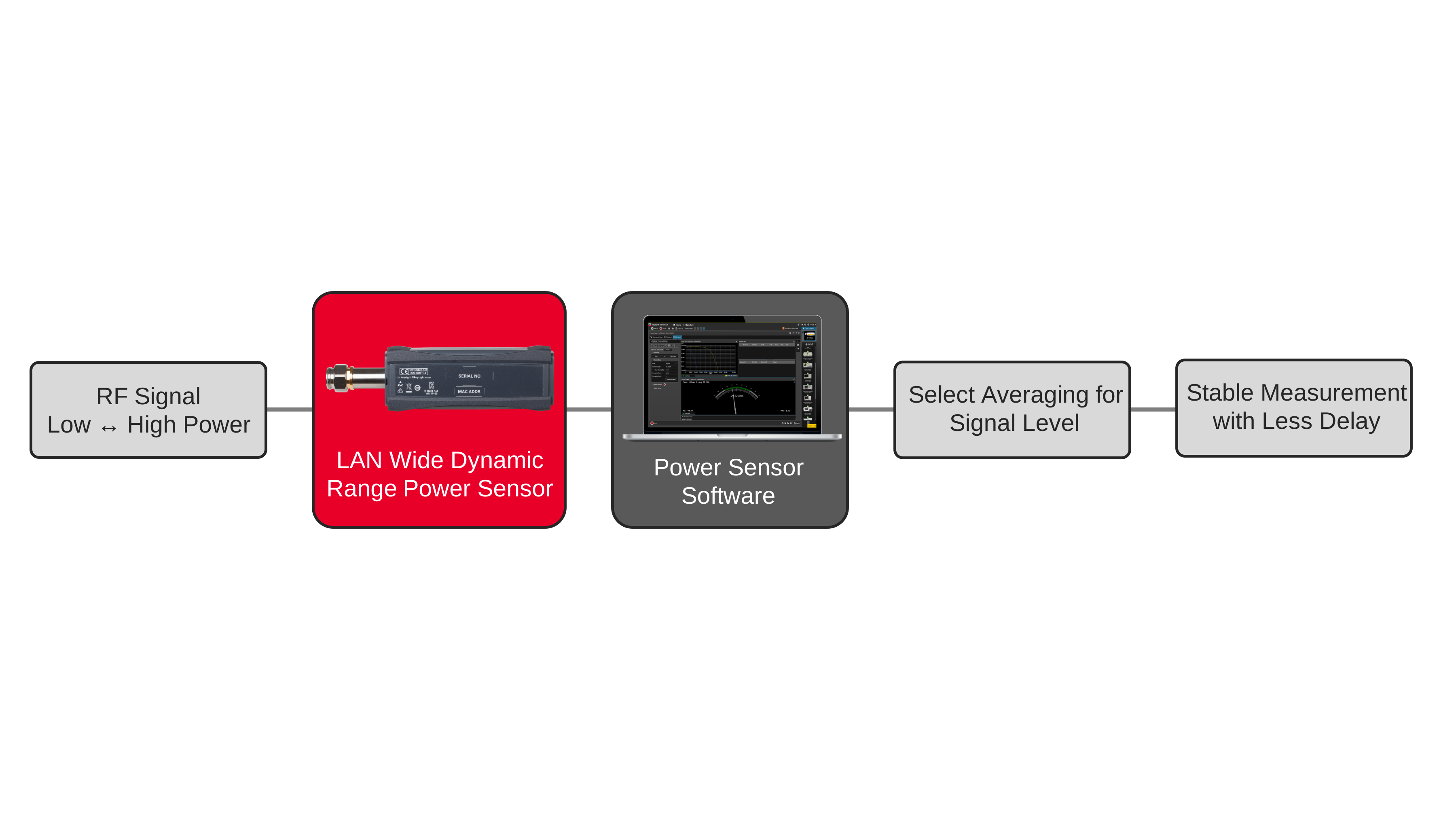
Explore Products in Our Optimized RF Power Averaging Solution
-

![]()
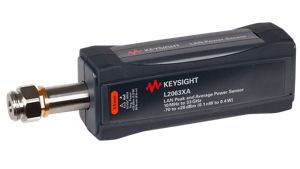
L2063XA LAN Wide Dynamic Range Average and Peak Power Sensor
-

![]()
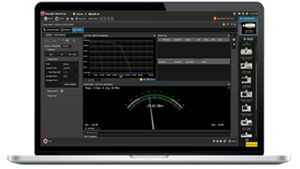
BV0007B PathWave BenchVue Power Meters/Sensors App


Discover Resources and Insights
Additional Resources for Wide Dynamic Range RF Power Measurements
Related Use Cases


-
![]()
Learn More
How to Automate Multi-DUT RF Power Calibration
Automate RF power calibration workflows across multiple devices using a power meter, sensors, and software for repeatable and efficient measurements.
Learn More

-
![]()
Learn More
How to Extend Diode Power Sensor Life in Production Test Environments
Extend diode power sensor life in production test environments using proper handling practices, controlled connections, and peak power monitoring.
Learn More
-
![]()
Learn More
How to Reduce RF Test Cycle Time Using Diode Power Sensors
Reduce radio frequency test cycle time using diode power sensors, fast-response power measurements, and automated measurement workflows to improve production and bench test efficiency.
Learn More

Get in Touch with One of Our Experts
Need help finding the right solution for you?