Artificial Intelligence
Artificial intelligence (AI) and machine learning (ML) are changing how we interact with technology — and how technology interacts with us. That's why we're building AI solutions to help you design, validate, and deploy the next generation of AI innovations.

eBook
5 Strategies to Optimize and Scale AI Data Centers
Discover five practical solutions to optimize AI data center performance for modern applications.
Find your AI solution
Whether you're building AI networks, designing data center infrastructure, or advancing 6G research, artificial intelligence and machine learning are shaping the future. Discover how our AI solutions can help you accelerate product design and development by integrating AI across the development life cycle.
- Networks
- Data centers
- 5G / 6G
- EDA
- Software testing
Products
Keysight AI Data Center Builder
AI / ML workload emulator for network evaluation, fabric validation, and infrastructure benchmarking.

Products
Interconnect and Network Performance Tester 1600GE
200GE - 1600GE Ethernet benchtop test system with PAM4 signaling and forward error correction support.

White Paper
How AI / ML Networks Differ from Traditional Networks
Find out how artificial intelligence and machine learning impact data center networking and design.
Black Book
Keysight AI Fabric Test Methodology
Discover a consistent, repeatable, and metrics-based test process to optimize infrastructures for AI workloads.
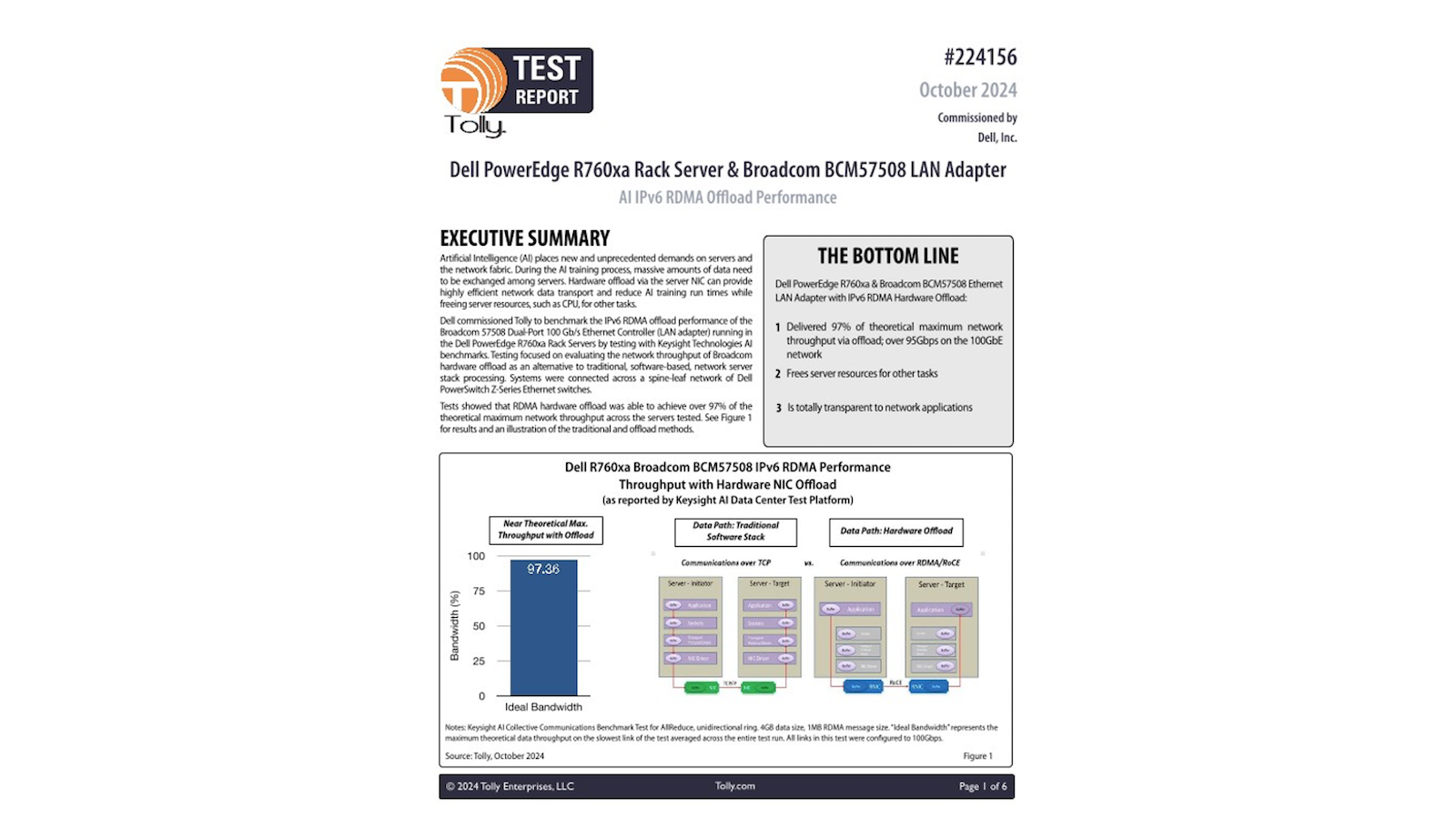
Report
Tolly Test Report: AI Performance Benchmarking
Discover how Tolly used Keysight AI Data Center Builder to validate Broadcom hardware's performance and throughput.
Article
Benchmarking Collective Operations
Learn a new methodology for understanding the performance limits of distributed AI infrastructure.

Solutions
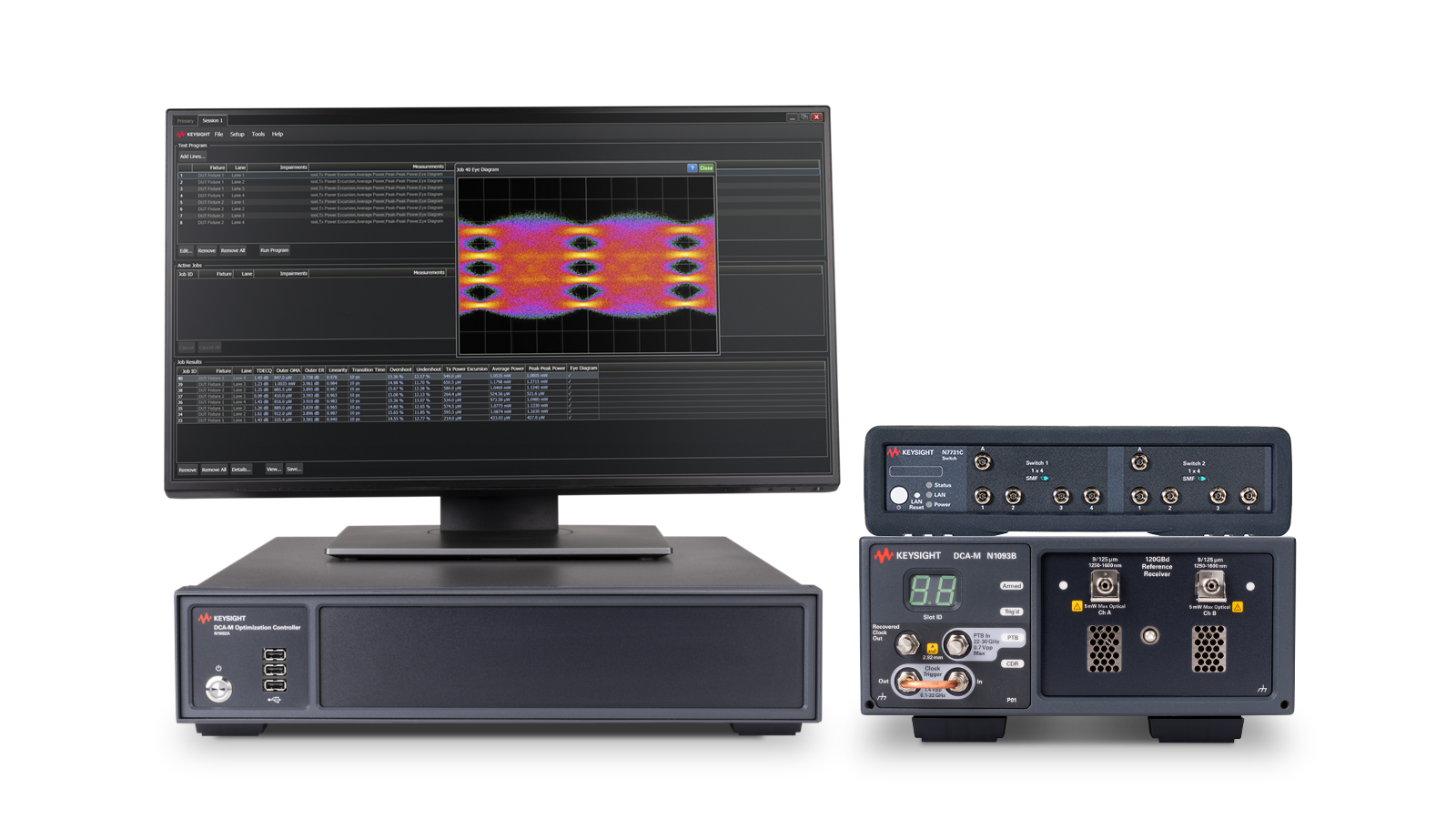
AI Data Centers
Validate every component, connection, and configuration to ensure networks and data centers can withstand the demands of AI.
Solutions
Data Center Networking
Validate device compliance with the latest digital standards, ensuring interoperability in the toughest signaling conditions.
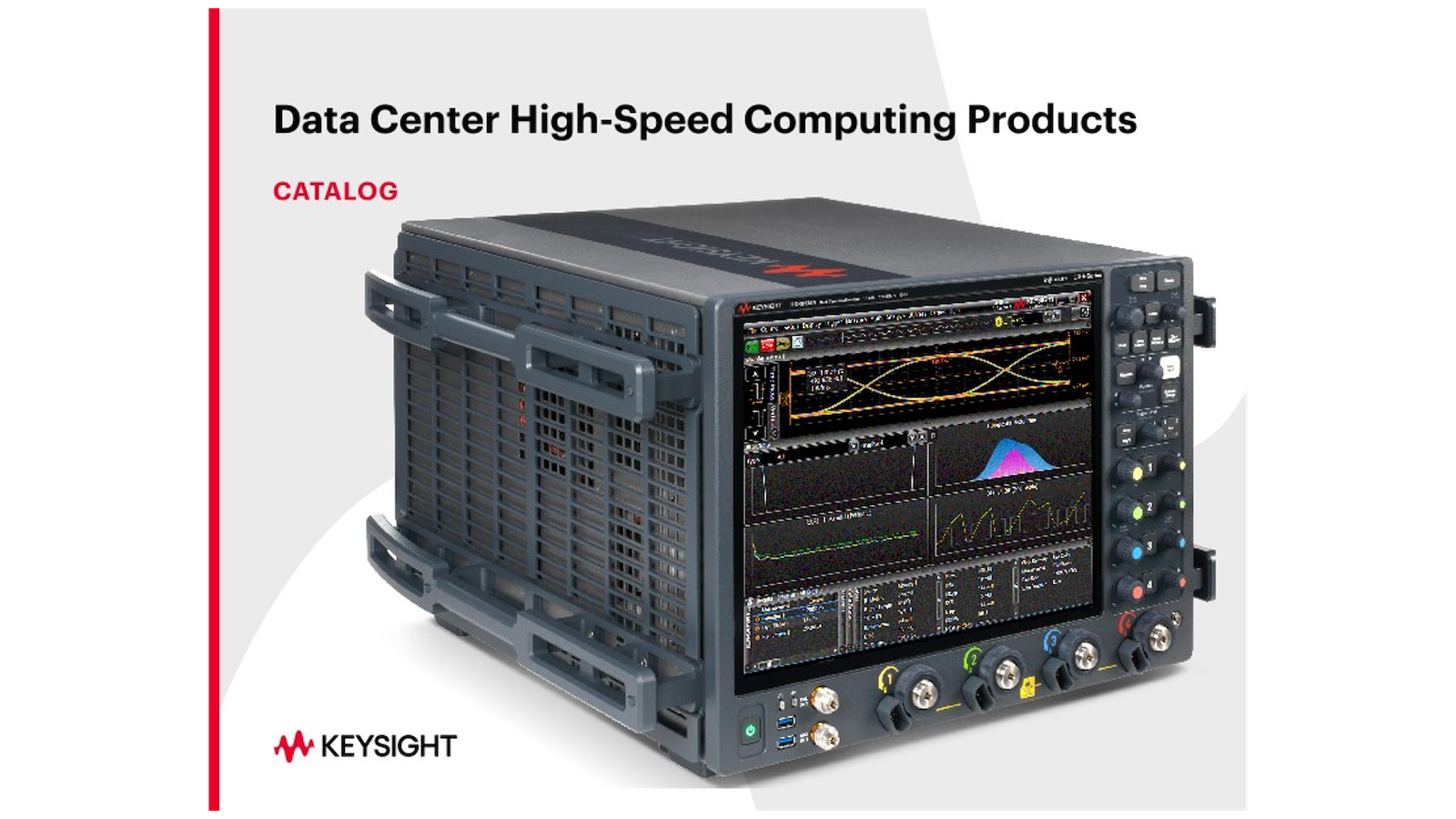
Catalog
Data Center High-Speed Computing Products
Stay ahead of AI-related industry standards, reduce time-to-market, and ensure device compliance and interoperability.
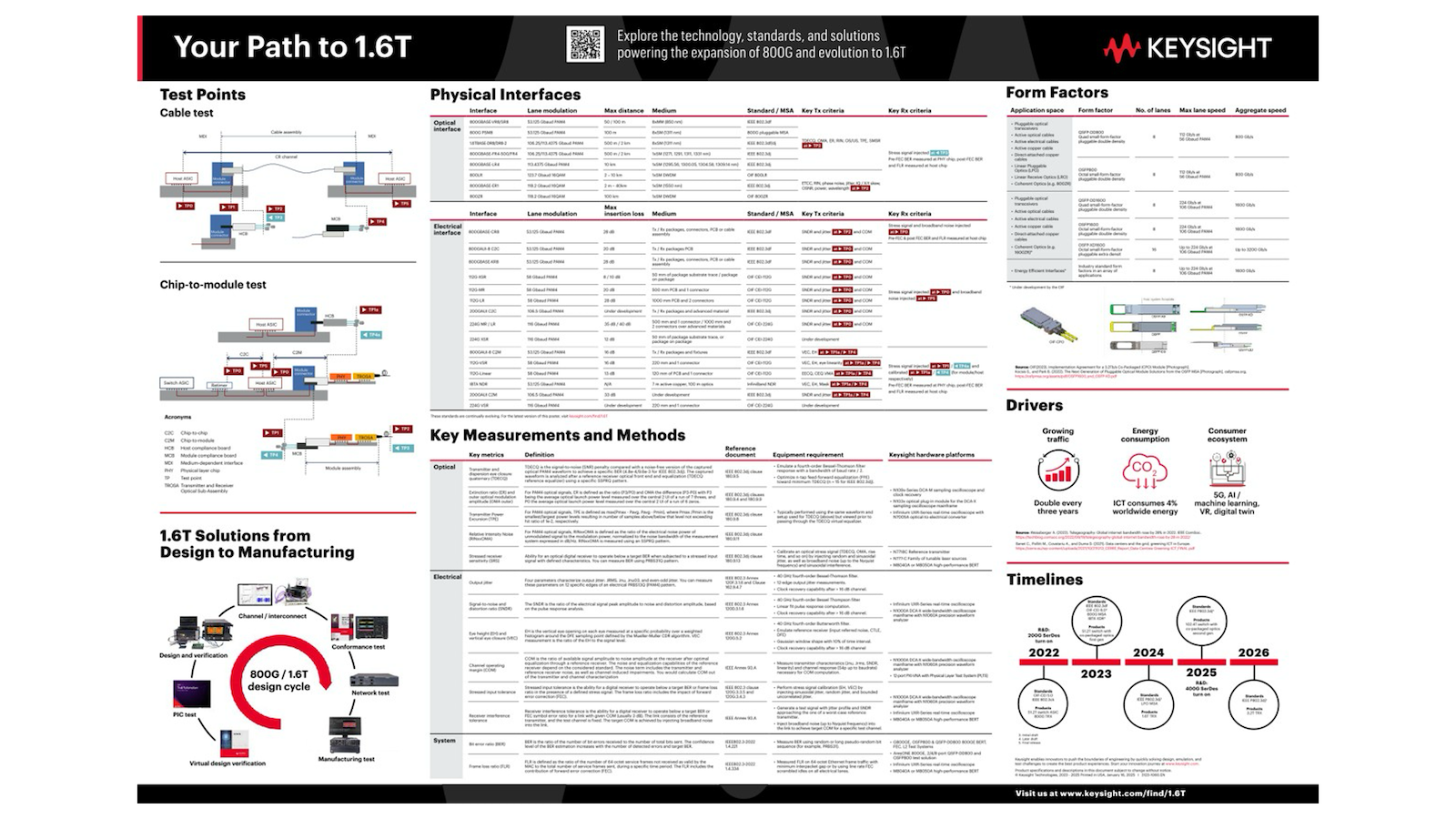
Poster
Your Path to 1.6T
Learn all about 800G / 1.6T — including test considerations, industry drivers, standards timelines, and Keysight solutions.
White Paper
800G / 1.6T Data Center Transceiver Test
Learn the new technologies and key considerations needed to support the requirements of 800G / 1.6T.
Article
CXL 3.0 and the Future of AI Data Centers
Discover how CXL 3.0 will enable data center infrastructure to unlock the potential of AI, ML, edge computing, and other data-intensive technologies.

Solutions
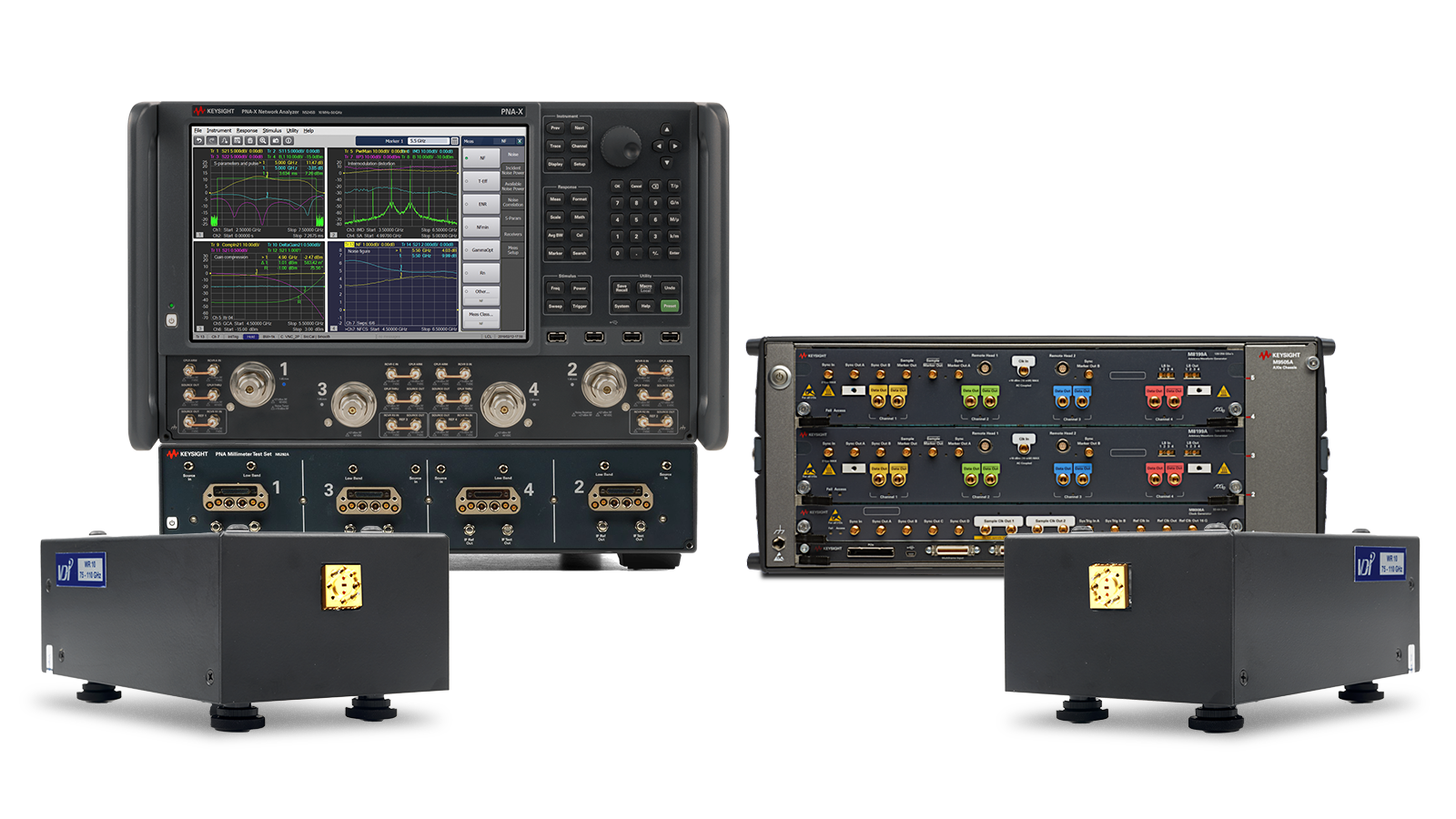
6G Research
Discover solutions for AI / ML, new spectrum technologies, novel network architectures, security, sustainability, and digital twins.
Solutions
Wireless Communications
Accelerate wireless networks and communication innovations from 5G and Wi-Fi® to 6G and AI / ML.

eBook
Innovating on 6G with Artificial Intelligence
Discover end-to-end solutions for simulating, testing, and evaluating devices, subsystems, and networks as 5G evolves towards 6G.

White Paper
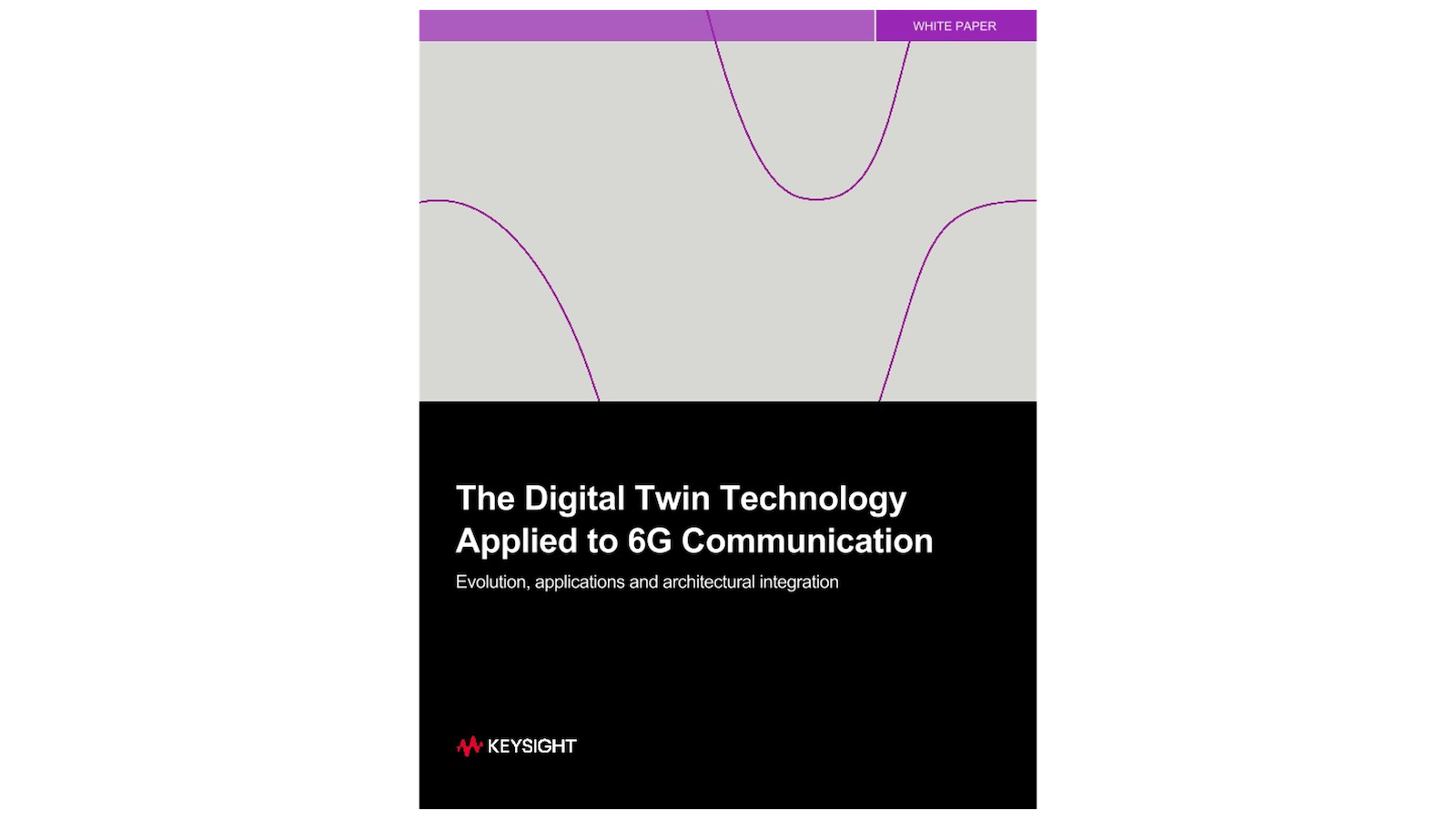
Applying Digital Twins and AI to 6G Communications
Learn about digital twins for 6G — including new frequency bands, new waveforms, AI-ML algorithms, and more.
Learn Hub
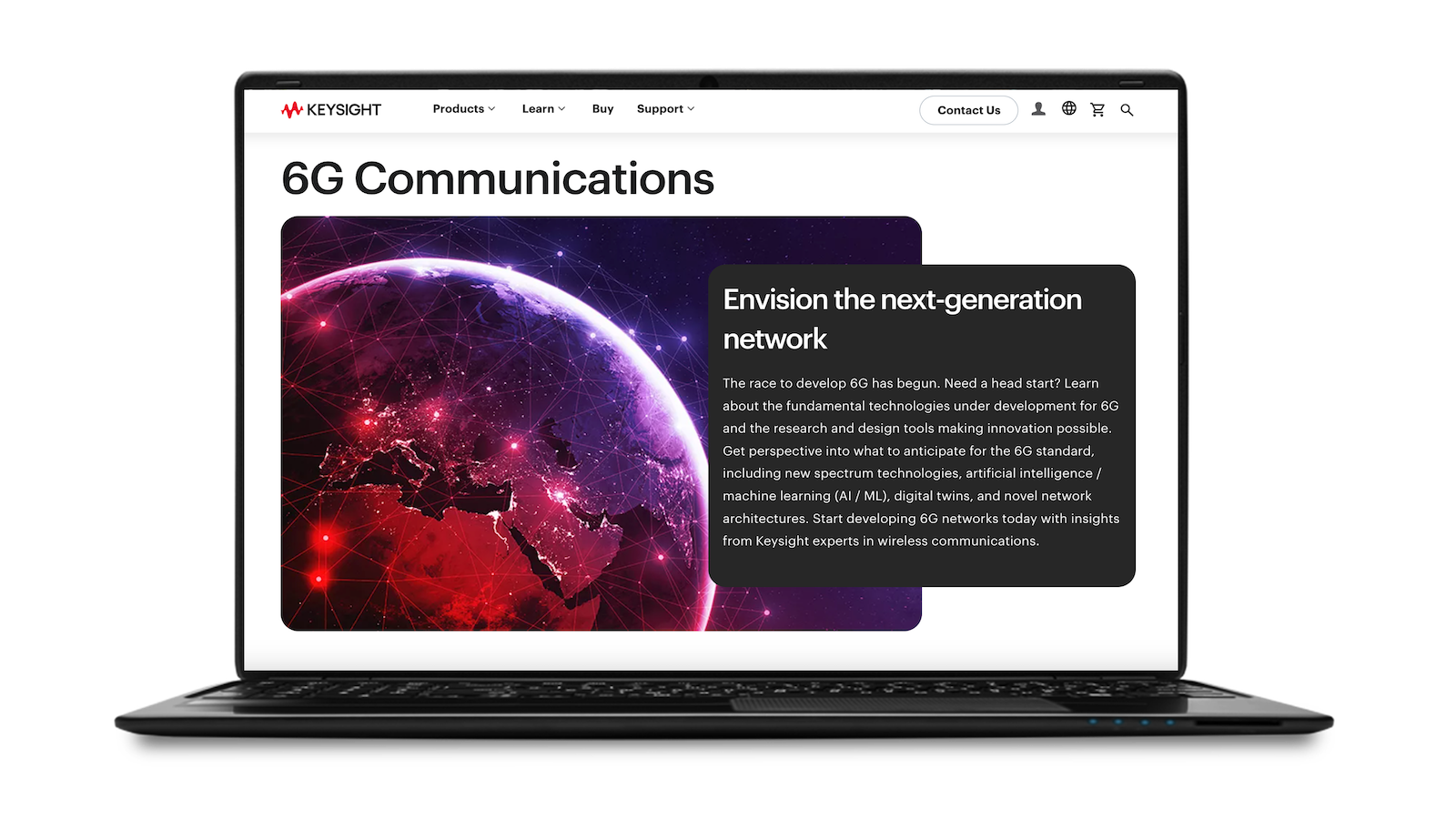
6G Communications
Learn about the technologies making 6G possible and the research and design tools that are accelerating innovation.
Video
Advancing AI for 6G with Academic Collaboration
Learn how Keysight and the University of Malaga contributed to three 3GPP contributions on AI / ML in support of 6G.

Solutions
AI / ML for EDA
Find out how Keysight EDA can solve real-world challenges — including connected design, channel modeling, and simulation.
Products
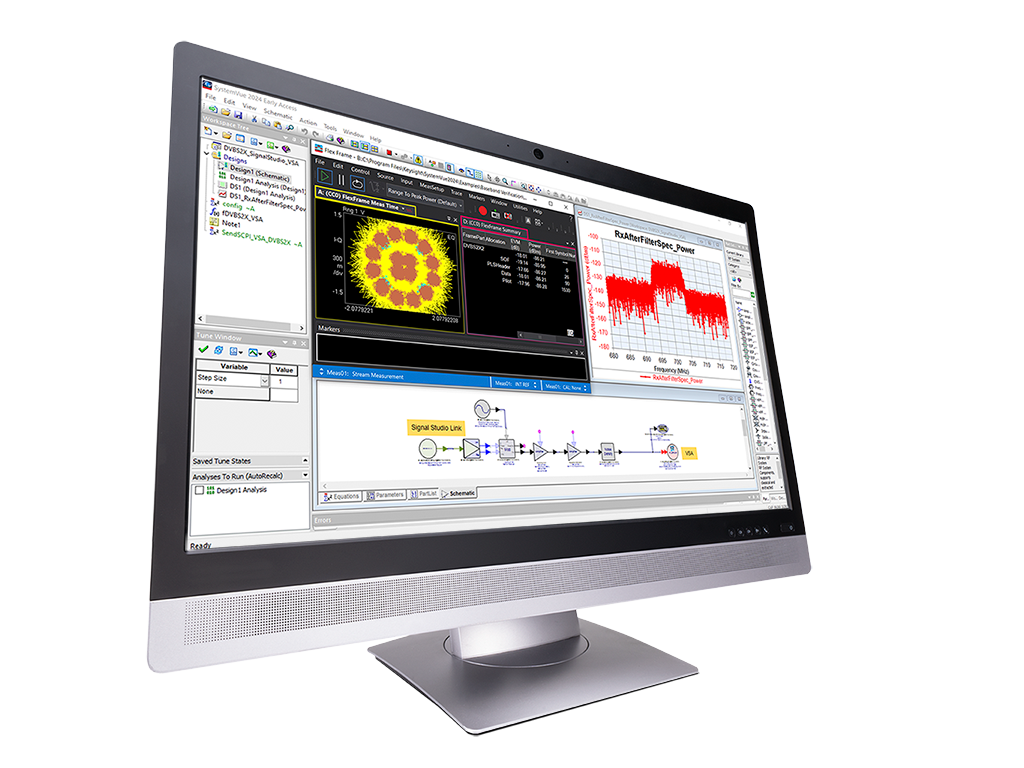
Keysight EDA Software
Shorten design cycles to achieve first-pass success across AI / ML, RF / microwave, 5G / 6G, and high-speed digital designs.

eBook
Accelerating AI Innovation with Concurrent Design Engineering
Find out how EDA tools accelerate AI chip development — including chiplets, 6G, power delivery, and engineering lifecycle management.
Application Note
Artificial Neural Network Simulation Models for RF Power Amplifiers
Learn how to build, validate, and use measurement-based simulation models for Power Amplifiers using Keysight’s Artificial Neural Network (ANN) engine.
Demo
Next-Gen Device Modeling with Artificial Neural Network (ANN)
Discover how to slash model extraction time from weeks to hours using Keysight's artificial neural network (ANN) model generator.
Article
AI in Device Modeling: Redefining Model Accuracy
Find out how Artificial Neural Networks (ANNs) unlock greater modeling efficiency for next-gen, AI-ready semiconductors.

Products
Software Test Automation
Accelerate releases, improve quality, and test any application or user interface with AI-powered software test automation.

Solutions
AI and Software Test Automation
Optimize user experience, speed up release cycles, and improve quality assurance processes with AI-powered software test automation.

eBook
The Ultimate AI Testing Playbook
Discover why artificial intelligence is the key to unlocking the potential of DevOps and continuous test.

White Paper
AI and Software Testing: Building Systems You Can Trust
Find out how to determine the trustworthiness of AI — and how to incorporate it safely and effectively into your software testing strategy.
Webinar
Generative AI: The Future of Software Testing
Discover the latest advances in generative AI, its practical applications in quality assurance, how it can accelerate test cycles and coverage, and more.

Article
AI-Augmented Testing: The Future of Software Testing
Learn about how Keysight software test automation employs generative AI — enabling testers to take advantage of next-generation capabilities.

Discover AI-related use cases
Dive deeper into AI solutions with self-paced learning
Frequently asked questions about AI
An AI solution is more than just a model — it’s an orchestrated system involving data, compute, and operations, optimized for tasks like inference, prediction, and automation. In infrastructure-heavy contexts such as data centers, AI solutions must integrate seamlessly with the compute stack (DDR/HBM memory, PCIe/CXL lanes), interconnects (400G, 800G, 1.6T), and networking protocols (RoCEv2, RDMA). Scalability depends on the ability of these layers to support jitter-free data movement, low latency, and high signal integrity under workload stress.
To function reliably at scale, an AI solution must combine:
- Compute: High-bandwidth memory (HBM/DDR), accelerated with PCIe/CXL interconnects
- Interconnect: 800G/1.6T backbones and 224G SerDes validated for signal quality and modulation
- Network: Low-latency communication with collective bandwidth optimization
- Power: Thermal-aware design and power integrity tools to manage consumption and prevent hotspots
KPIs like jitter, crosstalk, recovery time, algorithm bandwidth, bus bandwidth, and job completion metrics are tracked to ensure sustained performance across environments.
AI solutions differ significantly by industry based on latency tolerance, compute intensity, and data locality. For example:
- Financial services require ultra-low latency and high interconnect integrity (PCIe Gen5 / CXL).
- Healthcare relies on robust memory bandwidth for imaging workloads (DDR / HBM performance).
- Cloud / hyperscale operators prioritize thermal efficiency and job completion time across rack-scale deployments.
These trade-offs must be modeled and benchmarked using tools like workload emulation and simulation.
AI-related benefits include workload automation, reduced operational costs, and smarter system management. Infrastructure-aware AI solutions can dynamically allocate compute, route data efficiently, and anticipate failures based on telemetry.
These challenges include:
- Design validation across memory, interconnect, and power domains
- Maintaining modulation quality at high signaling speeds (224 Gbps, 1.6T)
- Controlling thermal and power integrity under AI load conditions
Without thorough emulation and benchmarking, AI deployments risk failure due to unexpected jitter, latency, or bandwidth bottlenecks.
AI data pipelines must be designed with infrastructure constraints in mind. In high-performance environments:
- Data is pre-processed close to memory (e.g., HBM near-processing)
- PCIe / CXL enables memory pooling and efficient access
- Network configurations allow low-latency transfer across compute nodes
Additionally, telemetry collected during early validation (e.g., from signal integrity tests or workload emulation) helps refine model performance and training strategies.

Get in touch with one of our experts.
Want help or have questions?