6G Testing Help Center


Ask Our 6G Experts
Do you have a specific 6G testing challenge or questions about 6G testbeds?
Trending 6G Testing Questions
3GPP defines integrated sensing and communication (ISAC) through a coordinated set of technical reports (TRs) across different working groups that address service requirements, radio aspects, and channel modeling. The following TRs collectively define ISAC requirements and ongoing standardization work:
Core Service Requirement Reports (SA1)
- 3GPP TR 22.837 – Feasibility study on ISAC under Release 19: This is the foundational report developed by 3GPP SA1. It defines ISAC use cases such as object detection, motion monitoring, and environmental sensing, and lays out service-level requirements for 5G-Advanced and pre-6G systems.
- 3GPP TS 22.137 – Service requirements for 5G systems under Release 19: This technical specification complements TR 22.837 by translating feasibility findings into normative service requirements. It defines key performance indicators (KPIs) such as sensing accuracy, detection latency, and spatial resolution.
Radio and Channel Modeling Reports (RAN1/RAN2)
- 3GPP TR 38.857 – Study on channel model enhancements for ISAC: Developed under RAN1, this report extends the stochastic channel models of TR 38.901 to support ISAC modes (BS monostatic, BS–UE bistatic, UE–UE bistatic, etc.) for frequencies 0.5–52.6 GHz, extendable to 100 GHz.
References:
Integrated Sensing And Communications (ISAC); Use Cases and Deployment Scenarios
Testing 6G NTN quality of experience (QoE) involves combining signal emulation, network emulation, and channel modeling to validate how satellite and terrestrial links influence end-user performance. Keysight provides an integrated approach to achieve this through its NTN and 5G NR / 6G test solutions. Here is an overview of a test workflow using Keysight tools:
- Signal generation: Create NR-NTN or 6G candidate waveforms using the MXG or VSG for uplink / downlink reference signals.
- Channel emulation: Apply delay, Doppler, orbit dynamics, and interference through PROPSIM or pre-standardization FR3 emulation models.
- Network integration: Use UeSIM or UXM as RAN emulators to simulate user-plane and control-plane flows.
- QoE measurement: Record application-level metrics—throughput, latency, jitter, and MOS—linked to satellite motion or channel impairments.
- AI feedback optimization: Employ Keysight PathWave Analytics for automated tuning of link and service parameters to maximize QoE.
The integration of non-terrestrial networks (NTNs) with terrestrial networks introduces unique challenges such as large propagation delays, Doppler shifts from satellite motion, intermittent link availability, NTN-TN mutual interference, and atmospheric impairments that differ substantially from terrestrial systems. Ensuring seamless handovers, cross-layer resource allocation, and interoperability across diverse platforms (LEO, GEO, HAPS, UAVs) adds to the complexity.
Keysight’s SystemVue RF Digital Twin modeling tool helps overcome these barriers by providing high-fidelity link-level modeling and simulation of end-to-end NTN systems, including satellite payloads, gateways, and user equipment under realistic propagation conditions. It incorporates key impairments like phase noise, RF nonlinearity, and I/Q imbalance, while supporting phased-array antenna modeling, 3D trajectory visualization, and nonlinear PA analysis with DPD. This allows engineers to accurately predict performance, validate beam management strategies, and evaluate link robustness before hardware deployment, ultimately accelerating reliable NTN-6G system design and ensuring scalability for global connectivity.
Learn more about Keysight's 5G / 6G System Design Solution.
Here are some use cases where AI can be used in developing NTN RAN:
Channel prediction and modeling: NTN channels are highly dynamic due to satellite movement, Doppler, and long propagation delays. AI/ML (e.g., deep learning, RNNs, transformers) can learn channel dynamics and predict channel state information (CSI), improving link reliability and reducing overhead.
Beamforming and handover optimization: AI can optimize adaptive beam steering for LEO satellites or HAPS, minimizing outage when users move across beams. ML algorithms predict mobility patterns and automate seamless handovers across satellites or between terrestrial and non-terrestrial cells.
Resource and spectrum management: NTN RAN must deal with fragmented spectrum and spectrum sharing across multiple RATs. AI can be used to dynamically allocate resources across FR1/FR2/FR3 + NTN bands, ensuring fairness and QoS under fluctuating demand.
Energy and power efficiency: Satellites and UAVs have constrained power budgets. AI can optimize power control, scheduling, and load balancing to maximize lifetime and efficiency.
Security and anomaly detection: NTN links are more vulnerable to jamming / spoofing. AI-driven anomaly detection can identify unusual signal patterns or cyber-physical attacks in real time.
Integrated sensing and communication (ISAC): AI helps NTN nodes use the same waveform for communication and sensing, enabling tracking of users, objects, or threats while maintaining connectivity.
AI is anticipated to be integrated into various components of the 6G wireless network, such as the physical layer of 6G transmitters and receivers. This will enable devices to independently make decisions, efficiently manage resources, and adjust to dynamic conditions without depending entirely on centralized systems. For this reason, testing wireless components that integrate AI technology is fundamentally different from testing traditional components.
Conventional test strategies that validate the performance of a wireless device against a set of specifications will not be sufficient. AI-enabled devices are built to adjust to unpredictable real-world situations and function in dynamic environments with fluctuating signal strengths, interference levels, and user densities. Consequently, AI algorithms need to be trained to optimize performance across a broad range of conditions to ensure reliability. Testing must include scenarios that differ significantly from the training set to assess performance in changing and unpredictable real-world environments.
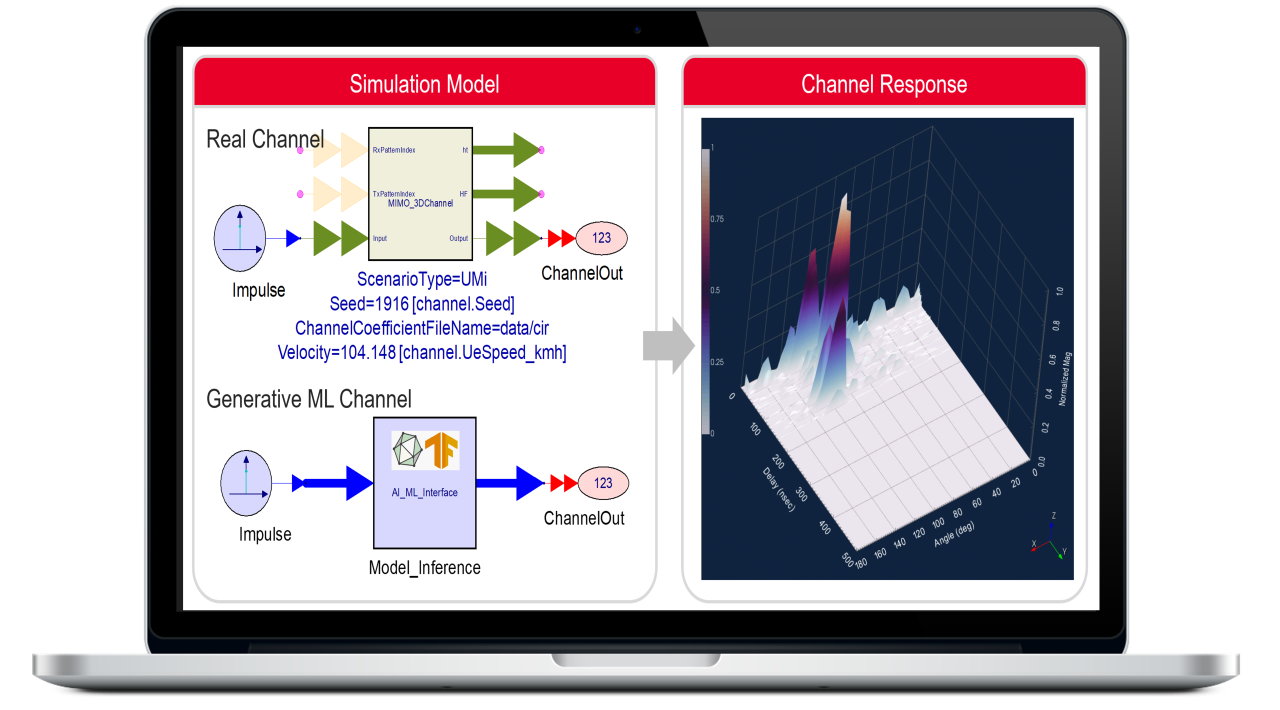
Channel modeling enables you to design and test your 6G mathematical models and evaluate the performance of transmitters and receivers in the communications system. In 6G frequency range three (FR3) testing, you need phase and time-coherent multichannel emulation using semideterministic and deterministic channel models. Key performance metrics for 6G FR3 channel modeling include:
- Beam weight estimation and pointing metrics
- Beam shape and gain
- Sidelobe levels
A robust channel emulation solution enables you to create diverse propagation environments and emulate hardware impairments such as phase noise and interference.
Using a higher spectrum for 6G involves overcoming radio frequency propagation challenges in these bands. In addition, the 5G protocol stack will need modifications to support the larger bandwidths and higher carrier frequencies necessary for 6G applications, which have not been tested or deployed in the real world. However, you can design and validate an early 6G network by emulating real-world user equipment (UE).
There are three fundamental approaches to achieving high data throughput for 6G. The first involves using higher-order modulation schemes to increase the number of bits transmitted for each symbol. The second approach uses more spectrum bandwidth and increases data throughput using a higher symbol rate. A third approach transmits multiple and independent data streams using multiple antenna techniques such as multiple-input / multiple-output (MIMO). MIMO exploits radio channel complexity and simultaneously transmits and receives multiple and independent data streams to generate a higher data throughput.
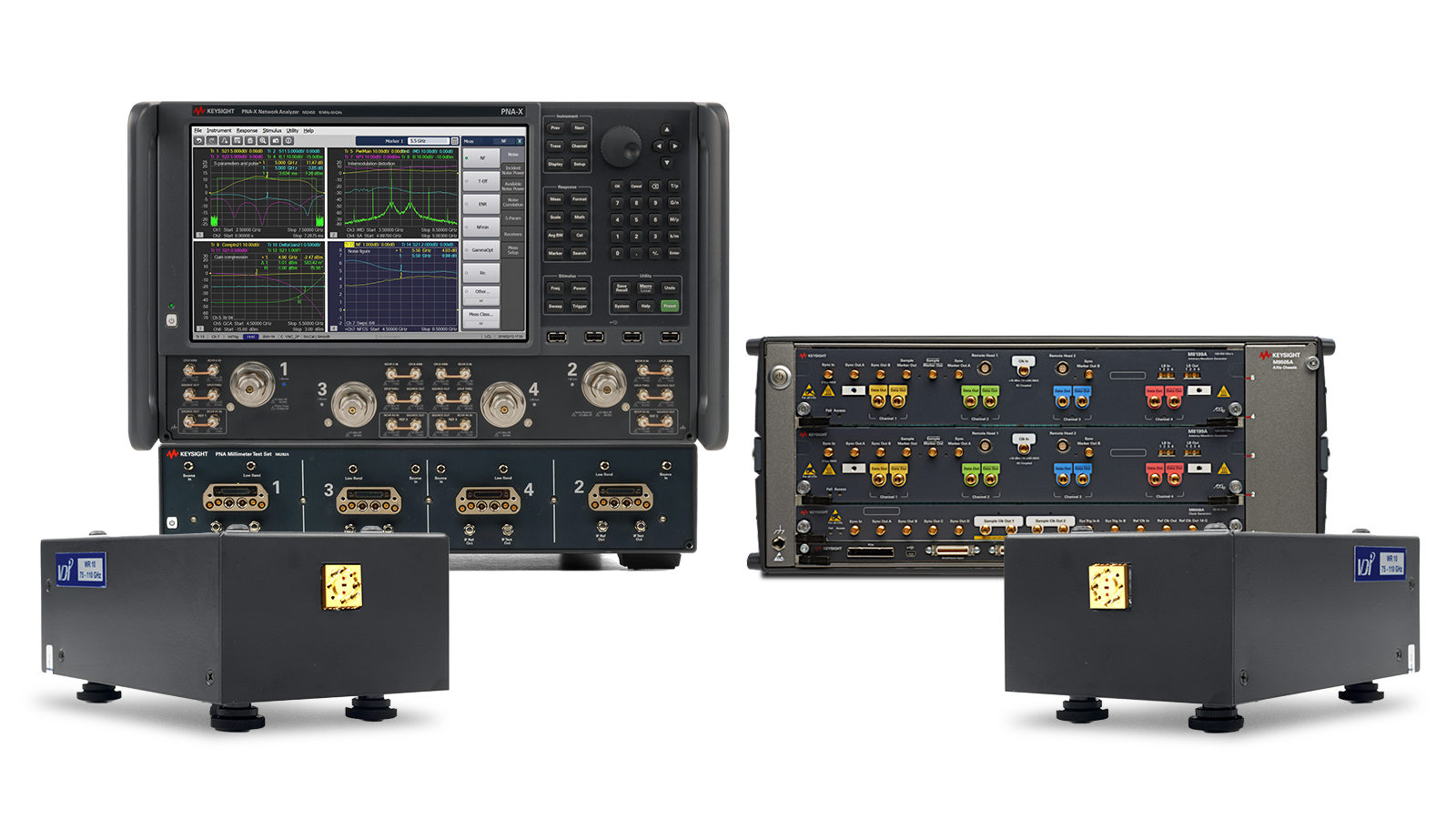
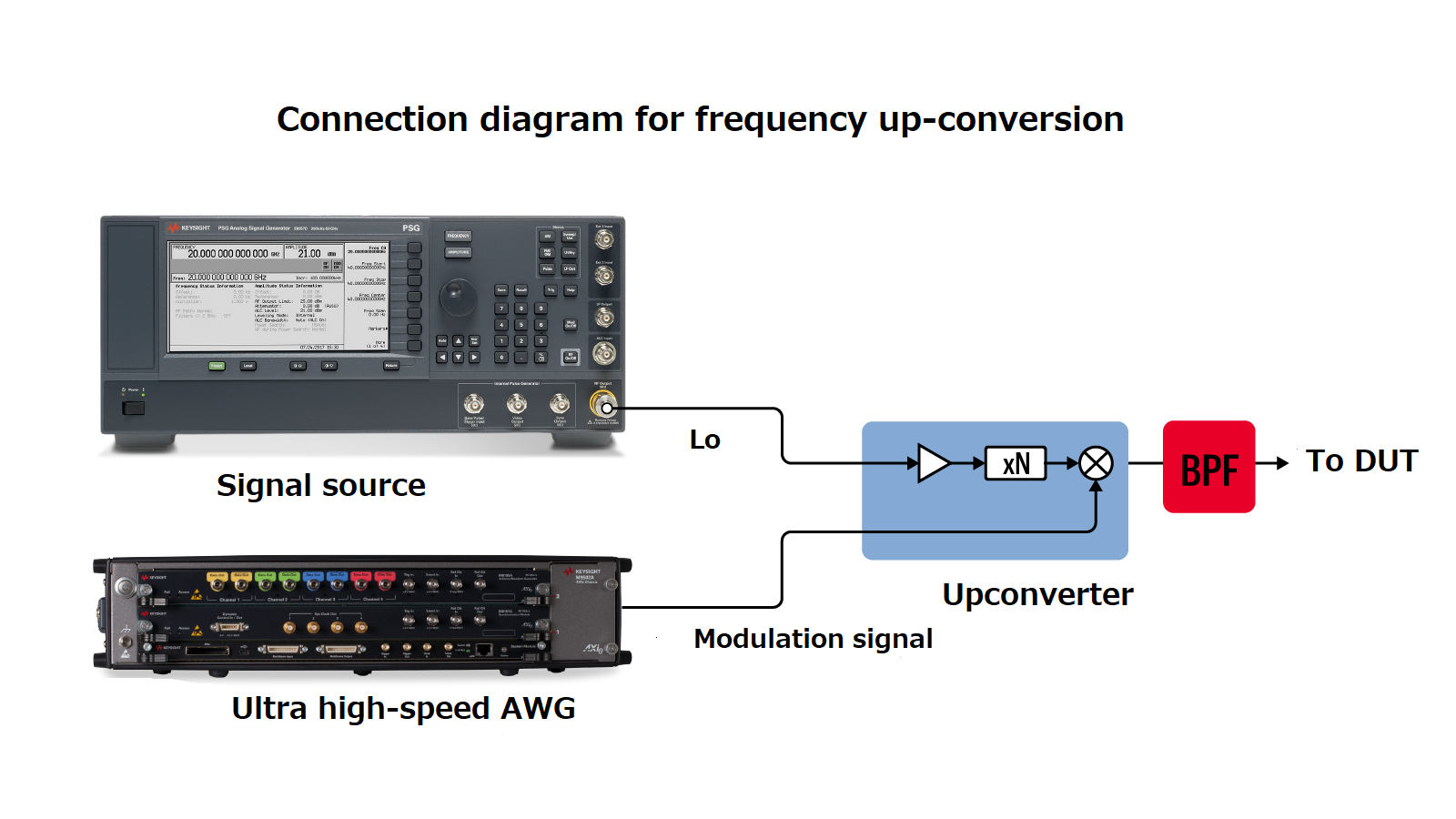
Characterizing sub-THz wideband signals for 6G involves using a combination of high-performance equipment and software. You need an ultra-high-speed arbitrary waveform generator (AWG), a frequency upconverter, and a signal generator acting as a local oscillator. This test setup helps generate, measure, and characterize H-band candidate waveforms.
A typical 6G testbed must support a multitude of frequency bands, bandwidths, and waveform types to address various research needs. Engineers need to use an arbitrary waveform generator (AWG) that can generate wideband and extreme bandwidth‑modulated intermediate frequency (IF) signals.
Compact D-band (110 to 170 GHz) or G-band (140 to 220 GHz) upconverters can then convert the wideband IF to the desired sub-terahertz frequency band. Receiver testing requires downconverting the signal to an IF. You will need downconverters to accomplish this task. You will also need an oscilloscope or a multichannel Keysight AXIe streaming digitizer to digitize the signal.
Keysight, in collaboration with 16 partners, launched the 6G-SANDBOX in January 2023 to create a pan-European test bed for 6G experimentation. The project combines digital and physical nodes to deliver fully configurable, manageable, and controllable end-to-end networks for validating new technologies and research advancements for 6G. The 6G-SANDBOX enables entities across the European Union (EU) to test promising 6G enablers, including network automation, cybersecurity, digital twins, and artificial intelligence (AI), as well as technologies that streamline energy consumption. The group has expanded to include research entities in Asia.
6G Testing Focus: Terrestrial-NTN Showcases
Explore 6G Use Cases




Featured use case
How to Emulate Non-Terrestrial Networks in the Lab
Non-terrestrial networks (NTNs) test requires laboratory reconstruction of all possible NTN scenario permutations involving user equipment (UE) and network emulation, satellites, orbital models, and channel models. The testing scenarios extend across physical, protocol, and application layers. They include emulating physical propagation conditions, such as large distances and speeds, delay and Doppler effect compensation, and atmospheric / weather effects. Ensuring that gNBs and UE comply with 3GPP standards, interoperate, and achieve seamless coexistence with terrestrial networks, as well as benchmarking key performance indicators like latency, throughput, and quality of service, is necessary.
Non-terrestrial network end-to-end testing requires emulating all the essential components of an NTN. Test engineers need an end-to-end solution to cover all phases in the testing workflow, including modeling, physical channel impairments, and protocol and application-level testing. The solution must measure application-level performance (energy consumption, protocol, RF, throughput, and latency) and integrate automation software to enable engineers to replicate scenarios and perform measurements.
Prepare For 6G Standardization
The Third Generation Partnership Project (3GPP), the International Telecommunication Union Radiocommunication Sector (ITU-R), and the O-RAN Alliance play key roles in developing 6G wireless technology standards. Ensure your 6G test bed stays relevant as the standards evolve by understanding upcoming milestones.
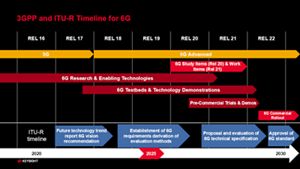
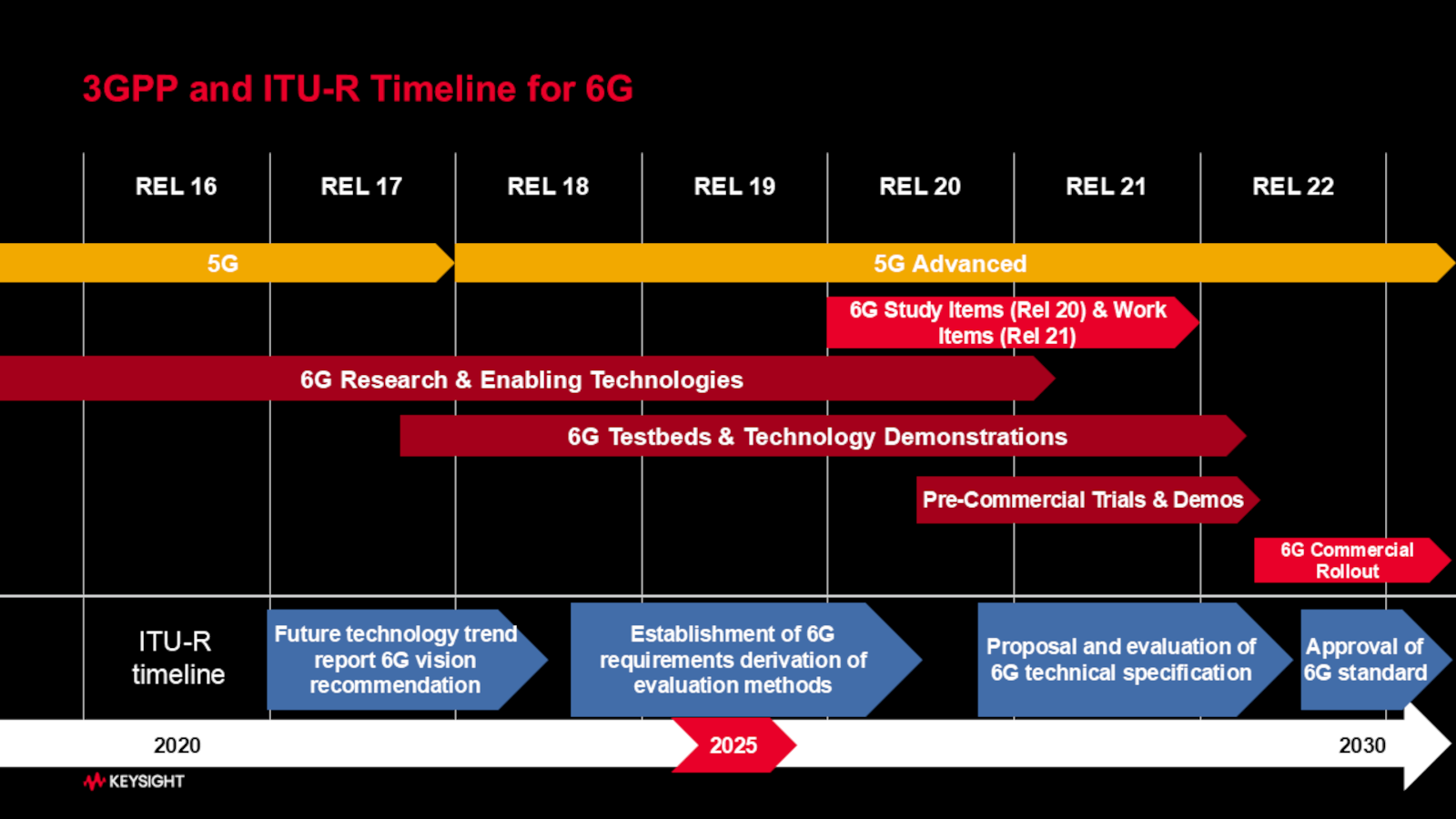
There are currently no fully established conformance testing standards specifically for 6G. However, 3GPP is projecting the following developments and 6G release dates:
- 2024 – 2026: Definition of 6G technical performance requirements.
- 2027 – 2028: Development of 6G technology specifications in Release 21.
- 2028 – 2029: Submission of 6G self-evaluations to ITU.
- 2030: Deployment of 6G for commercial uses.


Sensing the 6G Future: Insight from the Wireless Channel
6G is redefining the role of wireless networks, not just as a communication medium, but as a tool for sensing the environment. From gesture recognition to object detection and location awareness, sensing applications demand new ways to model, simulate, and test. Join us at this online event to learn more.
6G Test: Go Deeper

Get in Touch with One of Our Experts
Need help finding the right solution for you?
What are you looking for?