How to Avoid Common RF Power Measurement Mistakes with Diode Sensors

Avoid Measurement Setup Errors
Accurate radio frequency power measurements depend on proper measurement setup, correct sensor selection, and careful handling throughout the measurement process. Common mistakes such as exceeding sensor operating limits, using damaged or contaminated connectors, selecting an unsuitable sensor, or failing to verify signal conditions before connection can introduce measurement errors or permanently damage the sensor. Engineers should establish consistent setup procedures, inspect connectors before each measurement, verify expected signal levels, and confirm that the measurement configuration matches the intended application before beginning data acquisition.
A typical measurement setup includes a diode power sensor connected to a compatible peak power meter using appropriate radio frequency interconnects. Engineers should maintain clean connector interfaces, avoid unnecessary mechanical stress on the sensor, and operate within the specified measurement range throughout development, manufacturing, and calibration activities. Following standardized measurement practices helps reduce setup-related errors, improve measurement consistency, protect sensitive measurement hardware, and increase confidence in radio frequency power measurements across multiple operators and test environments.

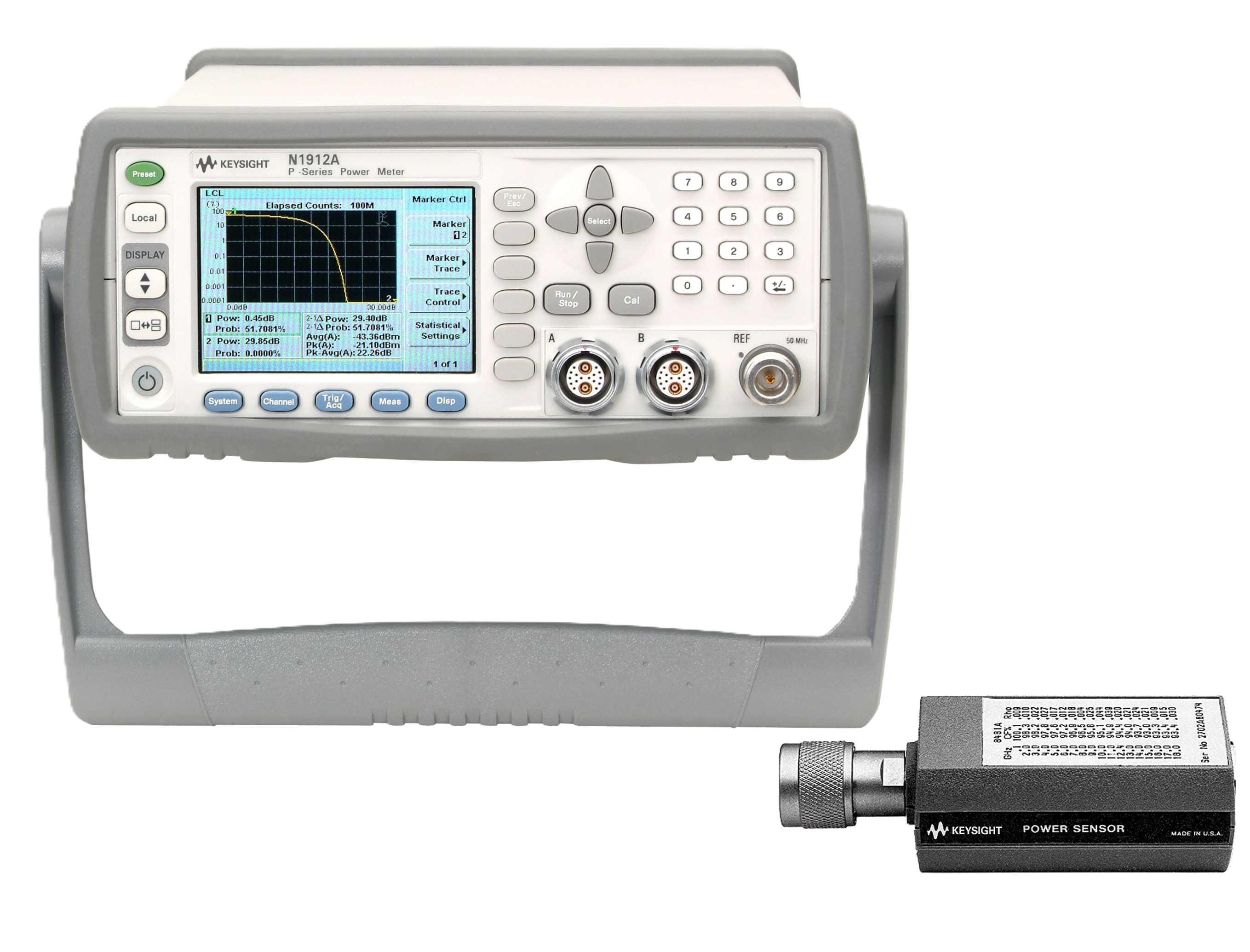
Reliable RF Power Measurement Solution
See Block Diagram of Reliable RF Power Measurement Solution


Explore Products for Our Reliable RF Power Measurement Solution
-

![]()
N1912A P-Series Dual Channel Power Meter
-
![]()
8487D Diode Power Sensor


Discover Resources and Insights
Additional Resources for Reliable RF Power Measurements
Related Use Cases

-
![]()
Learn More
How to Perform Burst Power Measurement
Measure burst RF signal power using time-gated averaging with power meters, sensors, and automated control software for TDMA systems.
Learn More

-
![]()
Learn More
How to Measure RF Power During Rapid Amplitude Switching
Measure RF power during rapid amplitude transitions using a power meter, fast-response sensors, continuous acquisition, and automated measurement techniques.
Learn More
-
![]()
Learn More
How to Measure Average Power of Frequency-Hopping Signals
Measure average RF power of frequency-hopping signals using power meters, sensors, and time-aligned measurement techniques for accurate results.
Learn More

Get in Touch with One of Our Experts
Need help finding the right solution for you?