How to Compare Thermistor and Diode Sensor Measurement Accuracy

Compare Sensor Accuracy Methods
Thermistor and diode-based radio frequency power sensors rely on fundamentally different measurement principles, resulting in distinct accuracy characteristics across frequency, power level, and signal modulation conditions. Thermistor sensors measure true average power through thermal conversion, providing high absolute accuracy with minimal dependence on waveform shape or crest factor. In contrast, diode sensors operate through rectification and detection of voltage proportional to input power, introducing potential errors due to nonlinearity, frequency response variation, and sensitivity to modulation characteristics. These differences become increasingly significant in applications requiring traceable measurements and precise uncertainty control.
Comparing sensor accuracy requires performing controlled measurements across a defined power range while applying corrections for mismatch, effective efficiency, and system losses. Engineers must evaluate linearity, noise floor behavior, and compression effects, particularly at the extremes of the dynamic range where diode sensors may exhibit increased error. Statistical analysis of measurement deviation enables quantification of accuracy differences, while repeated measurements ensure confidence in observed trends. This comparison provides critical insight into selecting the appropriate sensor technology for specific measurement requirements.

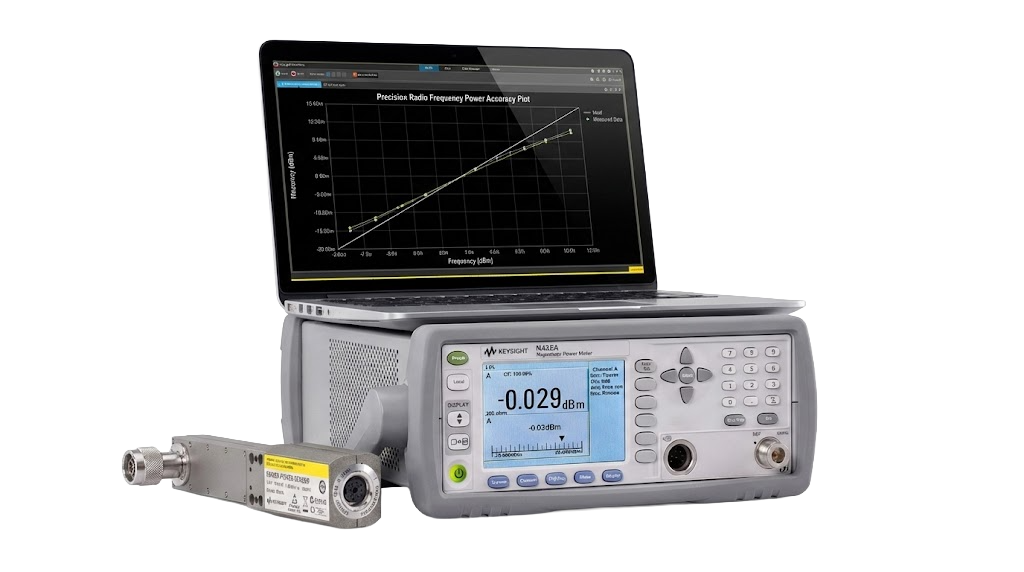
Sensor Accuracy Comparison Solution
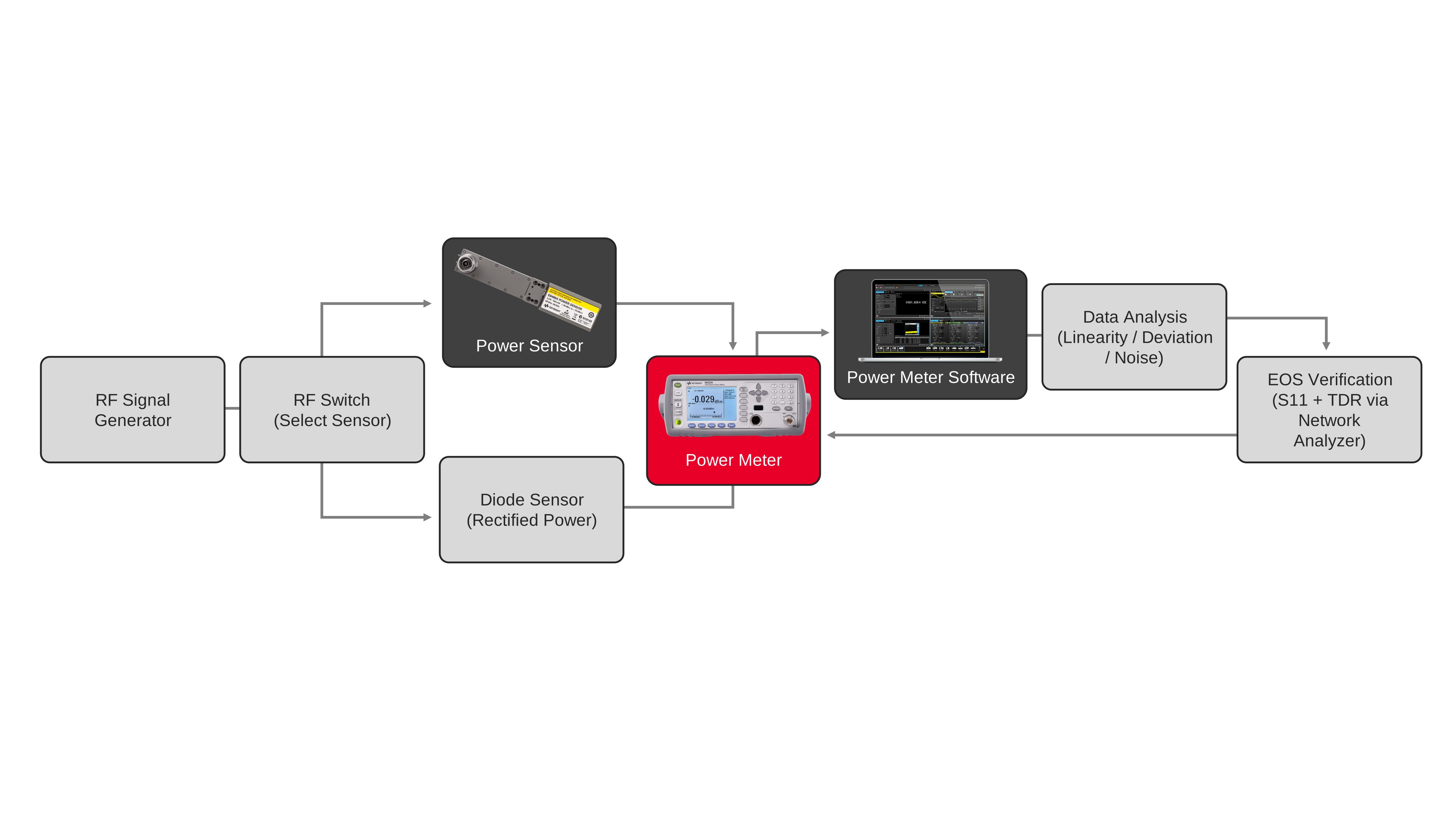
See Block Diagram of Sensor Accuracy Comparison Solution

Explore Products for Our Sensor Accuracy Comparison Solution
-

![]()
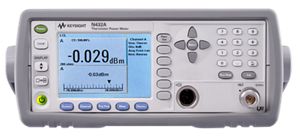
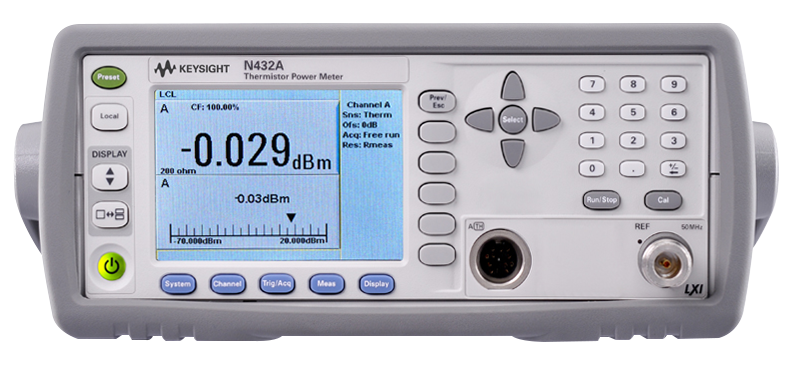
N432A Thermistor Power Meter
-
![]()
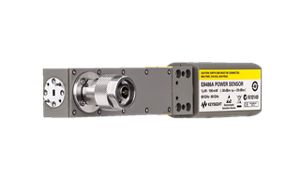
E8486A Waveguide Power Sensor
-

![]()
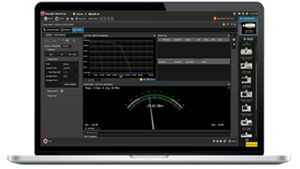
BV0007B PathWave BenchVue Power Meters/Sensors App


Discover Resources and Insights
Additional Resources for Sensor Accuracy Comparison
Related Use Cases

-
![]()
Learn More
How to Automate RF Power Logging for Environmental Testing
Automate RF power logging during environmental testing using a power meter, continuous measurement, data acquisition, and software-controlled workflows.
Learn More

-
![]()
Learn More
How to Characterize RF Power Sensor Drift Behavior
Characterize RF power sensor zeroing and drift behavior using a power meter, controlled measurements, data logging, and long-duration analysis techniques.
Learn More
-
![]()
Learn More
How to Verify RF Power Measurement Repeatability
Verify RF power measurement repeatability using a power meter, controlled test conditions, repeated acquisition, and statistical analysis techniques.
Learn More

Get in Touch with One of Our Experts
Need help finding the right solution for you?