










- Overview
- All Models
- Support
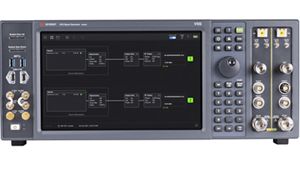
Generate the most complex wideband signals
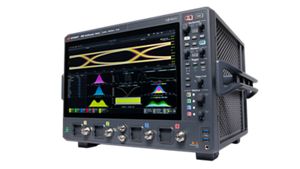
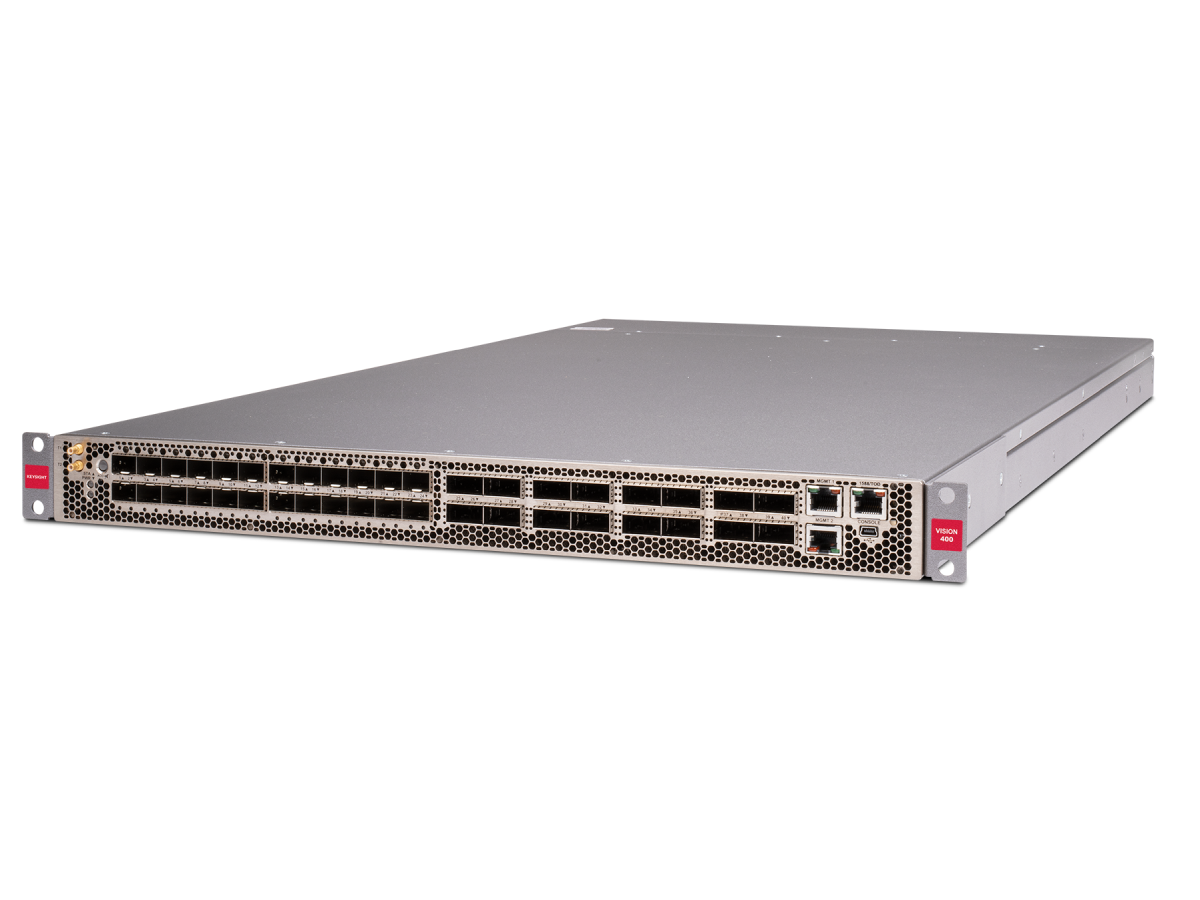
Keysight XG7-class Pro vector signal generators include the VXG Series. Pro vector signal generators extend frequency support up to 54 GHz, or 110 GHz with a frequency extender, and bandwidth up to 2.5 GHz while supporting direct digital synthesis, embedded software, and other key features of our Expert models. Additional capabilities include channel bonding, providing up to 10 GHz bandwidth per instrument, real-time fading including custom fading models with signal generation software, and eight virtual signal generators per RF channel or 32 emulated transmitters in a single unit. Choose one of our most popular configurations or build the one you need for your application. Need help selecting? Check out the resources below.
Ultra-high frequency
Covers all 5G NR frequency bands and V- / W-bands up to 54 GHz, or 110 GHz with a frequency extender, with up to 2.5 GHz modulation bandwidth per channel.
Emulate up to 32 signals
Simplifies MIMO and beamforming tests with up to 4 synchronized and phase-coherent channels in one instrument, plus eight virtual emulators per channel with high dynamic range.
Real-time application support
Real-time signal creation for 5G and LTE uplink and GNSS, plus MIMO real- time fading for all 3GPP 5G NR base station conformance testing.
Lowest phase noise
Proprietary custom ASICs and DDS technology provide the lowest phase noise, down to -148 dBc/Hz, with extremely fine frequency tuning resolution.


-
Maximum frequency
54 GHz
-
Maximum modulation bandwidth
2.5 GHz
-
Number of outputs
1 to 4
-
Phase noise @1 GHz (20 kHz offset)
-148 dBc/Hz
-
Output power @1 GHz
20 dBm
-
Harmonics @ 1 GHz
-55 dBc
-
Frequency switching speed
3000 µs
Typical configuration
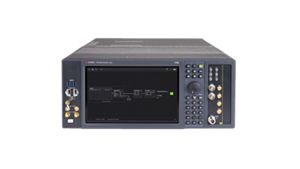

XG7-class Vector Signal Generator
Services and support
Innovate at speed with curated support plans and prioritized response and turn-around times.
Get predictable, lease-based subscriptions and full lifecycle management solutions—so you reach your business goals faster.
Experience elevated service as a KeysightCare subscriber to get committed technical response and more.
Ensure your test system performs to specification and meets local and global standards.
Make measurements quickly with in-house, instructor-led training, and eLearning.
Download Keysight software or update your software to the newest version.
Frequently asked questions
The Pro+ signal generator offers eight virtual signal generators (multiple IQ paths to RF), enabling you to emulate up to eight signals simultaneously using one channel. This feature is particularly advantageous in receiver design and testing applications, where the current method often requires RF combining multiple signal generators due to dynamic range limitations. The 8 virtual signal generators can simplify device characterization when multi-carrier or multi-radio access technology signals are necessary.
Fading refers to the change in a signal's attenuation caused by various factors, including geographic position, time, and frequency. Fading, also known as channel simulation, enables users to apply degradations to signals to simulate real-world conditions. Real-world causes of fading include multipath propagation (where the signal reflects off various obstacles along its path), multipath fading, and environmental factors such as weather (like rain) and obstacles that affect signal propagation.
Obstacles surrounding the transmitter and receiver create multiple paths for the transmitted signal to travel. The receiver sees a summation of multiple copies of the transmitted signal that have traveled different paths. On the journey from source to receiver, each received signal will arrive with differences in attenuation, delay, and phase shift, which may result in constructive or destructive interference.
RF channel bonding is a technique used in wireless communication systems to combine multiple RF channels into a single, wider channel to increase data throughput. This capability can help support applications such as generating wide-band QPSK and 5G NR waveforms.