Choose a country or area to see content specific to your location
What are you looking for?
-
-
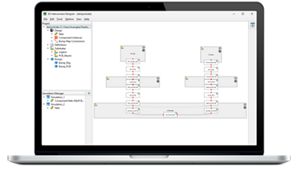
3D Interconnect Designer
3D Interconnect Designer provides a flexible modeling and optimization environment for any advanced interconnect structure, including chiplets, stacked die, packages, and PCBs.

-
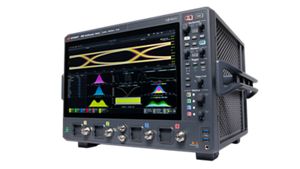
Save up to 50% on an XR8 Oscilloscope
Get faster digital validation for less with a trade-in.
-
Discover Keysight AI Data Center Builder
Emulate every part of your data center infrastructure. Emulate Anything. Optimize Everything.
-
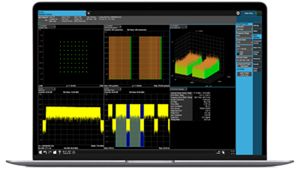
Accelerate Signal Analysis with X-Series Measurement Applications
Use 25+ X-Series applications to analyze, demodulate, and troubleshoot signals across wireless, aerospace/defense, EMI, and phase noise.
-
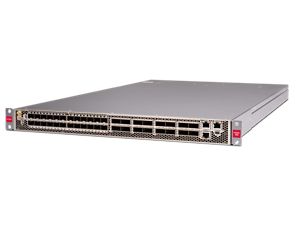
Introducing AI-Enhanced Packet Brokers
With extra memory and storage, these enhanced NPBs run Keysight's AI security and performance monitoring software and AI stack.
-
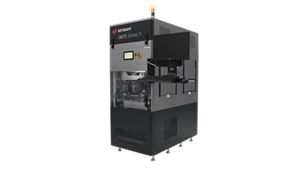
Precision In-Circuit Testing for Production
Achieve fast, accurate board-level testing with robust inline and offline ICT designed for modern manufacturing.
-
Accelerate Your Innovation Engine
Explore curated support plans, prioritized to keep you innovating at speed.

-
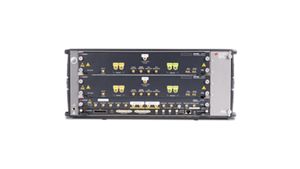
448 Gb/s Waveform Generation
Achieve 200+ Gbaud multi-level modulated signals with high-speed AWGs for digital and optical standards.
-
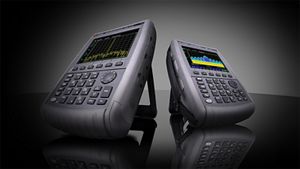
Stream 120 MHz I/Q Data to Your Laptop in the FieldPinpoint interference with post-processing spectrum management software in the lab.
 Find the Right ATE Power Solution
Use this selector tool to quickly identify the best power supply for your aerospace and defense ATE requirements.
-
- Solutions
-
Explore engineer-authored content and a vast knowledge base with thousands of learning opportunities.
FeaturedKeysight Learn offers immersive content on topics of interest, including solutions, blogs, events, and more.
-
Quick access to support related self-help tasks.
Additional content to support your product needs.
Do more with Keysight ServicesExplore services to accelerate every step of your innovation journey.






Lidar Scene Emulator Compact emulation of driving scenes with distance and reflectivity control


- Overview
- All Models
- Accessories
- Software
- Support
Simulate driving scenes for lidar sensor testing and validation
The Keysight lidar scene emulator brings real-world driving scenarios into the lab with precise control over distance and reflectivity in a compact, repeatable setup. Validate lidar sensors for autonomous driving and driver-assistance systems without the risks and constraints of on-road testing. Request a quote for the Keysight lidar scene emulator today. Want to learn more about this solution? Explore the resources below.
Controlled object emulation
Simulate vehicles, pedestrians, and static obstacles with precise control over distance, reflectivity, and motion.
Precision depth emulation
Simulate target distances from 3 to 300 meter in 1-meter steps, with distance accuracy of about ±5 cm, enabling highly accurate depth validation for lidar sensors.
Flexible scenario creation
Design simple or complex test scenes to replicate real-world conditions, from single-object detection to dense urban environments.
Accelerated sensor validation
Reduce reliance on expensive and time-consuming road testing by moving performance evaluations into a controlled lab setting.
-
Distance simulation
3 to 300 meters
-
Distance sweep
3 to 300 meters in 1 meter step
-
Reflectivity simulation
10% to 90%
-
Reflectivity sweep
10% to 90%
Typical configuration
Services and support
Innovate at speed with curated support plans and prioritized response and turn-around times.
Get predictable, lease-based subscriptions and full lifecycle management solutions—so you reach your business goals faster.
Experience elevated service as a KeysightCare subscriber to get committed technical response and more.
Ensure your test system performs to specification and meets local and global standards.
Make measurements quickly with in-house, instructor-led training, and eLearning.
Download Keysight software or update your software to the newest version.
Frequently asked questions
A lidar scene emulator is a controlled test system that creates highly realistic three-dimensional environments for evaluating lidar sensors used in automated driving. It allows engineers to reproduce a wide range of objects, distances, and movement patterns in a safe and repeatable environment. By simulating complex driving scenes, engineers can measure how well lidar sensors detect, classify, and track objects without relying entirely on real-world testing.
Lidar scene emulation helps teams test edge cases that are rare or risky to recreate on public roads, such as vehicles entering suddenly from side streets, unexpected obstacles, or difficult lighting conditions. This process verifies that lidar-based perception systems make accurate decisions, which strengthens confidence in automated vehicle safety.
A lidar scene emulator projects virtual objects into a vehicle’s lidar sensor field of view by recreating their reflective patterns. Engineers can control parameters such as object distance, size, reflectivity, speed, and trajectory, enabling the generation of dynamic traffic scenes. Many systems can represent multiple moving objects at once, replicating dense and unpredictable traffic environments.
The emulator feeds these virtual targets directly into the lidar sensor, allowing teams to monitor how the perception system interprets them in real time. This setup makes it possible to evaluate object detection accuracy, false positive handling, and sensor behavior under different conditions, including fog, rain, or bright sunlight.
Lidar scene emulators deliver repeatability, safety, and efficiency that on-road testing cannot consistently provide. Engineers can recreate complex or dangerous driving conditions, such as high-speed cut-ins or unexpected pedestrian crossings, without endangering people or property. Controlled laboratory testing significantly reduces the time and cost associated with accumulating real-world driving miles. These systems also allow teams to explore sensor limitations by varying factors like reflectivity and environmental lighting, which are challenging to reproduce consistently on the road. This approach accelerates development by helping engineers uncover and address weaknesses early in the design cycle.
Lidar scene emulators are valuable throughout the autonomous vehicle development process. During early design, they enable quick validation of new lidar architectures and object recognition algorithms before vehicles hit the road. During integration and system validation, they confirm that perception software can correctly interpret complex, multi-object environments.
In later stages, these emulators support regression testing by providing consistent scenarios that help engineers verify sensor behavior after software updates or hardware modifications. This repeatability helps ensure that lidar systems are reliable and ready for deployment in real-world driving conditions.