How to Characterize RF Power Sensor Drift Behavior

Characterize Sensor Drift and Zeroing
Characterizing radio frequency (RF) power sensor zeroing and drift behavior requires measuring changes in sensor output over time under controlled conditions with no applied signal. Engineers must establish a stable measurement environment and perform initial zeroing of the sensor to remove offsets before beginning drift analysis. Over time, sensor output may vary due to temperature changes, internal component behavior, and environmental influences. Accurate characterization requires continuous monitoring of the sensor output to detect small deviations from the zero reference level. Measurement systems must maintain consistent timing and stable connections to ensure that observed variations are due to sensor behavior rather than external factors.
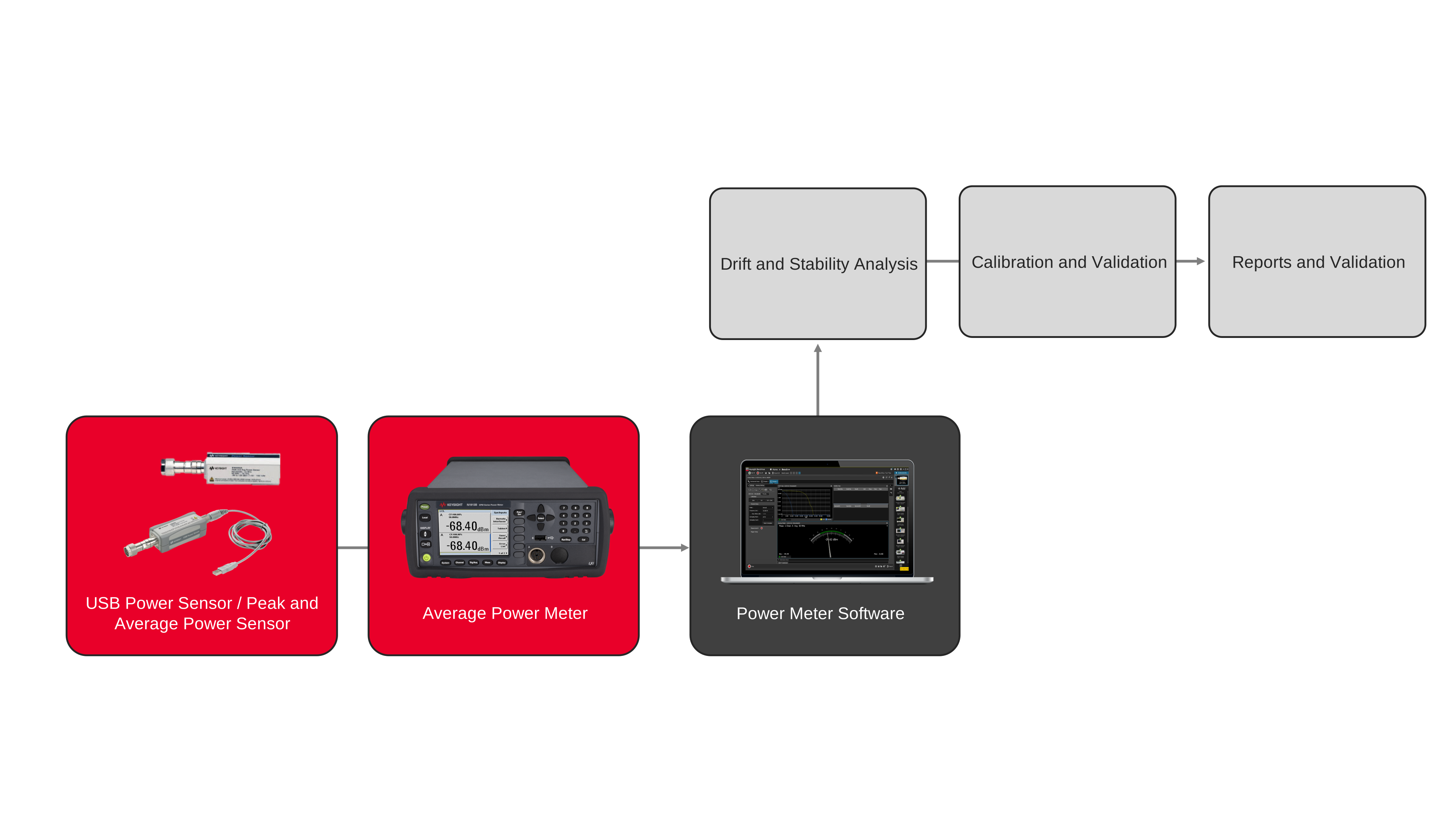
The measurement setup includes an average power meter, compatible power sensors, and software capable of continuous data acquisition and logging. Engineers record the sensor output over extended periods and analyze the results to identify drift trends, short-term fluctuations, and long-term stability. Repeated zeroing cycles may be performed to evaluate repeatability and offset behavior under varying conditions. Data analysis tools are used to quantify drift magnitude and assess stability across the measurement duration. Proper control of environmental conditions and measurement parameters ensures accurate characterization of sensor zeroing performance and drift behavior.

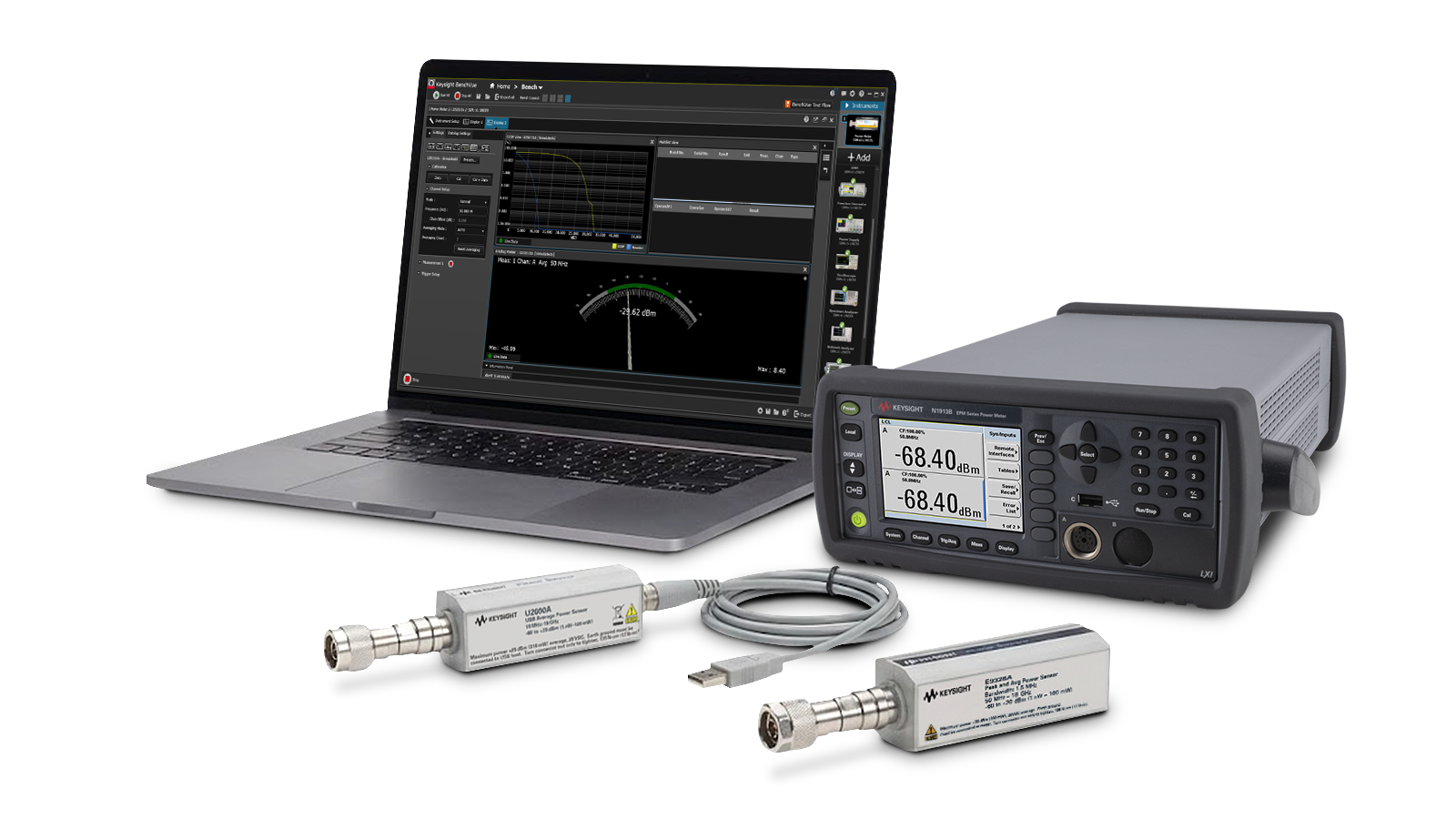
RF Power Sensor Drift Characterization Solution
See Block Diagram of RF Power Sensor Drift Characterization Solution

Explore Products in Our RF Power Sensor Drift Characterization Solution
-

![]()
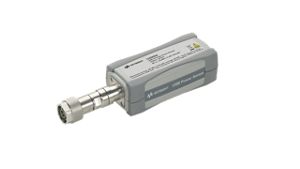
U2000A 10 MHz - 18 GHz USB Power Sensor
-
![]()
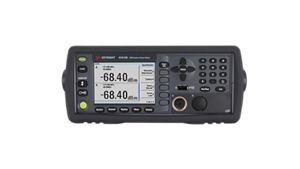
N1913B EPM Series Single-Channel Power Meter
-
![]()
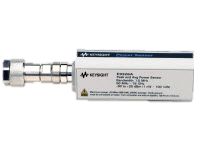
E9326A Peak and Average Power Sensor, 50 MHz - 18 GHz, 1.5MHz Bandwidth
-

![]()
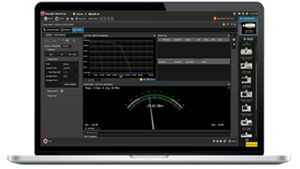
BV0007B PathWave BenchVue Power Meters/Sensors App


Discover Resources and Insights
Additional Resources for RF Power Sensor Drift Characterization
Related Use Cases


-
![]()
Learn More
How to Compare Thermistor and Diode Sensor Measurement Accuracy
Compare thermistor and diode sensor accuracy across power levels to improve measurement confidence using power sensors, power meters, and automated measurement control and data logging software.
Learn More

-
![]()
Learn More
How to Ensure Measurement Traceability in Radio Frequency Calibration Chains
Ensure traceable radio frequency power measurements across calibration chains with controlled uncertainty using power sensors, power meters, and automated measurement control and data logging software.
Learn More
-
![]()
Learn More
How to Automate RF Power Logging for Environmental Testing
Automate RF power logging during environmental testing using a power meter, continuous measurement, data acquisition, and software-controlled workflows.
Learn More

Get in Touch with One of Our Experts
Need help finding the right solution for you?