





















- Overview
- All Models
- Support
End-to-End Software Supply Chain Transparency and Security
Keysight SBOM Manager is an enterprise-grade platform that delivers full-lifecycle software transparency and risk insight across complex development, integration, and operational environments. It provides end-to-end Software Bill of Materials (SBOM) visibility, validation, and security intelligence by combining binary-level SBOM generation with validation, enrichment, sharing, and continuous monitoring. Through its unified ecosystem — comprising SBOM Generator, SBOM Studio, and SBOM Consumer — the platform enables organizations to generate highly accurate binary-based SBOMs, centrally manage and distribute them, and continuously assess software supply chain risk. Designed for a wide range of stakeholders — including product teams, system integrators, security operations, and compliance functions — SBOM Manager automates the tracking of open source, proprietary, and third-party components, while offering vulnerability correlation, version tracking, and compliance reporting. This enables organizations to detect insecure dependencies, enforce policies, respond rapidly to emerging threats, and maintain audit readiness, ultimately strengthening the overall security posture of the software supply chain.
Accurate binary-based SBOM generation
Generates high-fidelity SBOMs directly from binaries, firmware, and OS images, uncovering open source, proprietary, and deeply embedded components to reflect what is shipped to customers.
Context-driven vulnerability correlation and prioritization
Correlates SBOM components with multiple vulnerability sources and applies intelligent filtering to reduce noise, helping teams focus on relevant, exploitable risks instead of overwhelming CVE lists.
Compliance-ready SBOM and VEX lifecycle management
Delivers validated, high-quality SBOMs aligned with minimum element requirements from FDA, EU CRA, CERT-In, and other frameworks, with scalable VEX generation and controlled sharing for audit readiness.
Continuous monitoring with asset-level visibility
Continuously tracks new vulnerabilities and maps SBOMs to deployed assets, providing real-time insight into where risks exist and enabling faster, more effective remediation.
Most Popular Configurations
SBOM Generator
Generates high-fidelity SBOMs from binaries, firmware, and containers using advanced binary analysis — no source code required.
Generates high-fidelity SBOMs from binaries, firmware, and containers using advanced binary analysis — no source code required.


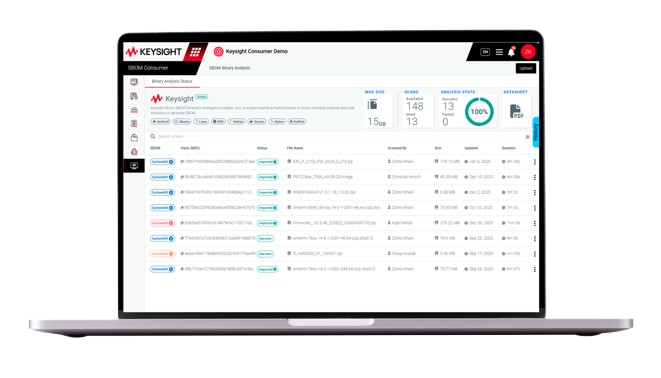
SBOM Studio
Supports digital product producers in centralizing SBOM management across the product lifecycle for vulnerability tracking and regulatory compliance.
Supports digital product producers in centralizing SBOM management across the product lifecycle for vulnerability tracking and regulatory compliance.

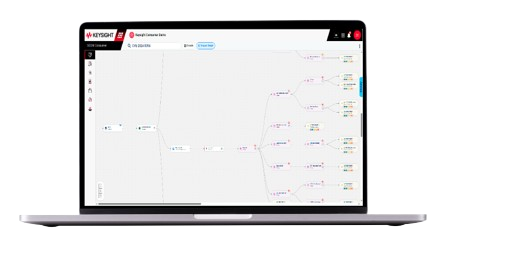
SBOM Consumer
Supports digital product buyers in validating and continuously monitoring supplier SBOMs, with real-time vulnerability tracking and exposure detection.
Supports digital product buyers in validating and continuously monitoring supplier SBOMs, with real-time vulnerability tracking and exposure detection.
Webinar: Turning SBOMs into Real Risk Reduction in Healthcare
Learn how to streamline compliance with FDA, TGA Australia, EU MDR/IVDR, and global frameworks such as IMDRF using automated workflows. Explore regulatory expectations and practical techniques for creating more complete SBOMs that identify, prioritize, and communicate vulnerabilities throughout the product lifecycle. You’ll also learn how healthcare providers can use SBOMs to strengthen procurement decisions, asset visibility, and proactive risk management — helping build a stronger foundation for both compliance and real-world security.
On-Demand in English
Available Now




Webinar: Get Ready for the EU Cyber Resilience Act (CRA)
Learn how to prepare for the CRA with automated workflows in this webinar. Discover how to simplify SBOM generation, validation, vulnerability monitoring, and CRA-ready reporting. Walk away with clear next steps and a stronger foundation for CRA readiness.
On-Demand in English
Available Now
- How to Ensure SBOM, Accuracy, Quality, and Compliance


- How to Generate and Validate Accurate SBOMs



What the Best SBOM Solution Should Deliver
The Software Bill of Materials (SBOM) has become one of the most important tools in modern cybersecurity and software supply chain management. By listing the components that make up a piece of software or a device, SBOMs provide the visibility needed to assess vulnerabilities, ensure compliance, and maintain trust throughout the product lifecycle.
One Year Countdown to EU CRA Compliance — September 11, 2026, Changes Everything
Most organizations believe they have until 11 December 2027 to comply with the EU Cyber Resilience Act (CRA). That assumption is dangerously wrong. The real first deadline is 11 September 2026, exactly one year from today.
Satellites, spacecraft, and defense systems rely on complex software ecosystems, often powered by open-source, third-party, and legacy components. Recent events remind us just how vital it is to track, secure, and manage that software supply chain.



How SBOMs Help Organizations Prepare for Global Cybersecurity Regulations
"SBOMs are essential to monitoring system security risks, including software composition management and supply chain risk management. Solutions which enable visibility into system components and support vulnerability impact analysis, have significant potential to strengthen organizations’ cybersecurity efforts."
Hitachi Industry & Control Solutions
Naoki Shimazaki
Director, Software-Defined Solutions
See the Keysight Difference


Frequently Asked Questions
Keysight SBOM Manager differs from many SBOM tools by combining patent-pending binary SBOM generation with validation, enrichment, continuous monitoring, scalable VEX management, and secure sharing in a single platform. Unlike tools that rely mainly on source code or build-system data, it analyzes binaries, firmware, and compiled software to uncover open-source, proprietary, and deeply embedded components that may otherwise be missed. It also improves SBOM quality and compliance readiness by aligning outputs with minimum element expectations from frameworks such as FDA guidance, the EU Cyber Resilience Act, and CERT-In requirements. In addition, while some tools claim full CVE reachability analysis, such approaches are often inconclusive in practice. Keysight SBOM Manager takes a more pragmatic and reliable approach by combining multi-source vulnerability correlation, intelligent filtering of clearly irrelevant CVEs, and scalable VEX generation to provide real exploitability context. This enables organizations to prioritize actionable risks without relying on uncertain reachability claims. For both producers and consumers, the platform delivers lifecycle management, asset-level visibility, and continuous monitoring, turning SBOMs from static compliance documents into actionable security intelligence.
Yes, SBOMs can be generated without source code using advanced binary analysis. Keysight SBOM Manager uses patent-pending techniques to analyze compiled binaries, firmware, and containers, enabling detection of embedded components that source-based tools often miss. This approach is especially important for analyzing third-party software, statically linked libraries, legacy systems, and closed-source environments where source code is unavailable.
Keysight SBOM Manager improves SBOM accuracy and coverage by analyzing the actual binaries, firmware, and compiled software that are delivered and deployed, rather than relying only on source code, package manifests, or build-time artifacts. This is critical because many software products contain statically linked libraries, native code, proprietary modules, third-party components, and deeply embedded dependencies that source-based tools often miss or misidentify. Using patent-pending binary detection technology, Keysight identifies a broader range of components across open-source, proprietary, and closed-source software, helping organizations build SBOMs that more closely reflect the real contents of the shipped product. It also improves precision by identifying component names and versions more accurately and assigning the correct identifiers, including CPEs and PURLs, to support more reliable vulnerability mapping. In addition, Keysight SBOM Manager validates, normalizes, corrects, and enriches SBOM data to improve completeness and quality, including dependency relationships and required metadata wherever possible. The result is a higher-quality, more complete, and more trustworthy SBOM that better supports vulnerability management, regulatory compliance, and downstream operational use.
Keysight SBOM Manager helps organizations meet evolving regulatory requirements by ensuring that SBOMs are not only generated, but also measurable, verifiable, and continuously maintained in line with industry and government expectations. The platform includes built-in SBOM quality scoring and validation capabilities aligned with recognized frameworks such as NTIA minimum elements, BSI TR-03183, and other global guidelines, enabling teams to assess completeness, consistency, and usability of SBOM data before submission or sharing. It also continuously monitors SBOM components against multiple vulnerability intelligence sources, supporting postmarket and operational compliance requirements such as ongoing risk assessment and timely response to newly disclosed vulnerabilities. In addition, Keysight SBOM Manager supports structured handling of vulnerability context through VEX, controlled and traceable SBOM sharing, and version management across product releases. By combining quality validation, continuous monitoring, and lifecycle traceability, the platform enables organizations to move from one-time compliance reporting to a repeatable, audit-ready compliance process aligned with regulations such as FDA guidance, the EU Cyber Resilience Act, PCI DSS, and CERT-In requirements.
Vulnerability Exploitability eXchange (VEX) is a standardized way for software producers to communicate whether a known vulnerability (CVE) actually affects their product, and if so, under what conditions. While SBOMs list all components and their potential vulnerabilities, they do not provide context on exploitability. This often leads to large volumes of reported CVEs, many of which may not be relevant in a given product configuration. VEX addresses this gap by allowing vendors to declare whether a vulnerability is not affected, affected, fixed, or under investigation, along with supporting justification. This context is critical for regulatory compliance, customer communication, and effective vulnerability prioritization. Keysight SBOM Manager enables scalable and lifecycle-driven VEX management by tightly integrating VEX with SBOM data. It supports both generation and import of VEX documents, allowing organizations to create their own VEX statements as well as ingest VEX data from suppliers and third parties. The platform maintains synchronization between SBOM updates and vulnerability status across products and versions, ensuring consistency over time. It continuously correlates SBOM components with multi-source vulnerability intelligence to identify newly disclosed CVEs and helps teams efficiently assess and assign exploitability status. By combining VEX with intelligent vulnerability filtering and prioritization, Keysight reduces CVE noise and helps security teams focus on actionable risks. In addition, VEX documents can be securely shared alongside SBOMs with customers, partners, and regulators through controlled, versioned distribution mechanisms, improving transparency, trust, and compliance across the software supply chain lifecycle.
Keysight SBOM Manager reduces vulnerability overload by addressing the root causes of noise in SBOM-based analysis—namely inaccurate vulnerability mappings, incomplete data sources, and lack of exploitability context. Many tools rely heavily on a single source such as the National Vulnerability Database (NVD) and use automated CPE-based matching, which can lead to both false positives and false negatives due to missing, overly broad, or incorrect mappings. Keysight overcomes this by correlating SBOM components with multiple vulnerability and threat intelligence sources, including authoritative sources such as vendor advisories and project-maintained repositories, and prioritizing these when discrepancies arise. This allows the platform to identify inconsistencies in vulnerability data and significantly improve accuracy. In addition, Keysight SBOM Manager performs precise version and patch-level analysis, ensuring that vulnerabilities already fixed in a specific component version are automatically excluded. This avoids the common issue where tools report vulnerabilities based only on base versions without considering applied patches. For deeper noise reduction, the platform applies a pragmatic and automated approach to exploitability. For selected components, it performs advanced CVE reachability analysis to determine whether vulnerable code is actually present or used in the product. Based on this analysis, it can automatically generate Vulnerability Exploitability eXchange (VEX) statements, for example marking vulnerabilities as Not Affected when the relevant code is not included. By combining multi-source intelligence, authoritative validation, patch-aware analysis, selective reachability assessment, and automated VEX generation, Keysight SBOM Manager dramatically reduces false positives and false negatives. The result is a focused, actionable vulnerability view that helps security teams prioritize real risks, reduce manual investigation effort, and respond more efficiently to security and compliance requirements.
Keysight SBOM Manager enables SBOM consumers and asset owners to move beyond static SBOMs and turn them into operational security intelligence that directly maps to their real-world environments. Many organizations today either lack SBOM visibility or treat SBOMs as static documents that are not connected to vulnerability feeds or asset inventories, limiting their practical value. Keysight addresses this by providing a centralized platform to ingest supplier-provided SBOMs, generate SBOMs independently from binaries, and compare the two to validate accuracy and uncover hidden or missing components—supporting a “trust but verify” approach. The platform then enriches SBOM data with multi-source vulnerability intelligence and continuous monitoring, ensuring that newly disclosed vulnerabilities are automatically correlated against all known components. Unlike traditional workflows that rely on vendor advisories and manual investigation—which can take weeks or months—Keysight enables real-time exposure detection, identifying affected components and assets within seconds of a new CVE disclosure. A key differentiator is its ability to map SBOM data to actual deployed assets, integrating with asset inventory and discovery systems to provide full context such as asset location, ownership, and criticality. This allows organizations to answer critical questions instantly: Are we affected? Which assets? Where are they located? How critical are they? Keysight SBOM Manager also incorporates VEX ingestion and management, enabling consumers to apply vendor-provided exploitability context and refine initial risk assessments over time. Combined with automated vulnerability triage, intelligent prioritization, and contextual alerts, this significantly reduces manual effort and improves decision-making. By bringing together SBOM ingestion and generation, continuous vulnerability monitoring, asset-level correlation, and VEX-driven context, Keysight SBOM Manager enables asset owners to shift from delayed, reactive analysis to immediate, precise, and actionable risk visibility. This results in faster incident response, improved operational resilience, and stronger compliance with regulations such as NIS2 and IEC 62443.
Keysight SBOM Manager provides centralized, role-based access and controlled distribution mechanisms for sharing SBOMs and VEX documents. It ensures version control, traceability, and secure access, eliminating the need for manual file transfers and enabling organizations to meet both regulatory expectations and customer requirements for transparency.