How to Analyze Frequency Drift Over Time

Track Continuous Frequency Drift
Analyzing frequency drift over time requires a stable reference, a measurement path matched to the signal under test, and a data stream dense enough to show both gradual movement and short-term variation. A frequency counter/timer performs this measurement by collecting a continuous record of frequency readings and associating each reading with a timestamp so the source behavior can be observed across the full acquisition interval.
The setup connects the source to the counter input, uses the required internal or external timebase reference, and records a long sequence of timestamped readings while the signal operates through warm-up or steady-state conditions. Trend and histogram views help separate random measurement spread from systematic drift, while continuous, gap-free measurement capability supports long-record observation without missing intervals in the data stream.

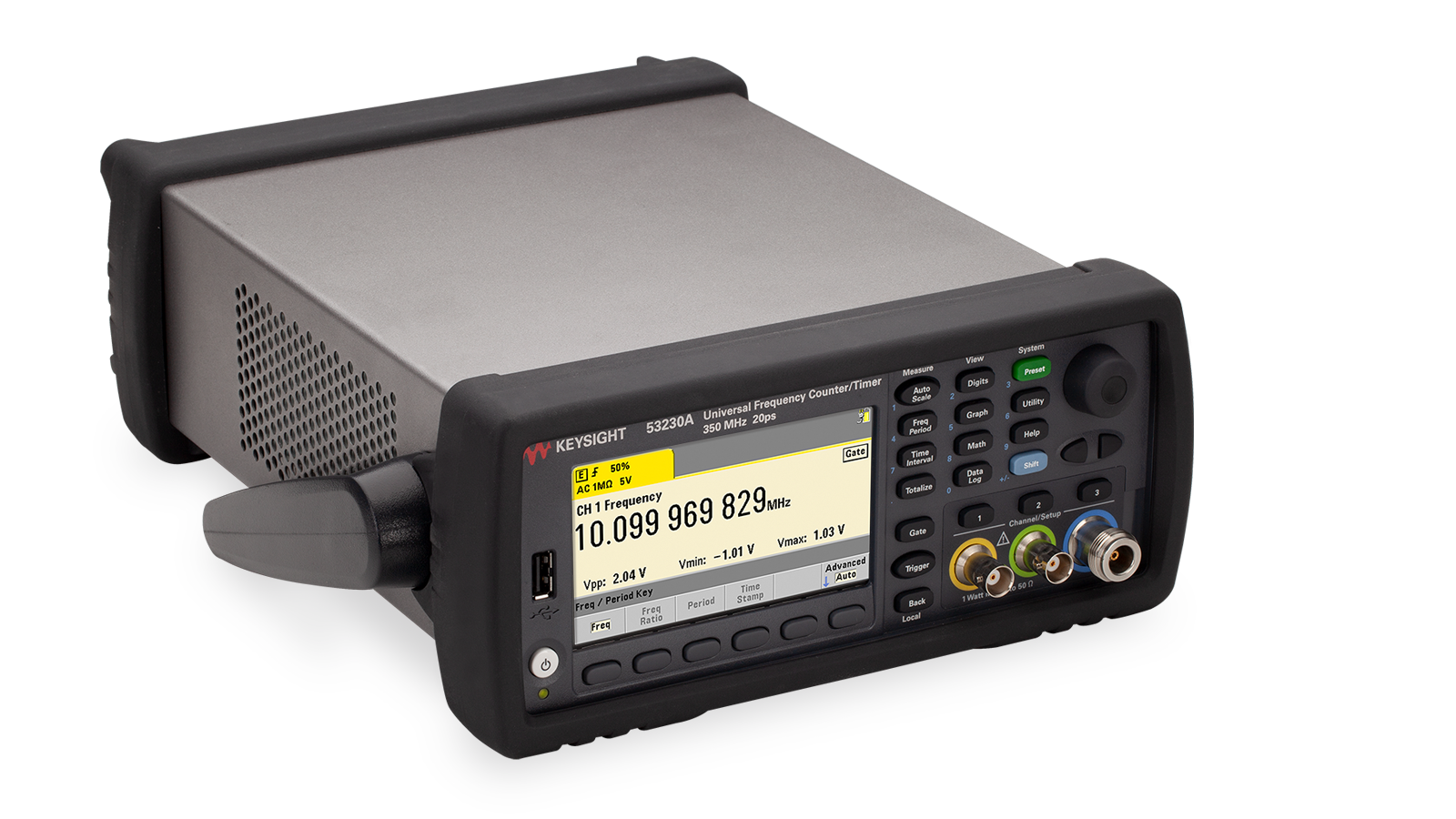
Frequency Drift Analysis Solution
See Block Diagram of Frequency Drift Analysis Solution


Explore Products in Our Frequency Drift Analysis Solution
-

![]()
53230A 350 MHz Universal Frequency Counter/Timer, 12 digits/s, 20 ps


Discover Resources and Insights
Additional Resources for Frequency Drift Analysis
Related Use Cases


-
![]()
Learn More
How to Compare Thermistor and Diode Sensor Measurement Accuracy
Compare thermistor and diode sensor accuracy across power levels to improve measurement confidence using power sensors, power meters, and automated measurement control and data logging software.
Learn More

-
![]()
Learn More
How to Ensure Measurement Traceability in Radio Frequency Calibration Chains
Ensure traceable radio frequency power measurements across calibration chains with controlled uncertainty using power sensors, power meters, and automated measurement control and data logging software.
Learn More
-
![]()
Learn More
How to Automate RF Power Logging for Environmental Testing
Automate RF power logging during environmental testing using a power meter, continuous measurement, data acquisition, and software-controlled workflows.
Learn More

Get in Touch with One of Our Experts
Need help finding the right solution for you?