How to Measure Mechanical Strain with a DAQ
Characterize Mechanical Strain Across Test Points
Mechanical strain measurement requires detecting very small changes in a strain gauge as a structure stretches, compresses, or bends under an applied mechanical load. A strain gauge measurement relies on the relationship between physical deformation and the resulting change in electrical resistance. The measured change can be small relative to the nominal gauge resistance, so the test must account for gauge factor, wiring resistance, initial offset, sensor placement, and the mechanical direction of the applied strain. When several gauges are attached to different locations on a structure, each measurement point may experience a different combination of tensile, compressive, axial, or bending strain. Multichannel strain acquisition must preserve these individual responses so engineers can compare deformation across the structure rather than treating the specimen as a single measurement point.
Bridge strain measurement introduces additional variables because the strain gauge forms part of a Wheatstone bridge whose output changes as one or more active gauge elements change resistance. Quarter-, half-, and full-bridge configurations produce different electrical responses depending on the number and orientation of active gauges. Excitation voltage, bridge balance, temperature effects, lead resistance, gauge factor, and the unstrained reference all influence the measured result. In a data acquisition (DAQ) strain measurement, small bridge-output changes must be captured repeatedly while mechanical loading changes over time. Engineers may also need to compare measurements from several gauges simultaneously or sequentially to determine how strain propagates through the test article. The resulting mechanical strain measurement therefore depends on consistent strain gauge measurement conditions, stable reference values, and repeatable acquisition across every monitored location.


Mechanical Strain Measurement DAQ Solution
Block Diagram of Mechanical Strain Measurement DAQ Solution


Explore Products in Our Mechanical Strain Measurement DAQ Solution
-

![]()
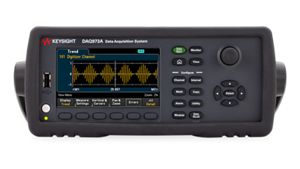
DAQ973A Data Acquisition System
-
![]()
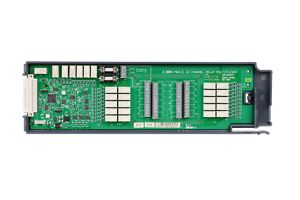
DAQM901A 20 Channel Multiplexer (2/4-wire) Module for DAQ970A and DAQ973A


Discover Resources and Insights
Additional Resources for Mechanical Strain Measurement DAQ
Related Use Cases


-
![]()
Learn More
How to Perform Regenerative EV Power Testing
Perform regenerative EV power testing with bidirectional source/sink systems and AC mains power analysis.
Learn More

-
![]()
Learn More
How to Isolate CAN Bus Arbitration
Isolate CAN bus arbitration using an Essential Benchtop Oscilloscope with zone triggering, CAN message qualification, and segmented memory.
Learn More
-
![]()
Learn More
How to Trace Data Across Automotive Serial Bus Gateways
Trace data across automotive serial bus gateways using an Essential benchtop oscilloscope with dual-bus decoding and a time-interleaved protocol lister.
Learn More

Get in Touch with One of Our Experts
Need help finding the right solution for you?