











- Overview
- All Models
- Support
Enhanced network analysis for nonlinear device test
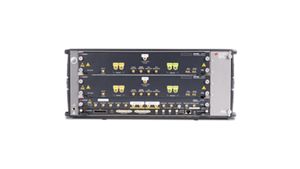
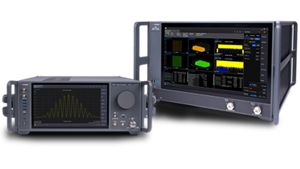
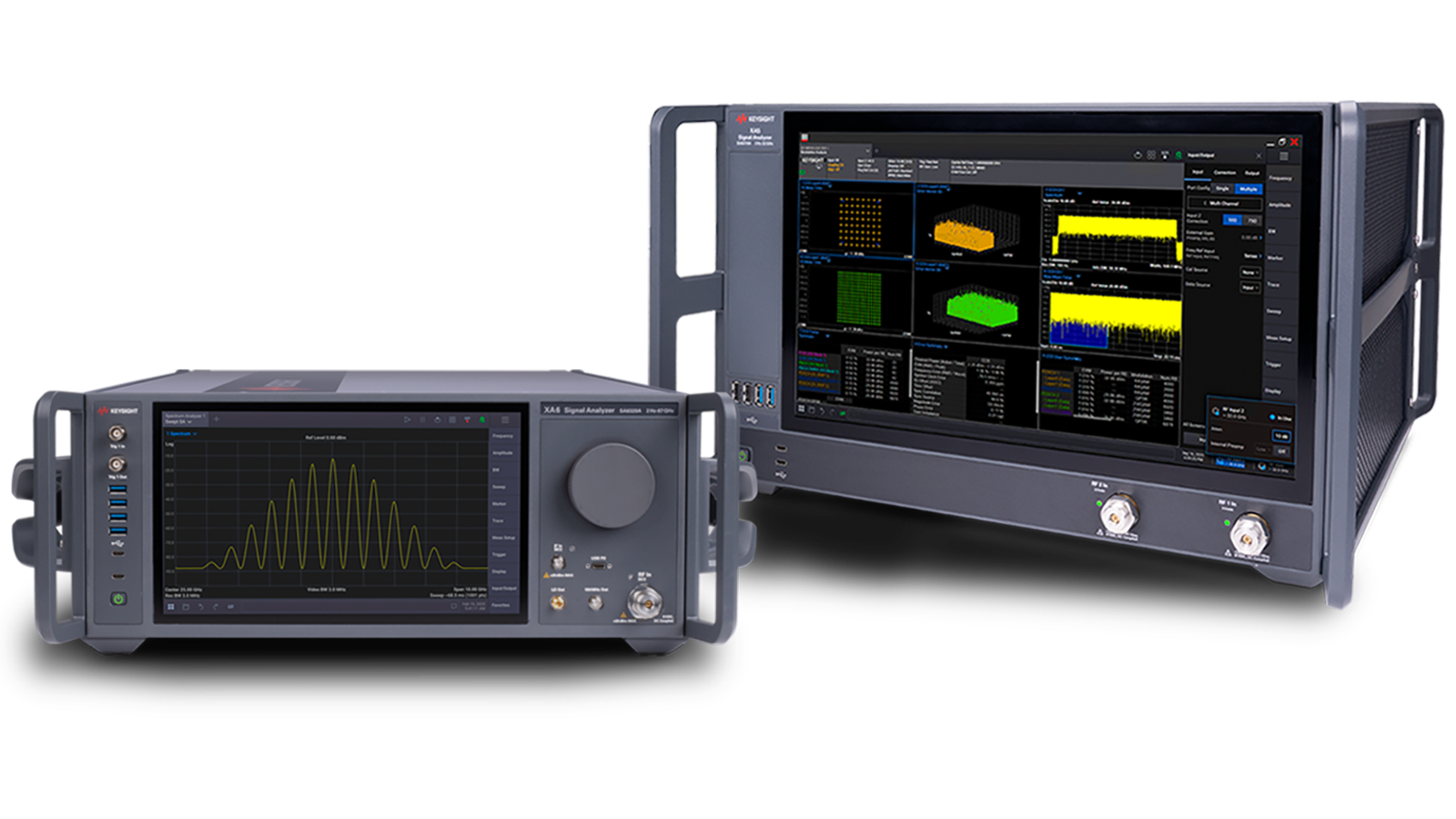
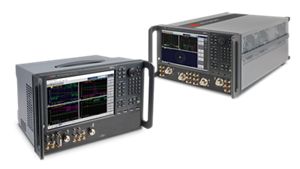
Keysight Expert vector network analyzers come in two classes. The XN5-class includes the ENA-X, PNA-L, and E5080B ENA. The XN7-class includes the PNA and N5264B PNA-X. They build upon our Essential VNA’s passive component test capabilities, adding active device measurements and offering metrology-grade performance in our top Expert models. With more than 120 software options available, you can characterize the nonlinear behavior of devices like RF power amplifiers, mixers, and modulators quickly and accurately. Plus, the direct digital synthesis (DDS) sources in our top Expert models provide up to 10 times faster phase and group delay measurements than our Essential VNAs. Choose one of our most popular configurations or build the one you need for your application. Need help selecting? Check out the resources below.
Active device test
Test gain compression, distortion, and phase versus drive for active devices like power amplifiers and single-stage mixers
5G New Radio FR2/FR3 coverage
Active device test across the millimeter-wave spectrum to ensure very high frequency and data rate performance
Vector signal analysis
Built-in spectrum analysis, error vector magnitude (EVM), and adjacent channel power ratio (ACPR) measurements
Sub-THz compatibility
Conduct sub-THz measurements up to 250 GHz using compatible compact frequency extenders
-
Maximum number of sources
2
-
Integrated low-noise receivers
0 to 2
-
Maximum frequency
26.5 GHz to 67 GHz
-
Number of built-in ports
2, 4
Most popular configurations
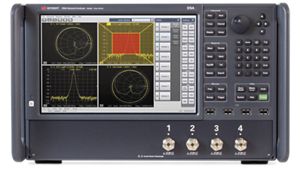

XN5-class Vector Network Analyzer
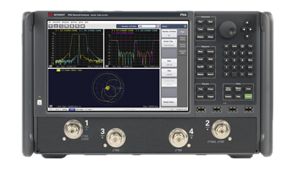
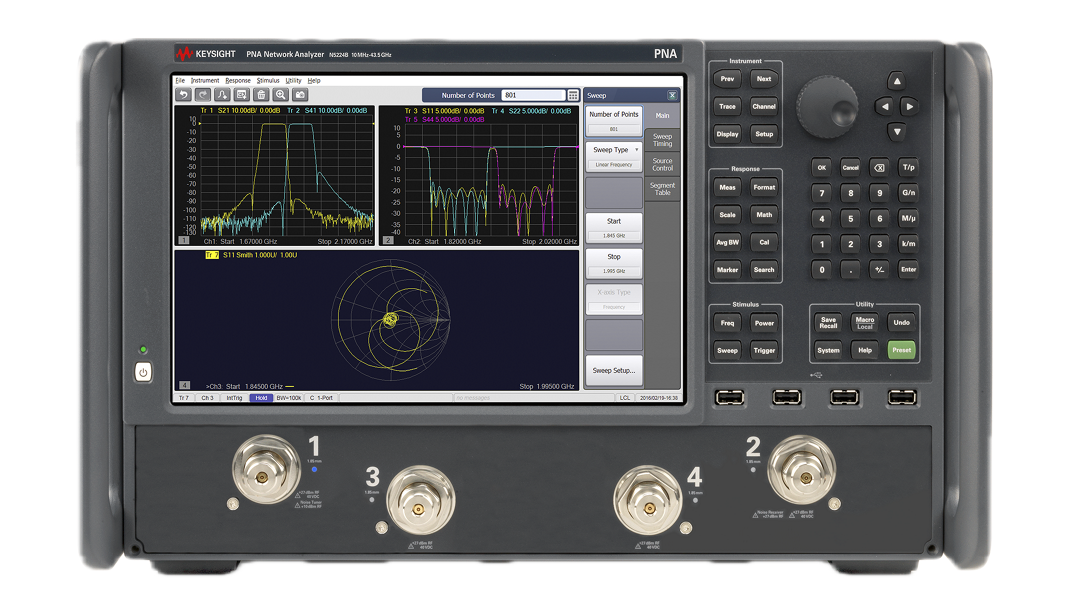
XN7-class Vector Network Analyzer
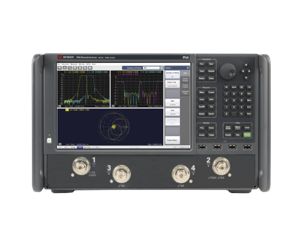
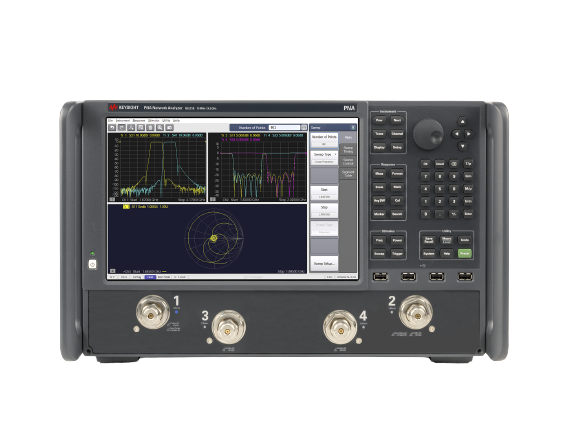
XN7-class Vector Network Analyzer
Services and support
Innovate at speed with curated support plans and prioritized response and turn-around times.
Get predictable, lease-based subscriptions and full lifecycle management solutions—so you reach your business goals faster.
Experience elevated service as a KeysightCare subscriber to get committed technical response and more.
Ensure your test system performs to specification and meets local and global standards.
Make measurements quickly with in-house, instructor-led training, and eLearning.
Download Keysight software or update your software to the newest version.
Frequently asked questions
For network analyzers, “metrology-grade” specifically refers to the measurement performance of scattering parameters (S-parameters).
S-parameters are a fundamental measurement in network analysis. They describe how electrical components reflect and transmit signals at different frequencies. Even small errors in S-parameter measurements risk significant performance issues.
For many high-precision applications, such as designing amplifiers, antennas, filters, and transmission lines, highly accurate S-parameter measurements are essential. A metrology-grade VNA excels in measuring S-parameters with extremely low measurement uncertainty. They achieve this by utilizing advanced calibration techniques and high-quality components that help maintain measurement accuracy over a wide frequency range and under various test conditions.
For accurate S-parameter measurements over time, metrology-grade VNAs offer high stability. This means that S-parameter measurements can be consistently repeated without significant drift or variation, which is critical for long-term testing, quality assurance, or comparative measurements.
Additionally, metrology-grade network analyzers provide traceability to national or international standards. This traceability ensures global consistency in S-parameter measurements, which is essential for the telecommunications and aerospace industries.
A vector network analyzer is an incredibly versatile instrument. It can be used for spectrum analysis, pulsed measurements, and active device tests.
Direct digital synthesis sources, or DDS sources, achieve faster active component testing by reducing the phase noise and spurious emissions from the network analyzer. While traditional analog frequency synthesizers suffer from drift, aging components, and inaccuracies, DDS sources provide consistent and precise frequency control over a wide range.
DDS sources use digital algorithms to generate precise and stable frequencies, essential for accurate VNA measurements. The ability to generate very fine frequency steps enables highly accurate frequency sweeps, improving VNA resolution performance as well as measurement time.
Phase noise analysis measures the stability of signal phase. Significant phase noise degrades measurement accuracy, particularly in high-frequency systems. DDS sources exhibit lower phase and harmonic noise than traditional frequency synthesizers, as well as fewer signal spurs. By consistently producing pure and stable signals, DDS sources improve the VNA’s signal-to-noise ratio and minimize error when analyzing a component’s phase performance.
By offering precision, stability, and pure, low-noise signals, DDS sources improve the overall reliability of network analyzers.
Fast and low-noise group delay and phase noise measurements are vital for maintaining the accuracy, reliability, and efficiency of high-frequency systems. They directly affect signal integrity and timing accuracy, making them key considerations in the design and optimization of components like filters, oscillators, and amplifiers.
Group delay refers to the time delay experienced by a signal as it passes through a component, specifically as a function of frequency. In systems that rely on precise timing, such as GPS, radar, or communications, significant group delay introduces errors in the calculation of arrival times, resulting in poor performance or data inaccuracies.
Low-noise group delay measurements ensure that the component’s performance is stable and predictable, without unwanted fluctuations that could compromise signal quality. While phase noise measurements are not conventionally performed on network analyzers, DDS source-enhanced network analyzers allow engineers to capture phase noise performance data.
Phase noise refers to the random variations in the phase of a signal. These fluctuations affect the stability of oscillators, thereby impacting the performance of high-frequency systems, such as communication transmitters, receivers, and radars. Both group delay and phase noise compromise signal integrity. By measuring and minimizing these factors, systems operate more efficiently, with lower error rates and improved data throughput.
Engineers depend on accurate and low-noise group delay and phase noise measurements to optimize device performance and ensure that components meet stringent quality and regulatory standards.