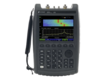







是德科技以旧换新
以旧换新,升级产品,降低成本。
查看“以旧换新”常见问题
Network + Impedance Analyzers Quick-Facts
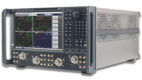
High-performance Vector Network Analyzers (VNA) are used to characterize and analyze RF and Microwave devices such as amplifiers, filters, power dividers/combiners, switches, antennas, and more. VNAs provide engineers with accurate device measurements including S-parameters, noise figures, return loss, and more.
A Vector Network Analyzer, a stimulus response testing equipment, is commonly used for research and development, design validation, failure analysis, and production testing by measuring the frequency response of component(s).
Yes, all VNAs are calibrated to ensure the highest quality results. The calibration process involves adjusting the instrument to eradicate the hardware systematic errors using traceable standards for accuracy and phase measurements.
How do you calibrate a Vector Network Analyzer?
The calibration process can be done manually or automatically, but in most cases, the manual method is used. The common methods of calibration include SOLT and TRL based on different parameters to remove systematic errors. Manual calibration involves selecting a known stimulus signal from a list of available signals within the VNA's software, then adjusting the amplitude and phase until the value corresponds to that from the known stimulus source. The network analyzer should be periodically calibrated with a reference calibrator to ensure the analyzer is measuring correctly. Periodic calibration guarantees the match with International standards.
The calibration process can be done manually or automatically, but in most cases, the manual method is used. The common methods of calibration include SOLT and TRL based on different parameters to remove systematic errors. Manual calibration involves selecting a known stimulus signal from a list of available signals within the VNA's software, then adjusting the amplitude and phase until the value corresponds to that from the known stimulus source. The network analyzer should be periodically calibrated with a reference calibrator to ensure the analyzer is measuring correctly. Periodic calibration guarantees the match with International standards.
Some VNAs have built-in error correction that may compensate for a variety of errors including thermal drift, time delay, source-load mismatch and optical path length variations.
A Vector Network Analyzer measures the amplitude as well as phase characteristics of one and two-port devices such as wireless components, microstrip lines, and branched structures.
A Network Analyzer measures the network parameters of two-port and arbitrary number of ports devices such as amplifiers, filters etc.
A Vector Network Analyzer measures complex component specifications at specific frequencies using a signal generator and a receiver.
A Spectrum Analyzer measures power across an entire frequency spectrum of the applied signal using a receiver only.
An oscilloscope measures external signals by representing voltage waveforms as a function of time, while a Vector Network Analyzer measures both the amplitude and phase monitoring the response of a network.
A VNA measures S11 by introducing a stimulus signal into the port of the device being tested, then measuring the reflected signal. The frequency at which this reflection occurs is then used to calculate S11.
S21 is used to measure how well a device rejects signals that are passed through the input port and reflected on the output port. The power transferred from the first port to the next can be determined using the S21 parameter.
Propagation and channel modeling is a technique for estimating the performance of wireless communications antennas and their effect on cell coverage.
The most significant parameters in propagation and channel modeling are path loss, Fresnel zone, path attenuation, and multipath fading.
A Smith chart is a graphic representation of a particular type of circuit operation. It shows the impedance, admittance, and conductance of an amplifier or other system component as it relates to frequency or voltage. In order to understand how a Smith chart operates, it is important to know the basics of transmission line theory.
Voltage standing wave ratio is the measure of the non-reactive voltage received at a point in space relative to cause by an AC source, thus representing the reflected power from the antenna source. It is typically specified as volts per meter (V/m) or millivolts per meter (mV/m).
A Vector Network Analyzer measures phase by introducing a stimulus signal into the port of the device being measured. The degree of phase shift is then noted. A separate calibration is used to determine the degree of phase shift when no stimulus signal is applied.
A VNA measures amplitude by introducing a stimulus signal into the port of the device, then measuring the strength. The magnitude of the reflected signal is then used to calculate amplitude.
Amplitude properties include the amplitude at a particular frequency, amplitude ranges, amplitude linearity, and amplitude ratio measurements.