How to Validate Receiver Performance With LO Substitution

Validate Receiver With Local Oscillator (LO) Substitution
Modern RF receiver validation requires precise control over local oscillator (LO) characteristics such as phase noise, jitter, and synchronization behavior, since these parameters can directly affect receiver sensitivity, selectivity, and overall signal integrity. Traditional validation methods often depend on fixed LO sources, which can make it difficult to isolate performance degradations caused specifically by LO impairments. As receiver architectures become more complex and performance margins tighten, engineers need greater flexibility to understand how LO behavior influences system performance under realistic operating conditions.
Using compact signal generators with configurable phase noise and synchronization capabilities gives engineers a controlled way to substitute and manipulate LO signals during validation. This approach makes it easier to evaluate receiver performance under a range of impairment conditions, helping teams assess sensitivity, selectivity, and robustness with greater precision and repeatability. By introducing known LO variations in a structured manner, engineers can better isolate root causes, compare results against expected behavior, and generate more reliable insights for receiver design validation and optimization.

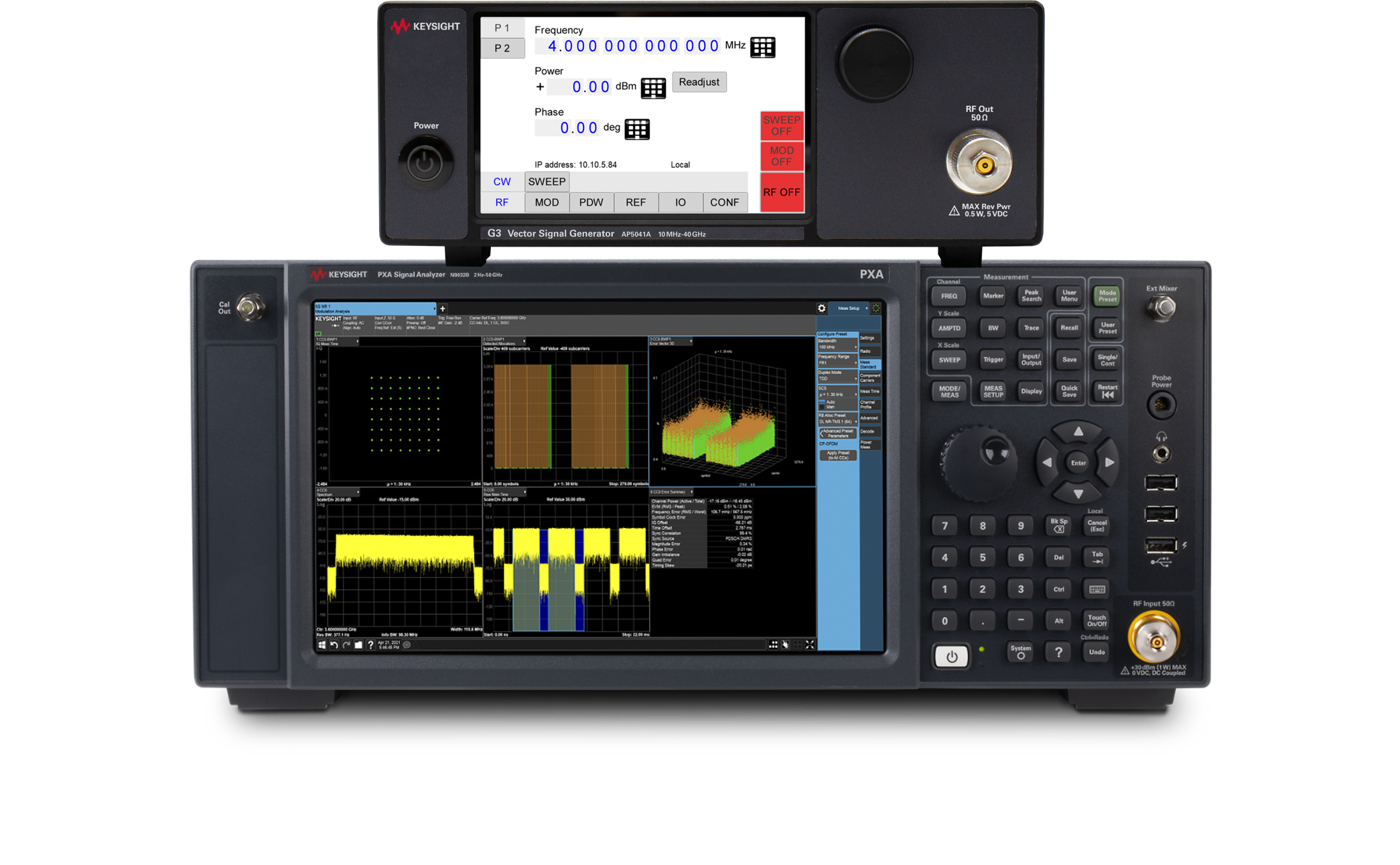
Receiver Validation With LO Substitution Solution
Block Diagram of Receiver Validation With LO Substitution Solution


Explore Products in Our Receiver Validation With LO Substitution Solution
-

![]()
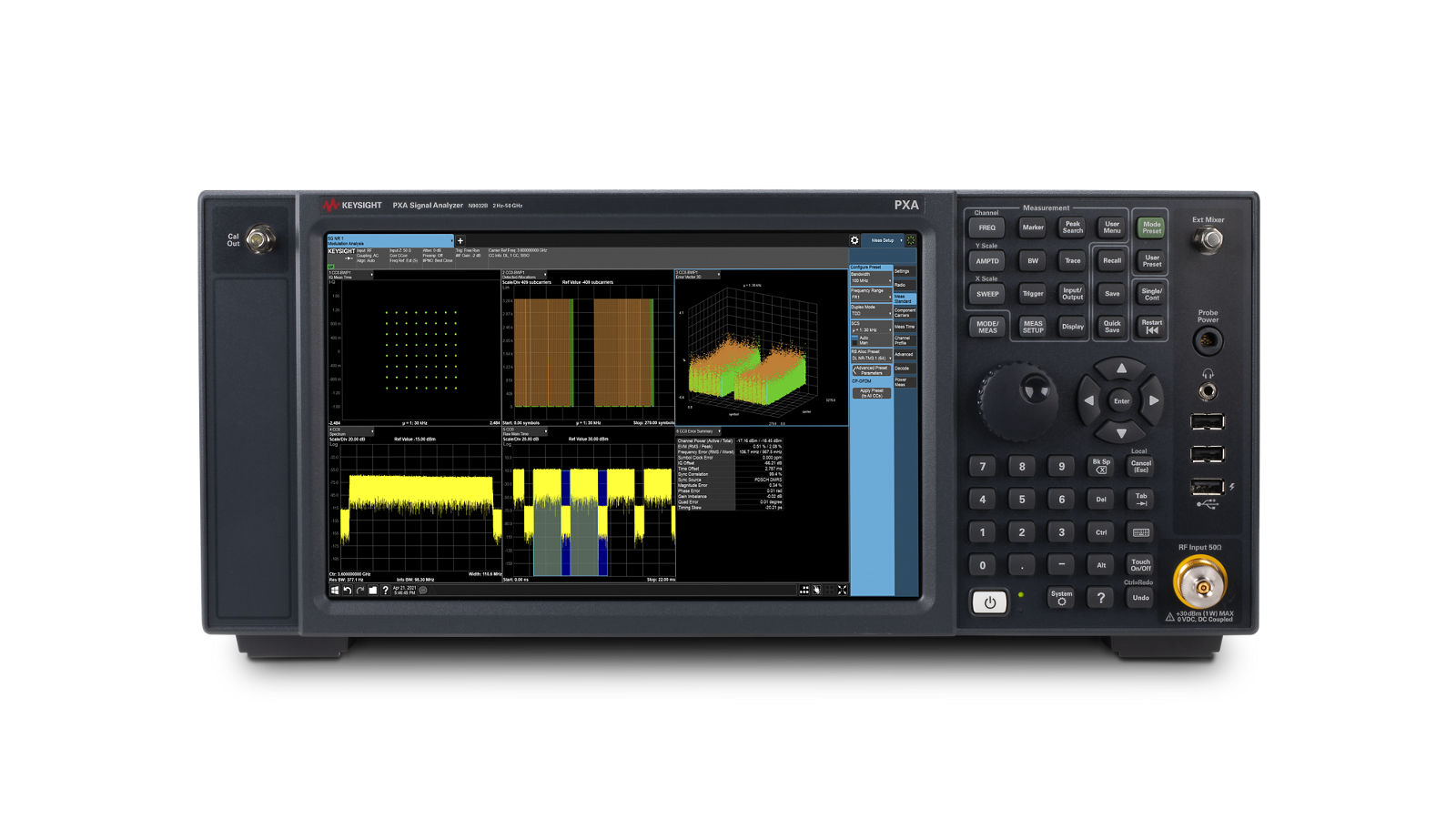
N9032B PXA Signal Analyzer, 2 Hz to 55 GHz
-
![]()
AP5041A Vector Signal Generator, 100 kHz to 40 GHz


Discover Resources and Insights
Additional Resources for Receiver Validation with LO Substitution
Related Use Cases


-
![]()
Learn More
How to Measure WLAN Device Current Drain
Measure and analyze dynamic current drain in WLAN devices to optimize power consumption and battery life.
Learn More

-
![]()
Learn More
How to Capture Transient WLAN Current Bursts
Capture transient current spikes in WLAN transmissions to analyze device performance and optimize power consumption.
Learn More
-
![]()
Learn More
How to Generate 5G New Radio Receiver Test Signals
Generate coded 5G new radio (NR) test signals for receiver bit error rate (BER), block error rate (BLER), packet error rate (PER), and frame error rate (FER) validation using PathWave Signal Generation (PWSG) software.
Learn More

Get In Touch With One Of Our Experts
Need Help Finding The Right Solution For You?