How to Classify RF Signals in the Field

Identifying and Characterizing Unknown and Known Emitters
Classifying signals in dynamic spectrum environments requires identifying waveform characteristics, modulation types, and signal behavior across varying power levels and bandwidths. Accurate signal classification relies on capturing signal presence over time, observing how it behaves in both the frequency and time domains, and distinguishing intentional communications from unintentional interference or noise. This involves collecting in-phase and quadrature (IQ) data, analyzing modulation features, and comparing observed patterns to known signal profiles. Spectrum monitoring personnel must determine not only what signal is present, but why it is present, and whether its source is authorized, interfering, or malicious.
Identifying and characterizing signal types across shared and congested spectrum environments requires a test system capable of continuous monitoring, IQ data capture, geolocation tagging, and post-event analysis. The test system typically integrates a spectrum analyzer, a directional or omni antenna system, and spectrum monitoring or classification software that applies pattern recognition, feature extraction, demodulation, and decision logic to label signals by category. The classification test system must support long-duration monitoring sessions, synchronized measurement logging, and the ability to process both narrowband and wideband signals under real-world conditions. Advanced analysis algorithms enable accurate separation of overlapping emitters and differentiation of legitimate transmissions from interference or anomalies.

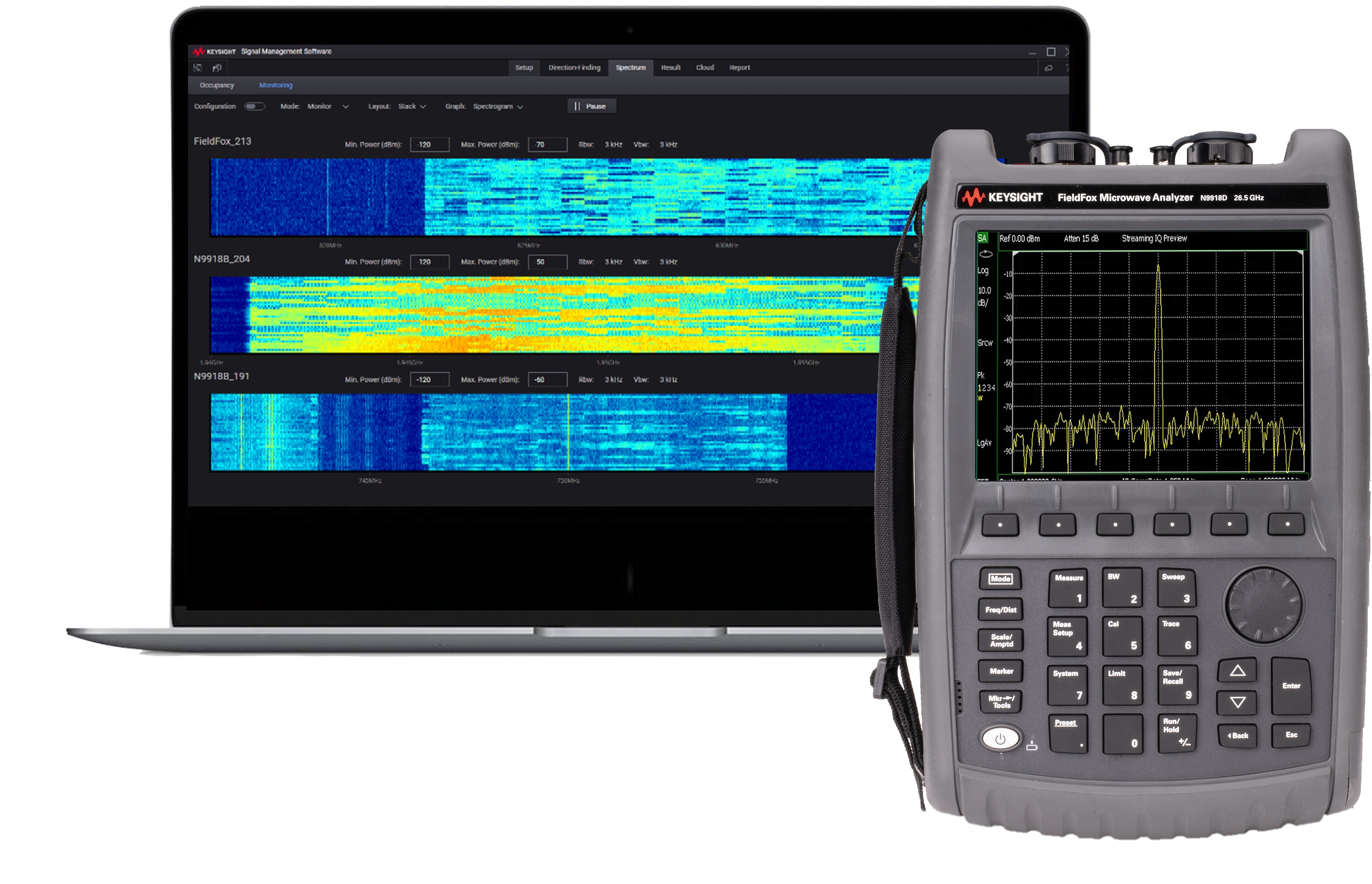
Signal Classification Solution
Explore Products In Our Signal Classification Solution
-

![]()
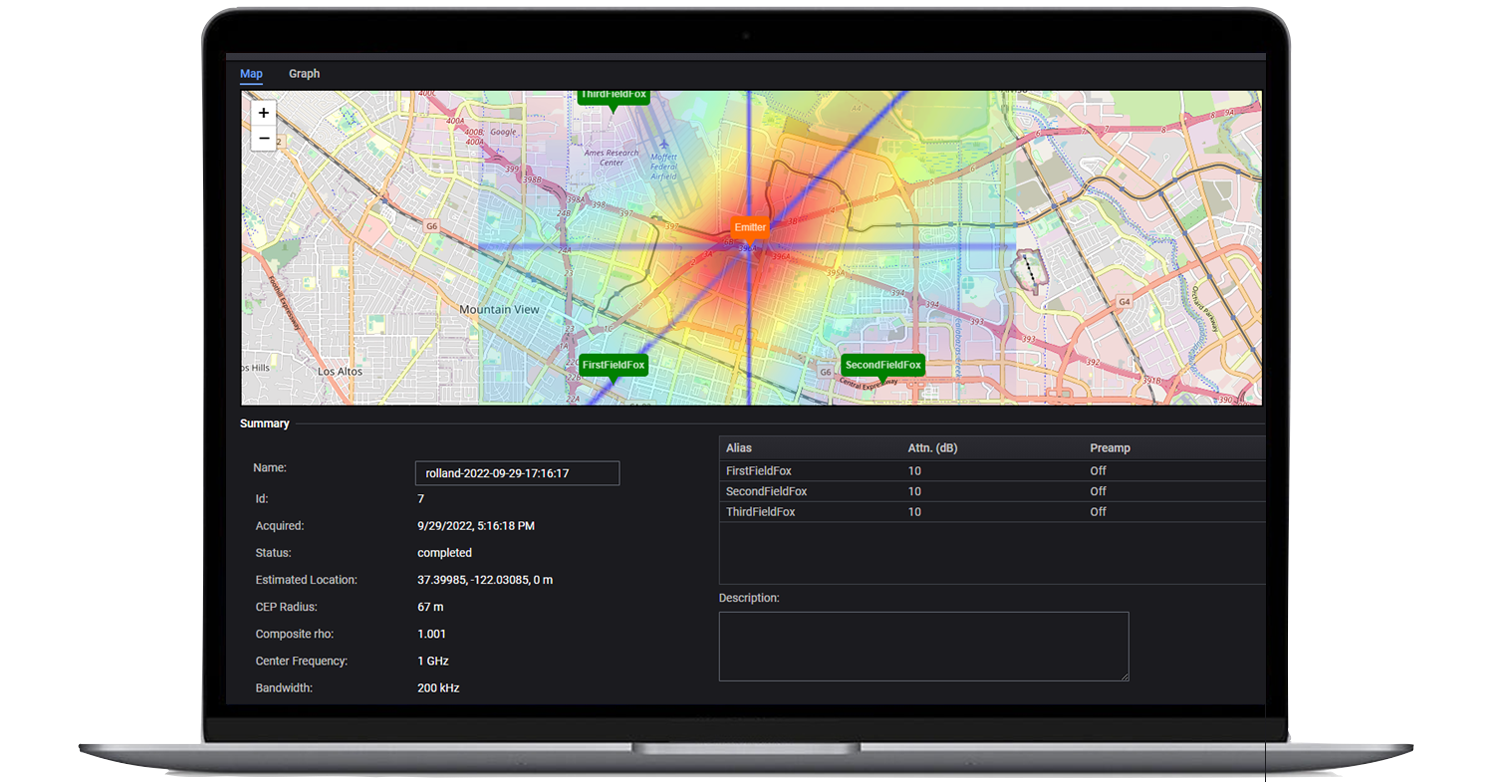
S9910A Keysight Spectrum Management Software (KSMS)
-

![]()
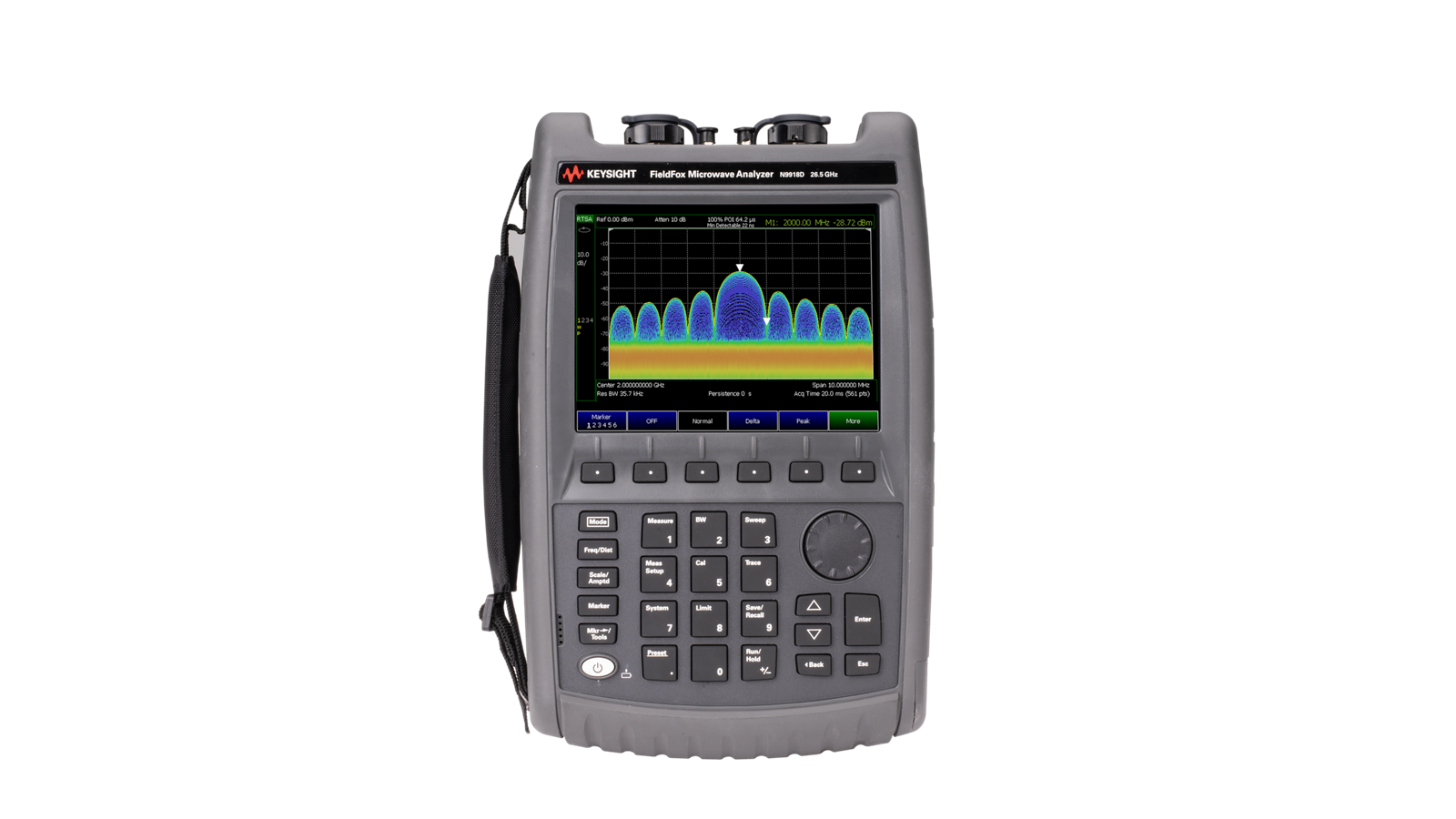
N9918D FieldFox Handheld Analyzer, 26.5 GHz

Discover Resources and Insights
Additional Resources for Classifying RF Signals
Related Use Cases

-
![]()
Learn More
How to Observe Long-Duration Radio Frequency Spectrum Activity
Observe long-duration radio frequency spectrum activity using a handheld spectrum analyzer and spectrum management software.
Learn More

-
![]()
Learn More
How to Monitor Remote Field Measurements in Real Time
Monitor remote radio frequency measurements using a handheld spectrum analyzer and remote display software.
Learn More
-
![]()
Learn More
How to Characterize 5G mmWave Air Interface
Characterizing 5G over-the-air performance requires an integrated, portable signal analyzer with a phased array antenna. Learn how to overcome key 5G network deployment challenges by characterizing millimeter-wave path loss and coverage.
Learn More

Get In Touch With One Of Our Experts
Need Help Finding The Right Solution For You?