









- Overview
- All Models
- Support
High-density, full-stack network testing in a self-contained platform
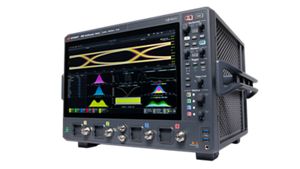
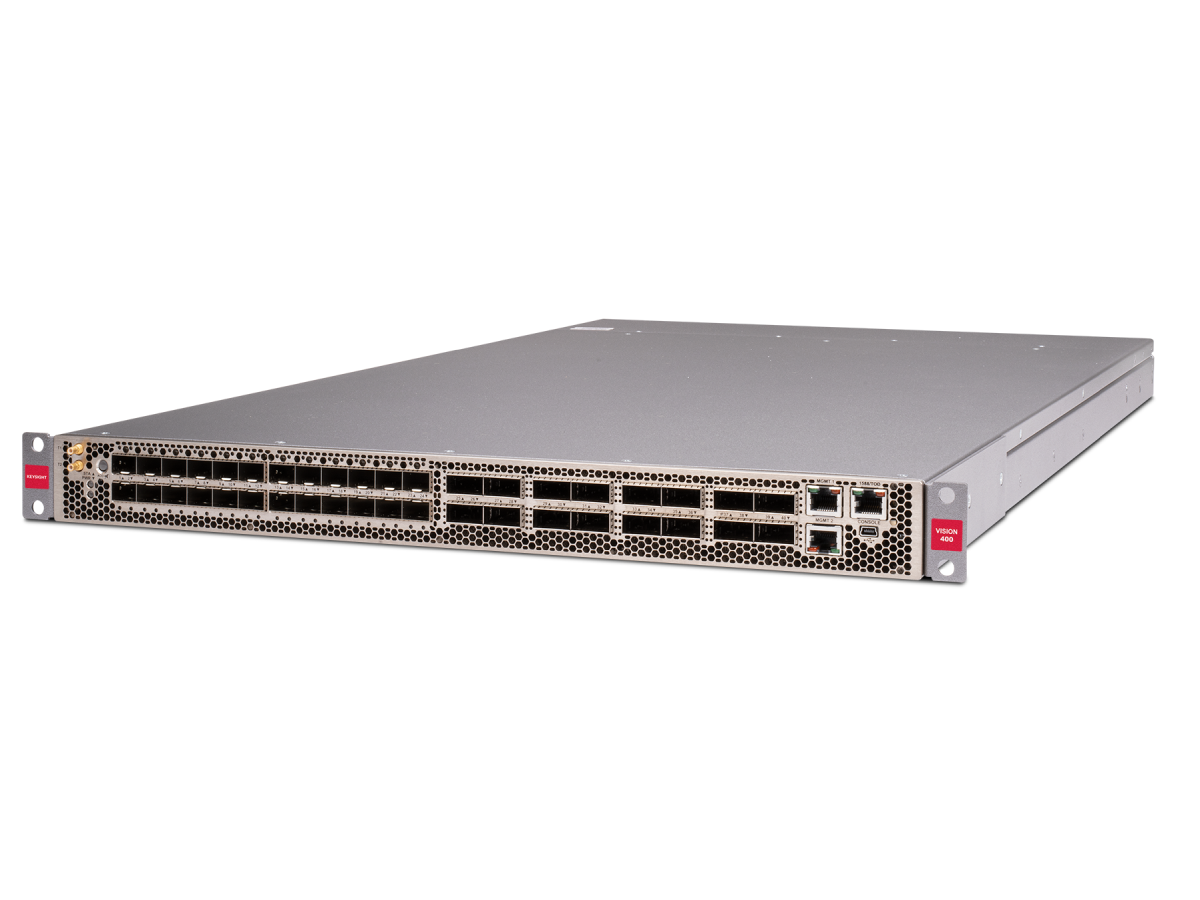
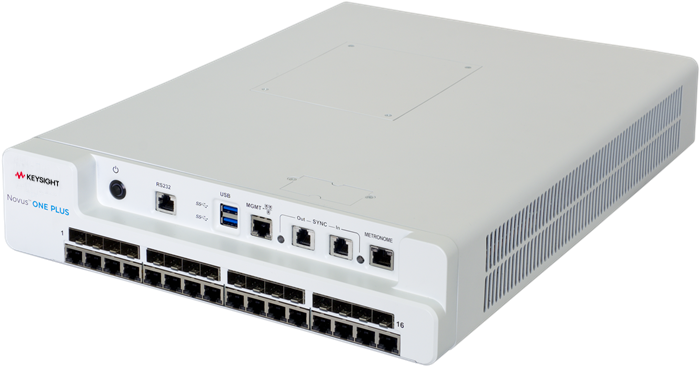
Keysight Novus ONE PLUS systems combine high-performance Layer 2 to 7 traffic generation and analysis in a fixed, all-in-one chassis for validating Ethernet devices and network infrastructure with fewer configuration steps. Built for streamlined setup and high throughput, Novus ONE PLUS delivers comprehensive testing of switching, routing, and application-layer performance, all from a compact, standalone platform. Novus ONE PLUS features predefined high-density port counts in a single enclosure for rapid deployment, turnkey labs, and efficient test coverage in QA or production environments. If custom port configurations are required, consider the XGS chassis paired with Novus modular generators, which allow for custom port configurations across multiple test modules. Request a quote for one of our popular configurations today. Check out the resources below.
Fixed, high-density chassis
Each system provides a complete, self-contained test bed with up to 16 ports in a single chassis, no modules or add-ons required.
Layer 2 – 7 test capabilities
Emulate control plane protocols, generate realistic application traffic, and validate inline performance for switches, routers, and security appliances.
Simplified deployment
Streamline setup with preconfigured port layouts and a unified software interface, compatible with test automation and software-driven validation workflows.
Enterprise scalability
Designed for repeatable, large-scale testing with minimal setup overhead for high-throughput lab environments.
-
Form factor
Appliance
-
Ports
4 to 16
-
Interface speed modes
10GE, 5GE, 2.5GE, 1GE, 100 MbE
-
Interface
SFP+
Most popular configurations
Novus ONE PLUS 10GE / 5GE / 2.5GE / 1GE / 100M Fixed Chassis, 4-Port, SFP+ / 10GBASE-T
Novus ONE PLUS 10GE / 1GE / 100M Fixed Chassis, 16-Port, SFP+ / 10GBASE-T
Novus ONE PLUS 10GE / 5GE / 2.5GE / 1GE / 100M Fixed Chassis, 16-Port, SFP+ / 10GBASE-T
Services and support
Innovate at speed with curated support plans and prioritized response and turn-around times.
Get predictable, lease-based subscriptions and full lifecycle management solutions—so you reach your business goals faster.
Experience elevated service as a KeysightCare subscriber to get committed technical response and more.
Ensure your test system performs to specification and meets local and global standards.
Make measurements quickly with in-house, instructor-led training, and eLearning.
Download Keysight software or update your software to the newest version.
Frequently asked questions
Testing Ethernet switch performance across Layers 2–7 requires a test solution that can simulate real-world traffic loads, network protocols, and user behavior at scale. At the lower layers (L2/L3), you need to validate forwarding performance, MAC learning, routing protocol convergence, and flow scalability under varying loads. At higher layers (L4–L7), the focus shifts to generating application-layer traffic such as HTTP, DNS, VoIP, and video streams to evaluate deep packet processing, throughput under real content, and QoE metrics.
Modern test platforms can emulate thousands of endpoints generating realistic traffic mixes, stateless and stateful, across high-speed Ethernet links, from 1G to 100G and beyond. These tests help uncover bottlenecks in ASIC processing, verify FEC implementation, measure latency and jitter, and validate protocol correctness under stress. Comprehensive tools also allow replaying captured traffic, triggering specific protocol behaviors (e.g., BGP route flaps or IGMP joins), and using fine-grained control over packet timing and payloads. All of this is essential for benchmarking switch fabric performance and ensuring robust behavior under real deployment conditions in enterprise, cloud, or edge data center networks.
To validate Ethernet port performance, especially in devices with dozens or hundreds of ports, you need a scalable testbed that supports high port density, clean signal generation, and precise traffic analytics. Key goals include measuring line-rate throughput, latency, frame loss, and error behavior across all active ports simultaneously.
Effective validation involves testing under different port configurations (e.g., mix of 10G, 25G, 40G, 100G) and traffic conditions (e.g., IMIX patterns, multicast floods, bursty AI workloads). You should be able to simulate simultaneous ingress and egress flows with unique MAC/IP addresses, vary packet sizes, and observe how each port performs under congestion or rerouting scenarios. Features like inline latency tracking, FEC error monitoring, and real-time port statistics help ensure physical and logical link integrity.
For production or regression testing, pre-defined port layouts and automation support allow you to rapidly repeat tests across builds or devices. Whether testing switches, routers, NICs, or packet brokers, high-density port testing is critical to ensure no degradation occurs in performance as port counts scale, especially important in AI/ML clusters and hyperscale cloud deployments.
Application traffic emulation goes beyond simple packet generation. It involves recreating realistic user sessions and protocol interactions to fully stress network or device behavior. This includes simulating web browsing (HTTP/HTTPS), video streaming (RTSP, MPEG), voice calls (SIP, RTP), cloud access (DNS, TCP, SSL), and enterprise services (LDAP, email, storage protocols). Traffic may be stateful (maintaining session info) or stateless (packet-based), depending on the layer of testing.
To emulate this, testers typically configure user profiles and application mixes that reflect actual usage scenarios, such as thousands of concurrent logins or simulated employees accessing cloud tools. The testbed must track end-to-end flow statistics like transaction time, error rates, and application throughput. Many solutions allow automation, where application scripts or workflows can be reused across tests and scaled to millions of connections.
This type of testing is critical for validating DPI engines, load balancers, firewalls, and switches that operate at Layers 4–7. You also uncover behavior under conditions like packet loss, congestion, and out-of-order delivery. Emulating application traffic helps ensure that networked systems deliver both performance and reliability before deployment in production.