















-
Automotive Cybersecurity Testing
Simplify automotive cybersecurity and regulatory compliance


-
IoT Security Testing
Real-world IoT threat simulation for enhanced security validation
Automotive Cybersecurity Testing
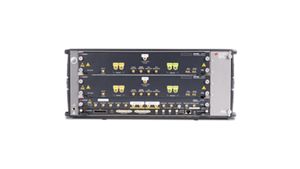
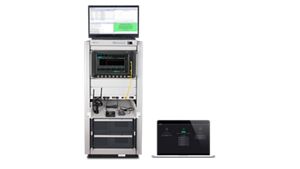
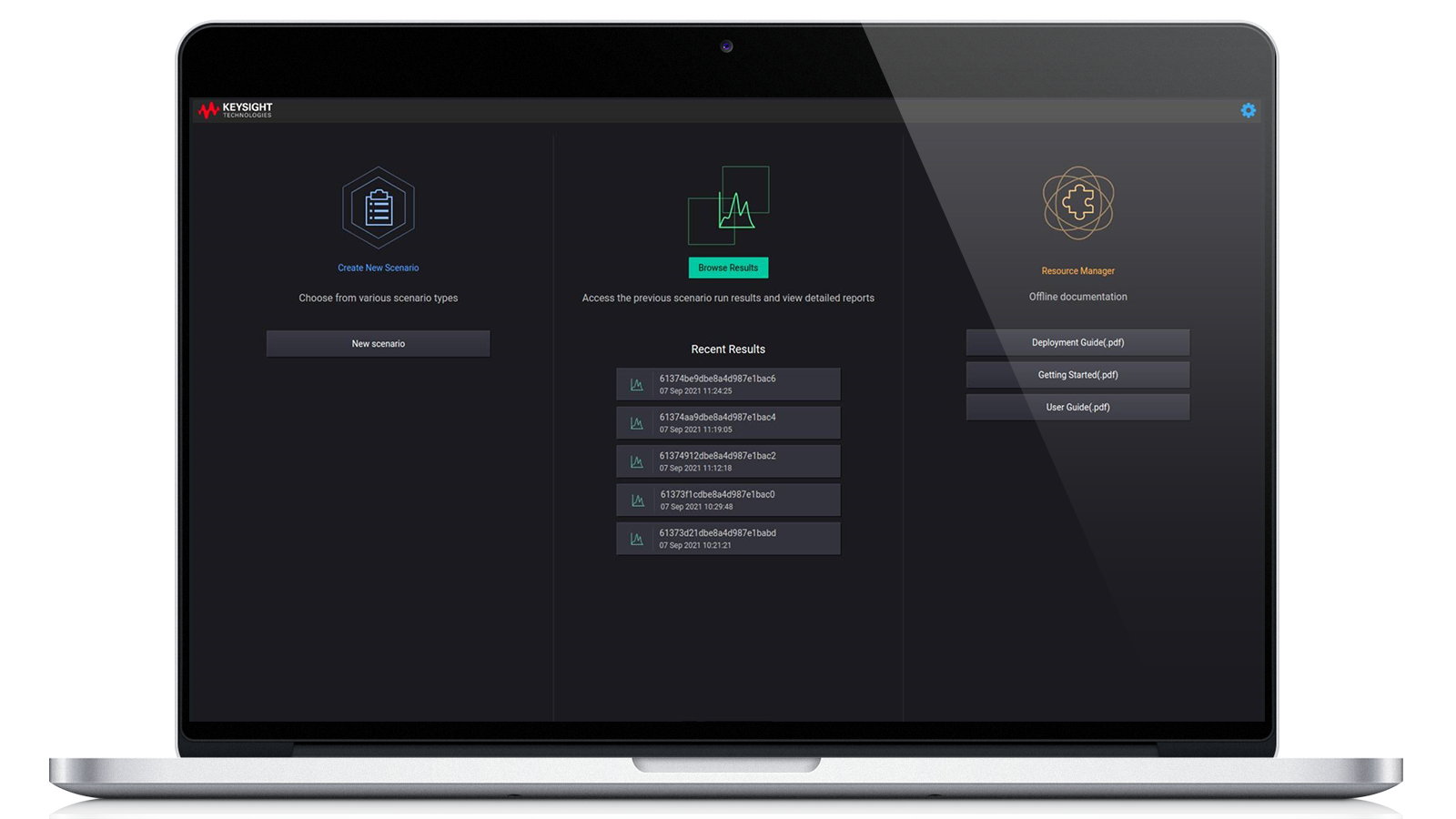
Keysight Automotive Cybersecurity Test enables you to assess the resilience of vehicle electronic control units (ECUs) and networks against cyber threats, helping ensure the security and compliance of connected automotive systems. The platform integrates traffic generation, threat emulation, and anomaly detection to assess ECU response to malicious inputs across standard automotive protocols, including Controller Area Network (CAN), Local Interconnect Network (LIN), and Automotive Ethernet. Keysight Automotive Cybersecurity is designed for flexibility and scalability, supporting automated test execution using pre-configured or user-defined test cases aligned with ISO/SAE 21434 and UNECE WP.29 requirements. It connects directly to DUTs via onboard physical interfaces. It can be deployed as a standalone tool or integrated into Hardware-in-the-loop (HIL) testbeds for closed-loop security validation under simulated driving conditions. Want to learn more about this solution? Explore the resources below.

IoT Security Testing
Keysight IoT security testing solutions combine intelligent automation, real-time analysis, and evolving threat coverage to help you validate the security of connected devices at every stage of development. Built to simulate real-world cyberattacks, enabling high confidence testing of embedded systems, communication protocols, and firmware security for both consumer and industrial Internet of Things (IoT) applications. IoT cybersecurity testing platform that automates validation through a point-and-click user interface (UI) or automation API. It’s a turnkey assessment tool enabling you to identify security gaps in IoT devices related to security, compliance, and labeling requirements. Keysight’s IoT security testing platform supports a wide range of device types and use cases, from consumer electronics to industrial IoT, with compliance-focused testing aligned to standards like ANSI / CTA 2088-A, ETSI-EN 303 645, OWASP, and Cyber Trust Mark. Threat intelligence updates and scalable cloud integration ensure you stay ahead of emerging risks, whether validating a single device or managing a fleet. Need help selecting? Check out the resources below.

Enabling U.S. Cyber Trust Mark Certification
Secure your connected devices with the advanced IoT security assessment platform. Designed for scalability and ease of use, this solution offers automated cybersecurity validation across various IoT applications. Perform firmware analysis, protocol fuzzing, and vulnerability scanning using a point-and-click interface or automation API. With support for major standards like ETSI EN 303 645 and Cyber Trust Mark, it simplifies compliance, enhances supply chain assurance, and helps you confidently launch secure, regulation-ready IoT products.
Explore Compatible Software and Accessories for Your Security Device Testing Solution
Choose from a wide range of security testing software for automated threat emulation, compliance validation, and real-time vulnerability analysis, or accessories like interface units, high-speed cabling, and more.
Services and support
Innovate at speed with curated support plans and prioritized response and turn-around times.
Get predictable, lease-based subscriptions and full lifecycle management solutions—so you reach your business goals faster.
Experience elevated service as a KeysightCare subscriber to get committed technical response and more.
Ensure your test system performs to specification and meets local and global standards.
Make measurements quickly with in-house, instructor-led training, and eLearning.
Download Keysight software or update your software to the newest version.
Frequently Asked Questions
Security device testing measures whether a device can enforce policy, detect threats, and maintain expected performance under realistic conditions. Key metrics include throughput under inspection, latency, detection accuracy, availability, and protocol handling.
Relevant references may include technical standards such as ETSI EN 303 645 and cybersecurity labeling programs such as the U.S. Cyber Trust Mark, depending on device type.These metrics matter because security devices must remain effective and responsive under benign traffic, attack traffic, and mixed loads. Keysight addresses these requirements through device validation.
A security device testing solution should match the target environment, device type, threat model, and standards scope. Selection depends on whether the use case involves automotive systems, IoT devices, enterprise edge infrastructure, or broader connected-device validation. Important considerations include compliance needs, validation purpose, and measurable outcomes such as throughput, latency impact, resilience under attack, and repeatability.
Relevant references may include technical standards such as ETSI EN 303 645, cybersecurity labeling programs such as the U.S. Cyber Trust Mark, and automotive cybersecurity requirements, depending on device type and deployment context. Keysight supports validation across these connected-device environments.
Security device testing integration means embedding repeatable security validation into development, lab, and regression workflows. This supports continuous checks for policy enforcement, threat handling, firmware integrity, and protocol robustness as software or configurations change.
Useful outcomes include regression tracking, earlier issue detection, and audit-ready evidence for standards-driven validation. Integration typically relies on test APIs, automation interfaces, protocol fuzzing, and vulnerability assessment workflows. Keysight enables this type of automated security validation across DevSecOps and CI/CD workflows.
Security device testing uncovers weaknesses by exposing devices to realistic traffic, malicious inputs, and pre-deployment validation conditions. Common findings include default or hardcoded credentials, unencrypted communications, firmware weaknesses, exposed debug interfaces, and missing secure boot or protected update mechanisms.
These issues can lead to unauthorized access, tampering, data exposure, or weakened device integrity. Standards-based validation may also reveal compliance gaps for connected devices. Keysight identifies these security gaps through pre-deployment validation.
Security appliance testing validates whether devices can enforce policy, detect threats, and maintain performance before they are exposed to live traffic. Key outcomes include detection effectiveness, throughput under inspection, latency impact, and resilience under attack.
Standards and regulatory requirements may also require documented validation before release. Pre-deployment testing identifies configuration issues, firmware weaknesses, and performance bottlenecks early. Keysight brings security validation expertise to pre-deployment assessment.
Security test tools simulate real-world cyberattacks by generating malicious and legitimate traffic in controlled, repeatable validation scenarios. Key outcomes include detection behavior, block rates, latency under attack, and throughput stability.
Standards-based validation may reference frameworks such as MITRE ATT&CK or other security testing methods, depending on use case. These tools can emulate exploit chains, denial-of-service traffic, encrypted payloads, and malformed protocol behavior to evaluate how devices detect, block, and recover. Keysight provides realistic attack simulation for security validation workflows.