


Why Use RSoft FemSIM FEM
Use finite element method (FEM) simulation to calculate transverse and cavity modes in arbitrary photonic structures. FemSIM enables accurate analysis of high-index-contrast waveguides, silicon photonic devices, lossy structures, and other complex geometries that can be difficult to model using simpler approaches.
Use RSoft FemSIM FEM for
- Calculating waveguide modes
- Analyzing optical cavity modes
- Evaluating high-index-contrast structures
- Studying silicon photonic devices
- Determining effective index and mode profiles
- Analyzing leaky and radiation modes
- Modeling complex photonic geometries that benefit from non-uniform meshing


 Full-Vector FEM Mode AnalysisCalculate electromagnetic modes in waveguides, cavities, and other photonic structures using finite-element analysis.
 Flexible Non-Uniform MeshingRepresent irregular boundaries and complex geometries with meshes adapted to the device structure.
 Detailed Mode ResultsEvaluate effective index, propagation constants, field profiles, overlap integrals, confinement, and loss-related behavior.
Key Outcomes

Analyze modes in structures that are difficult to represent with simpler or uniformly meshed approaches.

Evaluate how geometry and materials affect field distribution and optical confinement.

Identify leaky, radiative, or weakly confined modes that may limit device performance.

Generate mode information for subsequent propagation, coupling, or device-level simulations.
RSoft BeamPROP BPM
Use industry-leading RSoft BeamPROP BPM design software to rapidly and accurately design and simulate integrated and fiber-optic waveguide devices and circuits.
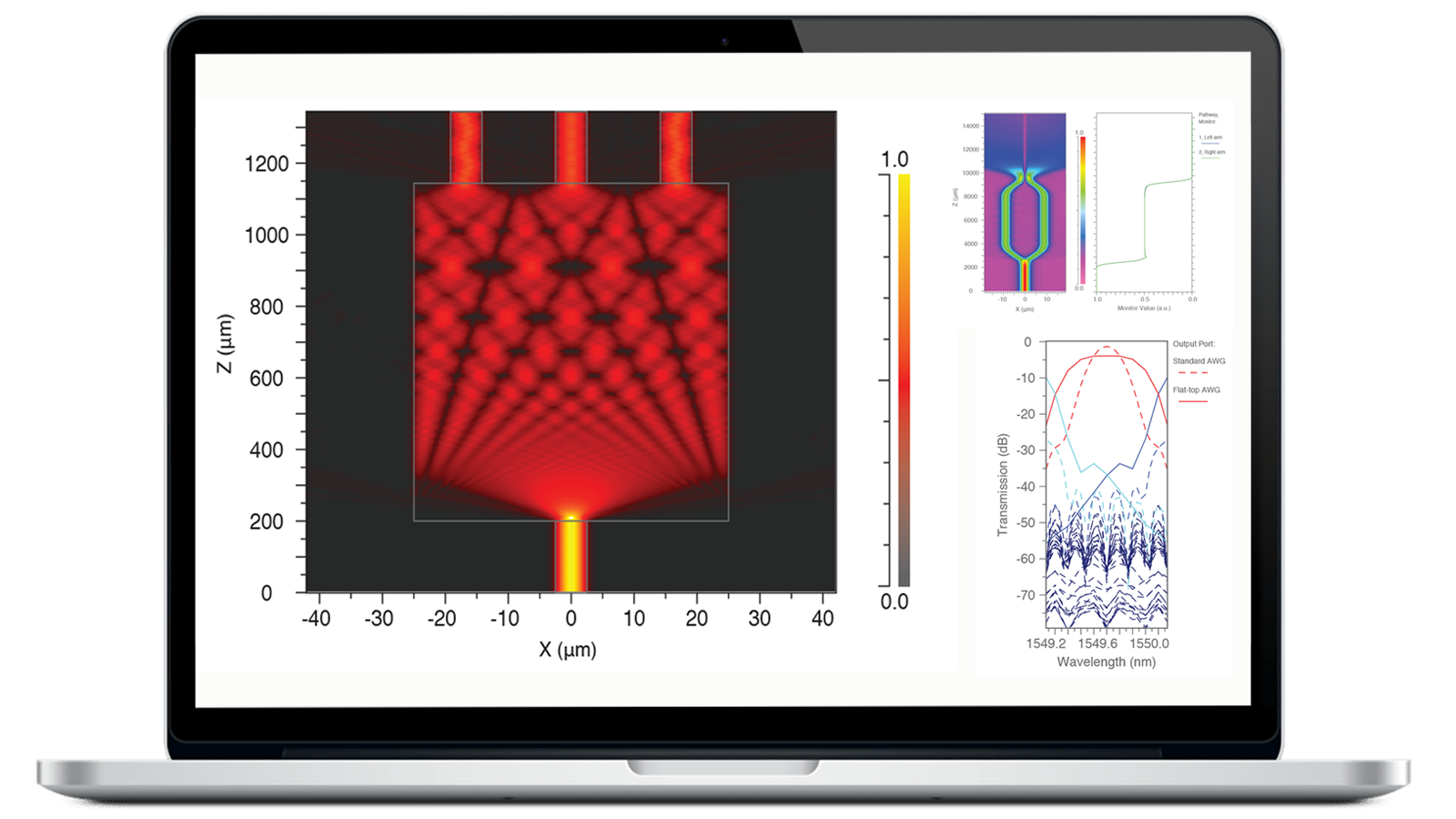
RSoft ModePROP EME
Explore RSoft ModePROP EME, an eigenmode expansion (EME) propagation tool that accounts for both forward and backward propagation and radiation modes.
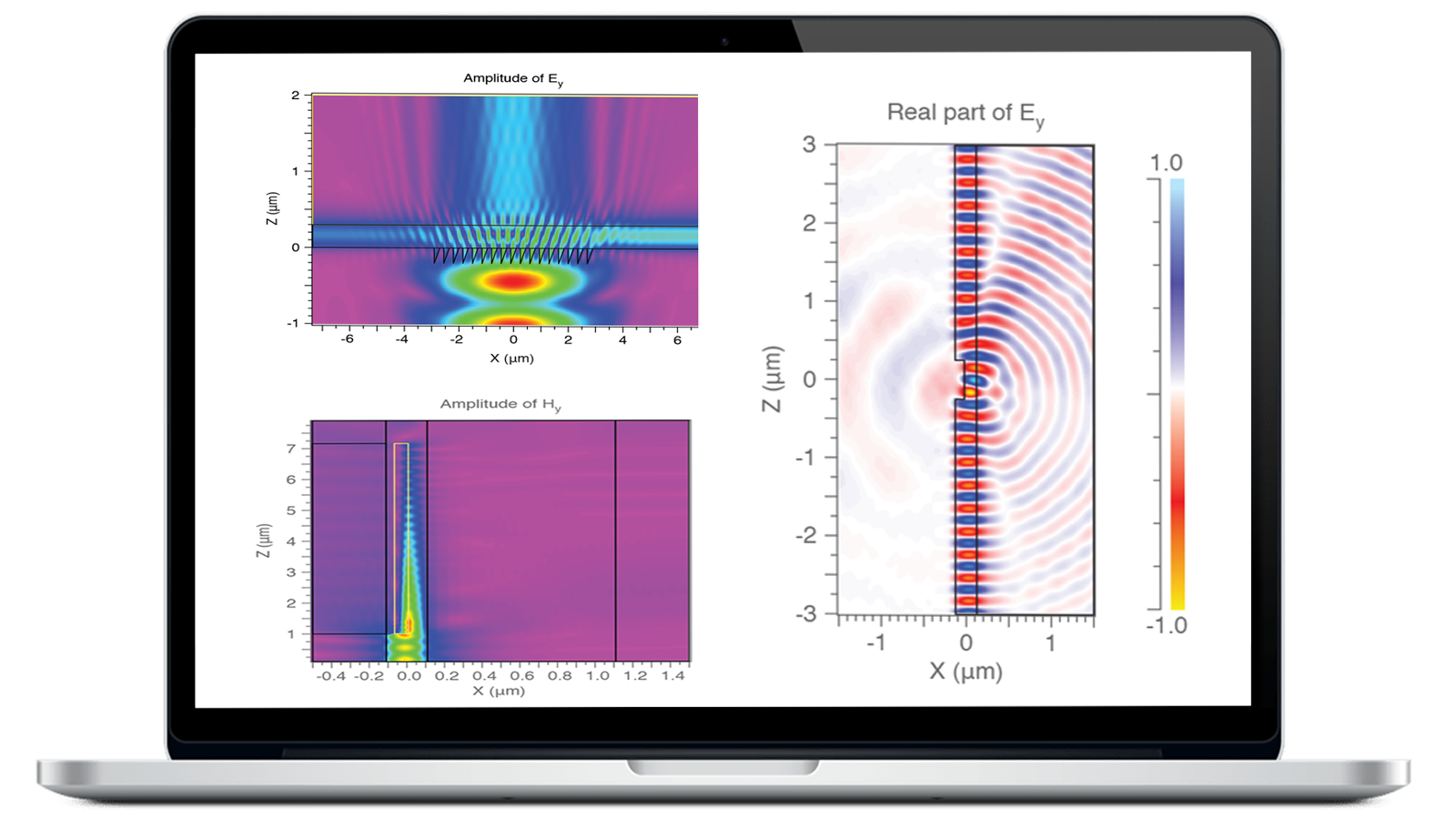
RSoft FullWAVE FDTD
Use the RSoft FullWAVE FDTD simulation tool to study how light propagates in photonic structures, circuits, and nanophotonic devices.
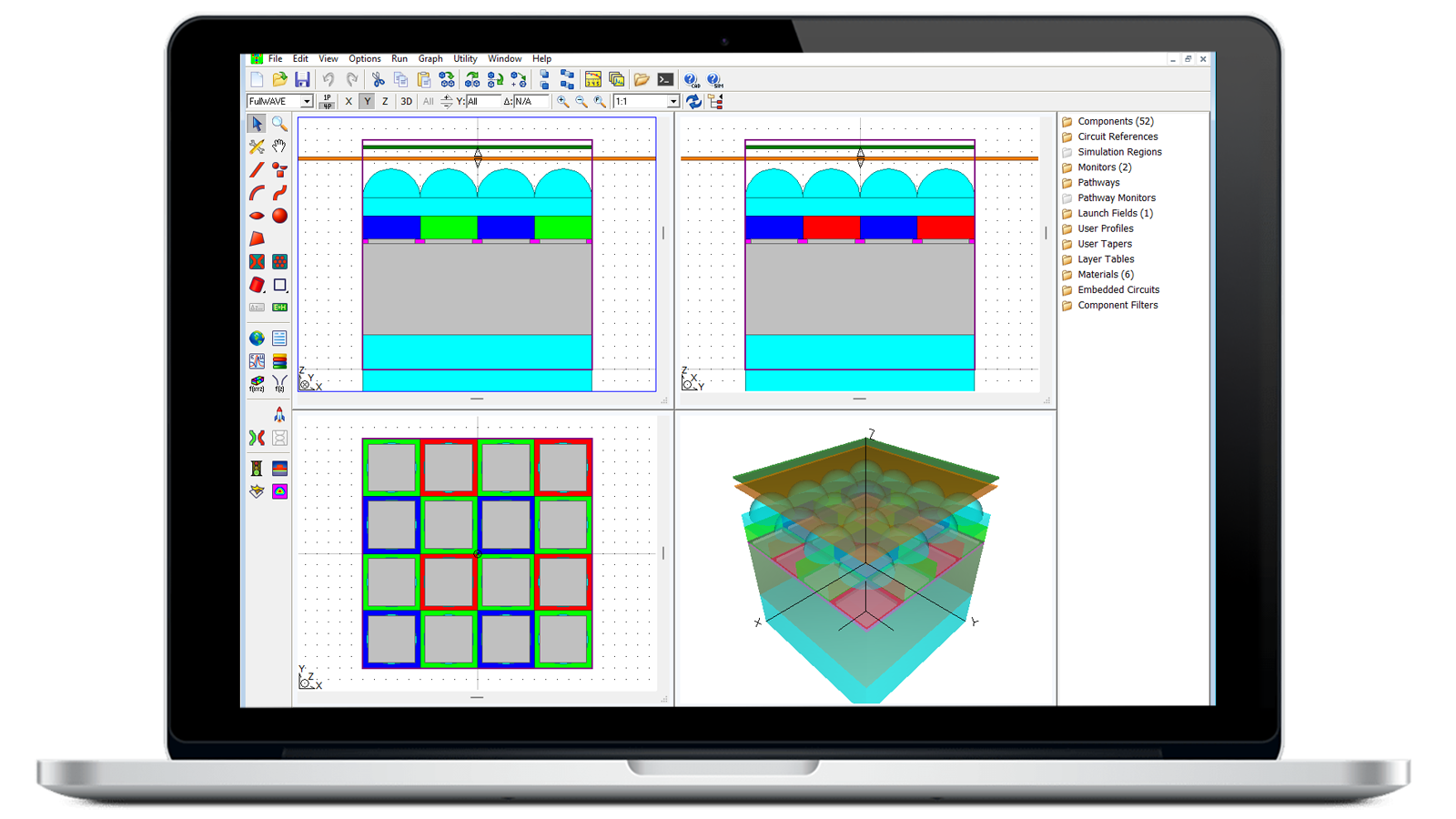
RSoft CAD Environment
The RSoft CAD Environment is the core program of the RSoft photonic device tools. Design waveguide devices, optical circuits, and other photonic devices.

Resources to Get You Started
See how finite element method simulation can be used to analyze optical modes, evaluate confinement, and optimize waveguide performance in silicon photonic devices.


Application Notes
Computing Bending Modes

Application Notes
Photonic Crystal Fiber
Application Notes
Electro-Absorption Modulator
Application Notes
Multimode Calculations of a Metal Clad Waveguide
White Papers
Choosing the Right Photonic Device Design Software
Flyers
What's New in RSoft Photonic Device Tools
White Papers
Efficient and Accurate BPM Simulation of a Polarization
Application Notes
Leaky Modes in a Multilayer / Rib Waveguide
Application Notes
Modes of a Slot Waveguide Structure
Application Notes
Silicon Nanowire Polarization Rotator
Have Questions? We've Got Answers
The finite element method (FEM) is commonly used to calculate optical modes, effective index, confinement, and electromagnetic field behavior in complex photonic structures. FEM is particularly useful for high-index-contrast devices and irregular geometries.
RSoft FemSIM is typically used to calculate optical modes and cavity modes. RSoft BeamPROP is generally used to simulate how those modes propagate through waveguide structures and devices.
RSoft FemSIM can be used for silicon photonic waveguides, high-index-contrast structures, optical fibers, resonant cavities, photonic crystal devices, plasmonic structures, and other complex photonic geometries. This aligns with the earlier RSoft FemSIM positioning around waveguide modes, cavity modes, silicon photonics, and complex geometries.
Yes. RSoft FemSIM can calculate effective index, optical mode profiles, field distributions, propagation constants, overlap integrals, and confinement factors. The earlier RSoft FemSIM review specifically emphasized waveguide modes, cavity modes, effective index, and mode-profile analysis.
Non-uniform meshing allows complex device geometries to be modeled more accurately while focusing computational effort where it is needed most. This is particularly valuable for high-index-contrast and irregular photonic structures.
Yes. RSoft FemSIM is commonly used to generate mode information that supports broader photonic device and PIC design workflows, including propagation, coupling, and device optimization activities. The earlier review included exporting mode data into broader simulations and optimization workflows.
Engineers can analyze optical mode profiles, effective index, propagation constants, field distributions, overlap integrals, confinement factors, cavity modes, and higher-order modes.