DDoS Testing




Emulate DDoS attacks in your own lab
Discover three options for simulating DDoS attack tests on your network. Set up basic attacks using open-source software, single-link attacks using professional network test tools, and multisite attacks using high-speed testing equipment.


Ready for Record-Setting DDoS?
Explore the fundamental components of the Rapid Reset DDoS attack which peaked at 398 million requests per second.


Establish an organization-wide DDoS mitigation strategy in four steps: tools, attacks, simulation, and test management.


DDoS Tests for Finance and Beyond
Discover a test methodology for ensuring network and device resilience against an ever-changing array of DDoS attacks.


Find out how a tech consortium partnered with Keysight to test its DDoS mitigation system on a live, distributed network.
DDoS testing simulates a cyberattack in which attackers overwhelm a network with traffic from multiple sources, aiming to make it unavailable to legitimate users.
By emulating multiple types of DDoS attacks at varying speeds, network operations teams can assess their systems' resilience and identify potential weaknesses before real attackers exploit them. When conducted regularly, DDoS testing can also help hone incident response plans, monitor network quality of service, and ensure that critical services stay online during an actual attack.







Testing DDoS mitigation hardware and software in a controlled environment helps you understand how well your network is prepared for a real-world attack — without endangering your users or applications. Software-based DDoS emulation tools are the most typical vehicle for this kind of test. However, hardware-based network traffic generators offer increased scale and throughput for testing larger networks.
Tests range from simple attacks using open-source software to complex emulations using high-performance testing rigs. Testing your infrastructure against an array of DDoS techniques — such as application, rate, volumetric, reflection, and fragmentation attacks — helps you ensure that your network can withstand a battery of attack vectors.





Basic attack simulations
Using open-source tools, you can execute a basic DDoS test on your network to measure your security posture and mitigation solutions. Keep in mind: cybercriminals sometimes use these same tools to carry out real-world attacks — so be sure to use them at your own risk. Moreover, since these attacks are limited in scale, it's challenging to draw lasting conclusions about your network's preparedness.
If you're comfortable with the risk, you can use open-source tools to emulate simple DDoS attacks, such as a SYN flood. This attack consists of hitting a server with a high volume of SYN packets to overwhelm the target. A simplified SYN flood test is limited to ~50,000 packets per second, but it's an effective way to see how your network withstands a low-volume attack.


Complex, medium-density testing
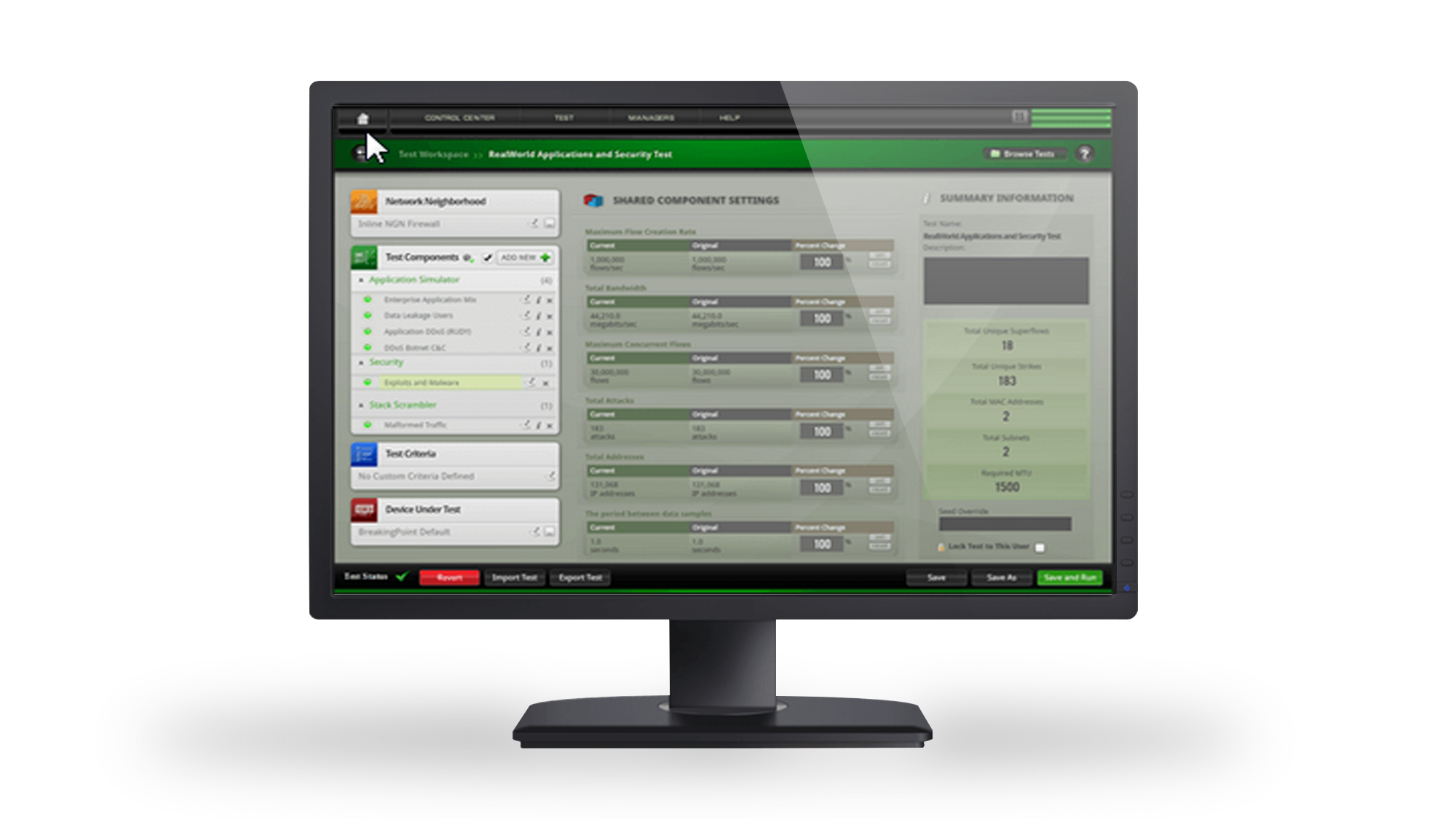
Dedicated DDoS test software offers a variety of real-world attack simulations for small to midsize organizations. More advanced than basic open-source tools, DDoS emulators don't just create attacks — they can disguise them in legitimate network traffic. These tools can simulate a range of application traffic protocols, such as social media traffic, peer-to-peer, gaming, enterprise business applications, and video.
The increased realism of DDoS emulators means you can get a more holistic portrait of your network security posture by emulating multiple attack types. For example, Keysight BreakingPoint Virtual Edition offers 36,000+ security strikes, 6,000+ recorded attacks, and 100+ common evasion techniques. However, virtual-only solutions like these have one major downside: scalability. Organizations with network bandwidth greater than 10 GB will need a hybrid setup with high-capacity test hardware.


Large-scale emulations
For enterprise-grade DDoS tests, you need more than just software. You need to pair an emulation platform with high-performance testing hardware that can generate network traffic profiles at an internet scale. A hybrid setup like this helps ensure that your network can withstand a DDoS attack of any size.
For example, using Keysight BreakingPoint software with a Keysight APS-ONE-100 network traffic generator, you can emulate DDoS attacks at 100,000 Transport Layer Security (TLS) connections per second, 3.2 million TLS concurrent connections, and 150 Gbps of encrypted throughput. However, no matter how strong your network defenses are, DDoS attacks will still impact users and infrastructure. Realistic, large-scale test setups like these also enable you to identify the maximum thresholds your servers can withstand — and the minimum level of network performance to maintain uptime.





Discover our DDoS testing tools
A leader in application and security testing, Keysight offers a range of hardware- and software-based DDoS testing tools.

Get in touch with one of our experts
Need help finding the right solution?