
Resource Guide
Top 10 Electronic Test Equipment Every Engineer Should Know



Introduction
Every successful engineering project starts with one thing: accurate measurement. Whether you’re designing a new PCB, validating a power circuit, or troubleshooting a communication link, the right test equipment turns uncertainty into data you can trust.
Modern instruments aren't just used for measurement, they reveal patterns, detect anomalies, and even predict failures. From oscilloscopes that visualize every voltage ripple to analyzers that expose signal noise, mastering these tools gives engineers a real edge in design and production.
In this guide, we’ll explore the top 10 electronic test instruments every engineer should know: what they do, how to use them, and how to integrate them into your workflow. You’ll also see how refurbished, OEM-certified equipment from Keysight can deliver the same precision and reliability at a fraction of the cost.
Comprehensive Selection Criteria for Advanced Test Equipment
Choosing the right electronic test equipment requires more than just checking specifications. It means finding tools that align with your specific engineering challenges. The instruments featured here were selected for their precision, versatility, and ability to support both analog and digital test environments across industries such as telecommunications, aerospace, semiconductors, and advanced manufacturing.
Each category was evaluated for its real-world performance in design validation, production testing, and field diagnostics, ensuring these tools deliver consistent results where accuracy and reliability matter most. From benchtop oscilloscopes to network analyzers, every instrument meets the demands of modern R&D labs, production lines, and service centers alike.
When evaluating advanced test instruments, engineers should prioritize the following criteria:
- Accuracy: The foundation of every reliable measurement.
- Bandwidth: Determines signal fidelity and data capture range.
- Ease of use: Simplifies complex testing workflows through intuitive interfaces.
- Automation: Reduces manual steps and ensures repeatable, error-free results.
- Integration capability: Enables seamless connection with other systems and software.
- Compliance with standards: Ensures test results align with global certifications and quality benchmarks.
The result is a balanced selection of instruments that deliver high performance, scalability, and long-term value, helping engineers stay ahead of evolving test and measurement requirements.
Detailed Analysis of Top 10 Advanced Test Instruments
The right test equipment forms the foundation of every engineer’s workflow. Each instrument in this list was chosen for its ability to simplify complex measurements, improve accuracy, and speed up diagnostics across multiple engineering environments. Whether you’re testing prototype boards, validating production units, or troubleshooting field systems, these tools will help you work smarter and with greater confidence.
1. Digital Multimeter with Advanced Functions
A digital multimeter is the foundation of every electronics lab. It measures voltage, current, and resistance. Modern versions go much further, adding capabilities for capacitance, frequency, temperature, and continuity testing. Whether you’re designing, repairing, or validating circuits, a DMM delivers the essential accuracy and confidence needed for reliable electrical measurements.
Today’s advanced multimeters combine precision and automation in one compact tool. Features like auto-ranging, data logging, and true RMS measurement allow engineers to capture dynamic, real-world signals with minimal setup. Many models also integrate with software for automated testing, trending, and documentation, ensuring consistency across teams and projects.
How to use effectively:
- Calibrate regularly to maintain traceable accuracy.
- Choose the correct mode and range before connecting probes.
- Use high-quality leads to minimize contact resistance.
- Follow safe handling practices, especially when measuring live circuits or high voltage.
As explained in Keysight’s Digital Multimeter Buying Guide, selecting the right DMM depends on understanding its resolution, input impedance, and measurement bandwidth. A high-accuracy DMM is a baseline reference for all other instruments in your setup.
Benefits:
- Multi-functional for a wide range of test applications
- High accuracy for validation and troubleshooting
- Compact and easy to integrate into any test bench
- Ideal for education, field service, and advanced R&D environments
Pro Tip: Use auto-ranging to save time on setup and data logging to analyze results over time. Both are simple ways to improve workflow efficiency and reduce errors.
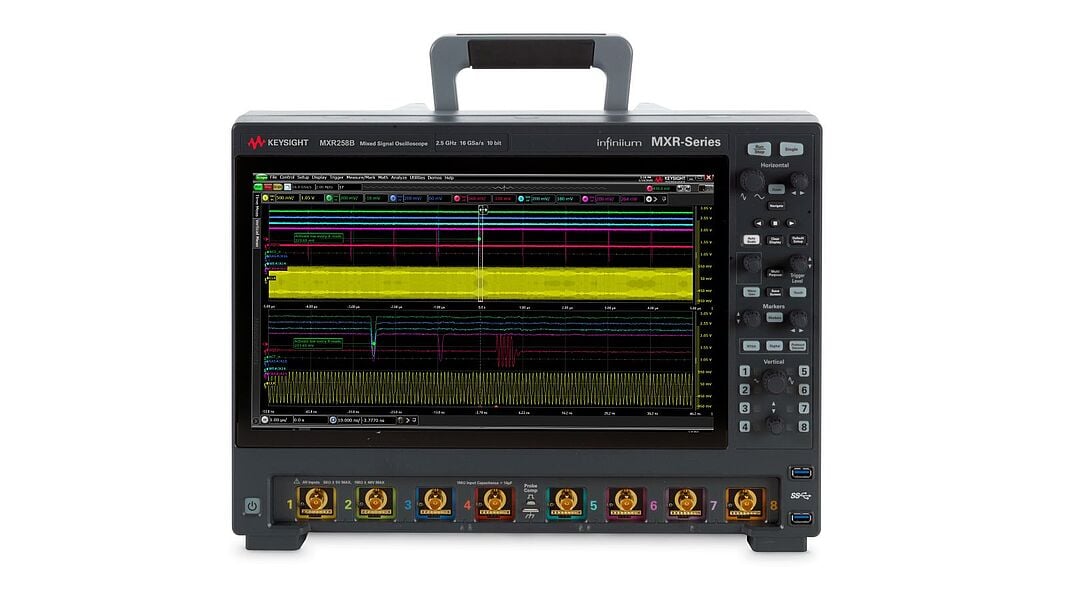
2. Real-Time Oscilloscope with Mixed-Signal Capability
A real-time oscilloscope is one of the most powerful and versatile tools on any engineer’s bench. Often described as the engineer’s microscope, it visualizes both analog and digital signals simultaneously. It can reveal voltage fluctuations, timing errors, and unexpected behavior that other instruments might miss.
Modern mixed-signal oscilloscopes combine high resolution, wide bandwidth, and deep memory to capture fast, complex events across multiple channels.
In design validation, oscilloscopes help engineers diagnose timing issues, jitter, interference, and signal integrity problems. For embedded systems, they decode serial protocols like I²C, SPI, UART, and CAN, making it easier to trace communication errors or hardware faults. The ability to correlate analog and digital waveforms in real time provides unmatched insight into how components interact within a system.
How to use effectively:
- Connect and configure multiple input channels to view both analog and logic signals.
- Set advanced triggers to isolate anomalies or rare events.
- Use serial decode functions to analyze digital buses directly on the display.
- Save and compare waveforms using reference traces for repeatable analysis.
Keysight’s Oscilloscope Basics highlights how modern oscilloscopes integrate advanced analytics, intuitive touch interfaces, and automated measurement tools to simplify complex debugging.
Benefits:
- Fast, visual understanding of circuit performance
- Seamless correlation between analog and digital domains
- Enhanced productivity through automation and intuitive UIs
- Compatibility with remote data acquisition and cloud storage tools
Pro Tip: Use reference waveforms and automated mask testing to quickly verify compliance and detect deviations without manual intervention.
Caution: Always match probes to your oscilloscope’s bandwidth and input impedance. Using the wrong probe can cause probe loading, introducing measurement errors and signal distortion.
From design labs to production floors, a reliable mixed-signal oscilloscope is the engineer’s ultimate window into how circuits truly behave in real time.
3. RF Vector Signal Generator
An RF vector signal generator is essential for designing, testing, and validating any device that transmits or receives radio frequency signals. It produces precise, modulated RF signals across wide frequency bands, allowing engineers to simulate the real-world environments their systems will operate in.
Modern signal generators combine high spectral purity, low phase noise, and flexible waveform generation, enabling precise emulation of 5G, Bluetooth, and Wi-Fi signals. With advanced vector modulation capabilities, engineers can replicate complex communication scenarios such as multi-carrier interference, fading, and noise injection, all within controlled laboratory conditions.
How to use effectively:
- Configure waveform types such as continuous wave, pulse, or digitally modulated signals.
- Select the correct modulation formats (QPSK, QAM, OFDM) to match your device’s protocol.
- Adjust power levels and frequency sweeps to test performance limits and sensitivity.
- Store and recall waveform settings for consistent, repeatable testing.
RF signal generators are most powerful when paired with spectrum or vector signal analyzers, creating a closed-loop test setup for full transmitter-receiver characterization. This combination allows engineers to measure parameters like error vector magnitude (EVM), spurious emissions, and adjacent channel leakage, ensuring compliance with industry standards.
Benefits:
- Enables reproducible testing of wireless communication systems
- Provides high signal fidelity for accurate receiver performance evaluation
- Simplifies stress testing under realistic modulation and interference conditions
- Scalable across multiple frequency ranges for emerging technologies
Pro Tip: Combine your signal generator with a spectrum analyzer to create a powerful closed-loop test environment. This setup verifies both transmission quality and receiver robustness, critical for optimizing designs in 5G, IoT, and RF component development.
4. Spectrum and Vector Signal Analyzer
A spectrum or vector signal analyzer is one of the most important instruments in RF and wireless engineering. It measures the frequency spectrum of signals, helping engineers detect interference, distortion, or unwanted emissions that can compromise system performance.
In more advanced applications, a VSA goes beyond simple amplitude measurement. It demodulates complex modulated signals to evaluate parameters like error vector magnitude (EVM), signal-to-noise ratio, and channel power.
These analyzers are indispensable for validating 5G, Wi-Fi, radar, and satellite communication systems, where maintaining clean and compliant signal transmissions is critical. They also help identify spurious signals, harmonics, and noise sources, ensuring devices meet regulatory and industry certification standards.
How to use effectively:
- Set the correct frequency span and resolution bandwidth (RBW) to capture the desired signal details.
- Use average and peak detection modes for better signal visibility.
- Integrate with protocol decoders to analyze digital modulation schemes in real time.
- Employ marker functions to measure power levels and frequency offsets precisely.
Keysight’s Spectrum Analyzer Buying Guide explains how selecting the right analyzer depends on frequency range, dynamic range, and measurement speed. A well-matched analyzer not only validates your signal integrity but also accelerates compliance testing.
Benefits:
- Identifies interference and spurious emissions early in development.
- Ensures compliance with international RF and EMC standards.
- Provides deep modulation analysis for wireless protocols.
- Reduces troubleshooting time with fast, automated measurements.
Caution: Always verify calibration and maintain proper shielding during testing. External RF interference or poor grounding can distort results and compromise accuracy.
A reliable spectrum or vector signal analyzer gives engineers the insight to fine-tune performance, certify designs with confidence, and maintain signal integrity across the entire RF chain.
5. LCR Meter with Precision Component Testing
An LCR meter is essential for engineers focused on component characterization and circuit validation. It measures inductance, capacitance, and resistance with high accuracy, confirming that components perform as expected before integration into a design. In both R&D and production settings, precise LCR measurement supports circuit stability, frequency response, and long-term reliability.
Modern precision LCR meters offer more than basic measurements. They include multiple test frequencies, automatic range selection, and high-resolution impedance analysis to evaluate components under varying conditions. Whether testing capacitors, inductors, transformers, or resistors, an LCR meter helps detect parasitic effects, loss factors, and temperature drift that can impact circuit performance.
How to use effectively:
- Connect components using low-resistance leads or Kelvin fixtures for maximum accuracy.
- Test across multiple frequencies to understand how impedance changes with operating conditions.
- Zero the instrument before measurement to eliminate lead and fixture effects.
- Record data digitally for easy trend tracking and comparison.
Benefits:
- Validates component quality and consistency.
- Reduces rework by catching out-of-spec components early.
- Provides accurate reference data for simulation and modeling.
- Ideal for manufacturing, incoming inspection, and design verification.
Pro Tip: Use a frequency sweep to reveal how inductors and capacitors behave dynamically across operating ranges, critical for high-frequency or precision analog applications.
6. High-Speed Bit Error Rate Tester (BERT)
A bit error rate tester (BERT) is the gold standard for evaluating the integrity of high-speed digital communication links. It measures how accurately a system transmits data by comparing the transmitted bitstream against a known reference pattern. Even a tiny number of bit errors can indicate timing jitter, crosstalk, or signal degradation, issues that can cripple advanced communication systems.
Modern BERTs are indispensable for validating interfaces like 5G, Ethernet, USB, PCIe, and fiber optics, where performance margins are tight and compliance standards are demanding. They simulate real-world data traffic at high speeds and detect bit-level discrepancies that traditional oscilloscopes or analyzers may overlook.
How to use effectively:
- Generate standard or custom data patterns to match your communication protocol.
- Configure error detection thresholds to identify deviations in timing or amplitude.
- Synchronize the transmitter and receiver clocks precisely to ensure accurate results.
- Capture and analyze long-term test runs to uncover intermittent or environmental effects.
Benefits:
- Quantifies data integrity for high-speed communication systems.
- Detects jitter, noise, and signal degradation before deployment.
- Enables compliance with global interface standards.
- Improves design robustness and reduces costly requalification testing.
Caution: Maintain precise timing synchronization between instruments. Even small phase or clock discrepancies can distort results and mask true error sources.
With increasing data rates and tighter design tolerances, a high-speed BERT is essential for engineers who demand measurable proof of link reliability and signal performance.
7. Automated Test Systems & Smart Testers
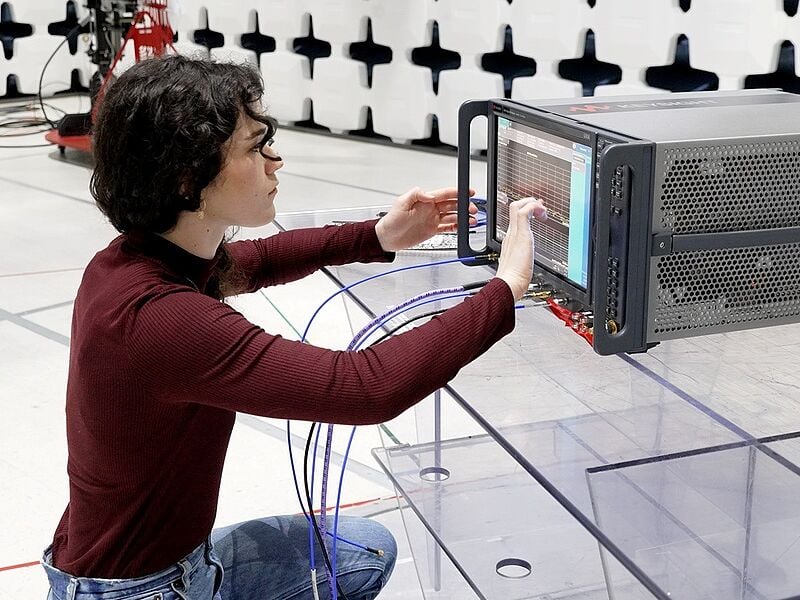
As electronic systems grow in complexity, automated test systems and smart testers have become essential for maintaining speed, accuracy, and consistency in production and R&D environments. These integrated, programmable solutions execute tests automatically, removing variability introduced by manual operation. They combine hardware, software, and control interfaces to perform repeatable, high-volume testing with minimal human intervention.
Modern ATS platforms can handle everything from circuit board validation and device calibration to RF performance verification. They often include programmable power supplies, switching matrices, signal analyzers, and digital I/O modules, all synchronized under a unified test framework. Engineers can design custom test sequences using scripting languages or graphical interfaces to measure performance, log results, and trigger alarms when anomalies are detected.
How to use effectively:
- Develop modular test scripts that can be reused or updated as product requirements evolve.
- Interface with devices under test via standard communication protocols such as GPIB, USB, or LAN.
- Automate data logging and report generation to track quality metrics over time.
- Integrate calibration steps and safety interlocks into each test routine for reliability.
Benefits:
- Increases throughput by reducing manual setup time
- Ensures repeatable, standardized testing across product lines
- Improves data accuracy and traceability with integrated reporting
- Reduces human error while enabling 24/7 test operation
By combining automation with advanced analytics, smart test systems transform how engineers manage large-scale validation and production. They free skilled personnel to focus on analysis and innovation rather than repetitive testing tasks.
Pro Tip: Create modular test routines that can adapt to multiple product configurations. This approach extends the life of your test setup, simplifies maintenance, and supports future upgrades without major system redesigns.
8. Thermal Imaging Camera for Electrical Diagnostics
A thermal imaging camera is one of the fastest, safest ways to detect electrical faults without physical contact. By capturing infrared heat patterns, it helps engineers visualize temperature variations across circuits, connectors, or equipment enclosures. This reveals early signs of overheating, loose connections, insulation breakdowns, or unbalanced loads.
Unlike traditional measurement tools, thermal imagers provide a complete picture of heat distribution, making them invaluable for preventive maintenance and failure analysis in electrical panels, transformers, motors, and PCBs. Detecting anomalies before they cause failure helps prevent costly downtime and ensures system safety.
How to use effectively:
- Perform scans while equipment is powered and under load to reveal true operating conditions.
- Interpret thermal signatures carefully, hotspots may indicate resistance, poor airflow, or component fatigue.
- Compare images over time to monitor degradation or verify repairs.
Benefits:
- Enables early fault detection and predictive maintenance
- Improves safety through non-contact inspection
- Enhances reliability by identifying issues invisible to the naked eye
For an in-depth overview of methods and case studies, see Thermal Camera Applications in Electrical Testing.
9. Logic Analyzer for Complex Digital Systems
A logic analyzer is an indispensable tool for engineers working with microcontrollers, FPGAs, and complex digital circuits. It captures and displays multiple digital signals simultaneously, helping you understand how data moves through buses and control lines in real time.
By decoding protocols such as I²C, SPI, UART, and CAN, logic analyzers reveal how software commands translate into hardware behavior. They are essential tools for debugging embedded systems and communication interfaces.
Unlike oscilloscopes, which focus on voltage levels and waveforms, logic analyzers focus on timing and logic states across many channels. This allows engineers to correlate events, verify setup and hold times, and identify signal collisions or missing pulses that can cause system instability.
How to use effectively:
- Connect probes to digital lines using high-quality clips or logic pods to ensure clean signal capture.
- Configure trigger conditions to isolate relevant activity within long data streams.
- Use protocol decoding software to translate binary data into readable instructions.
- Analyze timing relationships between channels to verify synchronization and event sequences.
Benefits:
- Simplifies debugging of embedded controllers and bus systems
- Provides time-aligned insight across dozens or hundreds of signals
- Helps verify firmware behavior during integration and testing
- Reduces troubleshooting time by correlating software and hardware activity
Pro Tip: Use protocol decoding software to visualize digital communication instantly, transforming streams of binary data into actionable insights for faster debugging and system validation.
10. Vector Network Analyzer for RF Component Characterization
A vector network analyzer is the cornerstone instrument for engineers designing or testing RF and microwave components. It measures how signals behave as they travel through a network, quantifying impedance, reflection (S11), and transmission (S21) characteristics across a defined frequency range. By revealing how components interact with RF signals, a VNA helps optimize performance, minimize losses, and ensure system reliability.
VNAs are critical in antenna design, filter tuning, cable and connector testing, and amplifier matching. They provide both amplitude and phase data, enabling engineers to visualize standing waves, insertion loss, and return loss in real time. With modern instruments offering wide dynamic range and fast sweep speeds, even subtle mismatches or parasitic effects can be identified early in the design phase.
How to use effectively:
- Perform a full two-port calibration using open, short, load, and through standards before measurement.
- Connect the device under test (DUT) with low-loss, phase-stable cables.
- Sweep across the target frequency range to capture magnitude and phase response.
- Store calibration data and use trace averaging for stable results.
Benefits:
- Ensures precise tuning of antennas, filters, and RF subsystems
- Detects impedance mismatches that cause reflection or signal degradation
- Enables accurate S-parameter modeling for simulation and design optimization
- Validates compliance with communication and radar performance standards
Caution: VNAs require regular calibration and controlled test environments. Temperature, humidity, or connector wear can introduce phase drift and measurement uncertainty.
Advanced Test Equipment Comparison
| Instrument | Primary Function | Frequency / Measurement Range | Key Features | Primary Applications |
|---|---|---|---|---|
| Digital multimeter (DMM) | Measures voltage, current, resistance, and more | DC to kHz | Auto-ranging, data logging, true RMS | Circuit validation, troubleshooting, R&D |
| Mixed-signal oscilloscope (MSO) | Visualizes analog and digital signals | DC to multi-GHz | Multi-channel, serial decode, mask testing | Debugging, signal integrity, timing analysis |
| RF vector signal generator | Produces modulated RF test signals | Hz to 50+ GHz | Vector modulation, wideband output, low phase noise | 5G, Wi-Fi, radar, satellite testing |
| Spectrum / vector signal analyzer | Measures signal spectrum and demodulates signals | Hz to 50+ GHz | Demodulation, EVM, spurious detection | RF design, EMI/EMC certification |
| LCR meter | Tests inductance, capacitance, and resistance | Hz to MHz | Multi-frequency sweep, high accuracy | Component validation, quality control |
| Bit error rate tester (BERT) | Measures digital link integrity | Mbps to 100+ Gbps | Pattern generation, jitter analysis, error detection | 5G, PCIe, Ethernet, optical networks |
| Automated test system (ATS) | Executes programmable, repeatable tests | Depends on configuration | Modular hardware, scripting, automated logging | Manufacturing, validation, quality testing |
| Thermal imaging camera | Detects non-contact temperature variations | -20 °C to 650 °C (typical) | Infrared sensing, live heat mapping | Preventive maintenance, fault detection |
| Logic analyzer | Captures and decodes multiple digital signals | Up to hundreds of MHz | Multi-channel timing capture, protocol decode | Embedded system debugging, bus analysis |
| Vector network analyzer (VNA) | Measures S-parameters and impedance | MHz to 110+ GHz | Phase and magnitude measurement, calibration | Antenna design, RF component characterization |
Strategies for Integrating Advanced Test Equipment into Workflows
Integrating advanced test equipment into your engineering workflow goes beyond simply adding new tools. It involves building a connected, efficient test ecosystem where every instrument works together toward a common goal. Oscilloscopes, analyzers, and other tools each play a role in supporting faster design validation, smoother production testing, and reliable field diagnostics.
During design and validation, instruments like oscilloscopes, logic analyzers, and signal generators help capture signal behavior, validate prototypes, and ensure design integrity under real-world conditions.
In manufacturing, automated test systems, LCR meters, and BERTs verify consistency across production batches, while data from these systems feeds directly into quality management platforms. For field diagnostics, portable DMMs, thermal imaging cameras, and handheld spectrum analyzers make maintenance and troubleshooting fast, safe, and accurate.
To make these instruments work seamlessly together, engineers should focus on three key areas:
- Operator training: Ensure every team member understands setup, measurement principles, and data interpretation. Skilled users reduce error rates and downtime.
- Calibration routines: Establish regular calibration schedules to maintain traceability and measurement confidence across all tools.
- Data integration: Use compatible software platforms for data capture, reporting, and analysis. This not only improves traceability but also enables predictive maintenance and long-term optimization.
Cross-platform compatibility and smart workflow integration turn test equipment into a unified, data-driven environment where every measurement adds insight and every tool contributes to greater accuracy, efficiency, and innovation.
Common Pitfalls and How to Avoid Them
Even the most advanced test equipment can produce unreliable results if it’s not used correctly. Common mistakes, like improper setup, neglected calibration, poor grounding, or ignoring environmental factors, can compromise accuracy, waste valuable time, and lead to costly troubleshooting later.
One of the most frequent issues is skipping proper calibration. Instruments drift over time, and without routine calibration, measurements can deviate from true values. Establishing a regular, traceable calibration schedule keeps every instrument performing within specification.
Improper grounding and cable management are also major sources of error. Loose connections or ground loops can introduce noise, distort readings, or damage sensitive components. Always verify grounding integrity and use shielded cables in high-frequency or high-voltage setups.
Environmental factors such as temperature fluctuations, humidity, and electromagnetic interference (EMI) can further affect test results. Whenever possible, maintain a stable test environment, isolate power lines, and control airflow around precision instruments.
Best practices to ensure accuracy and repeatability:
- Follow manufacturer setup guidelines precisely.
- Calibrate equipment on schedule and record each session.
- Keep test environments stable and well-grounded.
- Inspect cables and connectors before each use.
- Use automation and data logging to minimize manual error.
A disciplined approach to setup and maintenance ensures your instruments deliver consistent, verifiable results every time.
Metrics and KPIs to Measure Testing Success
Measuring the success of a test strategy depends on tracking the right performance indicators. The most effective metrics reveal how well your testing process supports accuracy, consistency, and efficiency across every project.
Key metrics to monitor include:
- Accuracy: How closely measurements align with known standards.
- Repeatability: The ability to achieve the same results under identical conditions.
- Throughput: The number of successful tests completed per shift or per unit of time.
- Defect reduction: The decrease in failures or rework after test optimization.
- Compliance tracking: Ensuring tests meet ISO, IEC, and other regulatory requirements.
For seamless data collection and reporting, use software platforms such as Keysight PathWave Test Automation. These tools automate result logging, generate reports, and visualize performance trends, turning raw test data into actionable insights for continuous improvement and product quality assurance.
Advanced Usage Tips and Future-Proofing Test Setup
Building a future-ready test environment means designing for scalability, flexibility, and intelligence. Technology evolves quickly, and test setups that can adapt to new standards, higher bandwidths, or faster data rates will deliver the best long-term value.
Start with a modular, upgradeable test bench. Choose instruments that support firmware updates, expansion ports, and interchangeable modules. This allows you to integrate new capabilities without replacing entire systems. Modular designs also simplify maintenance and reduce downtime during upgrades.
Next, harness AI and cloud analytics to move from reactive troubleshooting to predictive maintenance. Modern test systems equipped with built-in diagnostics can identify drift, wear, or calibration anomalies before they impact results. Connecting instruments to cloud-based platforms enables real-time monitoring, centralized data storage, and cross-team collaboration.
Finally, establish standardized communication protocols and automation scripts that work across devices and software platforms. These ensure compatibility as your test environment expands.
By designing test setups that evolve alongside technology, engineers not only preserve their investment but also unlock deeper insights, faster innovation cycles, and lasting measurement confidence.
Conclusion
Mastering the use of advanced electronic test equipment is essential to achieving design success, product reliability, and long-term innovation. Every precise measurement helps engineers validate performance, improve quality, and reduce development time. As technologies evolve, continuously upgrading both your skills and your lab tools ensures you stay ahead in demanding engineering environments.
From oscilloscopes and spectrum analyzers to network analyzers, signal generators, and VNAs, the right instruments give you clear, actionable insight into every aspect of your design and production process. They transform testing from a reactive step into a strategic advantage, driving smarter decisions and faster innovation.
At the Keysight Used Equipment Store, you can access Premium Used instruments, including oscilloscopes, network analyzers, and VNAs. Each device delivers like-new performance with OEM calibration, extended warranties, and expert technical support for complete peace of mind. Act now to explore high-quality refurbished equipment from Keysight and bring precision, reliability, and measurable confidence to your next project.
Whenever You’re Ready, Here Are
5 Ways We Can Help You
Call tech support US: +1 800 829-4444
Press #, then 2. Hours: 7am – 5pm MT, Mon– Fri
Contact our sales support team
Create an account to get price alerts and access to exclusive waitlists
Talk to your account manager about your specific needs.
Frequently Asked Questions
Ensure safety by using equipment rated for your environment (CAT II-IV), following manufacturer instructions, maintaining proper grounding, and wearing anti-static protection. Regular inspection and calibration keep devices safe and reliable. Environmental factors like temperature and humidity also affect safety and performance.
Calibration is typically needed annually or per manufacturer guidelines to maintain accuracy. Both measurement and safety functions must be calibrated, following standards such as IEC 61010 and ISO, to ensure reliable results and product quality compliance.
Condition of Equipment:
- Keysight Premium Used: These units are refurbished to a like-new standard.
- Keysight Used: For Keysight Used units please check the pictures on each listing where potential traces of usage will be shown.
Explore our Keysight Premium Used and Keysight Used Equipment.
Select probes matching your oscilloscope’s bandwidth and voltage ratings. Opt for high-impedance, low-capacitance probes to avoid circuit loading. Active or differential probes suit complex or low-level signals. Regular calibration ensures measurement accuracy and safety in your test setups.
Automated test systems boost throughput by replacing manual tasks, reduce human error for better accuracy, enable data logging, and simplify complex protocol testing. This improves productivity, test reliability, and product quality in manufacturing and R&D workflows.
Temperature extremes, humidity, and electromagnetic interference (EMI) can cause measurement errors and device degradation. Proper grounding and controlled environments reduce noise and improve stability, ensuring precise test and measurement instrument performance.
Avoid using incompatible probes or improper grounding, misconfiguring triggering settings, and neglecting routine calibration. These common errors cause inaccurate voltage and timing readings, hampering troubleshooting and product quality assurance.
Good signal integrity means signals are accurately captured without distortion, jitter, or interference. Maintaining it is essential for verifying electronic system performance, ensuring communication reliability, and meeting power quality and product standards.
Integrate instruments supporting automation, scripting, and standard data formats. Align tool selection with test phases (design, production, diagnostics). Train operators on multi-device safety and calibration to optimize overall productivity and testing instrumentation use.
Manufacturers provide technical consulting, software/firmware updates, extended warranties, calibration, and tailored training. This ensures accurate measurements, long-term reliability, and helps users maximize their investment in complex test and measurement equipment.