What are you looking for?
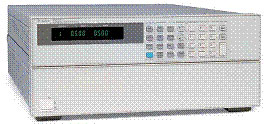
Keysight N3300 DC Electronic Load for AC Impedance Measurements on Fuel Cells
A fuel cell is an electrochemical device used to create electricity through a reaction between a fuel (such as hydrogen) and an oxidant (such as oxygen) in the presence of an electrolyte. In addition to producing electricity, the reaction generates by-products, which typically are only water and heat. Therefore, using fuel cells is an environmentally friendly way to produce electricity. Measuring the AC impedance of a fuel cell can help identify the kinetic and ohmic resistances, which can uncover efficiency issues by revealing internal cell losses. Measuring impedance across a range of frequencies (electrochemical impedance spectroscopy or EIS) can help identify problems with the fuel cell components or deviations in the fuel cell assembly process.
Fuel cells are non-linear devices because internal fuel cell impedance changes with operating conditions such as temperature and current density. As a result, fuel cells need to be evaluated under a variety of operating conditions, including many different current levels. Electronic loads are available to draw power from a fuel cell. Many of these loads can operate in constant voltage mode, which controls a fixed voltage across the cell, or constant current mode, which controls a fixed current drawn from the cell. To measure fuel cell AC impedance, you can choose an electronic load that has the ability to generate a small sine wave of current superimposed upon the larger DC current that it is drawing from the fuel cell. This low-level current stimulus will produce a corresponding sinusoidal voltage as a response to the internal fuel cell impedances. Measurement instrumentation can then be used to acquire both the AC current and voltage waveforms. From the data representing these waveforms, the fuel cell AC impedance can be calculated.
Keysight N3300A DC electronic loads are well qualified to draw DC current as well as stimulate your cells with an AC waveform. Additionally, these loads can make waveform measurements facilitating the calculation of the cell’s complex impedance across a frequency band to give you an EIS measurement.
N3300A Specifications and Unique Contributions
- Constant current mode to control the current in the fuel cell. This feature enables you to easily change the current operating point of the fuel cell to explore how the impedances are affected by current density changes.
- External programming input to allow an externally generated voltage to modulate the electronic load input current to superimpose a current sine wave on the DC current already being drawn by the load.
- Built-in synchronized voltage and current digitization capability to digitize its own input voltage and input current waveforms for fuel cell AC impedance measurements.
- Low-voltage operation to draw current even when a low voltage is applied to its input terminals.
- Remote voltage sensing to measure the voltage across two terminals that are located a distance away from the load input terminals.