What are you looking for?
SOS for Advanced Design System
Keysight's leading RF and microwave design environment now has a native engineering data backbone - built directly inside ADS. Design faster. Reuse more. Trust every version.
RF Design Demands Precision - Not Hope
The Problem You Know Too Well
RFIC and MMIC design is brutally unforgiving. A single parameter shift—a 0.1 dB error, a phase mismatch, a resonance drift—can cascade into massive performance failures. Your team works across complex domains: schematics, EM structures, device models, layout geometries. The consequences of version chaos aren't just annoying—they're catastrophic.
Most RF teams still rely on shared network folders and naming conventions built on hope. File_v3_final_FINAL_use_this.ads. Sound familiar? You deserve better.
Engineering Data Management That Gets RF
SOS brings military-grade discipline to your ADS workflow—without the bureaucracy. Version control that understands RF design complexity. Traceability that respects your process. Collaboration tools built for engineers who think in S-parameters and Smith charts, not in SharePoint folders.
This isn't generic version control pretending to understand circuits. This is purpose-built engineering data management for RF professionals who demand clarity, control, and speed. Innovation needs structure. SOS delivers both.
Native Integration Means Zero Context Switching


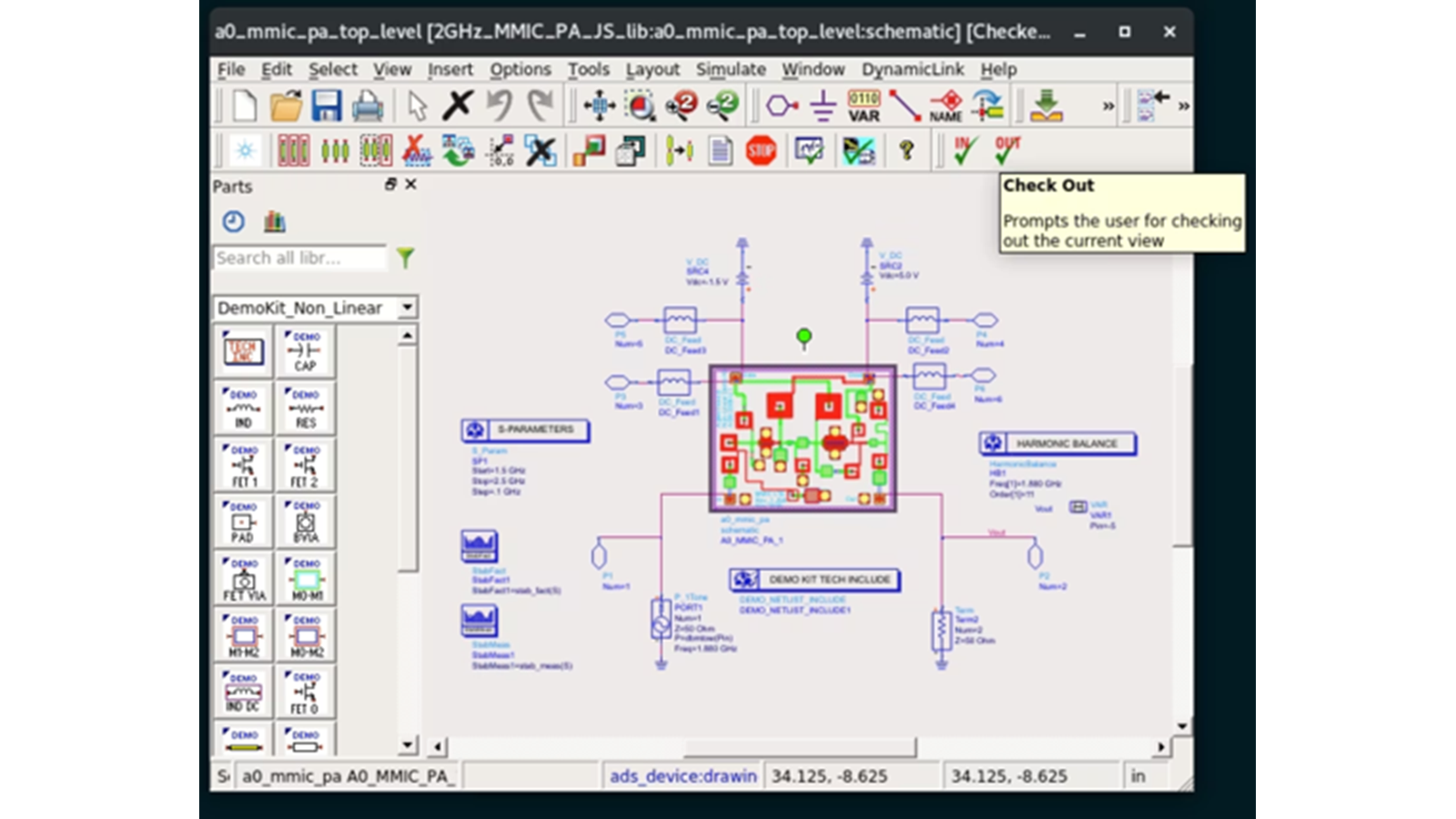
Check-In / Check-out
Lock files directly from ADS menus. Work with confidence knowing no one else can modify your active design blocks.


Version & Branch
Create design branches for experimentation. Tag milestone releases. Compare versions visually without leaving your workspace.


Reuse & Search
Find verified RF blocks instantly. Pull proven subcircuits and EM models into new projects with full version history intact.
SOS lives inside ADS menus - not in some external application you need to remember to open. Right-click your schematic. Version it. Branch it. Lock it. Release it. All without breaking concentration or switching tools. Your design flow stays fluid. Your focus stays sharp.
This is what native integration really means: engineering data management that disappears into your process instead of disrupting it. When the tool fits the workflow this perfectly, you stop thinking about data management and start thinking about better circuits.
Built for Multi-Domain RF Complexity
RF Design Isn't One-Dimensional
Your ADS projects span multiple interconnected domains—schematic capture, electromagnetic simulation, layout geometry, behavioral models, nonlinear device characterization. Each domain generates its own data artifacts. Each artifact has dependencies. Each dependency matters.
Generic version control treats everything like source code. SOS understands ADS project structures natively. It knows what a Momentum substrate definition is. It tracks EM mesh dependencies. It versions Design Data Sets correctly. It handles subcircuit hierarchies without breaking references.
Schematic & Netlist
Version circuit topologies with full component parameter history and simulation setup preservation.
EM Models & Momentum
Track EM structure revisions, substrate changes, and mesh refinements with complete simulation traceability.
Layout & Geometry
Manage physical design data, DRC rules, and layer mapping with revision control that respects hierarchy.
Device Models
Version nonlinear models, extraction scripts, and measurement data together as unified design artifacts.
SOS manages all these domains cleanly and automatically. One check-in captures everything. One version tag protects the entire state. One branch lets you experiment safely across schematics, EM, and layout simultaneously. That's the power of native ADS integration.
Automatic Traceability Without Extra Work
1
Device Model Updated
Transistor S-parameters revised based on new measurements. Version captured automatically.
2
Subcircuit Modified
Amplifier topology changed. Model references updated. Dependency tree tracked.
3
EM Structure Refined
Momentum simulation mesh adjusted. Convergence improved. Results linked to circuit.
4
Layout Verified
Physical geometry checked against schematic. DRC clean. Released with full audit trail.
RF design creates massive, interconnected data sets. A single MMIC project can involve hundreds of EM simulations, dozens of behavioral models, complex subcircuit hierarchies, and thousands of layout polygons. Tracking what changed, when it changed, and why it changed is nearly impossible with manual methods.
SOS Tracks Everything Automatically
- Model version history with timestamp and author
- EM simulation revision chains with result comparisons
- Subcircuit change logs with parameter deltas
- Behavioral model updates linked to measurement data
- Layout-to-schematic correspondence verification
Your design lineage becomes completely transparent—without extra clicks, without manual documentation, without hoping you remember why you made that inductance change three weeks ago.
Questions You Can Actually Answer
- What changed between these two simulation runs? SOS shows you exactly—with audit trails and object history reports.
- Which EM structures depend on this substrate definition? Instant dependency mapping reveals the entire impact tree.
- When did this phase error first appear? Version history pinpoints the exact commit that introduced the issue.
- Who approved this model for tape-out? Full audit trail with review signatures and release gates documented automatically.
Team Collaboration Without Collisions
Complex Projects Need Synchronized Teams
Your ADS teams aren't monolithic. Device modelers extract transistor parameters. EM specialists optimize passive structures. Circuit designers integrate building blocks. System engineers verify end-to-end performance. Layout engineers translate schematics to physical geometry.
These teams work in parallel on interdependent data. Without proper coordination, you get version conflicts, overwritten files, integration nightmares, and late-night Slack messages asking "which amplifier file should I use?"
SOS Keeps Everyone Aligned
Check-out locks prevent simultaneous edits. Branching enables parallel development. Merge tools resolve conflicts intelligently. Notifications alert teams to relevant changes. Release workflows ensure everyone uses approved blocks.
The right version of the right block—every time. No collisions. No overwrites. No confusion about which LNA schematic is tape-out ready.
SOS becomes the single source of truth that holds your distributed team together. Everyone works from the same baseline. Changes propagate transparently. Dependencies stay visible. Collaboration becomes coordination instead of chaos.


Device Team
Extracts and validates transistor models with measurement correlation.

EM Team
Optimizes passive structures, transmission lines, and matching networks.


Circuit Team
Integrates building blocks into complete amplifier and mixer designs.


Integration Team
Validates system performance and prepares final tape-out package.
Enterprise Governance for RF Design
1- Role-Based Access Control
Define who can view, edit, approve, or release designs. Junior engineers access training libraries. Senior designers control production blocks. Managers review without modification rights. Security that matches your organization structure.
2- Complete Audit Trails
Every action logged automatically—check-ins, modifications, approvals, releases. Who changed what, when, and why. Compliance documentation generated without manual effort. Traceability that survives audits and ISO certification reviews.
3- Release Gate Workflows
Enforce design reviews before tape-out. Require simulation verification before release. Mandate peer approval for critical blocks. Configurable workflows that match your quality process—not generic version control.
4- Controlled IP Sharing
Share design blocks across projects and teams without losing control. Gated access. Usage tracking. Derivative work visibility. Your RF intellectual property remains protected while staying accessible.
All the Rigor
ISO compliance documentation. ITAR export control. IP protection for competitive designs. Audit trails for regulatory review. Security policies that satisfy corporate IT. Release workflows that prevent premature tape-out.
None of the Drag
Fast check-ins. Lightweight branching. Instant search. Quick comparisons. No waiting for approvals on experimental branches. No filing tickets to access historical data.
SOS gives you enterprise-grade governance that actually fits engineering reality—not bureaucracy that pretends to understand RF design.
Turn Your Designs Into Reusable RF IP
Every RFIC you design contains building blocks worth reusing—verified amplifier cells, characterized transmission line structures, optimized matching networks, validated device models, proven layout patterns. But most teams can't find their own work six months later. Knowledge walks out the door when engineers leave. Best practices exist as tribal knowledge instead of searchable assets.
Your RF Knowledge Becomes Intelligence
SOS transforms your accumulated ADS design data into a searchable, reusable IP portfolio. Tag blocks by frequency band, technology node, performance spec. Add rich metadata—gain, noise figure, linearity, power consumption. Include design notes and lessons learned. Link to measurement results and tape-out reports.
New projects start with proven components instead of blank schematics. Junior engineers learn from verified examples. Design reviews reference actual performance data. Your institutional knowledge becomes a competitive advantage that compounds over time.

Built for High-Volume RF Data Performance
100K+
EM Data Points
Handle massive Momentum datasets without performance degradation or storage bottlenecks.
10K+
Design Files
Manage enterprise-scale RF libraries with instant search and retrieval across thousands of components.
100+
Concurrent Users
Support distributed teams working simultaneously without lock contention or system slowdowns.
Large EM Datasets? No Problem
Momentum simulations generate enormous data volumes—mesh definitions, field solutions, S-parameter sweeps, optimization histories. A single inductor optimization can produce gigabytes of electromagnetic field data. A complete MMIC project involves thousands of EM structures.
Most version control systems choke on binary engineering data. SOS handles high-complexity EM datasets efficiently—smart compression, incremental storage, fast retrieval. Your Momentum simulations are versioned completely without bringing your network to its knees.
Big RF Libraries? Easy
Enterprise RF teams accumulate massive component libraries—thousands of subcircuits, tens of thousands of layout cells, hundreds of device models, countless EM structures. Finding what you need should be instant, not an archaeological expedition.
SOS indexes everything for fast search. Metadata-rich queries. Dependency visualization. Performance-based filtering. You find the 5GHz LNA with <1dB noise figure in seconds, not hours.
More speed. More stability. More confidence. When your tools scale with your data, you stop worrying about infrastructure and start focusing on innovation. SOS delivers performance that matches the complexity of modern RF design—not limitations that force workarounds.
AI-Ready RF Design Data - Your Data Becomes Intelligence
Machine learning models need structured training data. Agentic design flows require queryable design repositories. Behavioral model prediction demands correlated simulation and measurement datasets. Design reuse analytics need tagged, versioned component libraries.
Your RF design data stops being files scattered across network drives. It becomes structured intelligence that enables computational design methods impossible with traditional workflows. The future of RF design is AI-augmented—SOS makes your data ready.
Structured Data Capture
Every design artifact versioned with rich metadata—performance specs, technology parameters, simulation results, measurement correlations.
Queryable Design History
API access to complete version graphs. Design pattern analysis. Component usage tracking. Performance trend identification across projects.
ML Training Pipelines
Export structured datasets for behavioral model training. Link simulation parameters to measured results. Build predictive models from accumulated design knowledge.
Intelligent Reuse
AI-powered component search. Performance-based recommendations. Automated design pattern recognition. Smart starting points for new projects.
Resources to Learn More
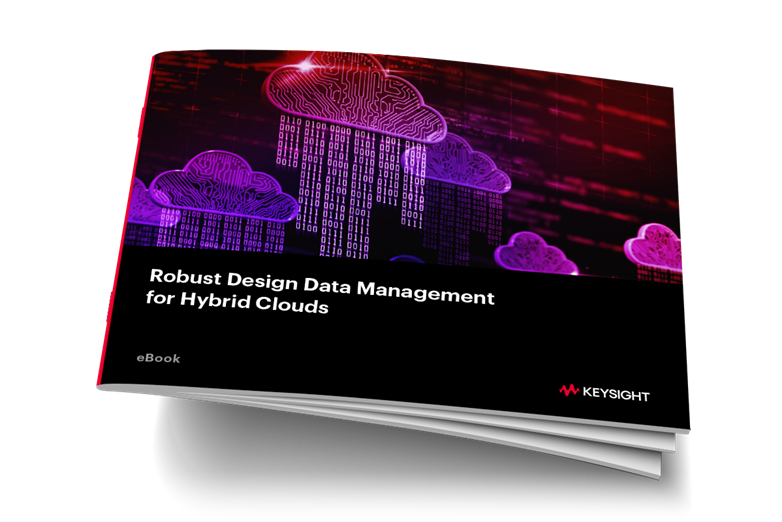
Explore how structured data drives smarter designs.









Design Data and IP Management FAQs
SOS connects directly to ADS, enabling version control, change history, and workspace management within the same environment. Engineers can check designs in and out, apply labels, and collaborate securely without leaving ADS.
Without structured data management, ADS projects often face version conflicts, redundant debug cycles, and lost time tracking changes. SOS organizes schematics, models, and simulation files into a single source of truth, making workflows scalable and reliable.
Yes. SOS allows engineers to capture complete project states with labels, so you can recreate or revert to a trusted configuration anytime — ensuring designs are auditable and reproducible.
SOS provides secure, role-based access and real-time updates, making it easy for distributed teams to work together on ADS projects. Data stays organized and shareable from block-level IP to full systems.
Absolutely. SOS offers built-in traceability and integrates with issue-tracking tools to support approval workflows, compliance audits, and standards such as ISO 26262.
Teams report faster simulation setup, fewer rework cycles, reduced storage usage, and more predictable project timelines. SOS makes ADS workflows more efficient and ready for advanced analytics and AI-augmented engineering.
AI can only deliver accurate insights if the underlying design data is clean, structured, and traceable. In ADS, SOS ensures schematics, models, and simulation results are organized into a reliable foundation, so AI tools learn from high-quality inputs instead of fragmented files.
Start by managing revisions, metadata, and project context in a single system of record. SOS integrates with ADS to capture this structure automatically, providing the clean, connected data required for effective AI training, predictive verification, and intelligent design reuse.
Ready to Transform Your ADS Workflow?
Want Help or Have Questions?