Here's the page we think you wanted.
See search results instead:
Choose a country or area to see content specific to your location
What are you looking for?
Suggested searches
No product matches found - System Exception
Matched content
-
-
Integrated Physics Suite
Bridging design and physical testing to evaluate drop, impact, shock, and vibration compliance before hardware exists.


-
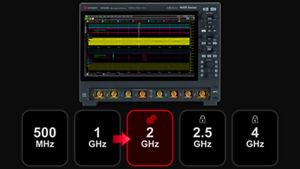
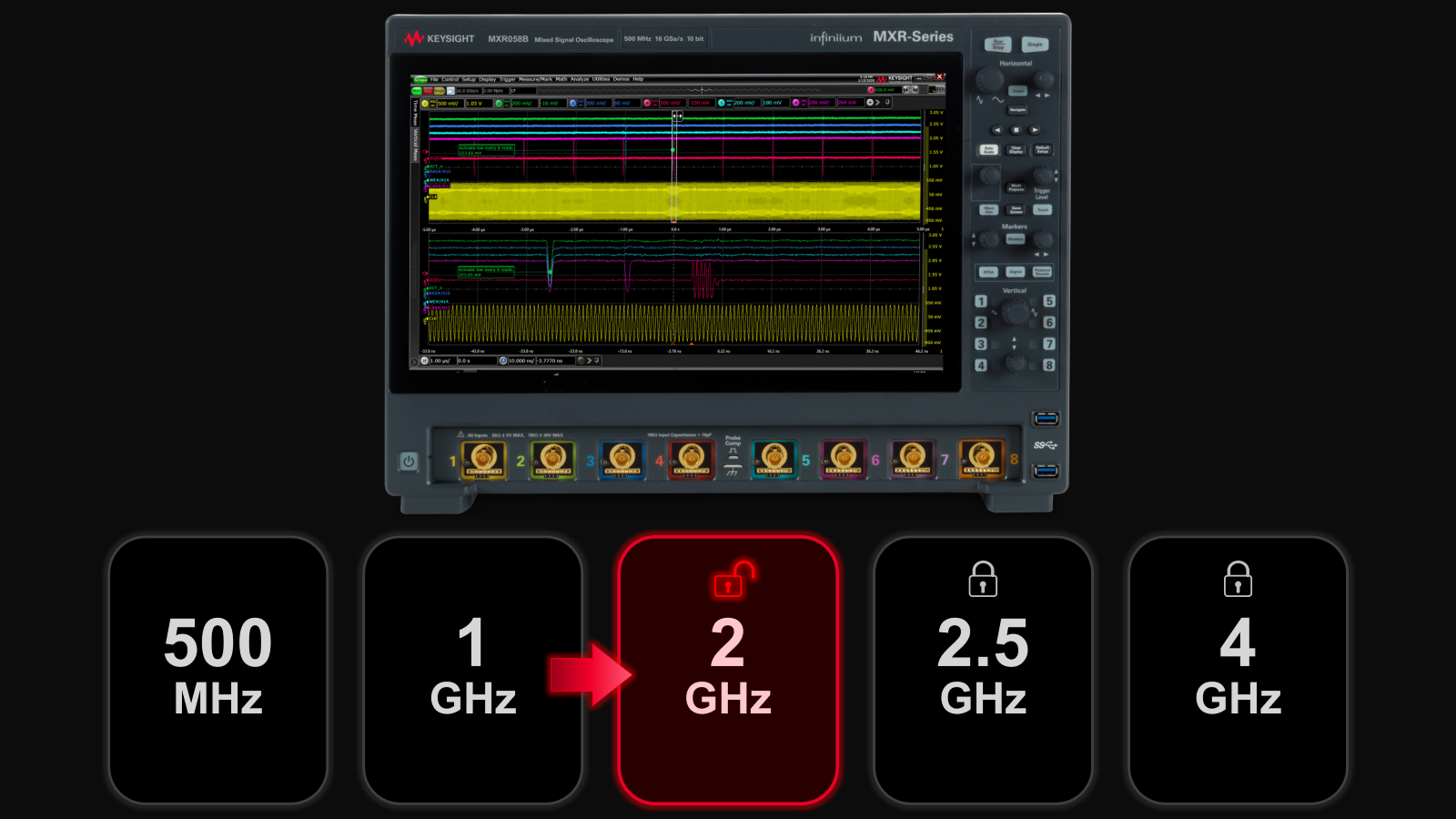
Buy an Expert Oscilloscope, Boost Your Bandwidth
Unlock your free upgrade to the next bandwidth tier.
-
End-to-End Validation for AI Data Center
Strengthen 1.6T network reliability for AI-scale workloads from transceivers to interconnects.

-
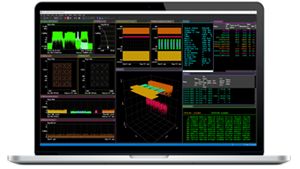
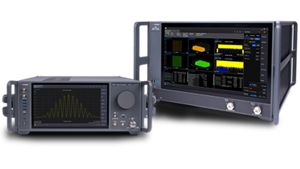
Take On Complex MIMO Signals
Pair Keysight VSA software with the new XA5 signal analyzer for advanced visualization, demodulation, and analysis — start your 30-day trial today.
-
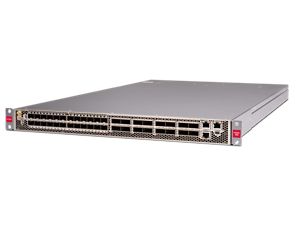
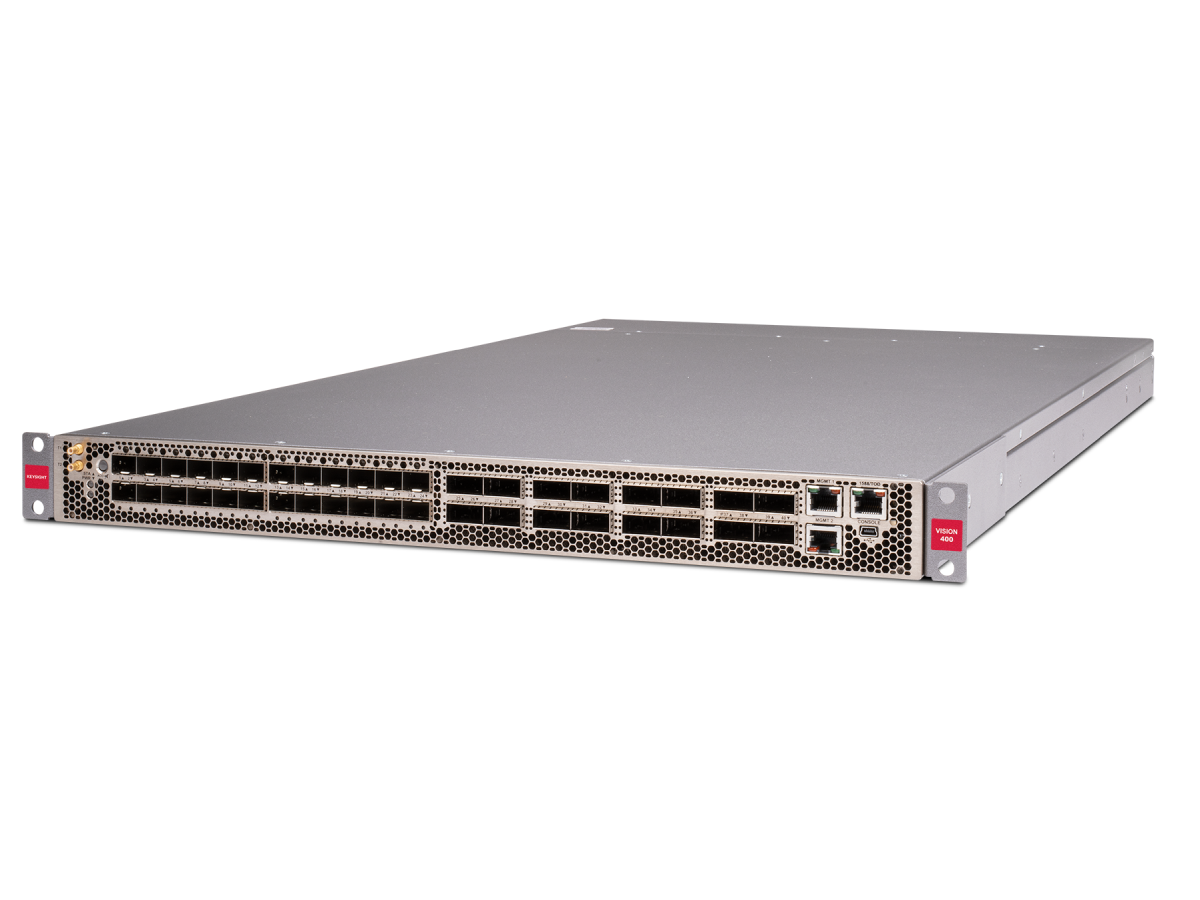
Introducing AI-Enhanced Packet Brokers
With extra memory and storage, these enhanced NPBs run Keysight's AI security and performance monitoring software and AI stack.
-
Accelerate Semiconductor Innovation
Explore end-to-end workflows spanning IC design, validation, wafer test, and photonics.

-
Accelerate Your Innovation Engine
Explore curated support plans, prioritized to keep you innovating at speed.

-
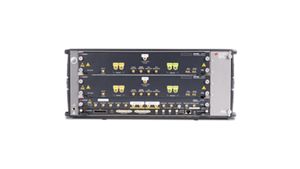
448 Gb/s Waveform Generation
Achieve 200+ Gbaud multi-level modulated signals with high-speed AWGs for digital and optical standards.
-
The Right Connection Makes the Measurement
Maximize accuracy and performance with precision accessories engineered for Keysight instruments.

Analyze Complex RF Signals FasterExplore dual-channel and ultra-wideband signal analysis for demanding RF workflows.
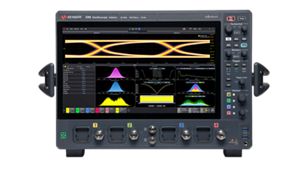
 Digital Validation. Faster.
Get faster, clearer insights with our new multicore, 12-bit oscilloscope up to 33 GHz. Trade in your old oscilloscope and get credit toward a new XR8.
-
-
Purpose-built solutions engineered for the design and test challenges unique to your industry.
Use Cases mapped to every stage of your product lifecycle, from design through operations.
Success Stories
HPE Juniper Networking Builds Next-Gen AI Infrastructure -
Authoritative application notes, data sheets, reference designs, and test procedures to accelerate design and validation decisions.
FeaturedHands‑on bootcamps that teach system design, test methods, and production workflows engineers can apply immediately.
Learning Hub
AI TechnologyExplore methodologies, test strategies, and technical resources for designing, validating, and scaling AI systems and networks.
-
Quick access to support related self-help tasks.
Additional content to support your product needs.
Do more with Keysight ServicesExplore services to accelerate every step of your innovation journey.










Automotive Cybersecurity Testing Simplify automotive cybersecurity and regulatory compliance
Model: SA8710A
prev
- Overview
- Options
- Accessories
- Software
- Support
Automotive Cybersecurity Test Platform
The Keysight Automotive Cybersecurity Test Platform is a scalable platform which enables you to validate the robustness of your ECU / TCU, subcomponents, and the entire car against cyber-attacks.

-
Type
Test System
-
Interface
Cellular - 2G; 3G; 4G LTE; 5G including C-V2X, Wi Fi, Bluetooth, CAN, Automotive ethernet
-
Platform
OpenTAP, PathWave-based software
-
Modularity
Scalable and flexible architecture
Ready for a quote
Find out what's included and explore available upgrade options from Keysight.
Highlights
Streamline automotive cybersecurity from the hardware level through all layers of the OSI stack. Keysight SA8710A Automotive Cybersecurity Test Platform is an automated, end-to-end solution for validating vehicular access interfaces in accordance with ISO / SAE 21434 and UN R155.
Accelerate test management and execution to find and fix vulnerabilities faster, so you can simplify compliance and go to market faster. A one-year license to Keysight Application and Threat Intelligence (ATI) database makes it easy to against the latest known vulnerabilities, while Keysight PathWave Lab Operations simplifies regulatory compliance, captures critical metrics, and streamlines regression testing.
Combine hardware, software, and services into a single test solution
- Connect DUTs to onboard interfaces with included hardware
- Use software to run tests and emulate attacks (exploits) against vehicular interfaces
Validate automotive cybersecurity with an expanding database of known threats
- Includes a one-year subscription to the Keysight Application and Threat Intelligence (ATI) library
Simplify regression testing and enterprise-level test management
- Save found vulnerabilities and test plans for fast, easy reuse
- Integrate with the Keysight Pathwave Lab Operations platform
Integrate test management into your own enterprise platforms
- Cloud and database services
- Integrate your own tests and reporting
Learn More About Automotive Cybersecurity
Use Case
Course
Related Product
Further reading
- Case Study: Automotive Cybersecurity Testing Meets UN R155 Regulations
- Solution Brief: Automotive Cybersecurity - Solutions for ISO / SAE 21434, UNECE WP.29
- Brochure: Automotive Cybersecurity
- Configuration Guide: SA8710A Automotive Cybersecurity Test Platform
Frequently Asked Questions About Automotive Cybersecurity
In today’s interconnected world, any device linked to an information stream is susceptible to cyberattacks. Cars are more connected than ever before, making them for hackers. From infotainment systems to engine control units, nearly every part of a vehicle relies on computer-based subsystems — creating an sprawling attack surface of interconnected vulnerabilities.
The modern connected car offers multiple entry points for attackers. Vehicles connect through various interfaces — USB, CAN bus, Wi-Fi, Bluetooth, cellular, and automotive ethernet — offering cybercriminals plenty of attack options. Securing these interfaces is an important — and ongoing — challenge for automakers.
In short, automakers need to proactively test their own vehicles before cybercriminals can exploit vulnerabilities. The best way to do this is to think like a cybercriminal, who aims to exploit system and component weaknesses.
By performing controlled cyberattacks, automakers can test vehicular security in line with their Cybersecurity Management System (CSMS). This practice, known as automotive cybersecurity testing, includes functional cybersecurity testing, fuzz testing, and vulnerability testing. These tests must cover a wide range of potential threats and account for all possible points of entry, such as cellular, Wi-Fi, Bluetooth, USB, CAN, and automotive ethernet interfaces.
However, testing is only part of the solution. Software updates, the preferred method for mitigating vulnerabilities, require thorough verification. This iterative process relies heavily on automation. Compliance with industry standards and government regulations requires a repeatable, scalable, and well-documented testing approach. Given the extensive attack surfaces, emerging threats, and mandatory compliance processes, integration and automation are essential.
The World Forum for Harmonization of Vehicle Regulations (UNECE WP.29) is a strategic initiative to align OEMs across various regulations. In 2020, WP.29 introduced new cybersecurity frameworks for passenger vehicles.
This framework requires automakers to:
- Manage vehicle cybersecurity risks.
- Mitigate supply chain risks by securing vehicle design.
- Detect and respond to security incidents across the vehicle fleet.
- Provide secure software updates without compromising vehicle security.
The main regulation to come from this, UN R155, mandates that automakers integrate cybersecurity throughout the vehicle’s lifecycle. In simple terms: they must establish a Cybersecurity Management System (CSMS) that uses risk-driven engineering processes for vehicle components, subsystems, and assemblies.
Automakers must demonstrate CSMS compliance to obtain “type approval” from the UN. Without this approval, vehicles cannot operate on public roads. UN R155 applies to major markets like the EU, UK, Korea, and Russia, and all vehicles in production must comply.
ISO / SAE 21434 is a standard that guides automakers and component manufacturers on implementing a Cybersecurity Management System (CSMS) — as required by regulations such as UN R155.
Similar to functional safety, automotive cybersecurity follows the “V Model” of engineering, where all component and system testing must be verified and validated. However, cybersecurity is a moving target. Unlike functional safety, which requires a one-time test per component, cybersecurity testing must be ongoing due to constantly emerging threats, exploits, and vulnerabilities. A CSMS addresses this by conducting a Threat Analysis and Risk Assessment (TARA) to evaluate applicable threats. TARAs help OEMs identify, implement, and verify mitigations before deploying software updates.
When new threats arise, engineering teams need a repeatable, fast, and accurate response. A CSMS provides the tools to quickly evaluate and mitigate new threats while ensuring that corrective actions do not introduce new vulnerabilities.
Services and support
Innovate at speed with curated support plans and prioritized response and turn-around times.
Get predictable, lease-based subscriptions and full lifecycle management solutions—so you reach your business goals faster.
Experience elevated service as a KeysightCare subscriber to get committed technical response and more.
Ensure your test system performs to specification and meets local and global standards.
Make measurements quickly with in-house, instructor-led training, and eLearning.
Download Keysight software or update your software to the newest version.
Start your quote by choosing a product
Select a configuration below