How to Perform Burst Power Measurement

Measure Burst RF Power Accurately
Burst power measurement in time-division multiple access (TDMA) and pulsed radio frequency systems requires isolating signal power during active transmission intervals while excluding idle periods. This is accomplished using time-gated measurement techniques, where the measurement window is precisely aligned with the burst timing of the signal. Engineers must configure gate delay, gate width, and trigger synchronization to ensure that the power sensor captures only the intended portion of the waveform. Accurate results depend on the sensor's response time, timing resolution, and the ability to repeat measurements consistently across multiple burst cycles. Any misalignment between the gate and the signal can introduce averaging errors and distort the measured power value.
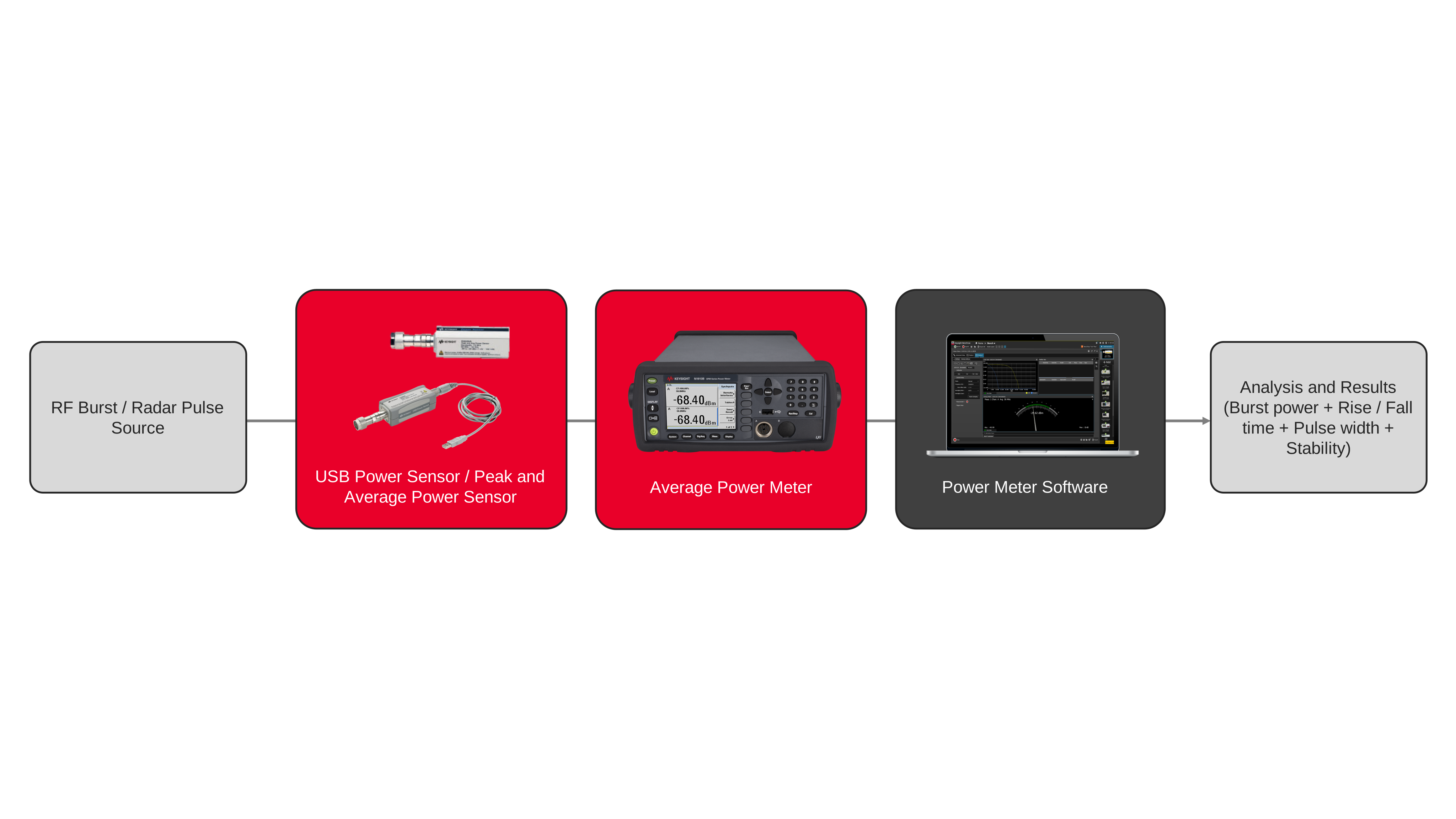
The measurement setup includes an average power meter, compatible power sensors, and software capable of controlling gating parameters and automating acquisition. Multiple bursts are captured and averaged to improve measurement confidence and reduce the effects of variation between individual pulses. Engineers use data logging and visualization tools to analyze burst-to-burst stability, verify timing alignment, and observe any drift or variation over time. Proper configuration of the measurement system ensures that only the active signal energy is included in the calculation, enabling accurate and repeatable burst power measurements across a range of TDMA and pulsed signal conditions.

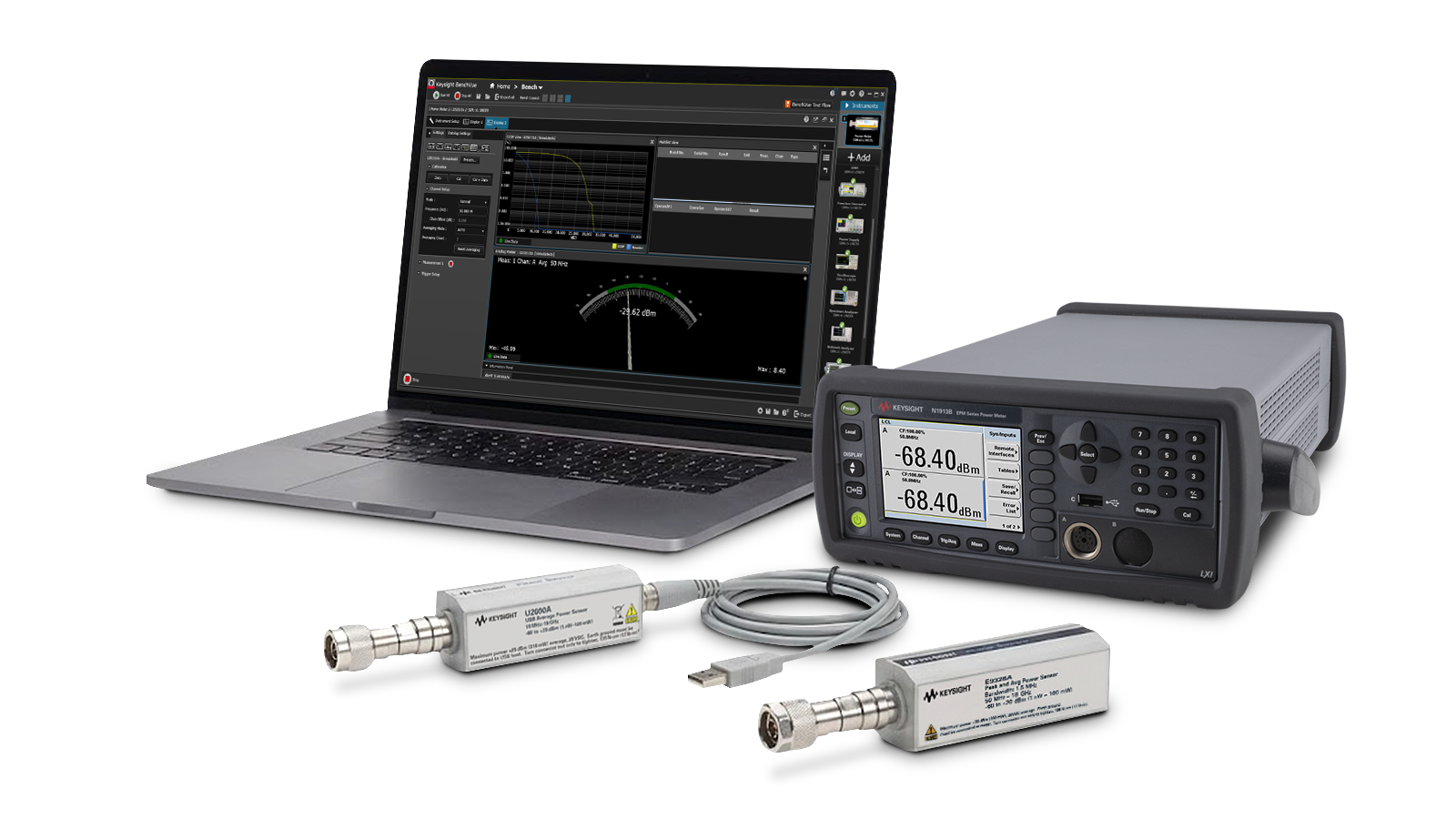
Accurate Burst Power Measurement Solution
See Block Diagram of Burst Power Measurement Solution

Explore Products in Our Burst Power Measurement Solution
-

![]()
BV0007B PathWave BenchVue Power Meters/Sensors App
-

![]()
N1913B EPM Series Single-Channel Power Meter
-
![]()
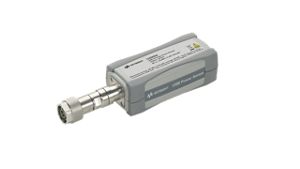
U2000A 10 MHz - 18 GHz USB Power Sensor
-
![]()
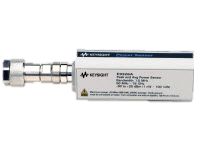
E9326A Peak and Average Power Sensor, 50 MHz - 18 GHz, 1.5MHz Bandwidth


Discover Resources and Insights
Additional Resources for Burst Power Measurement
Related Use Cases

-
![]()
Learn More
How to Measure RF Power During Rapid Amplitude Switching
Measure RF power during rapid amplitude transitions using a power meter, fast-response sensors, continuous acquisition, and automated measurement techniques.
Learn More

-
![]()
Learn More
How to Measure Average Power of Frequency-Hopping Signals
Measure average RF power of frequency-hopping signals using power meters, sensors, and time-aligned measurement techniques for accurate results.
Learn More
-
![]()
Learn More
How to Measure RF Power Settling Time
Measure RF power settling time during signal transients using fast power sensors, gated measurements, and automated data acquisition tools.
Learn More

Get in Touch with One of Our Experts
Need help finding the right solution for you?