Accelerate testing of in-vehicle networking (IVN) systems.


Understand the Modern Energy Infrastructure
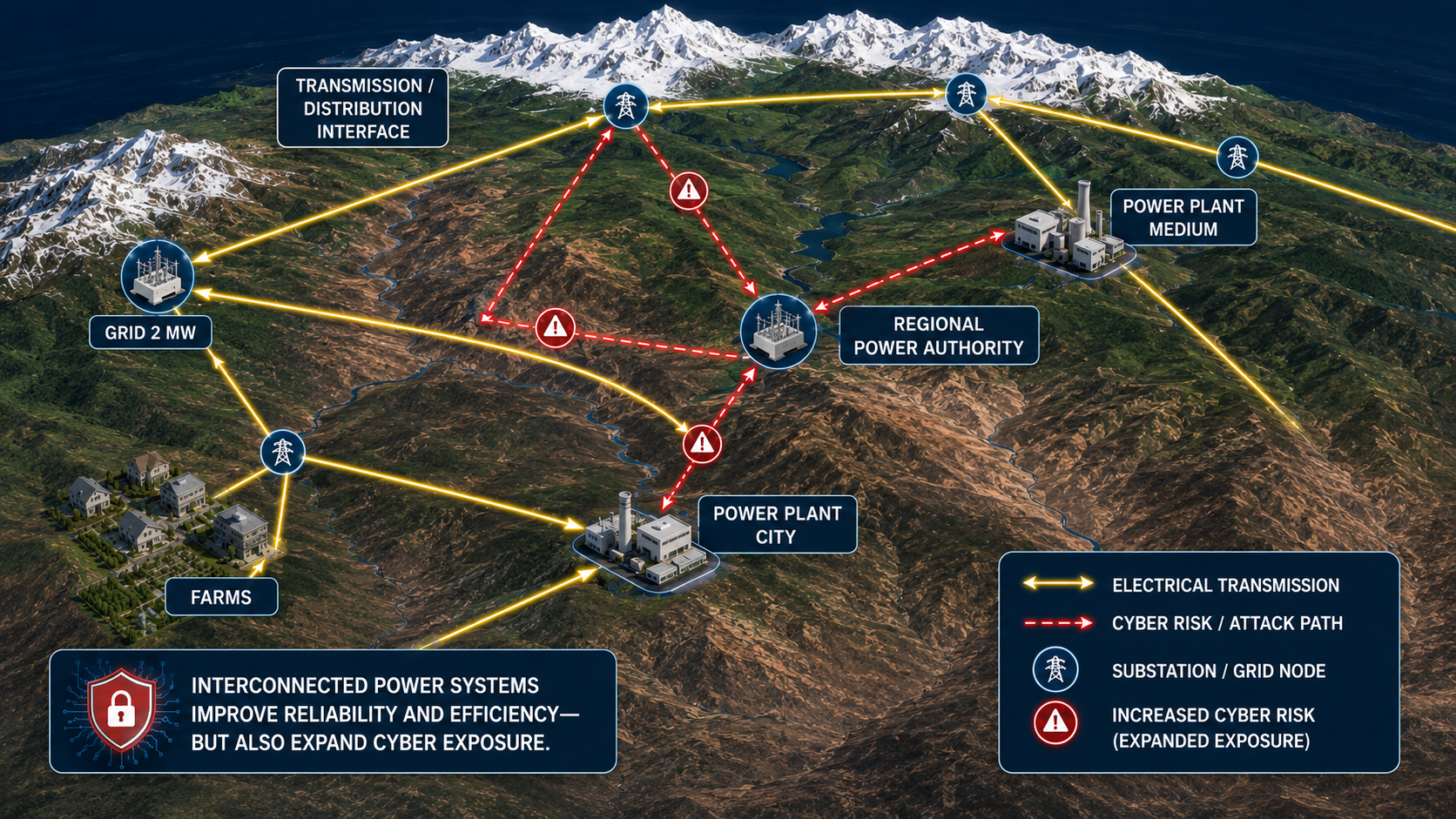
Today’s smart grids use connected infrastructure to optimize power delivery and integrate DERs like solar and wind.
Such intelligent connectivity exposes OT equipment, ICS and.SCADA networks, and IIoT sensors to the internet.
OT and IT Convergence in Electric Power Grids
Intelligent substations and cloud-connected platforms now form a complex, interconnected ecosystem with a significantly expanded attack surface. Utility environments involve specialized protocols and legacy equipment that cannot be easily patched. These environments require specialized security approaches like deep network visibility (using taps and packet brokers) to monitor lateral traffic (East-West) and gain the asset intelligence needed for resilience.
Unlike traditional utility cybersecurity, which often relied on air-gapped infrastructure, modern power grid cybersecurity requires specialized, multipronged approaches to secure its complex, interconnected OT and IT environments against threats and disruptions. Additionally, to ensure grid reliability and prevent systemic cascading failures, compliance with security standards and frameworks is critical. An important example is the North American Electric Reliability Corporation's Critical Infrastructure Protection (NERC CIP) standards.


White Paper: Is IT Ready for OT and the Industrial Internet of Things (IIoT)?
The integration of distributed energy devices onto the connected power grid instantly expands the attack surface. With deployments of IIoT set to skyrocket, experts are scrambling to extend cybersecurity infrastructures and give organizations full visibility to all industrial devices.
Your grid IT and security teams need new strategies for securing the IIoT as quickly as possible. This paper looks at the trends, challenges, and key elements of a high-level strategy for gaining visibility and control.
Potential Threats Facing Modern Utilities
Power grids face a variety of cyber risks. Here are examples of the different threats facing grid modernization:
- Advanced persistent threats (APTs) –T ypically nation-state actors that use sophisticated, stealthy, long-term campaigns to gather intelligence or prepare for future sabotage.
- Targeted ICS malware – Malicious software that manipulates ICS, disables safety mechanisms, or causes physical grid damage.
- Ransomware – Malware that encrypts critical IT and OT systems to disrupt operations and demand payments.
- Denial of service attacks – Flooding network or system resources with traffic to cause service crashes and grid instability.
- Protocol manipulation – Injecting malicious packets to bypass security controls and evade detection systems.
- Phishing – Using deceptive communications to gain initial network access and move laterally into sensitive environments.
- Reconnaissance scanning – Probing networks and ports to map grid infrastructure and identify vulnerable devices. AI-enabled reconnaissance can also help adversaries dynamically map environments and infer potential vulnerabilities.
- Legacy equipment attacks – Attacks on outdated devices lacking modern security features, and that cannot be easily patched.
- False data injection attacks – Falsified data is injected into communication channels with some malicious intent. (Example: under-reporting power usage from smart meters)
- Third-party risks – Threats introduced through insecure remote access granted to contractors or vendors.
- Supply chain attacks – Introduction of malicious hardware or software into the utility's environment during production or service.
- Hardware attacks – Manipulating physical components via fault injection or side-channel analysis to extract keys or bypass security.

SOLUTION BRIEF
Security Monitoring of Critical Infrastructure
Security breaches continue to remain a persistent challenge for both data center providers and enterprises monitoring their networks, even as the expenditures on network security appliances increases. When it comes to industrial control systems (ICS), there are many systems that are vulnerable. Here are some examples of vulnerable systems: Heating, ventilation and air conditioning (HVAC); Building power distribution systems; Communication systems. Read this brief to see how you can improve ICS security and monitoring with cost-effective network visibility.SOLUTION BRIEF
Challenges for US Electric Utility Operators: Gathering network intelligence from the digital power grid
Preventing network blind spots and processing and analyzing digital data is essential to fending off cyber-attacks and increasing the efficiency of power generation, operation, and service delivery.

Protect Operational Continuity and Reliability
The risks of operational downtime in the power sector extend far beyond financial loss. A compromised grid poses severe public safety implications across sectors, from hospital operations to transportation systems. Simultaneously, utilities face mounting compliance and regulatory demands to show their networks are defended.
To achieve true critical infrastructure security, utilities need greater network visibility and continuous monitoring as fundamental strategies. Keysight's visibility and real-time monitoring solutions help utilities capture, aggregate, and inspect network traffic so security tools receive the data needed to identify anomalies. With robust visibility architectures, utilities can:
– detect lateral movement early
– prevent disruptive outages
– ensure the uninterrupted delivery of essential services
Cybersecurity Solutions for Critical Infrastructure
There is an urgent need for operators of public utilities and other critical infrastructure to determine how resilient their communications fabric is to cyber attacks and to develop plans to mitigate the associated risks. This is especially pertinent for the power grid sector as infrastructure becomes more interconnected under the grid modernization transformation.
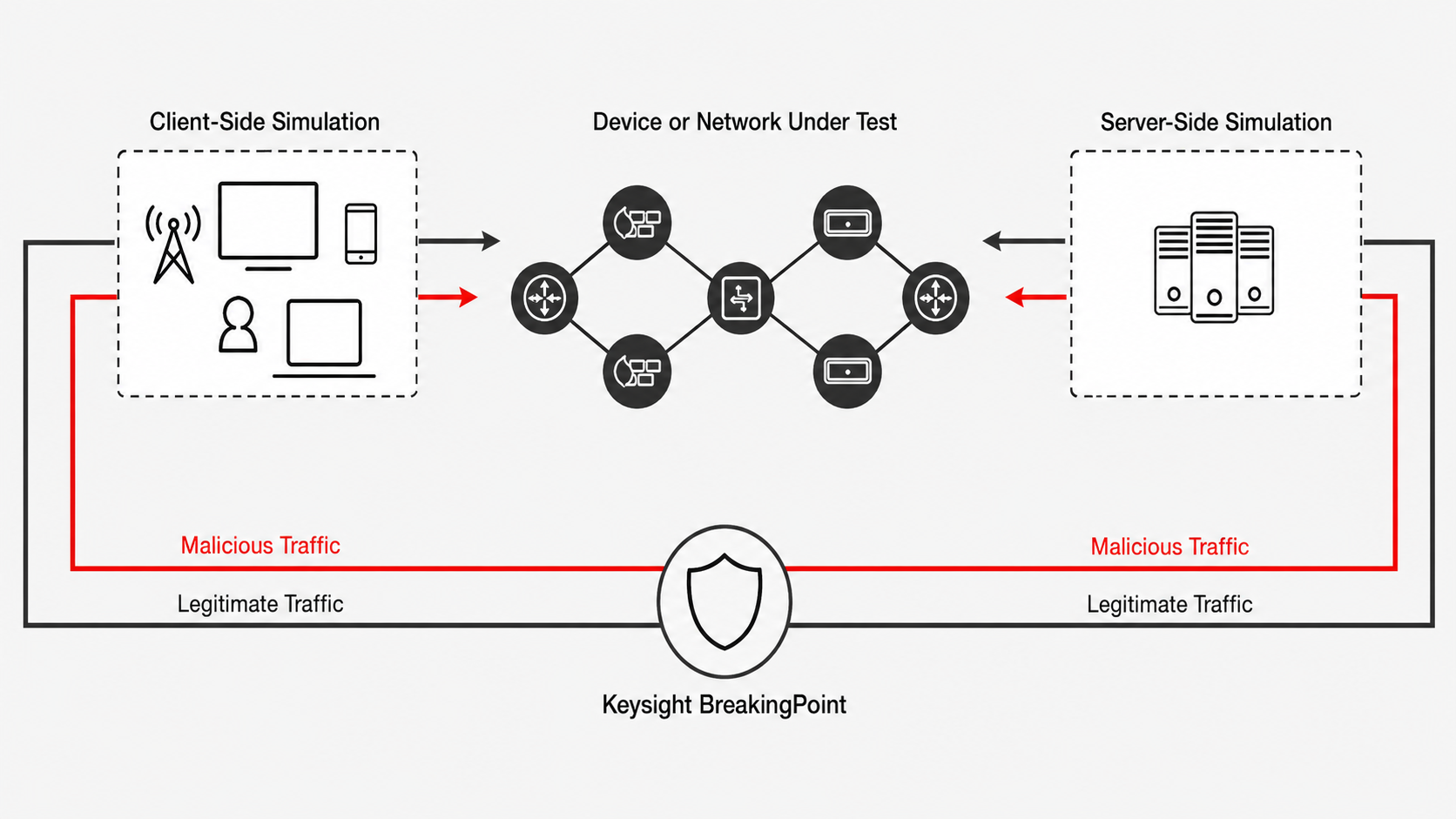
Keysight's high-fidelity network emulation is used to simulate and predict the behavior of networked environments based on various operational scenarios, including cyber attacks. The emulation runs in real time and models connections, computers, protocols, firewalls, and other defenses. Learn more.


Understand the NERC CIP Standards
In the US, the NERC Critical Infrastructure Protection standards mandate rigorous protection for a bulk electric system (BES). BES is the segment of a power grid that includes high-voltage transmission elements (100 kilovolts and higher) and the power infrastructure connected at those voltage levels.
For covered utilities, NERC CIP compliance is a mandatory part of protecting bulk electric system reliability, reducing cyber risk, and strengthening defenses against sabotage. NERC CIP requirements help utilities:
- enforce strict access controls
- manage system configurations
- generate detailed incident reports
Failure to comply carries significant financial penalties.
WHITE PAPER
NERC CIP Standards for Threat Visibility and Detection


Accelerate CIP-015-1 Readiness
Recent regulatory updates have shifted the focus from perimeter defense to internal network security monitoring.
The CIP-015-1 standard specifically mandates threat visibility inside the electronic security perimeter for high- and medium-impact cyber systems.
This requires utilities to:
- monitor East-West traffic
- detect lateral movement
- create baselines of normal activities so that anomalous behaviors indicative of intrusions can be identified
As NERC CIP-015-1 rapidly changes the grid cybersecurity race, the question now revolves around readiness to overcome the challenges that the new standard brings. This blog explores more.
White Paper: Accelerate CIP-015-1 with Strong Network Visibility
The new North American Electric Reliability Corporation (NERC) Internal Network Security Monitoring standard shifts grid security from perimeter defense alone to continuous visibility inside protected environments. This white paper details how network visibility can help organizations prepare for CIP-015-1 while strengthening detection, forensics, and audit readiness.


Satisfy the Visibility and Detection Requirements
Keysight solutions provide the essential network telemetry required to meet these rigorous grid cybersecurity regulations.
With Keysight passive network taps and intelligent network packet brokers, utilities can capture, filter, and route critical traffic (including encrypted traffic) to security analytics tools.
This passive approach helps reduce the risk of dropping packets during cyberattacks, ensuring you have the high-fidelity data required for intrusion detection.
Keysight's visibility architecture fundamentally accelerates compliance readiness. It supports complex audit and reporting initiatives while ensuring your utility maintains a defensible, resilient posture against modern threats.
This blog provides further insights: Security Highlight – How Security Regulation Can Help Grid Stability

The Expanding Attack Surfaces of Smart Grids
Smart grid security must defend a vastly larger perimeter than legacy power systems. The extensive use of smart meters, connected field devices, and IoT sensors introduces millions of new endpoints, each of which can harbor multiple hardware and software vulnerabilities.
Cloud-connected grid environments enable operators to process large volumes of telemetry, but further complicate the security landscape by providing adversaries with new attack vectors.
REPORT
Cyber Trust Mark: The Definitive Guide to IoT Security
The Cyber Trust Mark program establishes crucial baselines for cybersecurity, privacy, and transparency for manufacturers of consumer IoT devices. However, beyond the standards it sets, it’s also a golden opportunity for manufacturers to build consumer trust and win newfound market share.Read this report for an in-depth look at the Cyber Trust Mark program, the certification process, the benefits of early adoption, and the tools you need to start certifying your devices against the new standard.SOLUTION BRIEF
Darktrace and Keysight: Self-Learning AI for a Lasting Security Advantage
Darktrace’s Immune System learns normal ‘patterns of life’ to discover unpredictable cyber-threats, while delivering visibility across your dynamic workforce — from cloud and SaaS to endpoints and the corporate network. Keysight’s visibility solutions provide Darktrace with precisely the right data from hybrid networks and clouds for use in real-time Self-Learning AI analysis.

Visibility Challenges Across IT and OT Networks
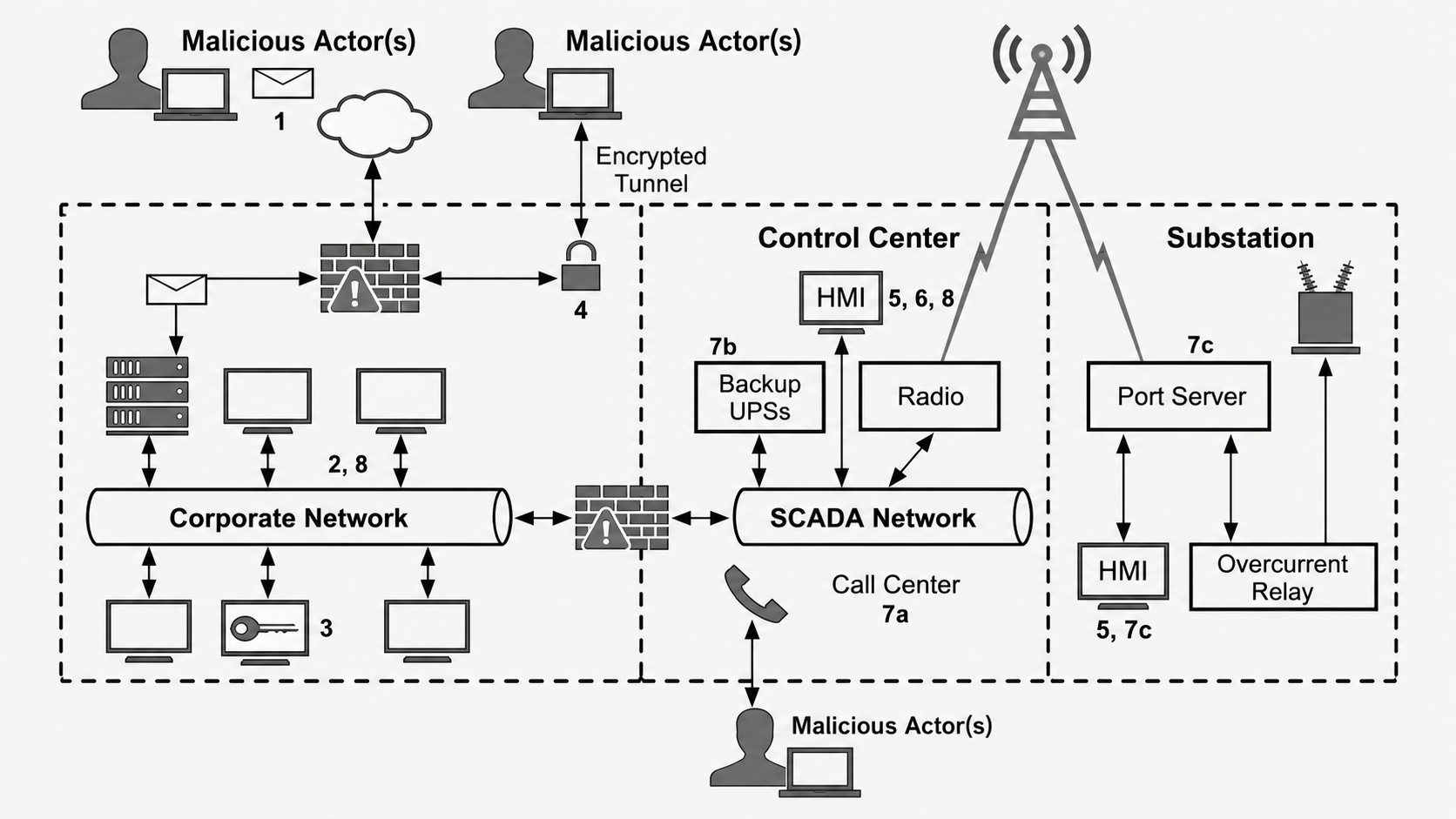
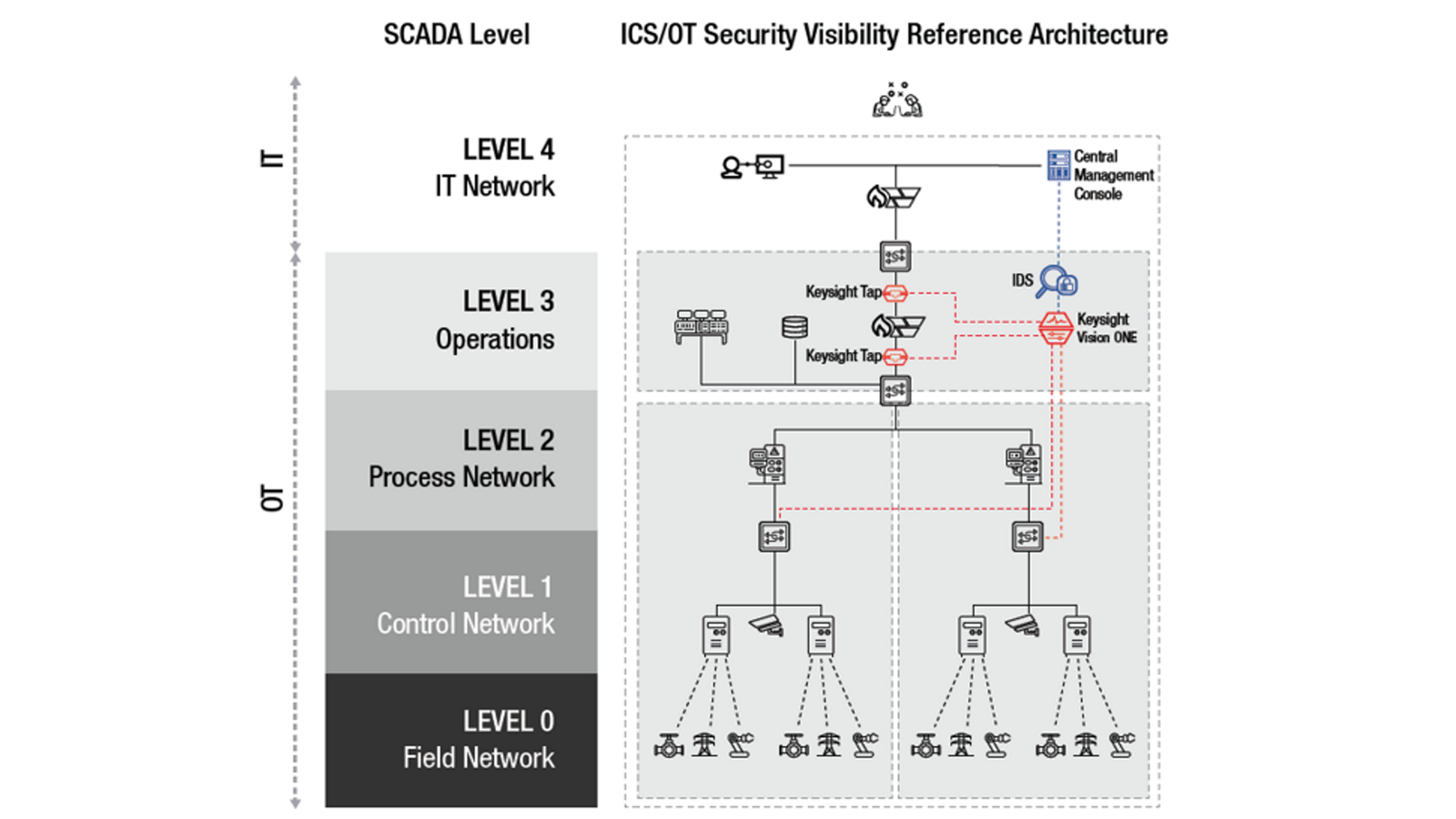
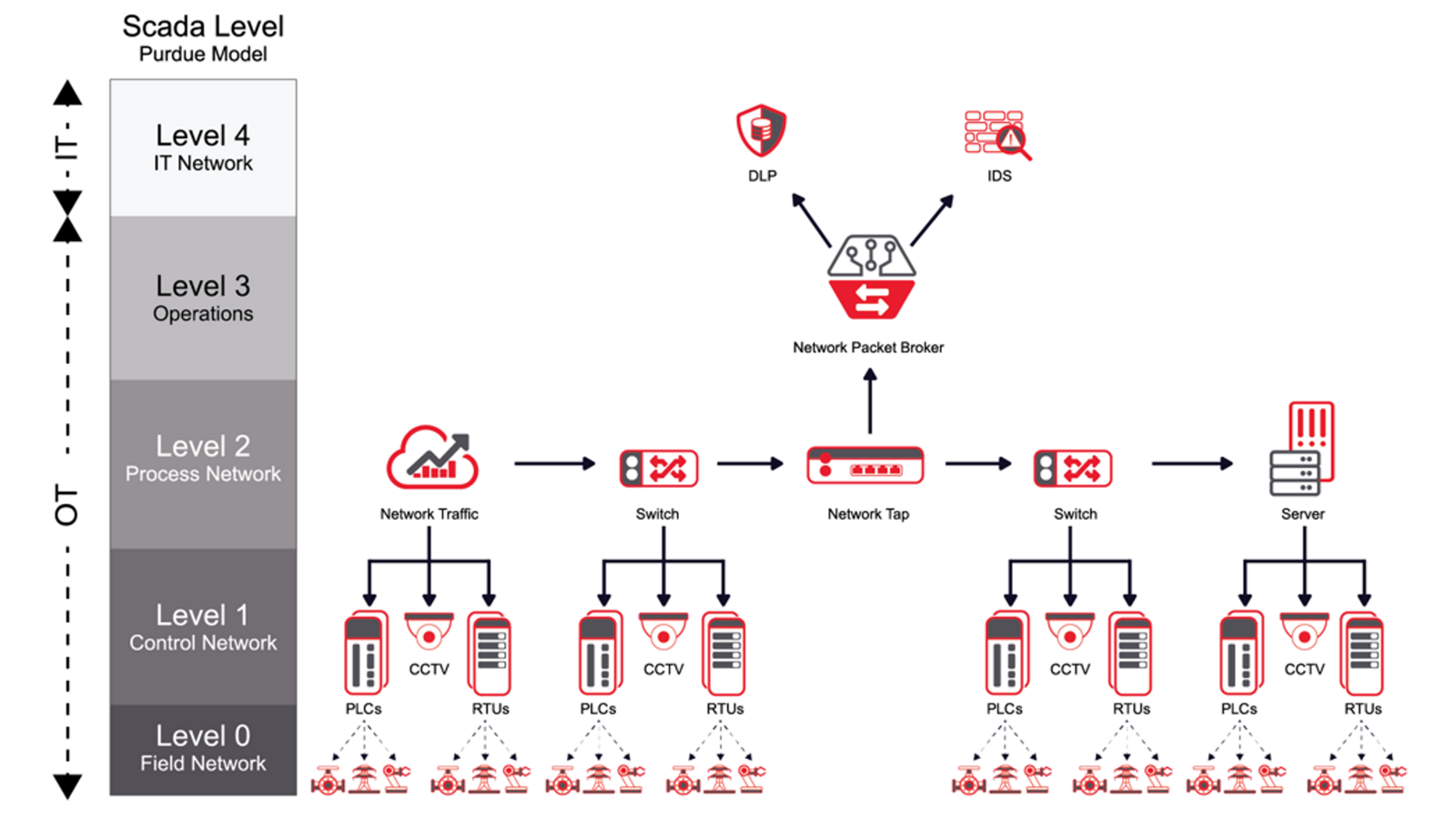
For robust OT security, utilities must overcome significant blind spots. While North-South traffic crossing the perimeter is routinely monitored, adversaries often exploit unmonitored East-West (lateral) traffic to move within the network. Additionally, the increasing use of encrypted traffic conceals malicious activity from standard detection tools.
So, gaining packet-level visibility in intelligent substations and SCADA networks is critical for identifying unauthorized commands and anomalous behaviors.
Improve Threat Detection Across Utility Networks
To safeguard vital grid-connected assets, utilities need proactive threat detection across operational environments. Keysight’s visibility solutions:
- systematically reduce blind spots
- facilitate continuous situational awareness across the OT landscape.
With secure network taps and packet brokers, utilities can mirror ICS traffic without impacting live environments and route it to specialized threat-detection platforms. This approach ensures that security teams can identify unauthorized access, misconfigurations, and malware before they impact power delivery and maintain excellent operational resilience.

SOLUTION BRIEF
Ukraine Power Grid Attack
Several high-profile cyber attacks have made headlines in the last few years, targeting organizations as varied as movie studios, retail store chains, credit agencies, and public utilities.SOLUTION BRIEF
AI-Powered Network Visibility
AI-Powered Network Visibility Insight brokers transform and accelerate IT and security operations help AI-Led Observability to reduces Risk, Cost, and Response Times. Keysight’s new generation of AI-powered visibility solutions takes full advantage. The addition of AI transforms traditional network packet brokers (NPBs) into highly intelligent Insight Brokers that accelerate workflows. Enhanced Vision Insight Brokers feature improved memory and storage to run best-in-class AI security and performance monitoring software.BLOG
Learnings From the Polish Energy Sector Attacks
The cybersecurity industry often focuses on adversaries gaining control of infrastructure (“pwn’ing”) — and on solutions designed to deny that opportunity. In this incident, however, the objective appears to have been sabotage: denying everyone control by using wiper malware to render devices inoperable (“bricking”). Read on...


Protect Industrial Control Systems
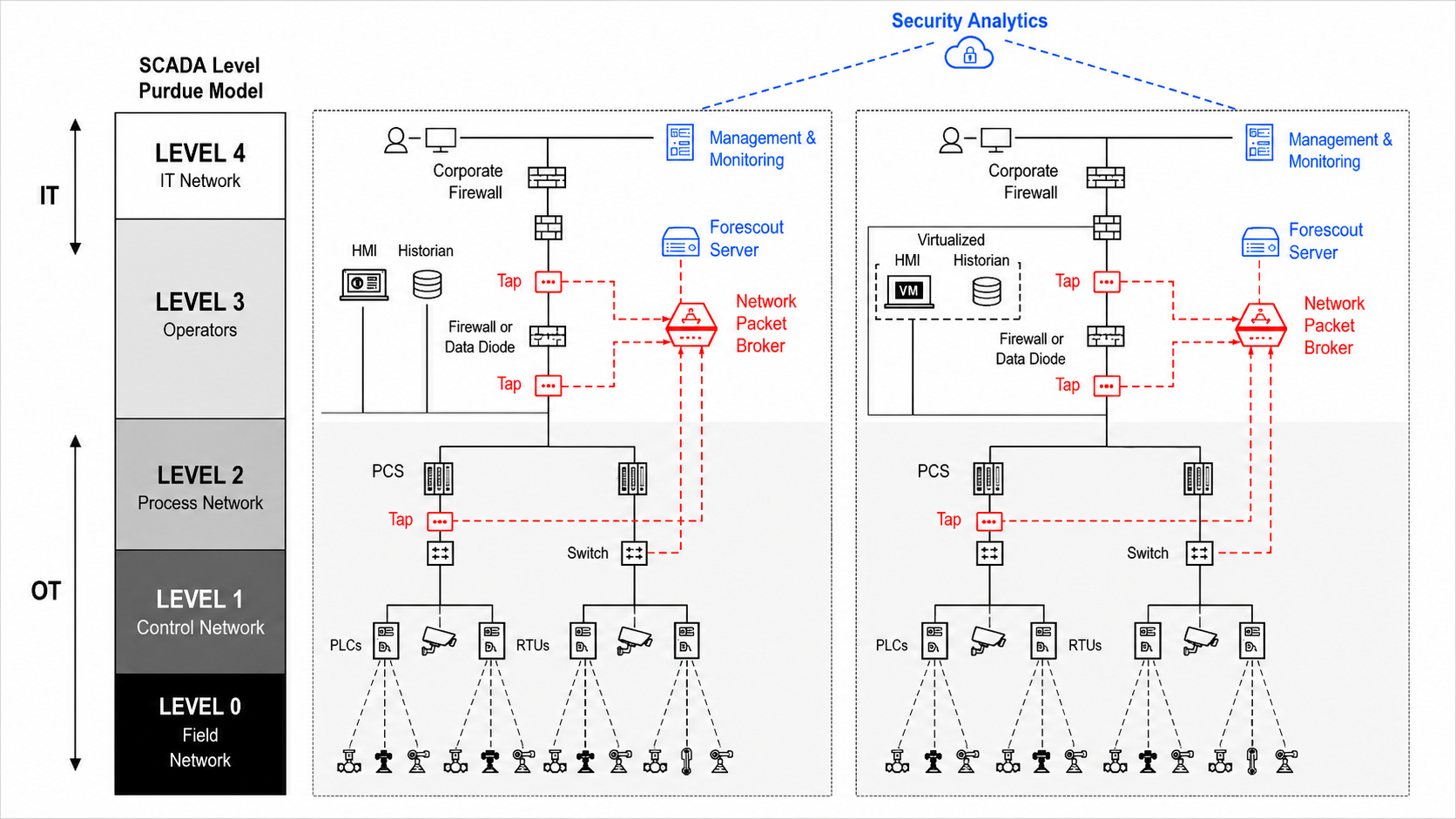
ICS and SCADA networks form the core of power generation and distribution infrastructure. Effective ICS / SCADA security requires continuous passive SCADA monitoring to avoid disrupting critical operations. Unlike standard IT environments, ICS / SCADA security requires in-depth protocol visibility to parse proprietary communications between programmable logic controllers (PLCs), remote terminal units (RTUs), and human-machine interfaces (HMIs). Without such visibility, malicious commands can masquerade as legitimate operational instructions.
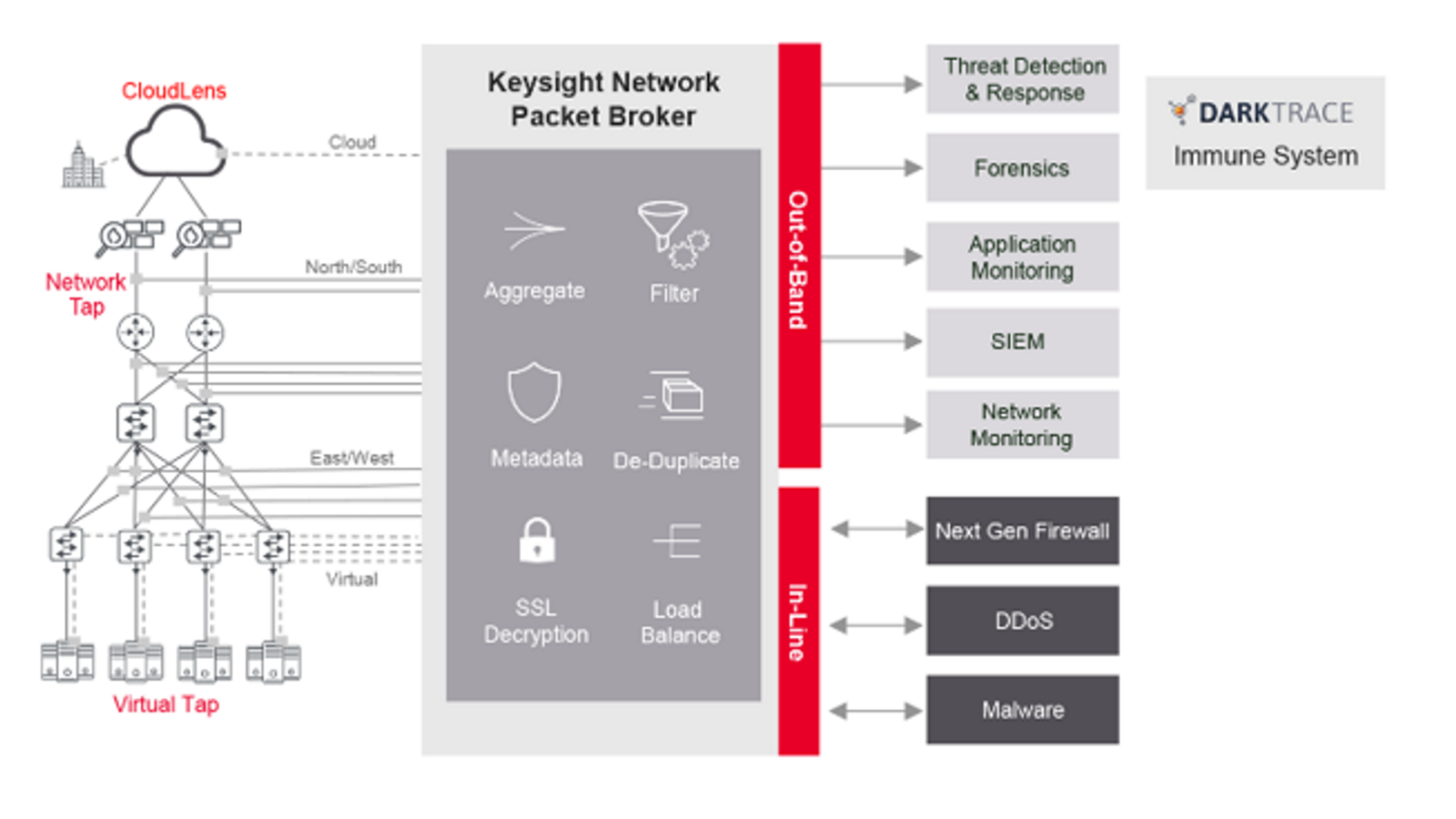
This illustration shows how Keysight taps and network packet brokers aggregate traffic across physical and virtual OT / ICS environments, then feed Forescout sensors and security analytics with the visibility needed to detect risk without disrupting operations.
Download the solution brief to learn more about securing OT and ICS deployments with the Forescout and Keysight solution.

MORE SOLUTIONS
Network Visibility and Network Test Products | Keysight
Use Keysight's market-leading network test, visibility, performance monitoring, and security solutions to build and manage more secure, and reliable networks.SOLUTION BRIEF
Validating SCADA Network Security
With SCADA operating over IP networks, the line between IT and OT has blurred... However, many OT teams are not prepared to handle threats in ICS networks. This document will help you understand the challenges of testing SCADA networks and how Ixia's BreakingPoint can help.
BROCHURE
What Is a Network Packet Broker, and Why Do You Need One?
Network packet brokers aggregate, filter, and send data to security and monitoring tools — tightening security, improving response times, and improving ROI.WHITE PAPER
Application and Threat Intelligence Research Center
The ATI Research Center combines proficiency in cybersecurity threats and application protocol behavior. This unique combination takes network security to a new level, looking at it the same way as a cybercriminal, from every direction.BLOG
Avoiding Grid Outages with Network Digital Twins
In the face of growing grid cybersecurity threats, the ability to run fully automated simulations using real-time data and live network topology is a critical defense. Digital twins enable grid operators to pinpoint system vulnerabilities, test new technologies safely, and assess how cyberattacks or extreme events could impact operations before they strike. With automated, parallel simulations, these virtual replicas can help you stay one step ahead of evolving threats. Read the blog to learn more.
Eliminate Blind Spots Across Utility Networks
Complete network visibility is the bedrock of effective grid cybersecurity. As power grids become increasingly decentralized, real-time monitoring of distributed utility infrastructure (from remote substations to core data centers) becomes highly complex.
Keysight’s visibility solutions use ruggedized network taps to deliver lossless, out-of-band packet-level visibility across IT and OT networks, helping utilities reduce blind spots across distributed infrastructure.
RELATED PRODUCTS
Network Taps | Keysight

RELATED PRODUCTS
Network Packet Brokers | Keysight
Improve Threat Detection and Response
Traditional switch ports are easily overwhelmed during a cyberattack, dropping the exact packets needed for forensics.
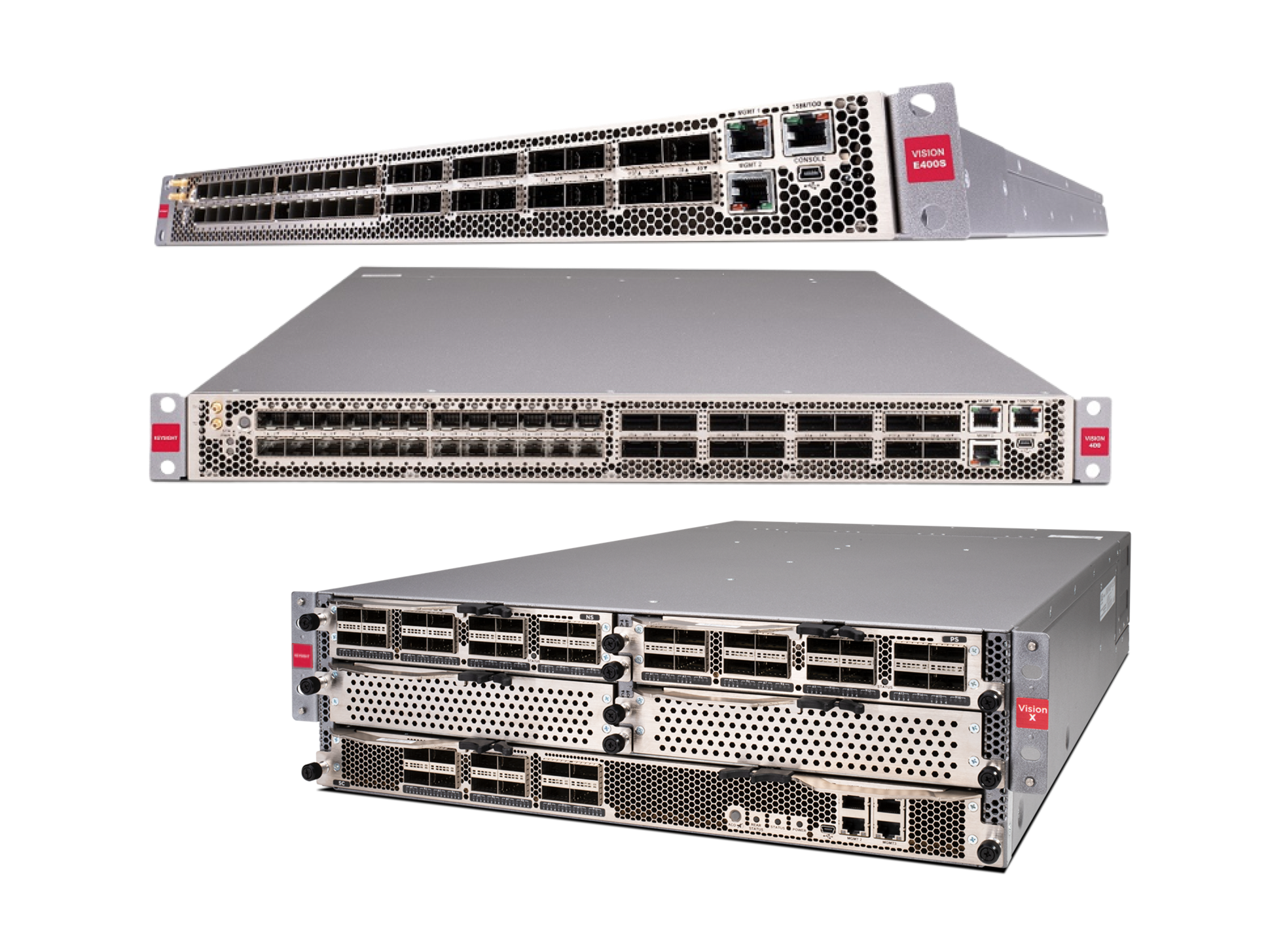
Keysight’s network packet brokers solve this by:
- intelligently aggregating the traffic
- filtering out irrelevant data
- deduplicating packets before routing them to specialized OT security sensors
This process prevents tool oversubscription, accelerates security analytics, and provides security operations centers with the clean data required for rapid incident response and proactive threat hunting support.
Learn more from this blog: Avoiding Grid Outages with Network Digital Twins
Enable Secure Grid Modernization
As utilities integrate more automated and connected technologies, robust visibility architectures are needed to safely bridge the gap between legacy systems and modern networks.
By seamlessly integrating with leading threat detection solutions, Keysight ensures that the transition to intelligent grid architectures does not compromise reliability. Our continuous monitoring capabilities enable secure grid modernization. They empower you to:
- monitor East-West traffic
- detect sophisticated threats early
- maintain stringent regulatory compliance
- support uninterrupted energy delivery
Application Note: Network Security
Network security is essential for homes, government organizations, and enterprises of all sizes. It is a strategy and provisions designed to protect the network infrastructure and the data traversing it. The number and types of attacks are enormous and the devices used to defend against them are necessarily complex. This book provides an overview of network security and covers test methodologies that can be used to validate the effectiveness, accuracy, and performance of network security devices, policies, and process.

Cybersecurity Risks in Renewable Energy
The rapid shift toward renewable energy sources has fundamentally altered power grid cybersecurity. The integration of solar infrastructure, wind systems, and massive battery storage facilities introduces an unprecedented volume of decentralized, intelligent endpoints.
Additionally, the proliferation of EV charging networks and smart inverter-based resources significantly expands the attack surface, creating new vulnerabilities that adversaries can exploit to disrupt power stability.
Protect Distributed Energy Systems
Securing DERs requires specialized smart grid security measures. Distributed energy cybersecurity challenges stem from managing thousands of third-party devices that lack standardized security protocols. To ensure reliability, utilities must align with evolving industry guidelines, such as those established by EPRI (Electric Power Research Institute) and UL (Underwriters Laboratories), that recommend rigorous device testing and continuous monitoring.
Keysight empowers grid operators to validate DER resilience, emulate cyberattacks against inverters, and monitor renewable infrastructure traffic, ensuring safe integration into the modern energy ecosystem.
Advanced Visibility Across OT and IT
Protecting the energy grid demands proven technology and industry expertise. Utilities around the world rely on Keysight for our expertise in comprehensive OT and IT visibility, which systematically eliminates blind spots across complex, distributed networks.
Our ruggedized network taps and intelligent packet brokers provide the foundation for powerful threat detection, ensuring that security analysts have lossless access to the packet data needed to mitigate the risks of cyberattacks.

WHITE PAPER
Best Practices for Network Monitoring
Proper network monitoring consists of more than just attaching a security and monitoring tool to a tap or SPAN port. Learn how a network packet broker can be effectively used to: - Filter out unnecessary data flooding your security monitoring tools to make them more efficient- Load balance data across multiple tools to extend the life of those existing tools- Perform packet slicing to improve network security and increase regulatory compliance- Perform header stripping to make security and monitoring tools more efficient- Take advantage of component automation to reduce costs and improve service efficiency This document provides the basic information you need, in a straight forward and condense format, to help you optimize your network visibility and monitoring architecture.WHITE PAPER
Best Practices for Visibility Architecture Tap Planning
When it comes to data monitoring, ensuring proper access to network data is one of the most critical things you can do. Missing and incorrect data will slow down the analysis of problems by your security monitoring and tools. It may also lead to false conclusions by those tools. In turn, this can lead to missed security threats, false positives for security threats and network impairments, and higher costs. This white paper is designed to be a generic guide to help assist in the optimization process of your visibility architecture so that you can collect better data at the start of your monitoring architecture. An overview of the differences between taps and SPANs, virtual taps, and different types of tap solutions including bypass switches is provided along with three examples and recommendations for best practices.CATALOG
Network Visibility Products Catalog
Network visibility enables you to keep performance high and security tight. Learn more and explore Keysight network packet brokers, bypass switches, taps, and fabric controller.
Enable Secure Grid Modernization
Keysight delivers utility-focused cybersecurity capabilities designed to protect legacy ICS environments while accelerating the deployment of new technologies.
From robust NERC CIP readiness and compliance automation to validating the security of smart inverters and DERs, our solutions drive modernization enablement without compromising safety.
Keysight grid simulation solutions, digital twins, network modeling platforms, and other testbed solutions help energy providers and related stakeholders strengthen operational resilience.
Ready to strengthen your utility cybersecurity strategy against the next generation of cyber threats?
Contact Keysight or book a demo with our experts to build a more secure, visible, and resilient power network.
Threat Simulator | Keysight
Fault Injection | Keysight

Tough Taps | Keysight

IoT Security Testing | Keysight
Ethernet Traffic Emulation | Keysight

More Frequently Asked Questions About Grid Cybersecurity
The highly interconnected nature of modern power grids, with legacy OT equipment connected to modern cloud-connected IT and IIoT equipment, makes power grid cybersecurity critical.