Choose a country or area to see content specific to your location
What are you looking for?
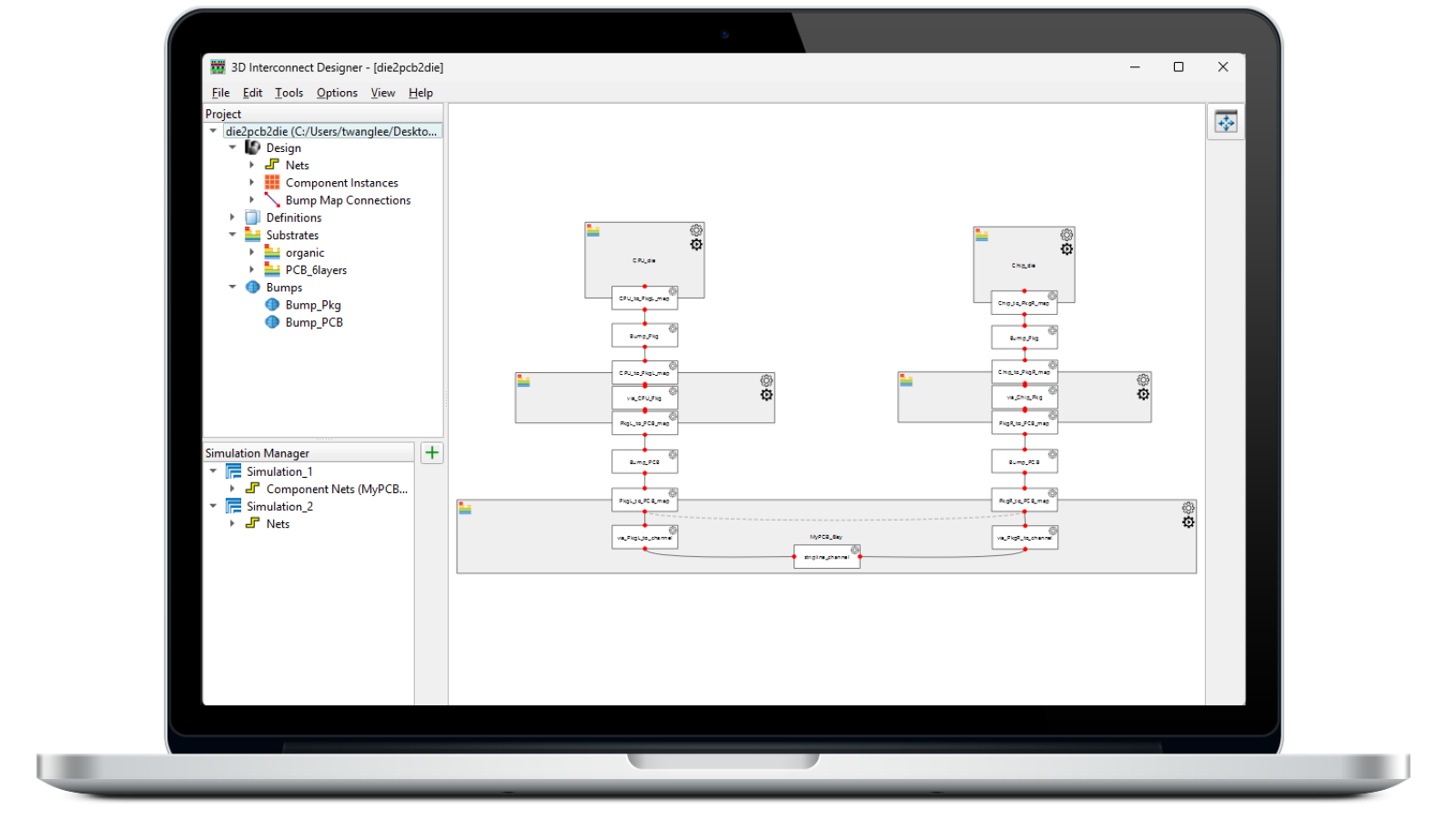
Design, model, and validate complex 3D interconnect architectures with a powerful standalone design environment.
Automate transmitter and receiver validation across next-generation I/O, memory, and fabric interfaces.
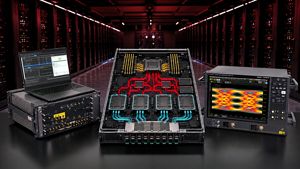
Strengthen 1.6T network reliability for AI-scale workloads from transceivers to interconnects.

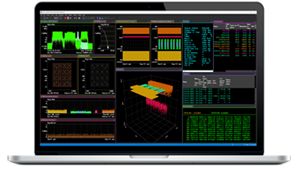
Pair Keysight VSA software with the new XA5 signal analyzer for advanced visualization, demodulation, and analysis — start your 30-day trial today.
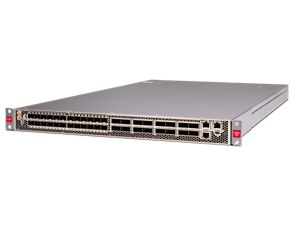
With extra memory and storage, these enhanced NPBs run Keysight's AI security and performance monitoring software and AI stack.
Explore end-to-end workflows spanning IC design, validation, wafer test, and photonics.

Save up to 50% on our latest instruments with eligible Keysight or competitor trade-ins.
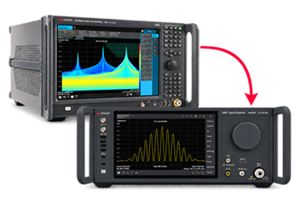
Achieve 200+ Gbaud multi-level modulated signals with high-speed AWGs for digital and optical standards.
Maximize accuracy and performance with precision accessories engineered for Keysight instruments.
Save up to 50% on our latest instruments with eligible Keysight or competitor trade-ins.
Four channels per 1U of rack space, up to 1 GHz bandwidth, and multi-oscilloscope synchronization.
Purpose-built solutions engineered for the design and test challenges unique to your industry.
Use Cases mapped to every stage of your product lifecycle, from design through operations.
Success Stories
Authoritative application notes, data sheets, reference designs, and test procedures to accelerate design and validation decisions.
Hands‑on bootcamps that teach system design, test methods, and production workflows engineers can apply immediately.
Learning Hub
Explore methodologies, test strategies, and technical resources for designing, validating, and scaling AI systems and networks.
Quick access to support related self-help tasks.
Additional content to support your product needs.
Explore services to accelerate every step of your innovation journey.
Validate complete user journeys across every platform with AI that adapts as your application changes.
Continuous testing automatically validates application changes at every stage of the CI/CD pipeline, from code commit through deployment. Tests trigger on every build, run in parallel across the full technology stack, and report results back to the development team without manual intervention.
The goal is to make quality validation a continuous, automated property of the delivery pipeline rather than a manual gate that blocks releases. Eggplant integrates into CI/CD pipelines through public APIs and standard toolchain connectors, triggering automated tests on every build without manual handoff.
Manual quality gates introduce delays and inconsistency that interrupt CI/CD pipelines, defeating the speed continuous delivery is meant to enable.
Tests that fail on every UI change cause pipeline failures, eroding trust and pushing teams to disable test stages entirely.
Multiple testing tools across environments produce fragmented results, making it impossible to see overall pipeline health at a glance.
Without continuous testing across UI, API, and back-end layers, integration defects reach pre-production or worse, the user.
Eggplant integrates directly into CI/CD pipelines, triggering AI-driven tests automatically and reporting results in formats DevOps teams can act on.
Jenkins, Azure DevOps, Git, and other pipeline tools trigger tests automatically on every build, with no custom scripting required.
AI-driven tests run across UI, API, and back-end layers in parallel, returning results fast enough not to delay release cadence.
Model-based test generation and AI computer vision keep tests stable across UI updates, eliminating noisy pipeline failures.
Results return in a non-proprietary format with detailed root cause analysis, giving teams real observability into pipeline quality.
Continuous testing in DevOps is the practice of validating application quality automatically at every stage of the CI/CD pipeline, from code commit through deployment. Rather than running tests manually before release, continuous testing makes quality validation an embedded property of the delivery process: tests trigger on every build, run in parallel, and report results immediately. The goal is to catch defects fast enough that fixing them doesn't slow delivery, supporting the high release frequency modern DevOps practices require.
Continuous testing integrates directly into CI/CD pipelines through native plugins or APIs for tools like Jenkins, Azure DevOps, GitHub Actions, and GitLab. Tests trigger automatically on commit, build, or deployment events; run in parallel to avoid slowing the pipeline; and report results back to the team in formats they can act on without leaving their existing workflow. The most effective continuous testing setups stage tests by speed and risk, running fastest tests earliest and broader regression on a slower cadence.
Test automation is the broader category of using tools to run tests without manual intervention. Continuous testing is a specific application of test automation: running automated tests continuously throughout the CI/CD pipeline, triggered by code changes rather than scheduled or manual events. All continuous testing involves automation, but not all test automation qualifies as continuous testing. The key differentiators are pipeline integration, automatic triggering, fast feedback, and unified reporting back to the development team.
Effective continuous testing is measured by a combination of speed and trust. Speed metrics include test execution time, time to feedback after commit, and pipeline pass-through rate. Trust metrics include false-positive rate (tests failing without real defects), defect escape rate (defects reaching production despite tests passing), and developer confidence in test results. The goal is fast feedback that teams act on, not just high test counts. Organizations measuring only the latter often find their pipelines bloated with low-value tests.
Modern continuous testing platforms integrate with all major CI/CD tools: Jenkins, Azure DevOps, GitHub Actions, GitLab CI, CircleCI, Bamboo, and TeamCity, plus container and orchestration tools like Docker, Kubernetes, and OpenShift. Native plugins handle the most common integration patterns; for less common setups, REST APIs and CLI interfaces let teams plug continuous testing into existing pipelines without major rework. The right integration depth depends on whether teams want simple test triggering or full pipeline orchestration with quality gates.
AI-driven testing improves continuous testing in two main ways. First, stability: AI computer vision and model-based test generation keep tests resilient to UI changes, eliminating the brittle-script failures that erode pipeline trust. Second, coverage: AI generates test scenarios faster than teams can write them by hand, expanding what continuous testing covers. The combined effect is a CI/CD pipeline where tests run continuously, fail only when real defects exist, and cover enough of the application to make pipeline pass-through a meaningful quality signal.
Automated regression built into your pipeline. Run nightly, not just before a deadline.
What are you looking for?