
Buying Guide
The Ultimate Engineer’s Guide to Buying a Network Analyzer



Introduction
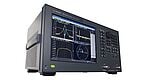
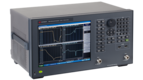
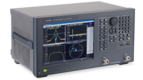
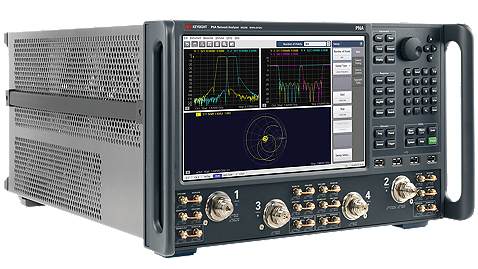
This guide compares eight current Keysight network analyzers, spanning 900 Hz to 67 GHz. Picking between them usually looks like working through a fifty-row spec sheet. It isn't. Three questions narrow the field to one or two candidates, and this guide walks through all three. This guide covers the electrical network analyzer, meaning the radio frequency (RF) and microwave test instrument, not software "network analyzers" such as packet and protocol tools that monitor IT traffic. They share a name, but not a function. As the OEM behind the instruments, the Official Keysight Used Equipment Store can help you match a certified-used analyzer to your measurements and budget. The featured certified-used pick, in good supply now, is the Keysight E5071C ENA vector network analyzer, with the current ENA E5080B and the microwave-class PNA family also available.

Summary
- A network analyzer measures a device's response to a known stimulus: it drives the device under test (DUT) with its own source and reports S-parameters, gain, insertion loss, return loss, and impedance as magnitude and phase.
- The modern default is a vector network analyzer (VNA). Scalar analyzers are legacy instruments that measure magnitude only; if you need phase (and impedance matching, de-embedding, and group delay all need phase), you need a VNA.
- Seven key specifications shape most of the buying decision: frequency range, dynamic range, measurement speed, trace noise, number of ports, form factor, and test port power.
- Match frequency range to your DUT's operating band and the harmonic frequencies you need to see, with headroom for the next project.
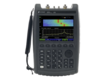
- In good supply now, certified used: the workhorse E5071C (9 kHz to 20 GHz), the current E5080B ENA, the PNA N5225B for microwave work, and the handheld FieldFox N9952B for the field.
- Certified used from Keysight can cost 40 to 90% less than new list price, with up to 5 years warranty options, OEM calibration, and KeysightCare support.
What Is a Network Analyzer?
A network analyzer characterizes the electrical properties of devices and circuits: how much of an RF signal passes through, how much reflects back, and how the phase shifts along the way. It is a standard test instrument for characterizing RF and microwave components before they go into a system. The most common type is the vector network analyzer, which measures both the amplitude and phase response of a device under test. Keysight's application note Understanding the Fundamental Principles of Vector Network Analysis describes vector network analysis as a way to characterize components by measuring their effect on the amplitude and phase of swept-frequency test signals.
The results appear as traces of magnitude and phase plotted against frequency, so you can see where a filter's passband sits, where an antenna is matched, or where a cable assembly starts to fail. You can change the stimulus conditions, including frequency span, source power, and sweep type, to study the device's behavior across its operating envelope. For the underlying definitions, see the glossary entries on the vector network analyzer and what a network analyzer is.
A network analyzer reports S-parameters (scattering parameters): S11 and S22 describe reflection at each port, S21 and S12 describe transmission through the device. The framework goes back to Kurokawa's 1965 IEEE paper, Power Waves and the Scattering Matrix, and it still underpins every S-parameter measurement a modern VNA reports.
How Is a Network Analyzer Different from a Spectrum Analyzer?
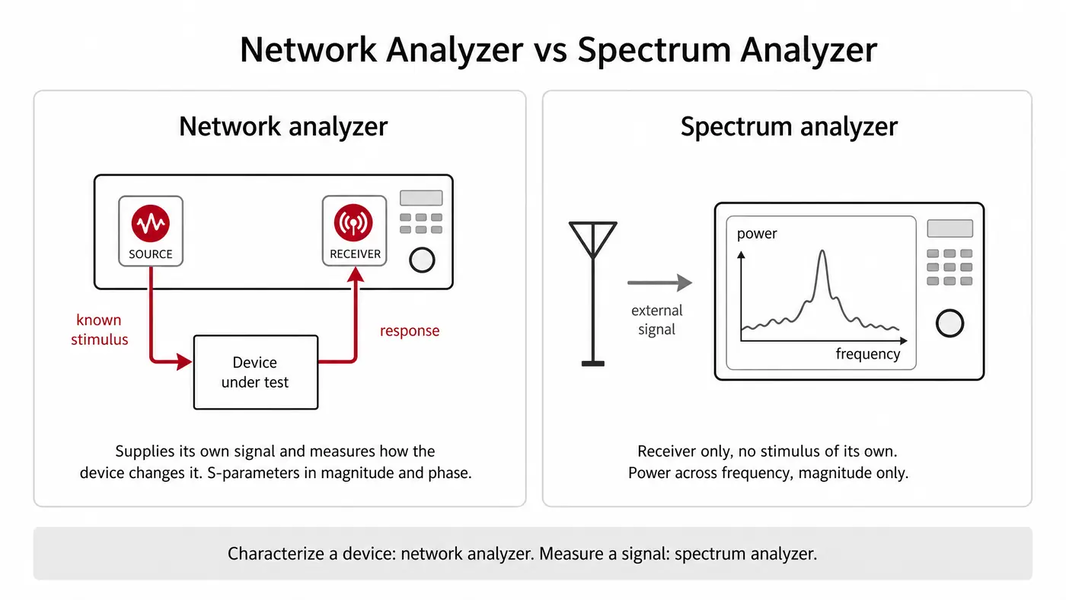
The two instruments get confused because they share connectors and frequency coverage, but they answer different questions.
A network analyzer measures how a device changes a signal the instrument itself supplies. It has a built-in source and receivers, so it can compare what went in with what came out and report amplitude and phase at its ports. Vector error correction helps clean up systematic errors.
A spectrum analyzer measures the power of an external signal across frequency. It is a receiver with no stimulus of its own, which makes it the right tool for finding interference, checking harmonics, and measuring the spectral content of an RF signal from a transmitter. It is not the right tool for characterizing a component. A spectrum analyzer fitted with a tracking generator can make scalar transmission measurements, but it still measures magnitude only, with no phase.
Use a network analyzer to characterize or match a device. Use a spectrum analyzer to measure a signal. Some jobs need both, which is why handheld combination analyzers such as FieldFox exist. The full comparison, including when each instrument can stand in for the other, is in our guide to the network analyzer versus the spectrum analyzer.
What Do You Use a Network Analyzer For?
Network analyzers characterize, match, and debug RF components and microwave assemblies. Common jobs include:
- Filter characterization. Passband insertion loss, stopband rejection, and ripple, read from S21. A network analyzer shows a filter's frequency response and whether it meets its rejection spec.
- Antenna work. Reflection measurements from S11 give return loss and voltage standing wave ratio (VSWR), which tell you how well an antenna is matched. A two-antenna S21 setup measures gain. Our guide on how to measure antenna gain using a network analyzer walks through the method.
- Cable and connector test. Insertion loss, return loss, and time-domain distance-to-fault along a cable assembly, on the bench or in the field.
- Amplifier characterization. Gain, gain flatness, input and output match, and compression behavior of amplifiers and other active components.
- Impedance measurement and matching. Complex impedance on a Smith chart, which is what you need to design a matching network. Impedance matching depends on phase, which is why this is vector-analyzer territory.
One boundary worth stating: sound-and-vibration measurement is not a network analyzer job. Low-frequency acoustic and vibration analysis belongs with dynamic signal analyzers, a different instrument class. If a page or catalog blurs that line, it is describing a different tool.
What Are the Types of Network Analyzers?
Three type names appear in catalogs, but the modern buying decision has one default:
- Vector network analyzers (VNAs) measure magnitude and phase and support vector error correction. Current Keysight network analyzer families, including ENA, PNA, PNA-X, Streamline USB, and FieldFox handheld models with VNA mode, are vector instruments. For RF network characterization today, a VNA is the instrument to buy.
- Scalar network analyzers (SNAs) measure magnitude only: return loss, VSWR, and gain, with no phase. They were the affordable option before VNA prices came down. Today they are a legacy category.
- Large-signal network analyzers (LSNAs) are specialist instruments for characterizing nonlinear behavior, such as amplifiers driven into compression. Nonlinear characterization needs are now commonly covered by a PNA-X-class VNA with the appropriate software options rather than a separate LSNA.
| Type | Measures | Error correction | Status today |
|---|---|---|---|
| Vector network analyzer (VNA) | Magnitude and phase (full S-parameters) | Vector error correction (12-term model) | The current default for component test |
| Scalar network analyzer (SNA) | Magnitude only (return loss, VSWR, gain) | Normalization only | Legacy; superseded by VNAs |
| Large-signal network analyzer (LSNA) | Nonlinear (large-signal) behavior | Specialized calibration | Specialist; largely covered by PNA-X-class VNAs with nonlinear options |
The practical rule is simple: if you need to measure phase, you need a vector instrument. Impedance matching, de-embedding, and group delay all need phase. The rest of this guide assumes you are buying a VNA.
What Specifications Should You Look For in a Network Analyzer?
Once you know the measurements you need, seven VNA specifications help separate the models. Work through them in order.
- Frequency Range
- Dynamic Range
- Measurement Speed
- Trace Noise
- Number of Test Ports
- Size and Form Factor
- Test Port Power
Frequency Range
Frequency range is the first specification to settle, and usually the biggest cost driver. Every step to higher frequency adds hardware. Match the analyzer's range to your DUT's operating frequency and the harmonics you need to measure, with headroom for the next project. A 2.4 GHz Wi-Fi front end can be characterized on an 8.5 GHz analyzer with room for the third harmonic. A 28 GHz beamforming module cannot.
Three practical bands cover most buying decisions:
- Basic RF testing up to 8.5 or 9 GHz: general component test for sub-6 GHz wireless, Internet of Things (IoT) devices, and cable assemblies. Entry ENA configurations cover this.
- RF and microwave to 18 or 20 GHz: radar bands, satellite links, and other high-frequency component tests. This is the E5063A and E5071C class.
- Advanced RF and millimeter-wave above 20 GHz: 5G FR2, automotive radar, and aerospace programs. This is PNA and PNA-X territory, with banded millimeter-wave extensions beyond that.
Buying more range than your test plan needs is a common way to overspend. Buying too little is a common reason an analyzer gets replaced early. State your highest harmonic of interest, then add margin.
Dynamic Range
VNA dynamic range is the span between the largest signal the receiver can measure accurately and its noise floor, stated in decibels. Keysight's application note Network Analyzer Dynamic Range defines it as bounded by the maximum receiver input before compression errors at the top and the receiver noise floor at the bottom.
Dynamic range matters most for high-rejection measurements. To measure a filter's 100 dB stopband rejection with confidence, the analyzer needs more than 100 dB of dynamic range at the chosen settings. Many benchtop VNAs offer roughly 120 dB or more; the current ENA E5080B specifies up to 140 dB.
Two settings commonly trade dynamic range against speed: reducing the IF bandwidth and enabling averaging both lower the noise floor, and both make the sweep slower. Cutting the IF bandwidth to a quarter improves the noise floor by about 6 dB, at roughly four times the sweep time. That trade-off is normal operation, not a defect, and it is why quoted dynamic-range figures always carry an IF bandwidth condition.
Measurement Speed
Measurement speed is the time the analyzer needs to complete a sweep at a given number of points and IF bandwidth. On an R&D bench, the difference between a 10-millisecond and a 100-millisecond sweep may not matter; in manufacturing and production environments running thousands of units, sweep time adds up to real test time and cost.
Speed is related to accuracy. Narrow IF bandwidth and heavy averaging lower the noise floor but lengthen every sweep, so a production line may run wider IF bandwidth at a dynamic range it can still tolerate. When you compare models, compare sweep times at the same number of points and the same IF bandwidth. Also check the analyzer's data-transfer speed if automated test systems will read traces over the network or bus: a fast sweep loses its value when the automation waits on data transfer.
Trace Noise
VNA trace noise is the small, random variation the analyzer itself adds to a measured trace, typically specified in thousandths of a decibel (0.001 dB). It sets a floor on how small a ripple you can reliably resolve: measuring a filter's 0.1 dB passband ripple through 0.05 dB of trace noise leaves little margin.
Trace noise improves with narrower IF bandwidth and averaging, at the usual cost in sweep time. Good cable discipline also helps the whole measurement: use phase-stable test cables and torque connectors properly, and keep the setup away from strong interference sources. A vector analyzer's ratioed measurements also make it less sensitive to source power drift than a scalar setup.
Number of Test Ports
The number of ports determines which devices you can characterize in one connection. A 2-port VNA measures the four S-parameters of a two-port device, such as a filter, cable, or amplifier, and handles one-port devices such as antennas. A 4-port instrument characterizes differential pairs, couplers, and duplexers without re-cabling. Multiport test sets extend a bench analyzer further by routing high-count devices through internal switch paths (the E5071C, for example, supports multiport expansion to 22 ports with the E5092A test set).
More ports cost more, so buy the port count your DUTs need rather than the maximum. Two related checks matter on any analyzer, new or used:
- Connector type and grade. Precision coaxial connectors are standardized by IEEE Std 287.1-2021, and the front-panel connector must match your frequency range and cable ecosystem, including the connector gender on your test cables.
- Connector condition. Connector damage is a common and costly repair on RF instruments. On a certified-used unit from the OEM, port connectors are part of the inspection. On a unit of unknown provenance, connector condition may be uncertain. Always use a torque wrench.
Size and Form Factor
Network analyzers come in three practical forms, and the right one follows from where the measurement happens:
- Benchtop (ENA, PNA, PNA-X): the high-performance choice for lab benches and production applications.
- USB and modular (Streamline P-Series): a compact, PC-driven analyzer, useful where rack space is tight or the analyzer travels between stations. The Streamline P5008A provides 100 kHz to 53 GHz coverage in a compact PC-driven module.
- Handheld (FieldFox): battery-powered combination analyzers with a full 2-port VNA mode plus spectrum analysis and cable-and-antenna test, built for tower, field, installation and maintenance, and site compliance testing.
A smaller instrument is easier to deploy and share. A benchtop test instrument generally offers a higher performance ceiling. Choose by measurement location first, performance second.
Test Port Power
Test port power is the output signal level the analyzer drives into your device, set in dBm. Two numbers on the datasheet matter:
- Source power range. Enough output power to overcome fixture and cable losses in lossy setups, plus low-power capability for measuring active devices near their small-signal region without compressing them. Power sweeps used to characterize an amplifier's compression point need a calibrated source range.
- Maximum input (damage) level. Every receiver port has a maximum input level, stated in dBm on the datasheet, above which you risk damaging the front end. If you test amplifiers, plan attenuation so the amplified signal stays below that limit.
This is different from the instrument's mains power draw, and it is separate from the impedance of your DUT: a VNA's ports present a 50-ohm reference impedance, and vector error correction handles the mismatch mathematics from there.
What About Calibration?
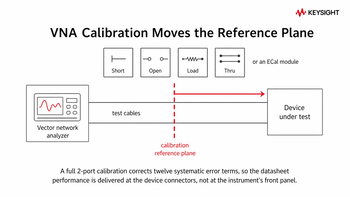
A VNA measurement is only as trustworthy as the calibration behind it, so calibration belongs on the spec sheet even though it is not a hardware number. A VNA's accuracy and precision depend on vector error correction: the analyzer measures known calibration standards, such as short, open, load, thru, or an electronic calibration module, and mathematically removes systematic errors from the test setup. Keysight Application Note 1287-3, Applying Error Correction to Network Analyzer Measurements, covers how a full 2-port calibration corrects twelve systematic error terms. Datasheet numbers state VNA performance at specific settings. Calibration is what delivers that performance at your reference plane.
For a buying decision, that means three checks: which calibration methods the analyzer supports, whether a calibration kit or ECal module is included, and whether the instrument carries a current, traceable factory calibration. NIST defines metrological traceability as a measurement result linked to national standards through a documented, unbroken chain of calibrations. That chain, not the instrument's age, is what makes a measurement defensible.
Which Keysight Network Analyzer Should You Buy?
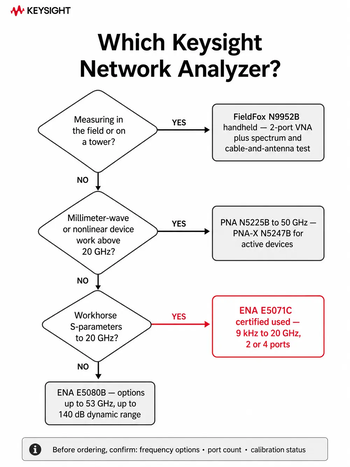
Match the instrument to the job, frequency range, and RF characteristics you need to measure. The table below maps common needs to current Keysight models, with frequency ranges from their official product pages.
| Job | Keysight model | Family | Frequency range | Ports |
|---|---|---|---|---|
| Workhorse S-parameters, certified used | E5071C | ENA | 9 kHz to 20 GHz | 2 or 4 |
| Value passive-device test | E5063A | ENA | 100 kHz to 18 GHz | 2 |
| Current benchtop ENA, up to 140 dB dynamic range | E5080B | ENA | Specialist; largely covered by PNA-X-class VNAs with nonlinear options | 2 or 4 |
| Microwave, high performance | N5225B | PNA | Options from 9 kHz up to 53 GHz maximum | 2 or 4 |
| Active-device and nonlinear characterization | N5247B | PNA-X | 900 Hz to 50 GHz | 2 or 4 |
| Compact USB, PC-driven | P5008A | Streamline | 900 Hz to 67 GHz | 2 |
| Field, handheld, VNA plus spectrum | N9952B | FieldFox | 100 kHz to 53 GHz | 2-port VNA mode |
| Field, handheld, mid-band | N9917B | FieldFox | 300 kHz to 50 GHz | 2-port VNA mode |
The featured certified-used pick is the E5071C ENA vector network analyzer (9 kHz to 20 GHz, 2 or 4 ports): the S-parameter workhorse for filters, duplexers, and RF front-end modules. Keysight has retired the E5071C as a new instrument and names the E5080B as its successor, making certified used a practical route to a proven ENA platform at a lower price; see the reasons to buy an E5071C used. For microwave programs, the PNA N5225B covers 900 Hz to 50 GHz with high dynamic range, the PNA-X N5247B adds dual sources and receivers for characterizing amplifiers, mixers, or frequency converters and the ENA Series page shows the wider certified-used ENA lineup. For field work, the FieldFox N9952B combines a 2-port VNA, spectrum analyzer, and cable-and-antenna tester in one 300 kHz to 50 GHz handheld.
Is a Used Network Analyzer Worth It?
RF analyzers hold their value, so certified used pricing can turn an out-of-reach capital line into an approvable one. The question that matters is not only the age of the instrument; it is who stands behind it.
| Decision factor | Certified used from Keysight | New |
|---|---|---|
| Price versus new list | 40 to 90% lower | Full list price |
| Warranty | Up to 5 years warranty options | Standard factory warranty options |
| Calibration | OEM tested and calibrated, traceable | Factory calibrated |
| Inspection | 101-point quality checklist | Factory final test |
| Frequency and software options | Confirmed per unit before quote | Configured at order |
| Support | KeysightCare access | KeysightCare access |
| Availability | Often in stock now | Build lead time |
Certified used from the OEM reduces the usual used-market risk because the instrument arrives inspected against a 101-point checklist, calibrated with a traceable result, and covered by up to 5 years of warranty options. Keysight Premium Used instruments are refurbished at the same factory that builds new units and pass the same final test to meet the same quality requirements as a new product. That addresses a real worry with unknown-provenance gear: an instrument that measures incorrectly, with no clear support path. Buying decisions still depend on your test plan, so confirm installed options and calibration status per listing before you order.
Closing Thoughts From Keysight
A network analyzer purchase comes down to a short list of questions. What devices are you characterizing, and do you need phase? How much dynamic range do your rejection measurements need? How many ports do you need, in what form factor, and at what port power? Answer those questions, and the model table above should narrow the choice to one or two candidates.
Certified used direct from the OEM can help you get the capability you need while controlling cost: Keysight certified used pricing can run 40 to 90% below new list for the same instrument families, with units inspected, calibrated, and covered by warranty options. Browse the certified used network analyzers and request a quote for the configuration you need.
Whenever You’re Ready, Here Are
5 Ways We Can Help You
Browse our certified used network analyzers and request a quote for current pricing
Call tech support US: +1 800 829-4444
Press #, then 2. Hours: 7am – 5pm MT, Mon– Fri
Contact our sales support team
Create an account to get price alerts and access to exclusive waitlists
Talk to your account manager about your specific needs
Select up to 3 instruments to compare
Sources
- Keysight Technologies, Understanding the Fundamental Principles of Vector Network Analysis (application note, lit. 5965-7707): S-parameters, reflection and transmission
- Keysight Technologies, Applying Error Correction to Network Analyzer Measurements (Application Note 1287-3, lit. 5965-7709): systematic errors and the 12-term correction
- Keysight Technologies, Network Analyzer Dynamic Range (application note, lit. 5980-2778): dynamic-range definition and the IF bandwidth and averaging trade-offs.
- K. Kurokawa, Power Waves and the Scattering Matrix, IEEE Transactions on Microwave Theory and Techniques, vol. 13, no. 2, pp. 194-202, March 1965.
- IEEE Standards Association, IEEE Std 287.1-2021: Precision Coaxial Connectors at RF, Microwave, and Millimeter-Wave Frequencies, Part 1.
- NIST, NIST Policy on Metrological Traceability.
Frequently Asked Questions
Use a vector network analyzer when you are characterizing a device, such as measuring a filter's response, matching an antenna, or checking a cable. Use a spectrum analyzer when you are measuring an external signal, such as hunting interference, checking harmonics, or verifying a transmitter. The dividing line is whether the instrument supplies the stimulus (VNA) or only receives (spectrum analyzer).
Browse certified used network analyzers and request a quote
A VNA contains a calibrated swept source, multiple phase-coherent receivers, and signal-separation hardware, such as couplers and bridges, to route stimulus and response across a wide frequency range. Wider frequency coverage, more ports, and higher dynamic range each add hardware cost. This is also why used VNAs hold value, and why Keysight certified used pricing, which can run 40 to 90% below new list, can change the affordability question.
Pricing spans a wide range because frequency coverage, port count, and options drive the hardware. Entry RF configurations can cost a fraction of a millimeter-wave PNA-X. Certified used pricing can run 40 to 90% below new list for the same instrument families. Request a quote on a specific configuration for current pricing, since installed options change the price per unit.
Vector network analyzers (VNAs) measure magnitude and phase and are the current standard. Scalar network analyzers (SNAs) measure magnitude only and are a legacy category. Large-signal network analyzers (LSNAs) address nonlinear characterization, a job now often covered today by PNA-X-class VNAs with nonlinear software options.
Only within limits. A VNA's receiver can display signal power, but it lacks a spectrum analyzer's image and spur rejection, so readings of external signals can mislead. Some analyzers offer a spectrum-analysis option for this job, and handheld FieldFox analyzers carry both functions. For dedicated signal analysis, use a spectrum or signal analyzer.
Start from your DUT's highest operating frequency, add the harmonics your measurements must see (a third harmonic of a 6 GHz signal is 18 GHz), then add headroom for the projects you expect next. Frequency range is one of the largest price levers, so buy deliberately rather than maximally.
Choose by where the measurement happens. Benchtop analyzers, such as ENA and PNA models, generally offer the highest performance for lab and production work. USB analyzers such as the Streamline P5008A save space and can move between stations. Handheld FieldFox combination analyzers are built for field, tower, and maintenance work, with VNA, spectrum analysis, and cable-and-antenna test modes in one battery-powered unit.
Certified used analyzers from the OEM are inspected against a 101-point checklist, calibrated with traceable results, and covered by up to 5 years of warranty options with KeysightCare support. The reliability question to ask about any used instrument is provenance: who inspected it, who calibrated it, and who supports it if it fails. Confirm calibration status and installed options per listing before you order.
Browse the certified used inventory and request a quote