Used Spectrum + Signal Analyzers
The Used Equipment web is currently available in English only and pricing is in USD for the United States.Prices for other countries will vary.
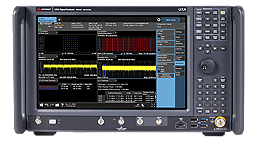
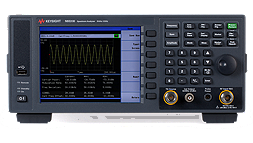
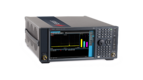
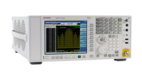
Spectrum analyzers measure a signal’s spectral power density in order to both analyze known signals and identify unknown interference. This makes them indispensable when evaluating a signal’s frequency-domain characteristics not easily observed in time-domain waveforms. More advanced signal analyzers even unite measurements from both domain types in one instrument.
Popular Model Families
Select up to 3 instruments to compare
Select another instrument to compare
![]()
Starting at
Select another instrument to compare
![]()
Starting at
Select another instrument to compare
![]()
Starting at