
Tech Guide
Network Analyzer vs Spectrum Analyzer: Uses, Specs, and How to Choose



Introduction
Two instruments get confused on almost every RF bench: the network analyzer and the spectrum analyzer. They look similar and share connectors, but they answer different questions. A network analyzer measures how a device changes a signal you supply. A spectrum analyzer measures an existing signal in the frequency domain.
First, one clarification: this guide is about the radio frequency (RF) and microwave test and measurement instrument, the network analyzer (electrical), not the software packet tools (Wireshark, SolarWinds) that also carry the name.
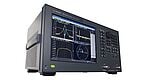
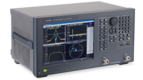
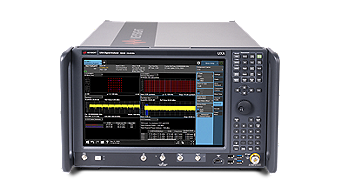
As the OEM behind the instruments, the Official Keysight Used Equipment Store can help you compare analyzer types, confirm configurations, and choose certified-used equipment with more confidence.The featured certified-used picks here, in good supply now, are the Keysight E5071C ENA vector network analyzer for device characterization and the flagship Keysight N9042B UXA signal analyzer for signal work, with the current ENA E5080B and PXA N9030B also available.

Summary
- A network analyzer measures a device's response to a known stimulus: it sends a signal in, compares what comes back, and reports S-parameters (S11, S21), gain, return loss, and impedance as magnitude and phase.
- A spectrum analyzer measures signal power across frequency: it is a tuned receiver with no source, showing amplitude on the Y axis against frequency on the X axis.
- A network analyzer has a built-in source plus receivers and vector error correction; a spectrum analyzer is a receiver. That architecture is the root of most differences.
- Use a vector network analyzer (VNA) to characterize or match a component (antenna, filter, cable, amplifier). Use a spectrum or signal analyzer to find, measure, and troubleshoot a signal (interference, harmonics, phase noise, modulated Wi-Fi, LTE, or 5G).
- Some jobs need both, and handheld combination analyzers such as the FieldFox carry both functions.
- Certified used analyzers from Keysight can cost 40 to 90% less than new, with up to 5 years warranty options and OEM calibration.
- In good supply now, certified used: the workhorse E5071C and value E5063A ENA VNAs (network side), and the flagship N9042B UXA signal analyzer (spectrum side).
Want the short version? Browse certified used network analyzers and certified used spectrum and signal analyzers, and request a quote.
What Is a Network Analyzer?
A network analyzer measures the network parameters of electrical circuits, most often the S-parameters (scattering parameters) that describe the transmission and reflection characteristics of a device under test (DUT). It can also report Y, Z, and H parameters, along with gain, return loss, and impedance. The defining feature is that the instrument supplies its own stimulus, then measures the device's response relative to that stimulus, so it reports both amplitude and phase. For the underlying definitions, see the Keysight glossary entry on the vector network analyzer and what is a network analyzer.
S-parameters are the standard way to describe a linear network at RF. The scattering-matrix formulation dates to Kurokawa's 1965 paper, Power Waves and the Scattering Matrix, and remains the reference framework today. For a working treatment, Keysight's application note Understanding the Fundamental Principles of Vector Network Analysis walks through reflection, transmission, and the Smith chart.
Network analyzers come in handheld, benchtop, and modular forms, in 2-port, 4-port, and higher port counts. Time Domain Reflectometry (TDR) can be used to locate impedance discontinuities along a line.

Scalar vs Vector: The Two Types That Matter
The traditional split into three families still holds, but two types cover almost all real work:
- Vector network analyzers (VNAs) measure magnitude and phase, and can apply vector error correction. They handle the four S-parameters of a two-port and are standard in modern RF labs.
- Scalar network analyzers (SNAs) measure magnitude only (return loss, voltage standing wave ratio or VSWR) and are a legacy choice; large-signal network analyzers (LSNAs) remain a specialist case for nonlinear devices such as amplifiers driven into compression. For everyday characterization, the VNA is the current instrument.
The decision is simple: if you need phase, you need a vector instrument. Impedance matching, de-embedding, and group delay all depend on phase, which is why VNAs, not scalar analyzers, do the bulk of characterization.
What Does a Network Analyzer Measure and Do?
Network analyzers characterize, match, and debug components and circuits.Common jobs include:
- Reflection measurements (S11, S22): return loss, VSWR, and input or output match for antennas, filters, and connectors.
- Transmission measurements (S21, S12): gain, insertion loss, isolation, and group delay through a device.
- Impedance and matching: reading complex impedance on a Smith chart and designing a matching network.
- Cables and antennas: distance-to-fault and return-loss measurements in the field, often with a handheld unit.
VNA accuracy comes from calibration, not just hardware. Vector error correction removes systematic errors (directivity, source and load match, tracking) measured during a calibration such as SOLT (short-open-load-thru) or TRL (thru-reflect-line). Keysight Application Note 1287-3, Applying Error Correction to Network Analyzer Measurements, explains how those systematic error terms are defined and corrected. The traceable form of TRL was formalized by NIST's Roger Marks, whose 1991 multiline method in the IEEE Transactions on Microwave Theory and Techniques is still the reference for broadband and on-wafer calibration. Reference standards are defined by documents such as IEEE Std 287.1-2021 for precision coaxial connectors, and the calibration chain traces back to national standards through metrological traceability. A well-calibrated VNA can reach a measurement accuracy a receiver-only instrument cannot, because it corrects errors rather than just displaying them.
Network Analyzer Specs
| Specification | What it tells you |
|---|---|
| Frequency range | The band the analyzer covers; it should span your device’s operating frequency and relevant harmonic frequencies. |
| Number of ports | 2-port suits most passive devices; 4-port covers differential and multiport devices. |
| Dynamic range | The span between the largest and smallest signals it can measure; higher dynamic range helps on high-loss or high-isolation devices. |
| Source (output) power | The stimulus level and whether it can be set for power sweeps on active devices. |
| Calibration and error correction | Which calibration kits and methods (SOLT, TRL, ECal) are supported; this often determines real measurement accuracy.. |
| Trace noise and stability | How repeatable a trace is over time and temperature. |
| Measurement speed | Sweep time per point or per trace, which affects throughput in production. |
What Is a Spectrum Analyzer?
A spectrum analyzer measures a signal's power across a range of frequencies. It plots amplitude on the vertical axis against frequency on the horizontal axis, so you see the spectral content of a signal (its power and frequency) rather than its shape over time. Unlike a network analyzer, it has no source. It is a tuned receiver that measures whatever input signal you connect. For more background, see the Keysight glossary entry on spectrum analyzers and the Keysight guide to spectrum analyzers versus oscilloscopes.
The classic architecture is the swept-tuned superheterodyne receiver, which mixes the input with a local oscillator to an intermediate frequency, then sweeps across the band. Keysight's Spectrum Analysis Basics (Application Note 150) is a useful reference for the block diagram, the receiver architecture, and how a spectrum analyzer works in practice.
One point is worth clarifying: a modern signal analyzer is a spectrum analyzer that also digitizes the signal for vector analysis (magnitude and phase of modulation). The frequency-domain display is the same; the signal analyzer adds demodulation and deeper measurements, which is why current Keysight instruments carry the "signal analyzer" name.
Types of Spectrum Analyzers
- Swept superheterodyne analyzers sweep a tuned receiver across the band. They offer wide frequency coverage and good dynamic range, and remain the general-purpose choice.
- FFT (fast Fourier transform) analyzers sample a block of the signal and compute its spectrum, which suits low frequencies and fine resolution.
- Real-time analyzers process the input continuously so they can catch brief, intermittent, or hopping signals that a swept analyzer may miss.
The right type depends on the signal: real-time for transient interference, FFT for fine low-frequency detail, and swept for general RF work.
What Does a Spectrum Analyzer Measure and Do?
Spectrum and signal analyzers find, measure, and troubleshoot signals. Common jobs include:
- Signal and interference hunting: locating unwanted signals and interference in Wi-Fi, cellular, and other wireless systems.
- Frequency and power measurements: center frequency, occupied bandwidth, channel power, and spurious levels.
- Phase noise: the short-term frequency stability of an oscillator or source.
- Harmonics, spurious signals, and intermodulation: distortion and spurious outputs from amplifiers and mixers, including IMD and third-order intercept point (IP3).
- Modulation analysis: error vector magnitude and demodulation of Wi-Fi, LTE, and 5G signals.
For the measurement quality that governs these jobs, Keysight's Signal Analysis Measurement Fundamentals covers noise floor, sensitivity, and dynamic range. The floor those jobs work against is physical: Johnson-Nyquist thermal noise sets a floor of about -174 dBm/Hz at room temperature, the limit a signal analyzer’s displayed average noise level can approach but not beat.
Spectrum Analyzer Specs
| Specification | What it tells you |
|---|---|
| Frequency range | The band the analyzer covers, from low kHz to millimeter-wave on high-end models. |
| Displayed average noise level (DANL) | The noise floor; it determines the smallest signal you can see. |
| Resolution bandwidth (RBW) | The narrowest filter, which determines how well you resolve two close signals. |
| Video bandwidth (VBW) | Display smoothing that helps you see a low signal in noise; it does not improve resolution. |
| Dynamic range | The span between the largest and smallest signals the analyzer can measure at once. |
| Phase noise | How clean the analyzer's own local oscillator is, which limits close-in measurements. |
| Inputs | Coaxial connector type and, on some units, additional I/Q or external mixer inputs. |
Network Analyzer vs Spectrum Analyzer: What Are the Key Differences?
The differences trace back to one fact: a network analyzer supplies its own stimulus and a spectrum analyzer does not. Everything else follows.
| Aspect | Spectrum / Signal Analyzer | Vector Network Analyzer |
|---|---|---|
| What it measures | Signal power versus frequency | How a device changes a known signal (S-parameters) |
| Source | Receiver, no built-in source | Built-in source receivers |
| Result | Magnitude | Magnitude and phase |
| Error correction | Limited | Vector error correction via calibration |
| Typical question | Is this signal clean? Where is the interference? | Is this device matched? What is its gain or loss? |
| Frequency coverage | Wide, up to millimeter-wave on some models | Wide, up to millimeter-wave on some models |
Two clarifications help with the older “wider versus narrower” framing. Frequency coverage now overlaps. Both instrument classes can offer broadband, high-frequency coverage into millimeter-wave, so range alone rarely decides the choice. A VNA is also not simply “more accurate.” It is ratioed and error-corrected, so for the specific job of characterizing a device, it can correct systematic errors that a receiver-only spectrum analyzer can only display. For measuring an external signal, the spectrum analyzer is the right tool and the VNA is not.
Can You Use One Instrument for the Other's Job?
Sometimes, but only with limits.
- Spectrum analyzer as a scalar network analyzer: add a tracking generator, which is a source that follows the analyzer’s tuning, plus a directional coupler, and a spectrum analyzer can measure gain, insertion loss, and return loss.You get magnitude only, with no phase and no vector error correction, so it works for quick scalar checks but not for matching or de-embedding.
- VNA as a spectrum analyzer: a VNA’s receiver can show signal power, but it is a narrowband tuned receiver without the same spur and image rejection as a spectrum analyzer. That can make external signal readings unreliable. The reason is architectural. A spectrum analyzer uses double conversion, also called double heterodyne, to reject mixer images and spurious responses. A VNA uses single conversion because its stimulus is known and controlled, so image ambiguity is handled through stimulus control rather than filtering. Treat it as a rough check, not a measurement.
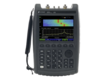
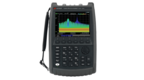
- When you need both a VNA and a spectrum analyzer: RF bring-up often needs device characterization and signal analysis. That can mean two instruments or a combination analyzer. The handheld FieldFox N9952B carries VNA, spectrum analyzer, and cable-and-antenna functions in one unit to 50 GHz.
In practice, substitution can handle spot checks, but a dedicated instrument is still the better choice: a tracking-generator setup will not give you phase, and a VNA will not give you a clean spur measurement.
Which Keysight Analyzer Should You Choose?
Match the instrument to the job, frequency range, and RF application. The table below maps common needs to current Keysight models, with the exact frequency ranges from their product pages.
| Job | Keysight model | Type | Frequency range |
|---|---|---|---|
| Benchtop 2 or 4-port S-parameters | ENA E5080B | Vector network analyzer | 9 kHz to 53 GHz |
| Workhorse S-parameters, certified used | ENA E5071C | Vector network analyzer | 9 kHz to 20 GHz |
| Value passive-device and PCB test | ENA E5063A | Vector network analyzer | 100 kHz to 18 GHz |
| Wideband ENA-X characterization | ENA-X E5081A | Vector network analyzer | 9 kHz to 44 GHz |
| Microwave, high dynamic range | PNA N5225B | Vector network analyzer | 900 Hz to 50 GHz |
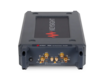
| Compact, USB, ATE | Streamline P5008A | 2-port USB VNA | 100 kHz to 53 GHz |
| Field, handheld, VNA plus spectrum | FieldFox N9952B | Combination analyzer | 300 kHz to 50 GHz |
| Flagship signal analysis, mmWave | UXA N9042B | Signal analyzer | 2 Hz to 75 GHz |
| High-performance spectrum and signal | PXA N9030B | Signal analyzer | 2 Hz to 50 GHz |
| Mid-range signal analysis | MXA N9020B | Signal analyzer | 10 Hz to 50 GHz |
| General-purpose signal analysis | EXA N9010B | Signal analyzer | 10 Hz to 44 GHz |
| Value, entry level | CXA N9000B | Signal analyzer | 9 kHz to 26.5 GHz |
For network analysis, the ENA E5071C and ENA E5063A are strong certified-used picks in good supply, the ENA E5080B covers most benchtop S-parameter work, the PNA N5225B handles demanding microwave measurements, and the Streamline P5008A fits automated and space-limited setups. For spectrum work, the UXA N9042B is the certified-used flagship, the PXA N9030B is the high-performance tier, with the MXA N9020B and EXA N9010B cover mid-range and general use. If you are cross-shopping the legacy E4440A PSA, note that Keysight has retired it and points users to the PXA N9030B. Confirm options and calibration per listing, since installed software and frequency options vary by unit.
Featured Certified-Used Picks: In Good Supply Now
Three certified-used models cover the jobs most RF programs bring to this comparison:
- E5071C ENA vector network analyzer(9 kHz to 20 GHz, 2 or 4 ports): the workhorse for filter, duplexer, and T/R-module S-parameters, with up to 22 ports via the E5092A test set. Keysight has retired it as a new instrument, with the ENA E5080B as its successor, making certified used a practical path for buyers who still want the E5071C. See reasons to buy the E5071C used vs new.
- E5063A ENA vector network analyzer (100 kHz to 18 GHz): the value pick for high-volume passive test (antennas, filters, cables, connectors) and PCB or substrate impedance work through the Option 011 time-domain (TDR) wizard.
- N9042B UXA signal analyzer (2 Hz to 75 GHz, up to 4 GHz analysis bandwidth): the flagship for 5G FR2 and mmWave modulation quality, radar and electronic-warfare spurious and phase noise, and 76 to 81 GHz automotive radar and vehicle-to-everything emissions. The mmWave bands it targets are defined in 3GPP TS 38.101-2, whose original FR2 range spans 24.25 to 52.6 GHz, well inside the analyzer's 2 Hz to 75 GHz reach.
Match the analyzer to the question: use the E5071C or E5063A to measure a device’s scattering parameters, and use the N9042B when you need to measure, clean up, or verify a signal.
Ready to Match an Analyzer to Your Bench? See Live Offers
Is Buying a Used Network or Spectrum Analyzer Worth It?
RF and microwave analyzers hold their value, so certified used is often the difference between a quote you can approve and one you cannot. Buying direct from the OEM reduces the usual used-market risk, because the instrument arrives tested, calibrated, and supported.
| Decision factor (RF analyzer) | Certified used | New |
|---|---|---|
| Price vs new list | 40 to 90% lower | Full list price |
| Warranty | Up to 5 years warranty options | Standard factory warranty options |
| Frequency and software options | Confirmed per unit | Configured at order |
| Calibration | OEM tested and calibrated | Factory calibrated |
| Support | KeysightCare access | KeysightCare access |
| Availability | Often in stock now | Build lead time |
Certified used from Keysight includes a quality inspection, up to 5 years warranty options, OEM calibration and software, and KeysightCare technical support. Keysight Premium Used instruments are OEM-remanufactured and can include firmware, software, and like-new warranty matched to a new unit. Calibration should mean more than a sticker: NIST defines metrological traceability as a result linked to reference standards through a documented, unbroken chain, which is the standard a credible certified-used analyzer should support. For model-by-model help, see the network analyzer buying guide and the spectrum analyzer buying guide.
How Do You Choose Between Them?
Start with what you are measuring:
- You need to characterize or match a device (antenna, filter, cable, amplifier), so you care about return loss, gain, impedance, or phase: choose a vector network analyzer.
- You need to find, measure, or troubleshoot a signal (interference, harmonics, phase noise, modulated Wi-Fi, LTE, or 5G): choose a spectrum or signal analyzer.
- You need magnitude-only scalar checks in the field and want one box: a handheld combination analyzer covers both, with the limits noted above.
- You need both, at the bench:pair a VNA with a signal analyzer, sized to your highest frequency.
Keysight can help size the analyzer to your application and confirm what a given used unit includes. That replaces guesswork with a specific model, frequency range, and option set for your work.
We Help Engineers Match the Right Analyzer: Browse Our Offers
Select up to 3 instruments to compare
Whenever You’re Ready, Here Are
5 Ways We Can Help You
Browse our premium used spectrum analyzers and network analyzers
Call tech support US: +1 800 829-4444
Press #, then 2. Hours: 7am – 5pm MT, Mon– Fri
Contact our sales support team
Create an account to get price alerts and access to exclusive waitlists
Talk to your account manager about your specific needs
Select up to 3 instruments to compare
Closing Thoughts From Keysight
Network analyzers measure the electrical behavior of a device you drive with a known signal. Spectrum and signal analyzers measure the frequency content of an external signal. The architecture explains the rest: source and receivers versus receiver only, calibrated and error-corrected device measurements versus signal measurements. Decide by what you are measuring, size the instrument to your highest frequency, and consider certified used direct from the OEM to keep the capability and cut the cost.
Frequently Asked Questions
A network analyzer supplies a known signal and measures how a device changes it (S-parameters, gain, return loss, impedance) in magnitude and phase. A spectrum analyzer has no source and measures signal power across frequency. Characterize a device with the first; measure a signal with the second.
A VNA's receiver can show signal power, but it lacks a spectrum analyzer's spur and image rejection, so readings of unknown signals can be unreliable. The reason is architectural. A spectrum analyzer uses double conversion, also called double heterodyne, to reject mixer images and spurious responses. A VNA uses single conversion because its stimulus is known and controlled, so image ambiguity is handled through stimulus control rather than filtering. Use it as a rough check only. For real signal measurements, use a spectrum or signal analyzer.
With a tracking generator and a directional coupler, a spectrum analyzer can measure gain, insertion loss, and return loss as magnitude only. That covers scalar checks, but there is no phase and no vector error correction, so it cannot do impedance matching or de-embedding.
No. A vector network analyzer measures a device's response to its own stimulus in magnitude and phase. A spectrum analyzer measures an external signal's amplitude versus frequency. They share connectors and frequency coverage but answer different questions.
A scalar network analyzer measures magnitude only (return loss, VSWR). A vector network analyzer adds phase and vector error correction, so it can measure complex impedance, group delay, and full S-parameters. If you need phase, you need a vector instrument.
A signal analyzer is a spectrum analyzer that also digitizes the signal for vector analysis, so it can demodulate and measure modulation quality (for example error vector magnitude on Wi-Fi, LTE, or 5G). The frequency-domain display is the same; the signal analyzer adds deeper measurements.
Often, yes. On an RF bench, you characterize components with a VNA and analyze signals with a spectrum analyzer. A handheld combination analyzer such as the FieldFox carries both functions when you need one portable unit rather than two.
A VNA measures return loss and VSWR directly from S11 as a calibrated, error-corrected result. A spectrum analyzer can measure return loss with a tracking generator and a directional coupler, as a magnitude-only value without error correction.
Certified used analyzers from the OEM are tested, calibrated, and covered by up to 5 years warranty options with KeysightCare support. Confirm the calibration status and installed options per listing before you order.