
Buying Guide
Network Analyzer Rental or a Used Purchase: How to Find Your Break-Even Month



Introduction
A network analyzer rental usually looks like the lower-cost option on the day the quote arrives, and on a long enough project it is not. The month it stops costing less is the number your approval needs, and rental listings for this analyzer typically show a quote form instead of a rate, so the listings do not print it. This guide gives you a formula that finds that month from your own quote and checks it against a dated used price for the Keysight E5071C.

Overview
- Rental pricing for a 2-port vector network analyzer (VNA) such as the Keysight E5071C is typically quoted per request, so the decision turns on how long your project runs, not on the monthly rate alone.
- Break-even month = (cost of owning − one-time rental charges) ÷ all-in monthly quote. If your project runs longer than that, buying costs less; if it ends sooner, renting does.
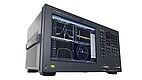
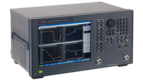
- On 24 October 2026 the Official Keysight Used Equipment Store listed an E5071C-2K5 (2 ports, 300 kHz to 20 GHz, built-in bias tees) at USD 47,172.65 against a list price of USD 134,779.00, sold as Keysight Used with 90 days warranty.
- Keysight Rent to Own covers new equipment or Keysight Premium Used equipment. The E5071C, which Keysight stopped taking orders for in 2021, is sold used, and the program does not apply to it.
What Does a Network Analyzer Rental Cost?
Rental houses typically quote network analyzer rentals per request. The E5071C rental listings checked on 23 October 2026 showed a quote form rather than a price, and some showed a zero-dollar placeholder where a rate would sit. So the honest answer to "what does it cost?" is: the all-in figure on your written quote, and you have to ask for it.
The figure typically depends on more than the instrument. The exact configuration matters, because a 2-port analyzer to 20 GHz with bias tees and a 4-port analyzer to 8.5 GHz are different units with different quotes. The term matters, and so do calibration, shipping and what the rental fleet has available in the week you need it. Keysight's own rental page sends you to a rental company in your region for a quotation, not to a published rate.
Ask the rental house to put these items in writing before you compare anything:
- The monthly rate for the exact configuration, named by its option code
- The minimum term, and the rate if you extend past it
- The calibration date and certificate that ship with the unit
- Shipping in both directions
- Damage or loss cover, and who pays for it
- Any tariff or surcharge lines
- The return condition and any inspection charges
Add every recurring item to the monthly rate; that all-in monthly number is what the next section divides by. Keep the one-time items, such as shipping and a return inspection, as a separate total, because you pay them however long the rental runs. If you are still deciding which kind of analyzer the project needs, the network analyzer buying guide covers ports, frequency range and dynamic range before any of this.
How Do You Find Your Break-Even Month?
Your break-even month is the cost of owning the analyzer for the project, less the rental's one-time charges, divided by your all-in monthly rental quote; if the project will run longer than that, buying costs less.
The cost of owning has three parts you can price today and one you usually cannot. Cost of owning = used price + the calibration and support you add, minus what you recover at the end. For the E5071C-2K5 listing read on 24 October 2026, the inputs look like this:
| Input | Where it comes from | E5071C-2K5 example (24 Oct 2026\) |
|---|---|---|
| Used price | The unit listing on the store | USD 47,172.65 |
| Fresh calibration (optional) | Service options on the listing | USD 1,341.00 |
| Optional extended warranty | The E5071C page (read 25 Oct 2026\) | Up to 3 years |
| Value recovered at the end | No published source | Count as 0 unless you hold a written offer |
| All-in monthly rental quote | Your written quote | Your figure |
Here is the arithmetic with the price and a fresh calibration, leaving out the optional extended warranty:
- Cost of owning: 47,172.65 + 1,341.00 = USD 48,513.65.
- Break-even month: (48,513.65 minus your one-time rental charges) ÷ your all-in monthly quote.
- Compare the result with the length of your project. If the project will run past that month, buying costs less on these inputs, before taxes and before any repairs once the 90 days warranty period is over.
Subtracting the one-time rental charges matters because the rental pays them even in month 1. Put your own quote in the denominator, and add the extended warranty to the numerator only if you would buy it. If two rental houses quote different terms, run the formula once per quote rather than averaging them.
To use the number in an approval, write it as a count of months and set it next to the project plan. A plan that ends well before the break-even month points to renting, and a plan that ends well after it points to buying. A plan that ends close to the line is where schedule risk decides: each month past the plan adds a full rental payment, while the purchase cost stays where it was. When the result is close, say so in the request and show both totals at the planned end date and at a later date that allows for a slip.
Two limits apply to this simple version. First, resale value after the project is not published anywhere we can cite, so the cautious case counts it as zero; a written offer for the unit at the end of the project would lower your cost of owning and bring the break-even month forward. Second, the formula ignores the cost of money. A finance team that discounts later payments will see the break-even month move later, because the purchase is paid up front while rent is paid over time.
The store runs the same comparison for another instrument in the same decision for oscilloscopes, if your bench has both on the budget.
What Does a Rental Include, and What Should You Ask About?
According to Keysight's rental page, equipment from the companies it lists comes with calibration and maintenance by the rental company. With any other rental house, ask what calibration paperwork ships with the unit. Ask for the certificate date on the unit you will receive, because that date decides how much of your project the calibration covers.
Two questions about that certificate apply to either path. Ask whether the laboratory that issued it is accredited to ISO/IEC 17025:2017, the international standard for the competence of testing and calibration laboratories; as of October 2026 it remains the current published version, last reviewed and confirmed by ISO in 2023. Ask too whether the results are traceable: the NIST Policy on Metrological Traceability describes traceability as a documented unbroken chain of calibrations, each contributing to the measurement uncertainty. Accreditation bodies that sign the ILAC Mutual Recognition Arrangement assess calibration laboratories against ISO/IEC 17025, which helps when the certificate comes from another country.
Beyond that, the terms belong to the rental house and the quote you sign. Minimum periods, delivery, calibration paperwork, damage cover and return inspection vary from one quote to the next, so treat them as questions, not as known facts. The certificate of calibration guide covers what a certificate should show, whichever path you take.
Here is how the two paths compare on the items that usually decide it:
| Item | Rental (ask the rental house) | Used E5071C from the store (as listed) |
|---|---|---|
| Calibration at delivery | Calibrated and maintained by the rental company on Keysight's rental page; ask for the certificate date | Calibrated or Tested; some units sold "Used & Calibrated \+ Measurement Report"; fresh calibration offered per unit |
| Warranty | Ask what covers a failure during the term | 90 days warranty; optional extended warranty for up to 3 years |
| Return | Return at the end of the term; ask about inspection charges | 30-Day Right-of-Return |
| Ownership at the end | None, unless a rent-to-own plan applies | You own the analyzer |
| Configuration | What the fleet has that week | What is listed; customization is limited or not offered on Keysight Used units |
The table shows why the comparison is rarely just money. A rental keeps calibration and upkeep with the rental company, while a purchase leaves you with an instrument and with the responsibility for keeping it calibrated.
When Is Renting the Right Call?
The Official Keysight Used Equipment Store sells used analyzers, and renting is still the better choice in several common cases. Rent when the project will end before your break-even month. Other cases that favor renting:
- The end date is short and uncertain, and nobody will commit to a longer schedule.
- You need a configuration for a few weeks only, such as a 4-port set for one test campaign.
- Only operating budget exists, and no capital line will open in time for the project.
- You need coverage above 20 GHz for a short period.
- Your team has no calibration process yet and the project is too short to set one up.
In these cases the rental either ends before it reaches the cost of owning or spares you an instrument you would not use again. Before you rent, check that a vector network analyzer is the right instrument for the job; the network analyzer versus spectrum analyzer guide covers which measurements need which.
One case stays open: the project whose end date nobody knows. Compute the break-even month anyway, judge which side of it the project is more likely to land on, and recompute when the schedule moves. A project that keeps extending is the usual way a rental ends up costing more than the analyzer.
What Does Buying a Used E5071C Include?
A used E5071C from the store comes with 90 days warranty, and each listing prices its calibration options. These units are Keysight Used, and the store's tier table for that tier lists savings of up to 90%, working condition, calibrated or tested, and 90 days warranty, with limited customization.
The options on one E5071C-2K5 listing, read on 24 October 2026, show what you can add at purchase:
- The unit was sold "Used & Calibrated + Measurement Report".
- A fresh calibration was offered for USD 1,341.00, which extends lead time by under 4 weeks.
On top of that, the E5071C page (read 25 October 2026) offers an "Optional Extended Warranty for Up to 3 Years: Available Only on the Keysight Used Equipment Store".
Read the support status and the service options on the specific unit you choose, and ask the Keysight Used Equipment Store what support covers for that unit before you buy. Settle this before you request the quote, not after.
The E5071C page points to KeysightCare for "the same support and technical consultation as with a new instrument", and the store's Certified Calibration service covers calibration for equipment bought on the store. The calibration certificates guide shows how to read the certificate that comes with a calibrated unit.

Why Is a Used E5071C a Price Decision, Not a Technology One?
The E5071C is a discontinued model sold used, so you buy it for its price and its specified performance up to 20 GHz, not for the latest technology. Its data sheet (5989-5479EN) carries Keysight's discontinuance notice: the last date the analyzer could be ordered was May 31, 2021. The same notice recommends the E5080B for new purchases. Keysight's own E5071C product page now lists the model as obsolete.
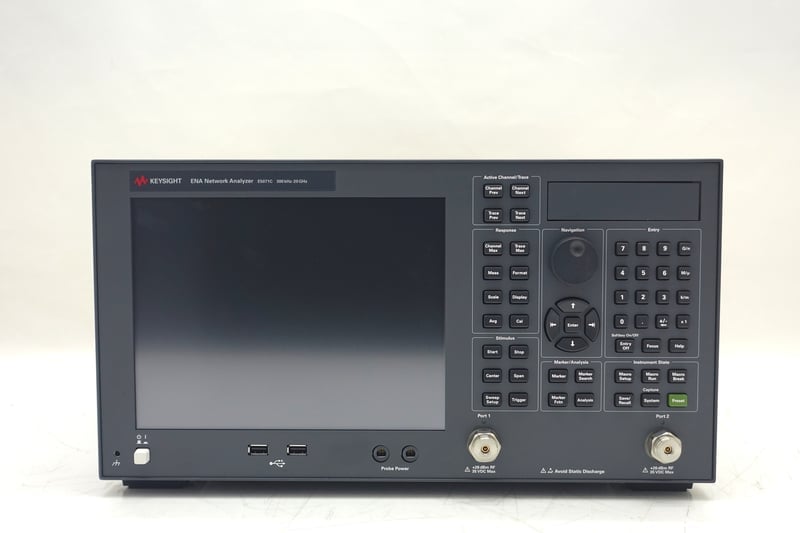
The data sheet specifies the E5071C-2K5 as follows; a unit sold "tested" rather than calibrated has not been checked against these figures, which is one reason to add a fresh calibration:
- 2 ports, 300 kHz to 20 GHz, with built-in bias tees
- System dynamic range of 123 dB from 100 MHz to 6 GHz and 96 dB from 15 to 20 GHz, specified at a 10 Hz IF bandwidth
- Trace noise of 0.004 dB rms from 10 MHz to 4.38 GHz, specified at a 70 kHz IF bandwidth
- Bias tee inputs rated ±35 VDC and ±200 mA without degrading RF performance (typical)
A used E5071C fits when the project needs these figures up to 20 GHz and the budget favors a lower purchase price. The E5080B fits when you need a new instrument, a current support path or coverage past 20 GHz. The store's guide on buying the E5071C used versus new covers the comparison in more depth. For a rental decision the point is narrower: if the measurement fits the E5071C, the question left is cost, and the break-even month answers it.
Which E5071C Configuration Matches the One You Would Rent?
Store listings name the configuration by option code, and a rental quote should too (ask for it if it does not), so compare the same option code on both, or the comparison means nothing. The options listed on the store's E5071C page on 24 October 2026:
| Option | Ports | Frequency range | Bias tees | Lowest listed price, 24 Oct 2026 (USD) | |
|---|---|---|---|---|---|
| 2K5 | 2 | 300 kHz to 20 GHz | Yes | 47,172.65 | |
| 280 | 2 | 9 kHz to 8.5 GHz | No | 18,131.59 | |
| 480 | 4 | 9 kHz to 8.5 GHz | No | 25,312.88 | |
| 485 | 4 | 100 kHz to 8.5 GHz | Yes | 25,312.88 | |
| 4D5 | 4 | 300 kHz to 14 GHz | Yes | 32,842.39 | |
| 4K5 | 4 | 300 kHz to 20 GHz | Yes | 55,749.05 |
Prices change as units sell; the E5071C page shows the current listings.
The data sheet sets a simple rule for the start frequency. Options up to 8.5 GHz start at 9 kHz without bias tees and at 100 kHz with them, while the 14 GHz and 20 GHz options start at 300 kHz. So a quote for a "9 kHz to 8.5 GHz" analyzer describes a unit without bias tees, and a project that needs DC bias on the test ports needs one of the bias tee options. Check installed options per listing as well, because options such as time-domain analysis vary by unit. The full range of used network and impedance analyzers is on the category page.
Is Rent-to-Own a Middle Path?
Keysight Rent to Own credits 50% or more of the payments toward ownership, for new equipment or Keysight Premium Used equipment. The Keysight Rent to Own flyer (3124-1136, March 2024) sets out the program, which runs through the rental companies named in the flyer:
- A minimum term of 6 months, which can be adjusted to when budget becomes available
- 50% or more of the payments credited toward a buyout
- Flexible financial terms: capital or operating budget, financing, or purchase over time
- The option to change the configuration during the rental
- KeysightCare included with the rental
Per the flyer, the terms are subject to change, so confirm them in your quote.
The limit matters for this page. The flyer covers new equipment or Keysight Premium Used equipment, and the E5071C can no longer be bought new, while its store units are sold as Keysight Used. So the program does not apply to the E5071C, which is sold as Keysight Used. Keysight Premium Used is the used tier the program names.
Rent-to-own fits a different buyer: one who wants a new instrument, such as an E5080B, or a Keysight Premium Used unit; the flyer names no models, so ask the rental company which ones qualify. For a project that will outlast its break-even month on an E5071C, buying the used unit outright is the direct route.
Rent, Rent-to-Own, or Buy Used: Which Fits Your Project?
Decide which side of your break-even month the project lands on, then match the configuration. The table below turns that into a path:
| Your situation | Path | Why |
|---|---|---|
| Ends before your break-even month | Rent | You pay less in rent than the cost of owning |
| End date unknown, likely short | Rent, and recompute monthly | Keeps the option to buy if the project runs on |
| Runs past your break-even month, 2 ports, 300 kHz to 20 GHz, bias tees | Buy a used E5071C-2K5 | Owning costs less after that month |
| Runs past your break-even month, 4 ports, 300 kHz to 20 GHz, bias tees | Buy a used E5071C-4K5 | Same logic, 4-port configuration |
| Needs a new instrument or more than 20 GHz; budget arrives later | Ask about rent-to-own on a new instrument such as the E5080B | Payments are partly credited toward ownership |
| Needs a new instrument now | Buy an E5080B | Keysight's new-purchase successor |
The top two rows are where renting wins, and they are common. The middle rows are where a used E5071C pays off, and the configuration table above tells you which option code to quote. The last two rows are for buyers who need a new instrument, and there the E5080B is the route, bought outright or through rent-to-own where a rental company offers it.
What Should You Check Before You Sign Either Way?
Get the same five facts in writing from either side before you sign. For a rental quote:
- The exact option code of the unit you will receive
- The minimum term and the rate if you extend
- The calibration certificate date at delivery, and the accreditation of the laboratory that issued it
- Every fee on one line, so the all-in monthly figure is clear
- The return inspection terms and what they charge for
For a used listing:
- The option code and the installed options
- The calibration status ("Used & Calibrated" or tested)
- The support line on the unit
- The service options and their prices
- The warranty and the 30-Day Right-of-Return
If you plan to keep the analyzer past the project, the calibration provider matters too; the guide on how to evaluate calibration companies sets out what to check.
Select up to 3 instruments to compare
Frequently Asked Questions
Rental houses typically quote network analyzer rentals per request, and the E5071C rental listings checked in October 2026 showed a quote form rather than a rate. Ask for one all-in monthly figure for your exact configuration, then divide your cost of owning, less the rental's one-time charges, by it to get your break-even month.
It depends on how long the project runs. Renting costs less until your break-even month, which is the cost of owning, less the rental's one-time charges, divided by your all-in monthly quote. Past that month, buying a used unit such as an E5071C-2K5 costs less.
Keysight's Rent to Own program, run through the rental companies named in its flyer, has a 6-month minimum and credits 50% or more of the payments toward ownership. It covers new equipment or Keysight Premium Used equipment only, so it does not apply to the E5071C, which is sold as Keysight Used.
Keysight's last order date for the E5071C was May 31, 2021, and Keysight's product page lists the model as obsolete. Check the support status and service options on the unit you choose, and ask the Keysight Used Equipment Store what they cover.
E5071C units on the store are sold as Keysight Used, with 90 days warranty and a 30-Day Right-of-Return. The E5071C page also offers an optional extended warranty for up to 3 years, available only on the Keysight Used Equipment Store.
According to Keysight's rental page, the rental companies it lists calibrate and maintain their equipment. Request the certificate with the quote so you know when the next calibration falls due during your project.
Buy a used E5071C-2K5 when 2 ports from 300 kHz to 20 GHz with bias tees cover the work and the purchase price matters most. Choose the E5080B, Keysight's new-purchase successor, when you need a new instrument or coverage past 20 GHz.
The E5071C-2K5 is a 2-port vector network analyzer from 300 kHz to 20 GHz with built-in bias tees. Its data sheet specifies 123 dB system dynamic range from 100 MHz to 6 GHz and 96 dB from 15 to 20 GHz at a 10 Hz IF bandwidth.
Whenever You’re Ready, Here Are
5 Ways We Can Help You
Browse used E5071C configurations on the E5071C page and request a quote.
Call tech support US: +1 800 829-4444
Press #, then 2. Hours: 7am – 5pm MT, Mon– Fri
Contact our sales support team
Create an account to get price alerts and access to exclusive waitlists
Talk to your account manager about your specific needs
Sources
- Keysight, E5071C ENA Vector Network Analyzer data sheet, 5989-5479EN (April 2, 2020)
- Keysight, Keysight Rent to Own, flyer 3124-1136.EN (March 1, 2024)
- Keysight, rental page
- Official Keysight Used Equipment Store, E5071C page and listings (prices read 24 October 2026; warranty and support lines re-read 25 October 2026)