









- Overview
- All Models
- Support
Peak and average power measurements in a standalone form factor
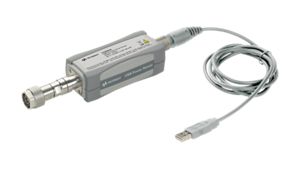
With plug-and-play connectivity, Keysight USB and LAN power sensors enable quick setup and immediate power readings, eliminating the need for additional equipment. Perform internal zeroing while connected to the device under test (DUT), ensuring accurate measurements without the hassle of external calibration. Their lightweight and portable design makes them ideal for field measurements, while remote operation via USB or LAN provides flexibility and convenience for measurements from a distance. These features make Keysight USB power sensors the perfect solution for modern applications requiring compact, reliable, and easy-to-use power measurement tools.
Plug-and-play connectivity
Connects via USB or LAN for quick setup and immediate power measurements, without the need for additional equipment.
Internal zeroing
Performs internal zeroing while connected to the DUT, eliminating the need for external calibration.
Standalone form factor
Integrates sensing and signal processing directly into the sensor; no separate power meter required.
Remote operation
Operate and control the sensor remotely via USB, offering flexible and convenient measurements from a distance.
Most popular configurations

10 MHz - 18 GHz USB Power Sensor
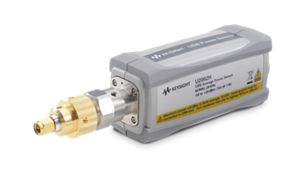
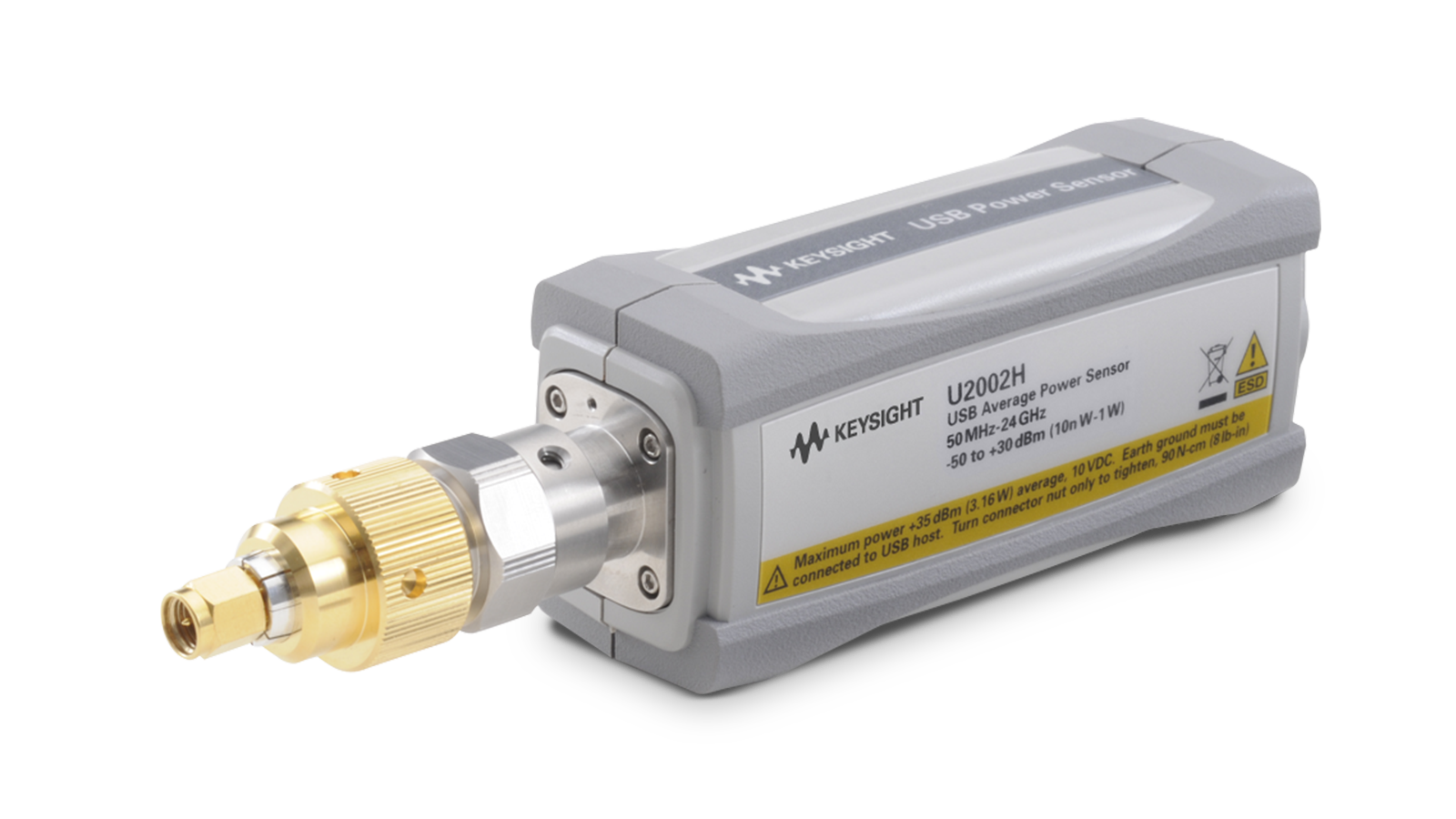
USB Power Sensor, 50 MHz to 24 GHz
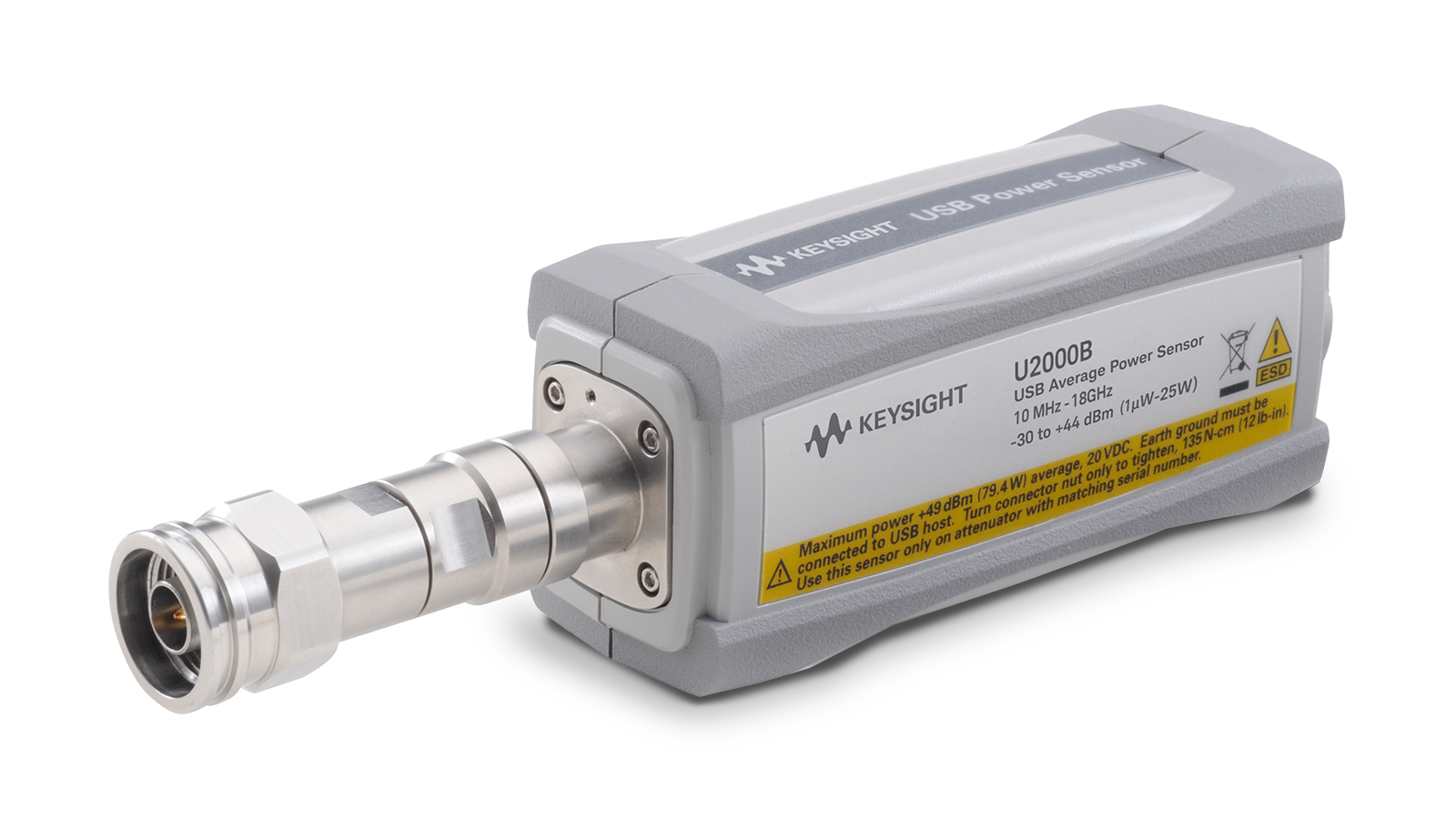
10 MHz – 18 GHz USB Power Sensor
Services and support
Innovate at speed with curated support plans and prioritized response and turn-around times.
Get predictable, lease-based subscriptions and full lifecycle management solutions—so you reach your business goals faster.
Experience elevated service as a KeysightCare subscriber to get committed technical response and more.
Ensure your test system performs to specification and meets local and global standards.
Make measurements quickly with in-house, instructor-led training, and eLearning.
Download Keysight software or update your software to the newest version.
Frequently asked questions
A USB power sensor connects to a power meter and measures the power level of a signal. A small, portable device, a USB power sensor measures the power consumption of electronic devices that connect to USB ports. These sensors can provide real-time data on parameters such as voltage, current, power, and energy consumption, enabling users to thoroughly assess the power usage of their devices in different operating conditions. Typically, sensors connect easily to USB ports, making them a convenient tool for analyzing the power dynamics of various electronic devices.
USB sensors offer:
- direct connection to PCs, laptops, or test controllers
- software-based control and display, typically using SCPI commands or vendor GUIs
- portable, compact form factor for field or bench use
- support for automation, ideal for test systems, R&D, and production environments
Despite their small size, USB power sensors can perform average, peak, or time-gated measurements depending on the model.
A local area network (LAN) power sensor measures and monitors the power consumption and energy usage in a LAN setting. Unlike USB power sensors that are specific to USB-connected devices, LAN power sensors track the power usage of various network-connected devices like computers, servers, switches, routers, and other networking equipment. These sensors are typically used in data centers, offices, and diverse networking environments and provide valuable insights about the energy consumption patterns of interconnected devices to administrators and IT professionals. LAN sensors help engineers gain a better understanding and management of power usage within the LAN to facilitate informed decision-making for efficient network operations.
LAN sensors provide:
- remote operation over standard Ethernet networks
- centralized control of multiple sensors from one location
- long-distance connectivity without USB cable length limitations
- integration into LAN-based automatic test equipment (ATE) systems or monitoring setups
Like USB sensors, LAN power sensors combine detection, digitization, and processing in one device, supporting SCPI commands, time-gated measurements, and scripting.
Calibration requirements for USB sensors vary based on the sensor type and the specific parameters that engineers are measuring. Calibration is crucial to ensure accurate and reliable measurements. While specific USB sensors may come pre-calibrated by the manufacturer, others may require periodic calibration to sustain accuracy. Factors influencing calibration include the need for precise measurements, changes in environmental conditions, adherence to regulatory standards, and application-specific accuracy demands.
USB and LAN power sensors offer several advantages over traditional sensor-and-meter setups, especially in modern, automated, and space-constrained test environments. These self-contained, digitally interfaced sensors integrate RF detection, signal processing, and communication into a single compact unit. Key benefits include:
1. Standalone power measurements
All measurement and processing electronics are built into the sensor. This eliminates the cost, bulk, and cabling associated with meters.
2. Simplified test setup
USB and LAN sensors only require a single cable connection for both power and data, which reduces setup time, wiring complexity, and potential connection errors.
3. Portable and compact form factor
USB and LAN sensors are compact and ideal for field work, benchtop use, or tight test environments. This makes them easy to deploy in mobile or temporary setups without bulky equipment.
4. Automation and remote control
USB sensors integrate directly with computers or test controllers. LAN sensors support remote access over a network, which is perfect for distributed systems or rack-mounted ATE environments. Both USB and LAN sensors support SCPI commands, allowing easy integration with automation scripts and test software.
USB and LAN power sensors deliver cost-effective, space-efficient, and automation-ready power measurement solutions. They’re ideal for engineers who need high-performance measurements without the bulk of traditional instruments, whether on the bench, in the field, or inside automated test racks.