

Why Choose Keysight Multiphysics
Bridge Design and Physical Validation for Electronics Structural Compliance
Keysight Multiphysics is a guided engineering validation environment purpose-built for mechanical engineering teams. It bridges design and physical testing by enabling engineers — including non-simulation specialists — to evaluate drop, impact, shock, and vibration compliance before hardware exists. Automated workflows, built-in compliance templates, and an electronics-specific material database replace complex CAE setup with faster time-to-insight, reducing physical test cycles and eliminating late-stage redesign surprises.


Key Features

Purpose-built workflows for electronics reliability analyses, including drop, shock, and vibration validation, aligned with real-world engineering processes.

Built-in templates, best practices, and application knowledge help engineers perform validated analyses without extensive CAE setup.

Automate meshing, material assignment, contacts, and model setup to eliminate repetitive manual preprocessing and accelerate simulation.

Leverage the proven VPS structural solver to deliver accurate, reliable predictions for electronics mechanical reliability.

Standardize validated workflows across projects with reusable templates that reduce setup time.

Enable product and mechanical engineers - not just CAE specialists - to confidently perform electronics reliability simulations.
Resources to Get You Started

Shifting Reliability Left: Guided Virtual Validation for Electronics Shock and Drop Testing
Mechanical shock failures, discovered late in product development after the design is frozen, are a persistent cost and schedule driver in electronics programs. Keysight Multiphysics addresses this gap through a guided, template-based virtual shock and drop analysis workflow accessible to design engineers without CAE specialization.
White Papers
Shifting Reliability Left: Guided Virtual Validation for Electronics Shock and Drop Testing

blogs
Why Teams Need Virtual Shock Testing Before the First Prototype
eBooks
Why Multiphysics Simulation Matters for Next-Generation Electronics
Frequently Asked Questions
Predicted results are based on the quality of the embedded material data and can be done before prototyping. Predicted results can be correlated by testing, by implementing accelerometers on the product for drop and vibration.
This software has been made specifically for electronic users, and the user does not need to be a mechanical simulation specialist. Shock drop analysis setup can be completed automatically with very few clicks.
The automated guided workflow makes the product very easy to use. The embedded material database avoids the need for a specialist in material modeling. The simulation templates are ready to use and can be reused for parameterization iteration on the design performance and scalability.
Simulation speed is proportional to the size of the product and module. For a drop test analysis, with access to HPC, this kind of simulation can be done within one hour.
The product can scale up to hundreds of CPUs on HPC facilities.
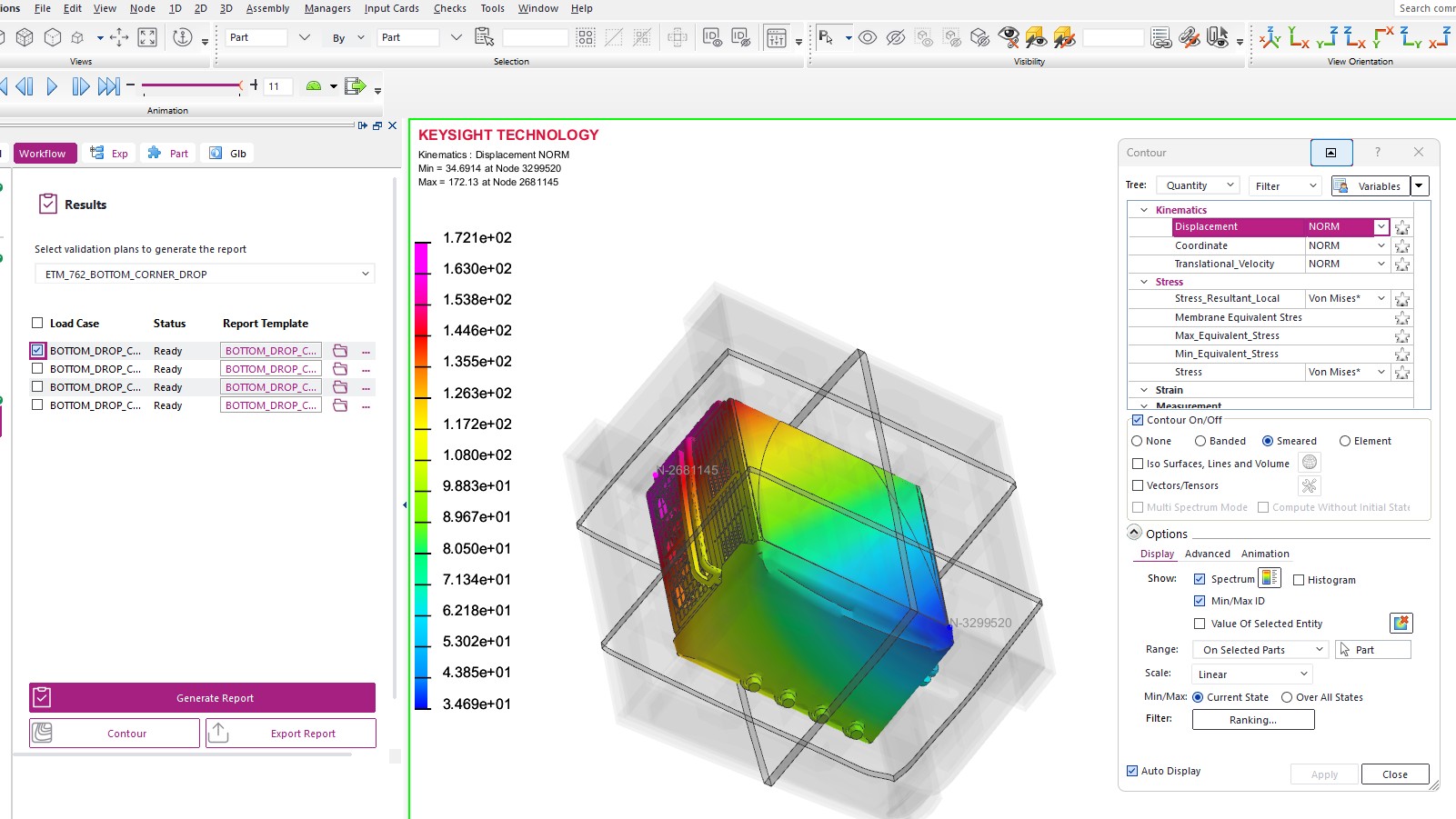
Stress/strain, acceleration, displacement and board curvature.
Yes when the material model has been implemented.
Yes, the purpose is to support industry standard test profiles and minimize stress during shock and vibration standards compliance.
The tool is fully open so the user can modify existing profiles, change existing profiles, create their own profile, and generate custom templates that can be used in future as a reference.