












- Overview
- All Models
- Support & Downloads
Ensure 5G Cloud-Native Deployments Perform Under Real Conditions
Operators migrating to cloud-native 5G standalone (SA) architectures face a dual challenge, confirming that the underlying infrastructure can support demanding workloads and that cloud-native network functions (CNFs) remain resilient under stress. The Landslide Cloud-Native Testing family addresses both needs. Infrastructure benchmarking validates CPU, memory, storage, and networking performance across Kubernetes clusters before CNFs go live. CNF resiliency testing then generates real 5G traffic while simultaneously injecting impairments. Together, these solutions give network and cloud teams the confidence to deploy, scale, and operate 5G services in dynamic, multi-vendor cloud environments.
Infrastructure Benchmarking
Benchmark CPU, memory, storage, and networking performance across private cloud Kubernetes distributions to confirm capacity before deploying cloud-native network functions.
CNF Resiliency Validation
Inject real-world impairments — including object failures, network contention, and resource constraints — while generating 5G traffic to validate fault tolerance and recovery.
Real-Time KPI Correlation
Correlate infrastructure and CNF impairments directly with 5G key performance indicators such as sessions, registrations, and handoffs to pinpoint service impact.
Automated DevOps Integration
Integrate with continuous integration/continuous delivery (CI/CD) pipelines and use drag-and-drop workflow engines to automate repeatable testing as environments evolve.
-
Test types
CPU Benchmarking, Memory Benchmarking, Storage Benchmarking, Networking Benchmarking, A/B Testing, Shadow Testing, Continuous Benchmarking, Resiliency, Impairment Correlation, Object Failure, Network Contention, Resource Constraint, Pod Failure, Container Failure, Node Failure
-
Technology
Kubernetes, Cloud-Native Infrastructure, 5G SA, 5G-Advanced, Cloud-Native Network Functions
Popular Configurations
Landslide CNF Testing
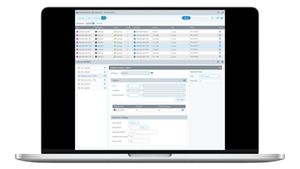
Validate 5G cloud-native network function resiliency with automated testing that correlates CNF impairments to service-level KPIs in real time.
Validate 5G cloud-native network function resiliency with automated testing that correlates CNF impairments to service-level KPIs in real time.

Landslide Cloud-Native Infrastructure Benchmarking
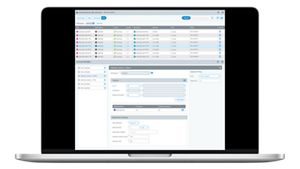
Benchmark CPU, memory, storage, and networking performance across Kubernetes clusters to validate infrastructure readiness before CNF deployment.
Benchmark CPU, memory, storage, and networking performance across Kubernetes clusters to validate infrastructure readiness before CNF deployment.
The resources below will help you choose the right Landslide configuration for your environment.
Data Sheet


Data Sheet

Solution Brief

Solution Brief

Solution Brief

Services and support
Innovate at speed with curated support plans and prioritized response and turn-around times.
Get predictable, lease-based subscriptions and full lifecycle management solutions—so you reach your business goals faster.
Experience elevated service as a KeysightCare subscriber to get committed technical response and more.
Ensure your test system performs to specification and meets local and global standards.
Make measurements quickly with in-house, instructor-led training, and eLearning.
Download Keysight software or update your software to the newest version.
Frequently Asked Questions
Infrastructure benchmarking focuses on validating the underlying Kubernetes environment — measuring CPU, memory, storage, and networking performance to confirm the cluster can support cloud-native network function (CNF) workloads. CNF resiliency testing operates at the application layer, injecting impairments into a live 5G environment and correlating the impact on service-level key performance indicators (KPIs). Together, they cover the full stack from infrastructure readiness through service assurance.
Landslide Cloud-Native Infrastructure Benchmarking supports major private cloud Kubernetes distributions including OpenShift, VMware Tanzu, WNDRVR Cloud Platform, Rancher, and k3s, as well as private clouds from equipment manufacturers.
The solution supports three categories of impairments: object failures (container, pod, and node failures), network contention (latency, packet loss, and bandwidth rate limiting), and resource constraints (CPU hog, memory hog, disk full, node drain, and node taint at both the pod and node level). These can be combined in an unlimited set of scenarios.
Both products integrate with continuous integration/continuous delivery (CI/CD) pipelines through an automation API. Infrastructure benchmarking also includes a drag-and-drop workflow engine that enables repeatable, automated test scenarios combining CPU, memory, storage, and networking actions. This supports continuous validation as cloud-native environments evolve.
Yes. CNF resiliency testing generates real 5G traffic while simultaneously applying impairments, then directly correlates the effect on 5G KPIs — including sessions, registrations, and handoffs. This enables engineering teams to pinpoint where and why a cloud-native network function is underperforming and optimize before production deployment.